The emergence of the crypto industry has led to a need for it in today's world which many firms have realized over time. It has generated a huge demand for the various cryptocurrencies with many companies coming forward to adopt them and integrate them into their operations. However, there is still a need for more awareness and the need to explore it more. It needs to be propagated or advertised in a way that it gets accepted by larger communities. Various organizations have come up with various ways that can help with crypto mining.
One such initiative has been taken by Maple Finance who very recently launched a lending pool worth three hundred million dollars that could assist firms in the mining of Bitcoin.
An in-depth analysis of the initiative taken by Maple Finance
It is imperative for each and everyone who is associated with the crypto industry to learn about its development and the changes being introduced in it, continuously to make informed decisions. It helps to be on top of things and be updated with the recent news and updates. Therefore, it is important to not only know what is going on in the market but to get to its roots. This article endeavors to do the same and provide readers with a detailed analysis of how the new initiative is going to help Bitcoin mining firms.
In an announcement made by Maple Finance as well as Icebreaker Finance, they would be extending a three hundred million dollars funding to all the private as well as public companies that are engaged in Bitcoin mining. Those industries can apply for funds that have the eligibility standards to meet treasury management as well as power strategies standard that are situated all over North America.
What is there in store for investors and allocators?
They also have provision made for those who invest in it. They have planned low-risk returns for the investors as well as the allocators, i.e. to almost as low as 13% per annum. However, there are certain guidelines that an investor must follow to be able to invest in it. First of all, an investor first needs to be accredited and be eligible enough by meeting the standard of income or having the appropriate net worth within the limits of jurisdiction.
More about the loans
It has also been mentioned by those at Maple Finance that the loans that are already existing in the lending pool would stay there for almost twelve to eighteen months and shall have a rate of interest of almost 20%. There are also some provisions made for the securing of the loans which are to be done by taking any physical or intellectual asset of the borrower.
However, it has also been mentioned by the authorities at Maple Finance that miners are important to the cause of any cryptocurrency and therefore provisions should be made to facilitate it. With this vision in mind, Maple Finance has rolled out a new finance system to assist and advertise Bitcoin mining further.
Conclusion
Various surveys and records have also found that Maple Finance constitutes the largest share in the crypto lending market. With such provisions in place, it is needless to say that, the crypto industry would be benefited in numerous ways and shall soon see a rise in its growth. The crypto market being highly volatile has been a risk that many are unwilling to take. However, with the right initiative in place and with the right steps taken, the whole scenario can change for the better.
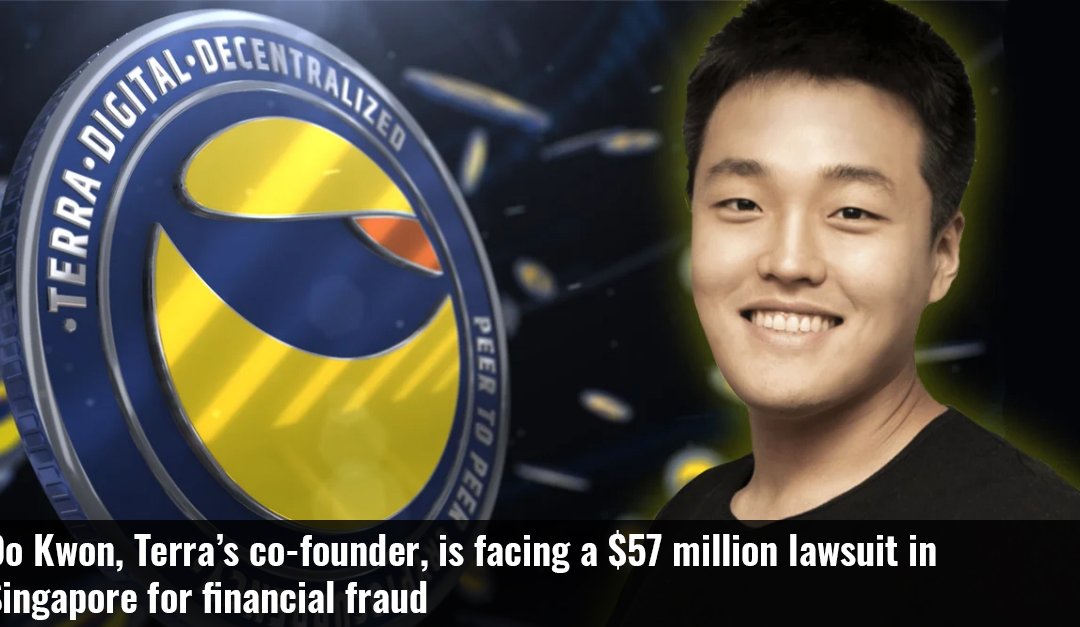
Victims of the UST-induced market crisis that saw over $40 billion in crypto assets evaporate in May have filed a fresh lawsuit in Singapore against embattled Terra Form laboratories CEO Do Kwon, the Luna Foundation Guard (LFG), and Terra founding partner Nicholas Plates.
What Went Wrong with TerraUSD?
Do Kwon's promises were readily swept away by waves on May 9, 2022, when the TerraUSD (UST), valued at $18 billion at the time, collapsed.
The cryptocurrency failed to hold its $1 peg, falling to $0.35. LUNA, a token designed to keep the UST price from plummeting precipitously, saw its value plummet from $80 to a few cents.
The TerraUSD collapse occurred in three stages, beginning with two dealers violating the currency's peg. Terraform Labs and three allies attempted to "fix" the situation by acquiring $2 billion in UST. As a result, the funds were depleted due to an uncontrolled sell-off.
The development did not end there, as it hyperinflated LUNA and eventually destroyed the prices of the two assets, forcing the crypto market to lose almost $40 billion.
Do Kwon’s Legal Headache
According to documents filed in Singapore's high court on September 23, 359 people claimed that Kwon and his co-defendants made false representations about Terra's algorithmic stablecoin TerraUSD's reliability (UST). The plaintiffs expressly claimed that Do Kwon was aware of "the structural fragility of algorithmic stablecoins" as a result of his engagement with Basis Cash (BAC), another stablecoin that failed under his supervision in early 2021, before the launch of UST.
The claimants further claimed that the defendants "knew or should have known that the claimants wanted to buy and hold digital stablecoins that were not susceptible to the volatility of the broader market and yield a respectable passive return." The claimants sustained significant losses on their UST holdings as well as additional damages as a result of the trio's acts. The claims asked the court to give them approximately $57 million for their losses and to force the trio to pay "aggravated damages."
The case comes amid an intensifying search for Kwon, who has now become an international fugitive after South Korea issued an arrest warrant. Therefore, the Terra blockchain ecosystem collapsed in May, Kwon has been the victim of many legal actions and threats. In September, South Korean authorities issued an arrest order for the Terra co-founder, which was later rejected, and Interpol added Kwon to its Red Notice list, urging that law enforcement identify and possibly jail him. On October 6, the South Korean Ministry of Foreign Affairs issued a notification ordering Kwon to return his passport within 14 days, or it would be invalidated.
Since his Terra empire collapsed in May, leaving millions of investors with severe losses, the Korean-born developer has been the target of several litigation lawsuits in the United States and South Korea over the last four months.
Eventually, local media reported that prosecutors were "in the process of freezing" tokens "believed to be owned by Kwon." These coins were allegedly stored on an unknown "overseas" cryptocurrency exchange that was "cooperating" with the Seoul Southern District Prosecutors' Office.
Despite not identifying his location, Kwon has been active on social media amid the issue and stated in September that he was "making zero attempt to conceal." In reaction to the complaint, one Redditor said Kwon was "doing a bad job at acting innocent for a guy who is innocent." Others speculated that he had undergone plastic surgery to conceal his features.
Conclusion
While it is unclear where Kwon is, Korean authorities reportedly claimed that he left Singapore for Dubai last month. However, no documents were found indicating that Kwon had entered the city, prompting Korea to ask neighbouring countries to assist in tracking his location. Kwon denied being on the run in a recent interview but refused to identify his location.
Coincheck, a major Japanese cryptocurrency exchange, stated on Friday that it aims to list on Nasdaq on July 2, 2023, through a merger with a special purpose acquisition company (SPAC) Thunder Bridge Capital Partners IV.
Coincheck stated that its ambitions to pursue a public stock offering in the United States via Nasdaq would provide the company with access to the country's lucrative capital markets.
Coincheck, a Japanese cryptocurrency exchange, has confirmed plans to pursue a public stock offering in the United States via Nasdaq, giving the company access to the country's lucrative capital markets.
Coincheck Business Update
Coincheck provided an update on its business. Initially, it expanded its dominance in Japan by slowly accumulating customers despite the weak crypto asset market.
The exchange subsequently stated that its NFT business revenue for the quarter was $160 million due to NFT market headwinds.
Coincheck also wanted to establish and expand its digital economic world with an eye on Web3, collaborating with appealing producers and artists to create revenue prospects such as sales of exclusive NFTs, tenant fees for land in the metaverse, and growing the Coincheck NFT user base.
Coincheck promotes firms related to crypto assets and NFTs that are spearheading the adoption of Web3 in addition to Coincheck Labs, the blockchain, and the Web3 ecosystem.
The exchange also identified several significant growth prospects that can be explored organically and accelerated through M&A or collaborations.
Coincheck and Hunder Bridge Capital Partners are Merging.
According to the exchange, the move will allow it to expand its crypto asset company by acquiring access to US capital markets, gaining exposure to global investors, and recruiting personnel to accomplish its growth goal. Monex Group, Coincheck's primary owner, declared in a Securities and Exchange Commission (SEC) filing.
In March of this year, Coincheck declared its intention to go public. Its merger with Thunder Bridge Capital was valued at $1.25 billion at the time.
SPACs were the hottest way for crypto firms to go public in 2020 and 2021, but the craze has died down this year due to an overall market slowdown and new Securities and Exchange Commission (SEC) restrictions.
Since June of this year, the SEC has been more careful about the general SPAC process, particularly crypto-related agreements, to improve investor safety.
Since July of last year, Circle Internet Financial, the backer of the "stablecoin" USD Coin, has been attempting to go public with a SPAC called Concord Acquisition (CND).
Coincheck controls 27% of Japan's Cryptocurrency market.
Coincheck has 1.75 million confirmed accounts, accounting for 27% of Japan's crypto trading market share, according to financial statistics. However, the company observed a drop in trade volume as a result of the cryptocurrency bear market. Quarter over quarter, total operational revenues fell by approximately half.
Several crypto-related companies have expressed an interest in going public via SPAC agreements. PrimeBlock, a Bitcoin (BTC) mining startup, announced in April that it would go public via a $1.25 billion SPAC. W3BCloud, a blockchain cloud infrastructure provider, announced a comparable price tag for its SPAC merger in August. eToro, a stock and cryptocurrency exchange, had planned a $10 billion merger before canceling the agreement over the summer.
Conclusion
A crypto/SPAC merger is also in the works between eToro Group, an Israeli online brokerage, and FinTech Acquisition Corp. Therefore, V (FTCV), a SPAC backed by veteran financier Betsy Cohen. The merger was called off in early July after the companies were unable to complete the transaction by the June 30 deadline. One of the reasons the deal failed was a failure to obtain SEC permission.
As part of Elon Musk's $44 billion acquisition of Twitter (TWTR), Binance, the largest cryptocurrency exchange in the world by trading volume, announced it had invested $500 million. This modest but significant action sparked rumors that the social media company might one day run on blockchain technology.
Musk Successfully Takes Over Twitter.
Musk completed his $44 billion acquisition of Twitter late on Thursday, gleefully tweeting, "The bird is liberated," and promptly removing several top executives from their positions. After months of public and legal battles over the sale, this finally happened. Early sources state that the new owner has already drastically lowered Twitter's c-suit. Twitter CEO Parag Agrawal, CFO Ned Segal, and top attorney Vijaya Gadde, who played a key role in the decision to block former President Donald Trump's account on the social media network in January 2021, are reportedly among the departing staff. Although it might only be a temporary post, Musk will take over as CEO, according to a source who talked with Bloomberg.
As per the reports, his next step would be to reinstate Twitter users who have received lifetime bans from the platform, including Trump.
Before finalizing the acquisition, Musk indicated that securing the "future of civilization" was his main driving force in buying Twitter.
Instead of dividing into "far right-wing and far left-wing echo chambers," Musk says the objective is to maintain a "common digital town square," where individuals of diverse viewpoints may discuss on their points of view without resorting to violence.
Other objectives include combating Twitter spam bots, which might be done by putting blockchain-based solutions in place.
Bot spam is particularly common in the cryptocurrency world, where con artists frequently use false identities to entice investors by impersonating influencers and other well-known people, including Elon Musk.
Binance Founder Expressed His Excitement about Working Together with Musk
Binance revealed on Friday that it has invested in Twitter's acquisition by billionaire internet entrepreneur Elon Musk as an equity investor (TWTR).
The founder of Binance, Changpeng Zhao, expressed his excitement in an email, "We're thrilled to be able to support Elon in realizing a new vision for Twitter. We want to help social media and Web3 work together to increase the use and adoption of blockchain and cryptocurrency." A team from Binance is reportedly being formed to think of ways that blockchain technology and cryptocurrencies can help Twitter.
In a tweet, Zhao claimed that Binance had sent $500 million as part of the transaction two days prior. CoinDesk's request for comment from Twitter did not immediately receive a response.
A few Twitter executives were reportedly taken to the door as Musk closed the transaction on Oct. 27. The new owner of the social media platform then purportedly cleaned house. In May 2022, according to a statement made by Binance, it will invest alongside 18 other investors in Twitter, including major cryptocurrency investment firms Sequoia Capital Fund, Fidelity Management, and Research Company.
The founder of Binance said on October 28 that the company had placed money on the table as Musk completed his acquisition of Twitter. To check that the business had wired the monies earlier in the week, CZ used the newly acquired platform.
Conclusion
Zhao clarified that he was not personally involved in the transaction and quipped that he thought the transfer had been made using traditional banking methods rather than a blockchain or cryptocurrency transaction in response to a user on the Twitter thread who wrote "CZ" now owns part of Twitter: "We are small potatoes, just a tiny bit." Zhao responded to other comments, clarifying that he was not personally involved in the transaction.
Bitcoin is the world's first decentralized cryptocurrency, a sort of digital asset that records, signs, and sends transactions across the Bitcoin blockchain without the oversight of a central authority. The BTC network was established in January 2009 by an anonymous computer programmer or group of programmers under the alias "Satoshi Nakamoto." The network is a peer-to-peer electronic payment system that employs bitcoin as a cryptocurrency to transmit value via the internet or as a store of value like gold and silver.
The newsletter's publishing date will stay unchanged, and the content will continue to focus on technical and fundamental analysis of cryptocurrencies from a macro perspective to spot important movements in investor mood and market structure.
Is it time to go long?
Bitcoin's (BTC tickers down $20,737) price has risen this week, reaching $21,000 on Oct. 26. This prompted a few traders to declare that the bottom had been reached or that BTC was entering the next phase of some technical structure such as Wyckoff, a range break, or some form of support resistance flip.
Before we get all positive and open 10x longs, let's go back to a previous analysis to see if anything has changed in Bitcoin's market structure and whether the recent burst of bullish momentum is indicative of a larger trend change.
When the last update was released on September 30, Bitcoin was trading at about $19,600, remaining within the range of the previous 136 days of price action. I discovered bullish divergences on the weekly relative strength index (RSI) and moving average confluence divergence at the time (MACD). There were also a few potential "bottoming" signs from other on-chain indicators that were at multi-year lows.
The Bollinger Bands are Quite Tight.
The Bollinger Bands on the daily period remain constrained, and this week's leap to $21,000 was the expected expansion or increase in volatility. After breaking out from the upper arm, the price has retraced to test the mid-line/mid-band (20MA) as support, as is customary.
Despite the severity of the rise, Bitcoin's price remains capped below. For the past two weeks, Bitcoin's "record-low volatility" has been the talk of the town, and when utilizing the Bollinger Bands, GMMA, and BVOL, the tighter price range does hint at expansion, but in which direction is unknown.
Bitcoin has been trading in the $18,600-$24,500 area for 36 days, and the price remains towards the middle of that range according to technical analysis. The rise to $21,000 did not result in a substantial daily higher high or break out of the present range, which is effectively a lateral chop.
For the time being, the price is above the 20-day moving average, but it has yet to cross over the 50-day moving average, and the majority of the Oct. 26 gain has been retraced back to the low $20,000 area.
In The Future
Multiple data points appear to indicate that Bitcoin's price is undervalued and in the process of forming a bottom, but none indicates that the market bottom has been reached.
Several Bitcoin mining companies have openly acknowledged the need to restructure debt, and the possibility of missed debt payments, and some have even hinted at impending bankruptcy this week and in previous months.
Since June, most publicly traded miners have been selling the majority of their mined BTC, and recent stories about Compute North and Core Scientific suggest that Bitcoin's price is still vulnerable owing to solvency difficulties among industrial miners.
Conclusion
According to Glassnode data, the aggregate size of miner balances is roughly 78,400 BTC and is "held by miners we have labeled (accounting for 96% of current hash rate).” According to Glassnode, in the event of "income stress," miners may be obliged to liquidate tranches of these reserves in the open market, and the effect on Bitcoin's price might be the next spark of a sell-off to new yearly lows.