A massive crypto platform blunder happened in crypto exchange Crypto.com. The error was disclosed after 7 months after the incident. A huge amount of crypto has been transferred mistakenly. Nearly AU$10.5 million ($7.2 million) worth of crypto has accidentally been transferred to a woman in Melbourne.
But the blunder became a more complicated issue as the Australian woman Thevamanogari Manivel spent a massive amount of the crypto. According to reports, five-bedroom property in suburban Melbourne was purchased from the crypto. The spent amount is AU$1.35 million.
How Did it Happen?
In December 2021, during an audit, that crypto firm disclosed that it had made a mistake in processing an AU$100 refund. That happened seven months earlier than that disclosure. That time the error was unnoticed.
The firm did this blunder during the payment process to the Australian lady. It entered the account number of that woman into the payment amount space.
Getting back the funds that were mistakenly transferred, the state of Victoria’s Supreme Court has ordered the home. It was ordered to sell the properties that were bought by capital and the money was returned to the company.
Recent reports show that the case is expected to back into court next month in October 2022.
The Legal Actions :
It was reported that the firm, Crypto.com had launched legal action to get back the amount
in the Victoria Supreme Court.
Following the court's order, the Australian Woman's bank account was frozen in February 2022. Unfortunately, the major amount of money either has already been spent or transferred to other bank accounts.
The court judgment stated that the money that was accidentally sent from the firm, was distributed to other relatives of that lady. Manivel sent $430,000 from that amount to her daughter in January 2022. Apart from that, she purchased a house in Craigieburn, a suburb of Melbourne. The house is priced at $1.35 million.
The court has ordered to sell the house and return $1.35 million to the firm along with its interest. As the interest was added, the amount is going to be raised at a high level to return it.
If that sister duo will not put their property for sale, Cypto.com will reportedly appoint a receiver to sell the house and will recover its money from the proceeds.
Also, if the lady will not cooperate with the court's proceeding, they are going to dip into more troublesome legal actions. Additionally, the court has also ordered the ladies to pay for the court's proceedings.
Present Condition Of The Market :
Notably, in this crypto winter, all the crypto platforms along with the major ones are suffering from their losses. Several exploits and scams are taking place in the market. Users and investors are panicking to invest in the market. Bad actors are luring the users through fake air drops and several other offers to gain tokens. Along with the platforms, its user community is also suffering from its losses. In those circumstances, that kind of error made by Crypto.com led it to a more risky financial structure. To play safe, the platform reportedly hid its blunder. There are so many reasons to hide that error from the other community. As the users are going backward in terms of believing any platform, the platform chose not to disclose its error. Additionally, for more advancement, the crypto platforms are choosing to adopt web3 technologies along with Metaverse projects. That is why web2 platforms are now into a hard competition to exist in the market. The gaming platforms to Defi, all are switching to that web3 mechanism.
As a direct response to the ongoing invasion of Ukraine by Russian forces, the United States Department of the Treasury has today announced the addition of 24 individuals and two entities with ties to the Russian government to the sanctions list maintained by the Office of Foreign Assets Control (OFAC).
The list includes organizations that OFAC claims backed Russia's invasion of Ukraine. These organizations include Task Force Rusich, an alleged neo-Nazi paramilitary outfit that the agency claims fought with Russia's troops in Ukraine.
Evasion prevention and a more isolated financial system in Russia
In retaliation for Russia's continuation of its invasion of Ukraine in February 2022, the United States and an international coalition of friends and partners moved swiftly to significantly cut off Russia's access to the world's financial system. They did this in reaction to Russia's actions. As a direct result of this, Russia has been working feverishly to develop innovative approaches to the processing of payments and the execution of transactions. The unjustified war being waged by the Kremlin has been sponsored both directly and indirectly by Russia's financial technocrats.
The designations announced today are directed at such efforts. Given the extensive sanctions that have been imposed on Russia's financial system this year, OFAC is also publishing a Frequently Asked Question (FAQ) document to provide additional guidance on the increased risk of assisting Russia's efforts to evade sanctions through the expanded use of the National Payment Card System (NSPK) or the Mir National Payment System. This is being done to provide information on the increased risk of doing so.
Vladimir Valerievich Komlev (Komlev) serves as both the Chairman of the Management Board and the Chief Executive Officer of NSPK. NSPK is a corporation that is owned by the Central Bank of the Russian Federation and is responsible for operating the Mir payment card network inside that nation. In 2014, because of concern about potential penalties from the United States and Europe, Russia established its card payment system that is managed by the state. As part of his job, Komlev has been traveling across the world spreading awareness about the Mir network, which has the potential to help Russia evade international sanctions.
The reason behind the actions
This action is being taken in cooperation with those taken by the United States Department of Commerce, which is imposing further export control restrictions to better align with allies and partners as well as by the United States Department of State, which is attacking Russia's military and high-technology businesses.
OFAC did not stop at just adding Task Force Rusich to its list of sanctioned organizations; the organisation also disclosed and blacklisted cryptocurrency addresses associated with Bitcoin, Ether, and USDT.
Before Russia began its invasion of Ukraine in February of this year, crypto currency contributions started streaming into the country as both sides looked to supporters all over the world and used digital assets to get around limitations on border crossings.
According to a report published in July by the blockchain analytics company Chainalysis, organizations with ties to Russia had raised a total of $2 million in cryptocurrency. The vast majority of the funds raised were transferred in the cryptocurrencies Bitcoin ($1.45 million) and Ethereum ($590,000), with "considerable quantities" also transferred in the cryptocurrencies Tether, Litecoin, and Dogecoin.
Final Thoughts
On the other hand, Bitcoin, Ethereum, TRON, Polkadot, Dogecoin, and Solana were among the cryptocurrencies that contributed to Ukraine's over $100 million in cryptocurrency contributions by March 2022, according to the blockchain analytics platform Elliptic. These cryptocurrencies included Solana. Among these gifts was a sum of five million dollars from Vitalik Buterin, the co-founder of Ethereum. In recent months, OFAC has increased its investigation and penalizing of cryptocurrency addresses. As part of this expansion, the organization has included the Tornado Cash coin mixing service as well as multiple Ethereum addresses, claiming the usage of the service in money laundering.
The crypto market is highly volatile and thus is more susceptible to changes now and then. However, for retail investors to be on the safe side it is important to gather knowledge on the way the market works to safeguard oneself from any unforeseen losses. Gathering adequate information is the most effective protection against a fluctuating market.
Instead of conducting a short search on Twitter, every digital network trading club, or trying to invest on Reddit, an individual might quickly identify several investors who may have significantly excelled well over a month, a season, or possibly an entire year. The very minimum of investigation that one must always carry out is a search. The bulk of rich market players cherry-pick several periods or operate many assets at the same period. This helps them ensure that there is always a comfortable lead to represent.
How has trading been affected widely?
On the other hand, thousands of traders realize that their investments have been effectively wiped out again, and they withdraw their money, leaving them with nothing. This is particularly the case when they use power and influence. Take a look at the Financial Conduct Authority (FCA), which operates in the United Kingdom as an example. The Financial Conduct Authority (FCA) mandates that dealers disclose the percentage of their customers located within the jurisdiction who have been trading alternatives at a loss. According to the data that is currently available, around 69 to 84 percent of frequent participants end up losing money as a direct consequence of the situation.
The United States Financial Industry Regulatory Authority issued a judgment of $70 million to Robinhood in June 2021. The authority claimed that Robinhood must have caused "widespread and significant hardship" to its customers and provided "inaccurate information onto numbers of its members." The judgment was issued to Robinhood beginning in September 2016, and it was finalized in June 2021. In particular, the watchdog pointed to the network outage that occurred during 2018 and 2018, which hampered customers' abilities to carry out buy and sell transactions at times of significant economic unpredictability.
Take a look at the trends in the market
Markets are commonly used by those who engage in such exploitation to supplement the vast quantities of cash that they already possess by bringing in additional money. Because they possess these features, traders can place contracts without any recourse, which is somewhat comparable to acquiring creditworthiness; as a consequence, businesses have merely a noticeable edge over established in the market.
Conclusion
Because of the complex interaction between exchangers, individual investors, trading platforms, and whales, professional investors truly need to understand that there is no room in the economy for newcomers to participate in any way, shape, or form. Having a trade that is advantageous to both parties means that even these businesses have an easier time gaining favorable access to preliminary initial offerings, listings, or economic integration; this is the case regardless of whether or not a formal partnership is documented in writing. The only option for shareholders to protect themselves against incurring a loss is for them to completely forego investing and even steer clear of any kind of influence trading that can incur costs. Speculators who invest within a time frame of six weeks or longer give a better possibility of making a profit from each one of their holdings. This is the case regardless of the asset class.
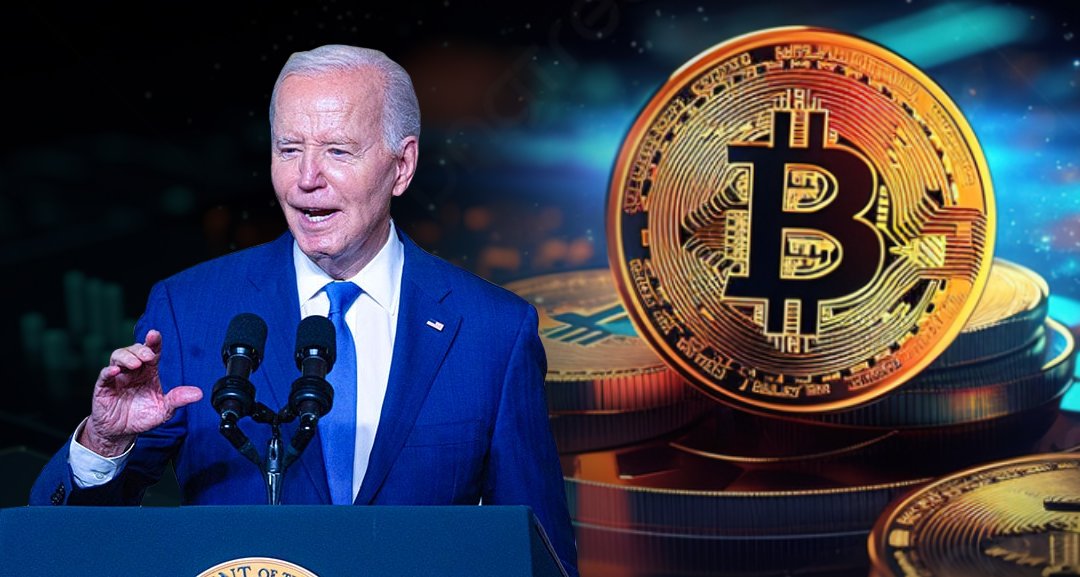
According to allegations that were made public on Friday, the Biden administration has said that the US government agencies need to increase their enforcement efforts in the digital asset industry and uncover loopholes in cryptocurrency legislation.
Even though the White House did not express support for a digital dollar, the Treasury Department will head up a committee of government departments that will investigate the possibility of a central bank issuing its digital currency. In response to an executive order that US Vice President Joe Biden signed earlier this year "on Ensuring Responsible Development of Digital Assets," these reports have been compiled.
What was the purpose of the report?
The reports urged regulators such as the Securities and Exchange Commission (SEC) and the Commodity Futures Trading Commission (CFTC) to release guidelines and regulations for potential consequences associated with the digital asset ecosystem. These risks include the possibility that cryptocurrencies could be used in illegal activities such as money laundering or fraud.
The White House also said that Vice President Joe Biden will explore whether or not to seek Congress to alter the Bank Secrecy Act (BSA) to apply to digital asset service providers. These service providers include cryptocurrency exchanges and platforms for non-fungible tokens, or NFTs. The BSA mandates that financial institutions disclose any transactions they deem to be suspicious to the Treasury.
Other steps were taken by the government
In addition to this, Biden will review the suggestions that agencies make for the establishment of a government framework to supervise non-bank payment providers. The value of cryptocurrencies soared beyond $3 trillion last year, but the industry has struggled in recent months as investors have withdrawn out of riskier assets owing to increasing interest rates.
This has led to a decline in the value of cryptocurrencies. Without the appropriate level of control, cryptocurrencies pose a threat to both the country's financial stability and its national security, according to Brian Deese, head of the National Economic Council. If digital assets are going to play the role that the government thinks it can in stimulating innovation and boosting economic and technical competitiveness, then regulation of cryptocurrencies is required.
The report is a summary
According to a series of stories that were released on Friday, the administration of Vice President Joe Biden is reportedly pushing for further regulation of cryptocurrencies and wants agencies to step up their enforcement efforts against digital asset enterprises that cause damage to consumers. Both the Securities and Exchange Commission (SEC) and the Commodity Futures Trading Commission (CFTC) are urged by the administration to "aggressively pursue investigations and enforcement actions against illegal acts in the digital assets area" in the reports.
The findings also recommend that the Consumer Financial Protection Bureau (CFPB) and the Federal Trade Commission "redouble their efforts" to monitor consumer complaints and detect abusive activities in the industry. These recommendations can be found in both of the reports. The ramifications of a central bank digital currency (CBDC) will be studied by an interagency committee, and the Treasury Department will serve as the group's leader, according to a recent announcement.
The new framework is a response to an executive order that Vice President Biden issued in March. In that order, he requested that government departments investigate the threats and opportunities involved with the rapidly developing cryptocurrency industry.
Final Thoughts
According to a fact sheet provided by the White House, one of the many objectives that were listed in the report is that the White House is contemplating whether or not to call on Congress to alter the Bank Secrecy Act (BSA) and prohibitions against unlicensed money transmission to apply expressly to digital asset service providers, digital asset exchanges, and nonfungible token (NFT) platforms. According to the White House, the United States Department of the Treasury will finish an illicit finance risk assessment on decentralized finance by the end of February 2023, and an evaluation on non-fungible tokens will be finished by July 2023. According to the White House, Vice President Biden is also taking into consideration agency proposals to build a federal framework to regulate nonbank payment providers.
The crypto world is volatile along with unexpected changes. Since the last period of 2021, the whole market is under several issues. The crypto market has been volatile after the last high market cap of $3 trillion. Top cryptocurrencies had lost their value. Now another issue has arisen. Once again a lawsuit hit the crypto industry. A single crypto platform is in a troublesome situation. Primarily, it was in the spotlight that Stake.com , the former partner of one of the biggest Bitcoin casinos in the world, was suing the founders of the platform.
What Is The Matter?
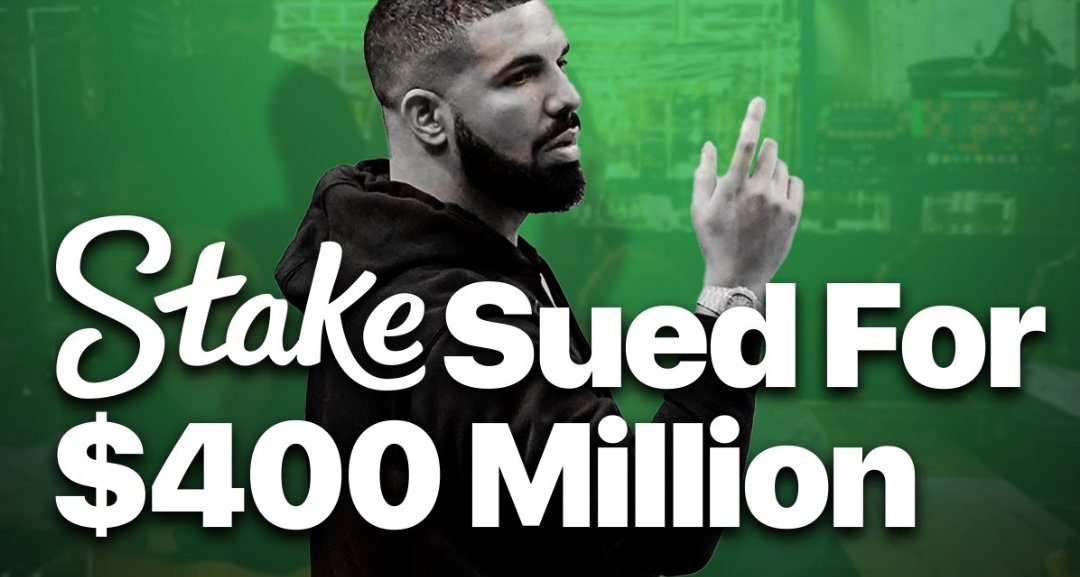
Recently, it was reported that the former partner Christopher Freeman lodged a civil lawsuit in the Southern District of New York. According to the filing, he claimed $400 million as punitive damages claiming that he was deceived into straying away from the formulation of Stake.com.
The creators of Stake.com, Ed Craven and Bijan Tehrani have been living luxurious lives. The recent investigation says that their recently bought costly houses were being held against them. He also stated that the firm had processed nearly $100 billion in bets. Freeman utilized all the money to take the success of the Bitcoin casino into the spotlight.
A Short Background :
The existing data shows that Tehrani and Freeman, both passed out from the same primary and high school. They met at Craven University in 2013. At that time the duo decided to set up a casino business called Primedice. Freeman partnered with 20 percent in Primedice. On the other side, Tehrani and Craven held 40 percent. This was a sample of their initial investment.
Though, Freeman’s stake dropped to 14 percent within nine months. This was a kind of result of rewarding other members of the development team. After that, Freeman implemented the idea of a crypto casino in 2016. Freeman claimed that the other two candidates were not interested because of the scare around regulations.
As a reentry, both have decided to go ahead with Stake.com while Freeman stated to be left high and dry. Tehrani and Craven invited Freeman to move to Australia if he wants to be a part of the crypto casino.
According to Freeman’s court, when Stake.com came up as a virtual casino including a competing online dice game and many other features Freeman had proposed. Tehrani and Craven affirmatively tried to deplete Freeman’s concern at having been misled by supporting that he still retained his stake in Primedice. Additionally, Freeman alleged that he was l
blocked out of Primedice also.
The Court's Proceedings :
Crypto casino Stake.com considers Freeman’s claims “inconsistent” and “misleading”.
The founders of Stake.com strictly rejected Freeman’s claims, considering them false. The firm also stated that the lawsuit was intended to spread incorrect information.
According to the statement, the complaint, that was filed by Chris Freeman, fills allegations that are internally inconsistent, intentionally misleading, and false with proof.
The firm logically showed that it would stand its ground and not give into Freeman’s demands. Bitcoin casino founders were confident about the court dismissing Freeman’s demands shortly.
The betting company is trusted to be an off-shore one. It was started in Melbourne, Australia, in 2017.
The company hired Canadian pop star Drake as an ambassador. The company is the lead jersey sponsor of the English Premier League, that is, the soccer team. Stake.com is allotted to be worth up to $1 billion. The founders of Stake.com stated that the company did not intend to compensate Freeman with $400 million. They claim Freeman’s lawsuit was a “desperate attempt” to spread FUD over the company and the court would dismiss it.