Three executives from crypto-linked companies have proposed that France tax conversions from crypto assets into regulated stablecoins, a change that would alter when some gains are taxed while keeping other digital-asset trades tax-deferred. Jean Meyer, CEO of Deblock, Damien Patureaux, co-founder of Lyzi, and Pierre Morizot, CEO of Waltio, said the measure would accelerate the use of crypto as a means of payment and reduce the complexity of calculating these taxes for users, according to Bitcoin.com News.
The plan matters because it would shift the taxable event for French holders. Under the proposal, tax would be triggered when crypto is converted into a regulated stablecoin, rather than when a regulated stablecoin is converted into euros, TokenPost reported. The executives said the same gain would be taxed once at the same rate, and that the proposal addresses when gains are taxed, not a new tax rate.
How the crypto-to-stablecoin tax would work
France currently defers taxes on exchanges between digital assets when no additional payment is involved, according to TokenPost. The executives would preserve that treatment for crypto-to-crypto trades and for conversions into nonregulated stablecoins, including USDT and DAI.
Meyer proposed abandoning taxation of crypto capital gains in exchange for taxing crypto-to-stablecoin exchanges, while keeping the exemption on crypto-to-crypto transactions, Bitcoin.com News reported. That shift would move tax calculation complexity to users and exchanges.
The executives also called for changes to how gains are computed. For occasional individual investors, gains are currently calculated using the disposal price and the value and acquisition cost of the holder's overall digital-asset portfolio, according to TokenPost. The executives want gains calculated asset by asset, with losses allowed to carry forward.
Executives cite a 'fiscal singularity'
In an article titled "France has six months not to miss the next industrial wave of agentic AI," the executives argued that "a French holder who converts his bitcoins into [stablecoin] does not trigger any taxation," according to Bitcoin.com News. They said this particularity conveyed no competitive advantage and constituted a fiscal singularity that is paid for in missed revenue and unbuilt infrastructure.
The executives contend the current tax treatment complicates the use of crypto for payments, TokenPost reported. Patureaux and Meyer presented a point of view that resonates with their companies, which provide electronic payment solutions that support crypto and stablecoins, according to Bitcoin.com News.
For Patureaux, the measure would simplify crypto payments for users and entice wider adoption of crypto payments at the merchant level. When paying in crypto, customers ask merchants a lot of questions about taxation, he said, according to Bitcoin.com News.
Undeclared gains and DAC8 data sharing
Morizot, who helms a tax software company, stressed that "the non-taxation of crypto/stablecoin transactions is a sword of Damocles," according to Bitcoin.com News. He said the proposal would prompt a boom in the tax statements of individuals.
The change would prompt higher tax collection from crypto holders alongside the implementation of DAC8, a crypto data-sharing initiative across European Union countries subscribed to by France, which is being expanded to more countries, Bitcoin.com News reported. France has legal provisions and a decree governing information transfers under the DAC8 framework, according to TokenPost.
Chainalysis estimates that over 90% of France's crypto gains go undeclared, considering 2025 data, Bitcoin.com News reported. That figure underpins the executives' argument that the current regime leaves revenue uncollected.
Industry pushback on the crypto-to-stablecoin tax
The proposal has drawn criticism from the native crypto crowd, according to Bitcoin.com News. Claire Balva, General Director of the Association for the Development of Digital Assets (ADAN), stressed that taxation can only happen at a fiat conversion level, as taxes can only be paid in euros, not in bitcoin or stablecoins.
Balva warned that implementing such a measure would push users to make exchanges into stablecoins that are unregulated in the EU, like USDT, Bitcoin.com News reported. Because the proposal would preserve tax deferral for conversions into nonregulated stablecoins such as USDT and DAI, critics say it could steer activity away from regulated tokens.
Nonetheless, Balva explained that this is still just a proposal and that no changes to the current tax regime are expected to be passed, according to Bitcoin.com News.
What comes next for the crypto-to-stablecoin tax
For now, the crypto-to-stablecoin tax remains an industry proposal rather than draft legislation. The executives have framed it as a way to tax the same gain once at the same rate while simplifying payments, and their call for asset-by-asset gain calculation with loss carry-forward would require changes to how occasional investors report, according to TokenPost.
Any shift would intersect with France's implementation of DAC8 data sharing, which the country has already written into legal provisions and a decree, TokenPost reported. With the measure still only a proposal and no changes expected to pass, the current regime deferring tax on digital-asset exchanges remains in place.
Conclusion
Three French crypto executives have proposed taxing conversions from crypto assets into regulated stablecoins, moving the taxable event earlier while keeping crypto-to-crypto trades and nonregulated stablecoin conversions tax-deferred. They argue the change would simplify payments and capture gains that largely go undeclared, while industry group ADAN counters that taxation can only occur at fiat conversion and warns the plan could push users toward unregulated stablecoins. The proposal remains only a proposal, and no changes to the current tax regime are expected to be passed, according to Bitcoin.com News.
Frequently Asked Questions
Who proposed taxing crypto-to-stablecoin conversions in France?
Jean Meyer, CEO of Deblock, Damien Patureaux, co-founder of Lyzi, and Pierre Morizot, CEO of Waltio, proposed taxing conversions from crypto assets into regulated stablecoins. The three executives from crypto-linked companies said the change would accelerate crypto's use as a means of payment and reduce tax calculation complexity for users, according to Bitcoin.com News.
How would the French crypto-to-stablecoin tax proposal change current rules?
France currently defers taxes on exchanges between digital assets when no additional payment is involved. The proposal would move the taxable event from converting a regulated stablecoin into euros to converting crypto into a regulated stablecoin, while preserving deferral for crypto-to-crypto trades and conversions into nonregulated stablecoins such as USDT and DAI, TokenPost reported.
Would the proposal create a new tax rate on crypto gains?
No. The executives said the same gain would be taxed once at the same rate, and that the proposal addresses when gains are taxed, not a new tax rate, according to TokenPost. They also called for calculating gains asset by asset and allowing losses to carry forward.
Why do the executives say France should tax crypto-to-stablecoin conversions?
They argue that a French holder converting bitcoin into a stablecoin currently triggers no taxation, calling it a fiscal singularity paid for in missed revenue and unbuilt infrastructure, according to Bitcoin.com News. Chainalysis estimates over 90% of France's crypto gains go undeclared in 2025 data, and the change would coincide with DAC8 data sharing.
Is France expected to adopt the crypto-to-stablecoin tax?
No changes are expected. Claire Balva, General Director of ADAN, said taxation can only happen at a fiat conversion level because taxes are paid in euros, and warned the measure could push users toward unregulated stablecoins like USDT. She said it is still just a proposal and no changes to the current tax regime are expected to pass, according to Bitcoin.com News.
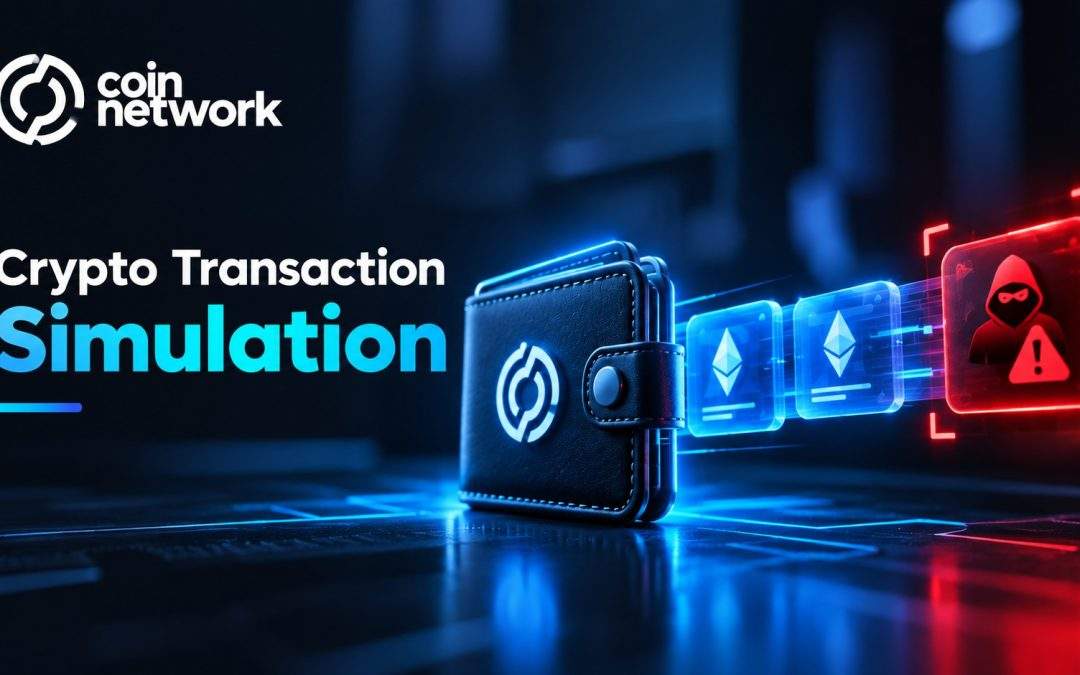
Crypto Transaction Simulation is a security technique that previews or tests a blockchain transaction before a user signs it. Instead of immediately broadcasting the transaction, a wallet or security service estimates what could happen if the transaction were executed.
A simulation may show potential balance changes, token transfers, NFT movements, approvals, contract interactions, and other state changes.
For example, a user may believe they are claiming an NFT while the transaction actually requests permission for a contract to spend tokens. A transaction preview can provide additional context before the user confirms the request.
MetaMask describes a transaction simulation as a test run that estimates balance changes and shows users what assets may move as a result. Its documentation also explains that standard off-chain simulations can differ from actual on-chain execution in some circumstances.MetaMask’s transaction simulation guide provides the technical details.
This makes simulation a useful security layer, but it should be combined with careful transaction review.
Why Crypto Transaction Simulation Matters
Crypto transactions can be difficult to interpret because smart-contract calls may contain technical instructions that are not obvious from a website interface.
A simulation can help answer practical questions:
Which tokens could leave my wallet?
Will I receive an asset?
Am I granting an approval?
Is an unexpected contract being called?
Could the transaction significantly change my wallet balance?
Does the expected result match what I intended?
This is particularly useful when interacting with decentralized applications, token claims, NFT platforms, DeFi protocols, and unfamiliar websites.
Coin Network’sCrypto Wallet Security in 2026 guide also covers reviewing transaction details, permissions, approvals, and suspicious signing requests before confirming blockchain activity.
How Crypto Transaction Simulation Works
The exact implementation depends on the wallet, blockchain, and security provider.
A transaction normally contains information such as:
Sender address
Recipient or contract address
Network
Gas parameters
Transaction value
Contract calldata
A simulation executes or models the transaction in a controlled environment to estimate the resulting state changes.
The wallet can then present those expected changes before signing.
For an ERC-20 interaction, the preview might show that 500 USDC will leave the wallet. For an NFT transaction, it may show one NFT leaving and another asset arriving.
Security providers can also combine simulation with threat intelligence, contract analysis, address reputation, and phishing detection.
MetaMask explains that its security alerts use on-chain analysis, ecosystem intelligence, and security partners including Blockaid.MetaMask’s security-alert documentation describes how these signals are used.
Crypto Transaction Simulation and Wallet Drainers
Wallet drainers are malicious systems or applications designed to trick users into signing transactions or approvals that may result in asset loss.
Common delivery methods include:
Fake airdrops
Counterfeit minting pages
Fake support websites
Phishing applications
Malicious token claims
Impersonation websites
Fake investment platforms
A simulation can expose an unexpected result before the user signs.
For example, a website may claim that a user is receiving an NFT while the simulated outcome shows valuable tokens leaving the wallet.
That mismatch is an important warning sign.
However, simulation does not guarantee that every malicious transaction will be detected.MetaMask’s security-alert guidance explicitly states that its security systems are designed to help users identify risks but cannot guarantee detection of every threat.
Crypto Transaction Simulation and Token Approvals
Token approvals deserve particular attention because an approval can create future spending permission rather than immediately transferring an asset.
A user should distinguish between:
A token transfer
and
A permission that allows another contract to spend tokens later.
That distinction matters because a transaction can appear inexpensive or routine while creating a potentially important authorization.
Simulation can help reveal expected permission changes, but users should still review the approval amount and destination contract.
Coin Network’swallet security guide provides additional guidance on reviewing token permissions and avoiding unnecessary approvals.
One of the most useful features of simulation is balance-change analysis.
A preview may conceptually show:
Before
1.0 ETH
2,000 USDC
3 NFTs
Expected after transaction
0.98 ETH
1,500 USDC
2 NFTs
The exact interface varies between wallets and networks.
A significant warning can arise when the simulated result does not match the user’s intention.
For example, if a user expects to receive an NFT but the transaction preview indicates that several valuable tokens will leave the wallet, the user should stop and investigate rather than sign immediately.
Crypto Transaction Simulation and Malicious Smart Contracts
Simulation can also help users understand interactions with unfamiliar smart contracts.
Depending on the transaction, a malicious contract may attempt to:
Transfer tokens
Change permissions
Move NFTs
Burn assets
Call additional contracts
Execute multiple internal operations
A simulator can trace or estimate these changes and present them in a more understandable format.
Blockaid describes its transaction-security technology as providing transaction previews that show the expected on-chain impact before signing, and its current platform says it protects more than 180 million Web3 transactions every month.Blockaid’s transaction-security platform provides the current product information.
This demonstrates how simulation has become part of broader wallet-security infrastructure.
Crypto Transaction Simulation and Red-Pill Attacks
A standard simulation can have limitations if a contract behaves differently during simulation than it does during actual execution.
MetaMask describes sophisticated attacks of this type as red-pill attacks.
In simplified terms, a malicious contract could attempt to appear harmless under simulated conditions while producing a different result during real execution.
MetaMask’s documentation explains that enforced on-chain simulations can address this problem by checking that actual execution matches the simulation. When the execution does not match the expected result, the transaction can revert.MetaMask’s enforced-simulation documentation explains the distinction.
The practical difference is:
A standard simulation predicts an outcome.
An enforced simulation can add a mechanism that requires actual execution to match the predicted outcome.
Support varies by wallet, smart-account implementation, transaction type, and network.
Crypto Transaction Simulation in 2026
The need for transaction-level security remains significant in 2026.
Chainalysis reported that it estimated $17 billion was stolen through cryptocurrency scams and fraud in 2025. Its 2026 report also found that impersonation scams grew by approximately 1,400% year over year, while the average scam payment rose from $782 in 2024 to $2,764 in 2025. These figures are estimates and can increase as additional illicit addresses and transactions are identified.Chainalysis’ 2026 Crypto Crime Report provides the methodology and context.
The FBI’s 2025 Internet Crime Report, released in April 2026, recorded 181,565 cryptocurrency-related complaints from U.S. victims and more than $11.3 billion in reported losses.The FBI’s 2025 Internet Crime Report provides the underlying figures.
Security infrastructure is also operating at large scale. MetaMask reported in June 2026 that its security partner Blockaid had flagged 65.4 million address-poisoning attacks since January 2025.MetaMask’s June 2026 Crypto Security Report explains the detection effort and related wallet protections.
These figures cover different parts of the crypto-security landscape. They should not be interpreted as evidence that every blockchain transaction is dangerous, but they do illustrate why transaction-level risk detection remains relevant.
How Wallets Use Crypto Transaction Simulation
A modern wallet can combine simulation with several other security checks.
Transaction Preview
The wallet estimates expected balance, ownership, and permission changes.
Threat Intelligence
The transaction can be compared with known phishing domains, malicious addresses, scam campaigns, and other security intelligence.
Contract Analysis
The wallet or security provider can inspect contract behavior and transaction calls.
Address Reputation
The destination address may be compared with known or suspicious addresses.
User Warnings
The wallet can display warnings when multiple risk indicators are detected.
MetaMask explains that its security classifications can use information involving phishing domains, contract behavior, impersonation signals, on-chain activity, and ecosystem reporting.MetaMask’s security-alert system provides more detail.
These layers should be viewed as complementary rather than as a single guarantee of safety.
What Crypto Transaction Simulation Can Detect
Simulation can be useful for identifying unexpected outcomes such as:
Unplanned token transfers
NFT movements
Token approvals
Large balance reductions
Unexpected contract interactions
Multi-step asset movements
Some suspicious permission changes
The effectiveness depends on the wallet, simulation method, blockchain, transaction type, and available security data.
An unknown malicious contract may have little reputation history, while an advanced attack may attempt to obscure its behavior.
A clean simulation therefore should not be treated as proof that a transaction is safe.
What Crypto Transaction Simulation Cannot Guarantee
Simulation does not replace broader security practices.
It may not reliably identify:
Social-engineering scams
Fake websites
Fraudulent project claims
Poor investment decisions
Unknown malicious infrastructure
Every simulation-evasion technique
Threats involving a compromised device
Users should therefore combine transaction simulation with domain verification, wallet security, permission management, hardware protection, and careful signing.
For broader crypto-security education, Coin Network’sCryptopedia section provides additional resources.
How to Use Crypto Transaction Simulation Safely
1. Check the Website
Verify that the domain comes from the project’s official channels.
2. Review Wallet Warnings
Do not dismiss a warning simply because the website appears familiar.
3. Read the Simulation
Look carefully at token, NFT, approval, and balance changes.
4. Identify Approvals
Determine whether the transaction creates spending permission for another contract.
5. Compare the Result With Your Intent
Ask whether the transaction preview shows the result you expected.
6. Stop When Something Looks Wrong
Do not sign simply because a website says the transaction is required.
7. Separate Long-Term Holdings
Using a separate wallet for experimental or unfamiliar dApps can reduce the amount of assets exposed to a mistaken interaction.
Common Mistakes With Crypto Transaction Simulation
Treating a Green Result as a Guarantee
A successful simulation indicates an expected execution path under the simulation conditions. It does not establish that the website or project is legitimate.
Ignoring Balance Changes
Users sometimes focus on a warning label without reading which assets are actually expected to move.
Approving Unlimited Spending
A transaction can create significant future permissions even when no asset leaves the wallet immediately.
Trusting a Familiar Brand
Attackers can imitate exchanges, wallets, projects, customer-support pages, and other trusted services.
Skipping Simulation for Small Transactions
A small transaction can still create a dangerous approval or permission.
Assuming All Wallets Simulate the Same Way
Wallets use different security providers, simulation environments, supported networks, and risk models.
Assets: Which tokens or NFTs may leave your wallet?
Gas: Is the expected network fee reasonable?
Warning: Has the wallet flagged the transaction?
Intent: Does the result match your intended action?
Follow-up: Can permissions be reviewed or revoked afterward?
Coin Network’sCrypto Wallet Security in 2026 guide provides additional guidance on approvals, suspicious dApps, wallet protection, and unfamiliar wallet activity.
Conclusion
Crypto Transaction Simulation provides a useful security layer by showing users what a blockchain transaction may do before they sign it.
It can help reveal unexpected balance changes, token transfers, NFT movements, approvals, and other contract interactions that may not be obvious from a dApp’s interface.
However, simulation is not a complete security guarantee.
A stronger approach combines transaction simulation, wallet security alerts, contract and address analysis, domain verification, permission management, and cautious signing behavior.
The 2026 security data from Chainalysis, the FBI, MetaMask, and Blockaid shows that scams and wallet-targeting attacks remain an important part of the crypto-security environment. Transaction-level visibility can therefore be especially useful when interacting with unfamiliar decentralized applications.
Does the transaction preview show the outcome I actually intended?
If the answer is unclear, stopping before signing is generally the safer choice.
FAQs
1. What is Crypto Transaction Simulation?
Crypto Transaction Simulation is a method of previewing or testing a blockchain transaction before it is signed and broadcast.
Depending on the wallet, it can estimate balance changes, token transfers, NFT movements, approvals, and other state changes.
2. Can Crypto Transaction Simulation detect malicious transactions?
It can identify some suspicious outcomes and risk signals, but it cannot guarantee detection of every malicious transaction.
MetaMask states that its simulations and security alerts are designed to help users identify potential threats but do not guarantee that every threat will be detected.
3. What can a transaction simulation show?
Depending on the wallet and network, it may show:
Token transfers
NFT movements
Balance changes
Approvals
Contract interactions
Other expected state changes
4. Can a malicious dApp bypass transaction simulation?
Sophisticated attacks can attempt to make simulated behavior differ from real execution.
MetaMask documents these as red-pill attacks and explains that enforced on-chain simulation is designed to help address this mismatch.
5. What is a wallet drainer?
A wallet drainer is malicious software or smart-contract infrastructure designed to obtain digital assets or permissions through deceptive interactions.
Users may be persuaded to sign harmful transactions or approvals.
6. Does a successful simulation mean a transaction is safe?
No.
A successful simulation indicates what the transaction is expected to do under the simulation conditions. It does not establish that the website, contract, project, or financial opportunity is legitimate.
7. Why are token approvals important?
An approval can allow another smart contract to spend a token on behalf of the wallet.
Users should understand the approval amount, token, and destination contract before signing.
8. Can transaction simulation prevent wallet drainers?
It can provide previews and warnings that help users identify potentially harmful transactions.
Some wallet systems also combine simulation with threat intelligence, address reputation, contract analysis, and enforced execution checks.
No single feature eliminates every security risk.
9. How should I react to a malicious transaction warning?
Do not sign the transaction.
Verify the project domain, check the destination address, review the transaction details, and investigate the warning before proceeding.
10. Is Crypto Transaction Simulation available on every blockchain?
No.
Support depends on the wallet, simulation provider, transaction type, and blockchain.
MetaMask currently documents on-chain simulation support across networks including Ethereum, Optimism, BNB, Polygon, Monad, HyperEVM, Sei, Tempo, MegaETH, Robinhood, Arc, Base, Arbitrum, Avalanche, and Linea through its supported implementations.
11. What should I do if I already signed a suspicious transaction?
Stop interacting with the suspicious application, review wallet activity and permissions, and consider moving unaffected assets to a secure wallet where appropriate.
Coin Network’sCrypto Wallet Security guide provides additional information for responding to suspicious wallet activity.
12. Where can I learn more about Crypto Transaction Simulation?
On Sunday, crypto firms made a splash in the mainstream media by spending millions of dollars on Superbowl ads. In Need of "Life Support," Bitcoin Might Collapse Below $20,000. On Monday morning, the Bitcoin Price Index dipped to $21,856.63, continuing its push to reclaim the $23,000 level that had inspired hope for the long-awaited bull run. Bitcoin and Ethereum have been inconsistent as of late, with some analysts suggesting that lesser coins may be about to experience a sudden appreciation. The value of bitcoin and ether had rebounded from their December lows, but they have been repeatedly pulled back. Crypto's appearance at one of the year's defining television events was seen by crypto industry bigwigs and staunch believers as a wonderful opportunity to clear up misunderstanding about what some see as the destiny of the globalized trade.
This year's annual showdown, which has drawn more than 100 million spectators in the past, did not boost the value of the biggest cryptocurrency on Monday, despite the huge sums of money and attention it received. Concerns that "Operation Choke Point 2.0" may soon attack the crypto industry have stalled rallies in Bitcoin and Ethereum, the two largest cryptocurrencies. There has been a massive influx of funds into the cryptocurrency market over the past two years. Bitcoin and Ethereum, two of the most popular cryptocurrencies, saw their values increase steadily for a while, before faltering in recent months. As a result, cryptocurrency has evolved from a niche digital pastime for "tech bros" to a mainstream cultural phenomenon, attracting both high-net-worth individuals and ordinary people.
Bitcoin
As Bitcoin seeks backing, it is evaluating the impact of potential new regulatory developments. Kraken was fined $30 million by the SEC last week for its staking method, while Coinbase was not. The Wall Street Journal claims that after the Binance USD stablecoin, the SEC will move on to Paxos. Traders are purchasing it as a replacement for gold, the traditional inflation hedge, and because bond yields are declining at a time when investors are concerned about rising inflation. Bitcoin's price has hit a new all-time high, surpassing $70,000 (£50,000), and analysts forecast additional gains for the most popular cryptocurrency in the world over the next several weeks.
In late October, bitcoin reached around $67,700 until investors discovered a brand-new cryptocurrency, shiba inu, and drove the price down. Ethereum, another cryptocurrency, reached a record high price of $4,837. Despite its historical volatility, Bitcoin has become the most valuable digital money at over $1.1 trillion. A single bitcoin was valued around $700 five years ago. Joseph DiPasquale of BitBull Capital claims that after falling below the $23,000 and $22,000 levels, Bitcoin is currently testing the waters for signs of support to determine whether it will recover to the $23,000 level or fall to the $20,000 level "extremely fast."
Ethereum
The value of Ethereum has dropped 0.89 percent in the past 23 hours and 6.23 percent in the past seven days. After a stellar start to 2023, Ethereum has been struggling in the cryptocurrency industry for days. Currently, one ether can be purchased for $1,520.66. If current trends persist, WalletInvestor predicts that ETH's value might fall to $476.16 within a year. Ethereum could pull a surprise, though, due to the volatile and unpredictable nature of the cryptocurrency industry. The Ethereum Big Eyes Coin, an Icon of Elegance and Success, Has Crossed the $26 Million Mark.
Big Eyes Coin (BIG) has raised $25.76 million in a presale, making it one of the largest cryptocurrency sales in recent history. This means that, once BIG opens, it will be among the elite, having raised millions of dollars. The present launch bonus of 200% means that anyone who purchases BIG now can effectively triple their money. Charity is important to Big Eyes Coin, which is why the company plans to keep five percent of its holdings in a special wallet for donations.
Big Eyes Coin, now fully presented, aims towards the summit. During the presale, it will accept Bitcoin, Dogecoin, and BNB. Decentralized and with a focus on feline memes, Big Eyes Coin is appropriately named. I think it's great that cats may now be found in the meme cat category. Further to its proof-of-stake consensus system, this helps cut down on pollution.