With the Ethereum merge about to take place there has been a lot of hype around it with different organizations and companies, adopting new creative methods to put forward their creative sides. Google has also aspired to do the same and has made a remarkable and interesting move in this sphere. It has come up with new features that are supposed to be added. There are just two days left for the big merge to occur. It is an event that has been waiting for a long time and the Ethereum community cannot keep its calm.
How did Google show its support for the Ethereum merge?
With the merger coming soon several companies and brands have come up with various creative ideas to celebrate the much-awaited event. Google, one of the top companies in the world has also tried to show its support for the upcoming merger with great enthusiasm. It has now started waiting for the merge by utilizing the time or marking the time that is left till the event, with the creation of a new countdown timer.
Let's take a look at how this countdown timer works
Many must be wondering about the significance of the timer or the function of the timer. This section answers all the questions that people or users must be pondering over, especially those who have been awaiting this merge as much as other brands and the community have. When one types anything that includes any mention of the merge, then the countdown timer appears which displays the time left for the merge to occur. the time displayed is not accurate but am estimated one that is based on three factors. These three factors are as follows:-
• The prevalent difficulty.
• The hash rate.
• The difficulty in the merge.
That is not all the search bar displays but other things such as two pandas on the side. These happy pandas are seen running toward each other with their hands outstretched. The best thing about these pandas is that as the time of the merge gets closer and closer the pandas shall also get closer. It is a special element that Google added to show its support for the merger that is going to be reformational and amazing. It has been said to be one of the best changes that are about to occur in the crypto market for a very long time.
What did the authors at Google say?
The authorities at Google have even shared their comments on the merge that is going to happen and the changes that Google has made to welcome it. Sam Padilla, the developer of google cloud mentioned through a tweet that the timer was just a funny way of showing their acceptance and encouragement for the new change that is going to occur. They have also mentioned that they appreciate the amount of work that has been put into bringing this vision of the merge into life.
Conclusion
Even though all of the work that has been put into Google's introduction of the fun new element was done by Google's search and lab teams, ur was Sam Padilla whose idea led to it all. He has also stated that time has a direct relation to the merge. With time, Google is getting more and more involved in the cryptocurrency industry. It has even established a Web3 team for the Google cloud. But the developers at Google are not the only ones who are keeping a watch over it with a lot of enthusiasm and interest. The search for Ethereum merge has scored more than 50 in recent times.
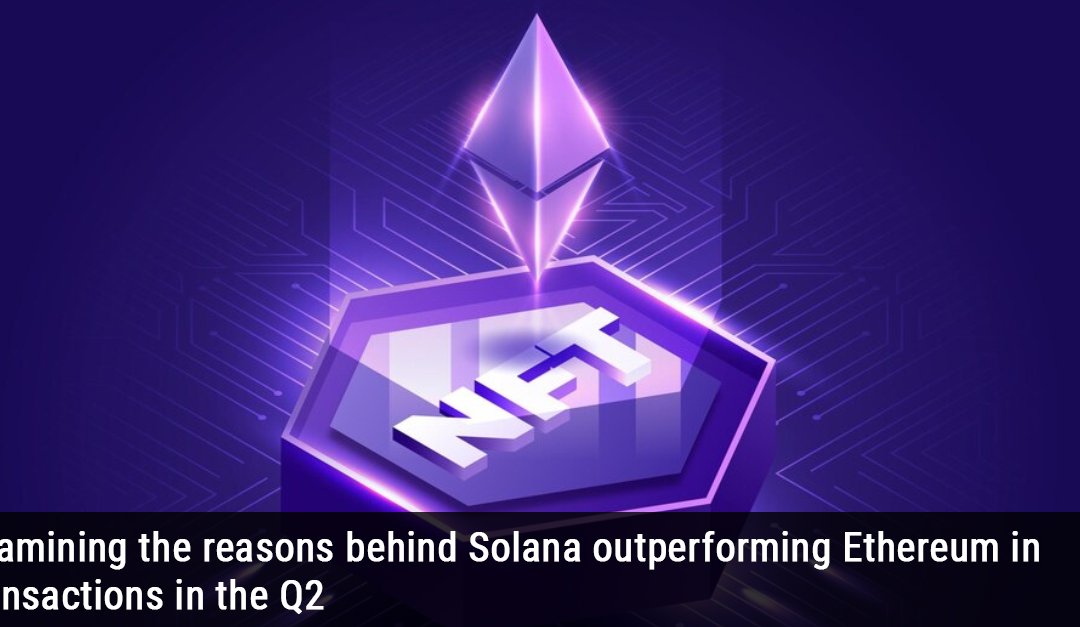
In the highly volatile market of the crypto industry, it is obvious that one crypto asset might get ahead of others. It is a never-ending race in which at one point some may fall behind and at the other point, leave other crypto assets behind. It is therefore important to keep track of it all if those who are associated with it want to be on the safe side and place their bets in the right cryptocurrency. One such event occurred more recently when Solana performed extremely well and left behind Ethereum based on its performance.
A closer look at the transactions in Solana
With time Solana has gained huge popularity and many transactions are now being made in the Solana blockchain. In recent times, these transactions have been steadily rising on the Solana blockchain, and this led to almost as many as 40 million daily transactions. In comparison to this, Ethereum failed to get as many transactions and could manage to make only one million transactions. These transactions were done specifically in April, May, and June.
What is the reason behind such performance?
Needless to say, the popularity of a crypto coin depends majorly upon the consensus of the general public. The more crypto manages to gather favor, the more its value increases. However, it is not always the case. It does not happen always that a crypto coin that is at the peak of popularity gets used more often of which Solana is an example. Even though there have been various ups and downs in its path, and despite being less popular than Ethereum, it managed to show its exemplary performance in the current season.
Solana's magnificent rise to the top
The best part about the rise that has been witnessed quite recently is that it has been steady throughout. This rise was analyzed by various experts and was even tracked based on daily non-vote transactions. There have been various factors that have been responsible for the rise Solana has been enjoying. There have been various decentralized apps such as Switchboard, that have contributed majorly to its spike.
Later when the vote transaction was taken into account, it showed that Solana managed to father almost as many as 100 to 200 million transactions in a day. This spike gave rise to the number of wallets being used all over the world.
Other factors responsible for the growth
There have been various other factors that too are responsible for the rise in Solana transactions. It is also a result of the funding that it began receiving right from mid-2020. Solana managed to attract so much funding as it was supposed to extend its support to other platforms such as Gamefi, Defi, and the nonfungible token ecosystem. No matter what the organization is, the Solana market is at its peak and is expected to continue at its peak as well.
Conclusion
There have been various such news doing rounds in the market about the emergence of a Helium blockchain network, that is supposed to transition into Solana. This shift has been waited and is highly recommended because it would help with various other issues that Solana has been facing. Primarily it would help with facilitating its operations and improve the scalability. The community is well set on fixing the number of problems that the crypto is facing and to come up with a renewed or reformed system for the betterment of all.
The higher authorities at Solana have even promised that the transition is supposed to bring about a plethora of changes.
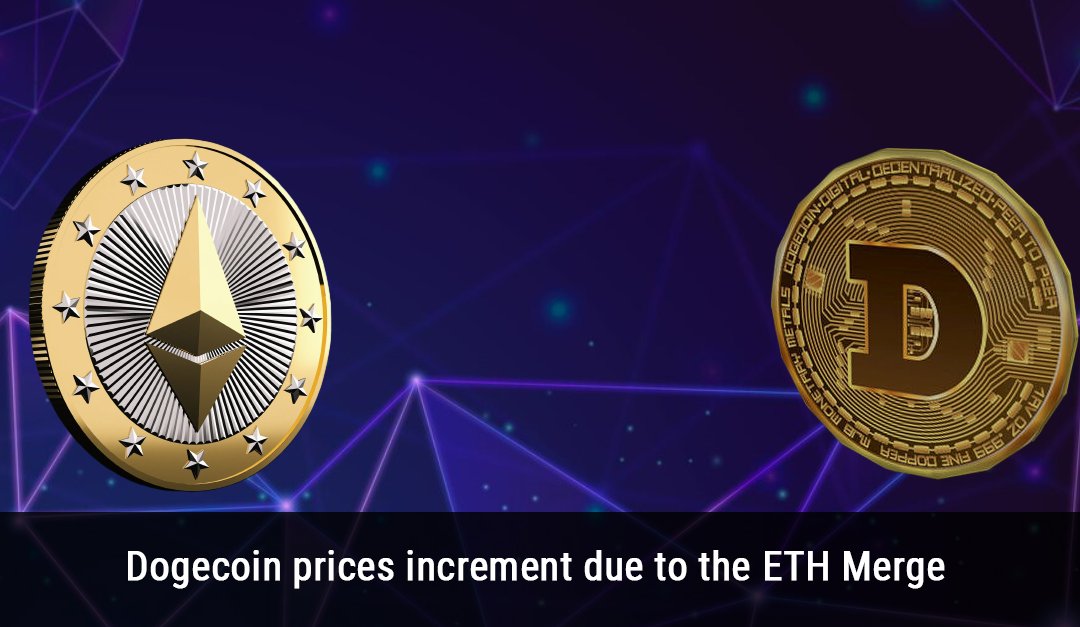
Since the beginning of this year, everyone's attention has been focused on the Ethereum network and the Merge, the much-awaited upgrade that the network is undergoing. This ground-breaking update caused a wide variety of changes not just inside the ETH environment but also in the outside world. After Ethereum completed its move to proof-of-stake [PoS], the proof-of-work [PoW] cryptocurrency market was taken over by ETH's equivalent, Dogecoin [DOGE], which is now the second biggest cryptocurrency overall.
What is DOGE?
Dogecoin, abbreviated as DOGE, is a cryptocurrency that is peer-to-peer and open-source. The picture of a Shiba Inu dog serves as its trademark, and the cryptocurrency was introduced in December of 2013, making it an alternative cryptocurrency. The blockchain technology that underpins Dogecoin, which was originally developed for Litecoin, has some value. Dogecoin, which makes use of an algorithm known as script, is notable for several reasons, including its cheap price and its endless supply.
DOGE coin price increment
Dogecoin is a cryptocurrency based on a meme that was first created as a joke in 2013 and has now grown to become the second-largest proof-of-work (PoW) cryptocurrency after Bitcoin. This breakthrough comes only one day after the Ethereum blockchain completed its switch to the power-efficient proof-of-stake (PoS) mining model from the power-intensive proof-of-work (PoW) mechanism it had previously used.
The native cryptocurrency of Ethereum, known as Ether, has also, as a result, lost its position among the PoW currencies. Dogecoin, on the other hand, is now selling at $0.059 (which is equivalent to around Rs. 5), and its market value is at $7.83 billion at the moment.
Why are DOGE investors so happy?
The community around Dogecoin was overjoyed with the successful completion of the Merge, which was being celebrated by the whole community. Dogecoin was able to move up in the ranks to a position just behind Bitcoin [BTC] once Ethereum entered the world of proof-of-stake transactions. DOGE was at the top of the PoW cryptocurrency list when it came to market cap. Dogecoin paved the path for other cryptocurrencies such as Ethereum Classic [ETC], Litecoin [LTC], and Monero [XMR].
The market capitalization of Dogecoin was estimated to be $7.87 billion at press time, but its price saw a daily decrease of 2%. The price of Elon Musk's preferred cryptocurrency was $0.0592 at present. As a result, many in the DOGE community started to rejoice over this victory. Several people were taken aback and were unable to believe what had just taken place.
How was the Merge responsible for Doge prices?
The transition from PoW to PoS on Ethereum was met with a great deal of resistance. By making adjustments, several people pointed out that the Ethereum network was going against the spirit of cryptography. In addition to this, opponents pointed out that the network was also interfering with the process of decentralization.
Following the recent statements made by SEC head Gary Gensler, the network is also under pressure from regulatory authorities. Since Ethereum transitioned to Proof-of-Stake, the community has been voicing their worries about the cryptocurrency being mistaken for security.
It is expected that the cryptocurrency sector will continue to focus on Bitcoin, DOGE, and other cryptocurrencies that are generated using proof-of-work algorithms. For example, Ethereum Classic received a significant amount of attention in the middle of the Merge. As a result, it is very possible that proof-of-work (PoW) cryptocurrencies could see greater attention in the days and weeks ahead.
Should Dogecoin go into proof-of-stake?
Despite the Merge, Dogecoin was still able to create headlines. Along the way, though, discussions on the potential of Dogecoin to enter the Point-of-Sale market were also started. Considering the intense attention that has been placed on PoW cryptocurrency for its energy usage, some people have pointed out the need for DOGE to include an alternate approach. However, several other people pointed out that Dogecoin uses a great deal less power than Bitcoin does.
According to Vitalik Buterin, the co-founder of the Ethereum network, the much-anticipated software update of the Ethereum blockchain, which is referred to in the cryptocurrency industry as the Merge, is now expected to take place around September 13 to September 15.
The Merge signifies a movement in the manner that Ether tokens are generated and payments are verified, away from mining blocks utilizing challenging computational puzzles following the proof-of-work technique and toward the proof-of-stake approach. The proof-of-work method required miners to solve increasingly difficult problems to get new blocks. Holders of Ether may sign up to verify transactions on Ethereum using the POS mechanism, which is based on stashes of locked up tokens in their possession.
Buterin said that the proof-of-work version of Ethereum only has a roughly "fixed amount" of mining slots after the last test stage of the Merge known as Goerli earlier this week. Goerli was known as the name of the test stage. Because of this, engineers now have a better idea of when the formal network update will likely get underway.
An earlier projection suggested that the date would fall between September 15 and September 20. Next week, there will be another meeting with the engineers working on Ethereum to iron out any last-minute kinks in the Merge. During this call, a specific date will be decided upon and hammered out.
The Bellatrix hard fork
On the Ethereum blockchain, the long-awaited update to Ethereum 2.0 is set to get underway. Ethereum 2.0 refers to the method by which the cryptocurrency Ethereum (ETH) will transition from operating on a proof-of-work (PoW) basis to operating on a proof-of-stake (PoS) basis through a hard fork, also known as a separation process. Even though the Ethereum Foundation does not make use of the phrase "Ethereum 2.0," the word is often used in the industry to make things easier to understand.
A Bellatrix upgrade for ETH is slated for today, the day before the final merge. At that time, the Ethereum Epoch value on the proof-of-stake chain is expected to increase to 144,896. This will occur before the final merge. According to the Ethereum Foundation, one epoch is the amount of time that must pass to mine 30,000 blocks.
The most recent upgrade to Bellatrix is required for "the Merge" to be carried out without a hitch. This upgrade is the last one that will take place before the Paris Upgrade, which will take place after "the Merge." It brings together the proof-of-stake chain and the current execution layer (current proof-of-work).
Mining on the Ethereum Blockchain will be rendered obsolete as a result of the Paris Upgrade, which will also herald the transition from a proof-of-work validation system to a proof-of-stake system design.
An outline of the most recent changes to Ethereum
In the same way that Bitcoin was constructed, the Ethereum network was built using the proof-of-work (PoW) method. This suggests that mining, a process that uses a substantial amount of energy, is necessary for the production of Ethereum (ETH) coins.
To make the transition to a proof-of-stake (PoS) paradigm, however, various measures were made in preparation for the introduction of Ethereum 2.0 in 2020. The purpose of this project is to improve the speed, efficiency, and scalability of the Ethereum network to facilitate the execution of a greater number of transactions in parallel.
What will happen after The Merge?
At the beginning of this year, Ethereum's original developer, Vitalik Buterin, assigned a development progress rating of 50% to the project. In addition to this appraisal, he included a list of the many stages, such as merging, surge, verge, and others, that Ethereum must go through to reach 100%.
The update to Bellatrix is slated to take place today. As part of this process, the Beacon Chain will be integrated with the Ethereum mainnet, and the consensus method will be converted entirely from proof-of-work to proof-of-stake.
The zk-rollups layer 2 scaling solution will need to be implemented as the next stage of the surge. To aggregate and carry out several transactions all at once, a technique known as rollup makes use of an Ethereum sidechain.
The cryptocurrency (ethereum) market is growing to include more assets and chains available than ever before. Unfortunately, despite the number of assets at play, most decentralized exchanges (DEXs) are still unable to deliver and facilitate the frequency and volume of trades necessary to satisfy the market. As a result, these exchanges face a lack of liquidity and high slippage, often occurring when fractions of an order are completed at a lower price and the rest at a higher and less advantageous price.
For this reason, investors often seek out manual workarounds, including checking for the best trading prices on all DEXs before making a transaction. Despite so many exchanges at play, the market has yet to see an actual cross-chain liquidity aggregator that can facilitate transactions across multiple chains for a swap. At present, aggregators cannot access the full breadth of available chains, nor are they user-friendly. For reference, some tools force users to connect multiple wallets or manually swap them between protocols.
Chainge Finance addresses this pressing DeFi concern with the Chainge app, giving users access to the SUM liquidity of multiple DEXs across several chains at the same time. Powered by the Fusion DCRM tech, the DEX aggregates liquidity cross-chain to ensure that users get the best prices for their target swaps.
“The Chainge app is the door to Web3. An app that provides unmatched security, top trading prices and the best cross-chain solution on the market. Furthermore, advanced integrated DeFi tools such as a derivatives market, time-framing and yield farming offer crypto users the means to maximize their wealth’s potential in a 100% decentralized way,” Dejun Qian, the CEO of Chainge Finance, shares in response to the team’s efforts.
The result is that Chainge Finance users can tap into extensive cross-chain liquidity with a single tap.