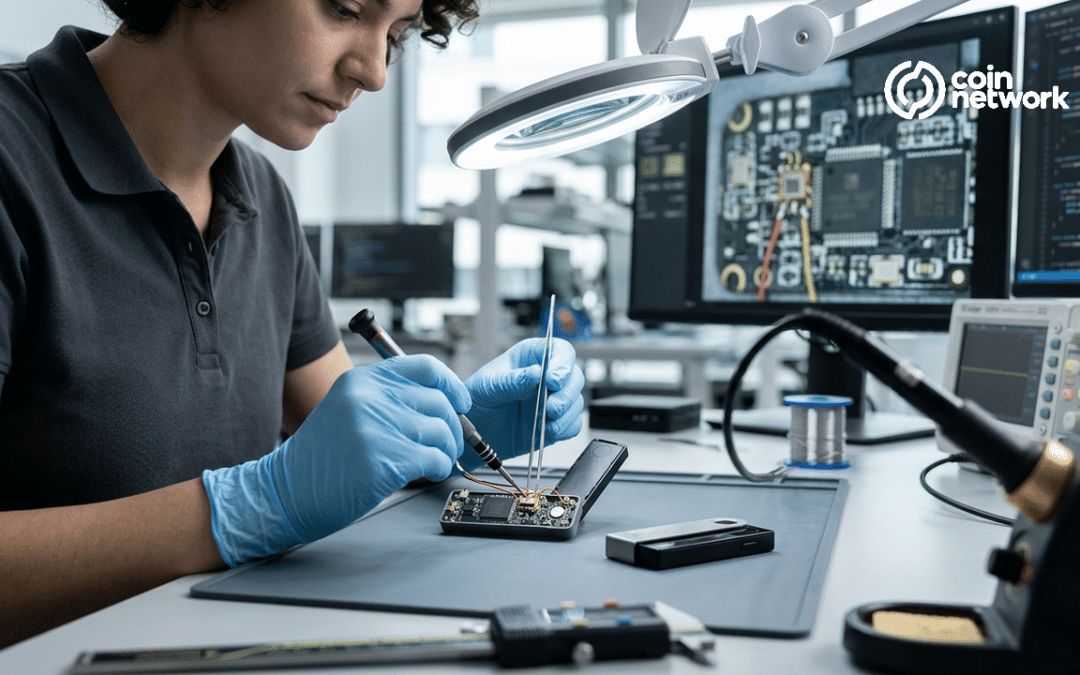


Optimizely attack reaches websites of 178 organizations, including Ledger

Optimizely attack reaches websites of 178 organizations, including Ledger

The Optimizely attack delivered crypto-stealing code to visitors of websites belonging to 178 organizations, including hardware wallet maker Ledger, on Nov. 16, 2026, Bitcoin.com News reported. The malicious JavaScript reached the sites through Optimizely's website testing platform.

The code could replace a copied cryptocurrency wallet address with one controlled by the attacker, putting users who pasted it into a transfer at risk of sending funds to the wrong destination. Ledger's inclusion matters to crypto holders because customers use its site to download software and follow setup instructions, according to Bitcoin.com News.

The Optimizely attack's reach

Security firm Report URI examined 1,611 Optimizely snippets and found malicious code in 188 of them, Bitcoin.com News reported. Those infected snippets were associated with 178 brands, the publication said.

Alongside Ledger, the affected organizations included Zoom, the BBC, CNN, Salesforce, Gitlab, IKEA, HSBC, Equifax, Air France-KLM and Peacock, according to Bitcoin.com News. kucoin also identified Zoom, the BBC, CNN, Salesforce and IKEA, saying their sites collectively draw millions of visitors each day.

Banking and finance accounted for 32 organizations caught up in the Optimizely attack, making it the most affected sector, YAHOO! reported. The list also included OANDA/Coinpass and trading platforms IG, Interactive Investor and TMS Brokers, according to kucoin.

The affected organizations spanned businesses whose sites use Optimizely to test page versions, as well as Ledger, whose customers use its website for software and setup information, Bitcoin.com News reported. kucoin reported that Cointelegraph had sought comment from Ledger, Coinpass and several other companies identified as affected.

How the code reached websites

Optimizely Web lets companies compare versions of their pages through tests. As part of that process, websites load a JavaScript snippet from Optimizely's servers, Bitcoin.com News reported.

Rather than breaking into each website directly, the attacker inserted code into an optional custom-code field in customers' Optimizely projects, according to Bitcoin.com News. YAHOO! reported that Optimizely's network then served the code to visitors.

Optimizely confirmed a breach and said an unauthorized party had exploited a weakness in the signup process for its Experimentation accounts, Bitcoin.com News reported. The platform said it had fixed the flaw and reset access, according to the publication, which also reported that the affected websites had already trusted the domain serving the code.

The BBC was among the first sites observed with injected Optimizely content, at about 4:21 a.m. UTC on Monday, kucoin reported. Bitcoin.com News reported that Report URI placed the first version of the crypto address-swapping code at 08:10 UTC, with stolen funds moved to exchanges by 13:03 UTC.

Address swaps and other theft tools

The crypto component of the Optimizely attack replaced legitimate wallet addresses with attacker-controlled addresses when visitors copied them, according to an analysis by security firm StepSecurity cited by kucoin. The technique, known as a clipper, targets the copy-and-paste process used for long wallet addresses, Bitcoin.com News reported.

A visitor who copied a deposit address from an affected page could therefore end up sending crypto to the attacker, YAHOO! reported. Bitcoin.com News said the code could also capture payment card data, cookies and screenshots and deliver exploit kits aimed at older iPhones and iPads.

YAHOO! reported that later versions added a card skimmer and loaded exploit kits targeting iPhones and iPads. The card-stealing code captured information entered into website forms, according to kucoin.

YAHOO! reported that Report URI estimated roughly $7,040 in crypto reached the attacker's wallets over about nine hours. Bitcoin.com News separately cited a developer who put the stolen amount at $7,040 and said the server hosting the attacker's payload was still responding overnight.

Scott Helme of Report URI confirmed transactions to the attackers, Bitcoin.com News reported, putting the amount received by wallets linked to the operation at about $7,000 by Monday. The publication said Helme published a detailed account of the episode on the day of the attack.

Cleanup and investigation

Ledger's affected snippet was cleaned at about 20:41 UTC, according to Report URI's timeline reported by Bitcoin.com News and a separate account from kucoin. Bitcoin.com News said that was among the earliest fixes in a broader cleanup running from roughly 20:40 to 21:10 UTC.

By 21:52 UTC, Report URI had found just one infected snippet still live, Bitcoin.com News reported. kucoin reported that most of the malicious code had been removed by that time.

Optimizely said it had removed the injected code and secured the affected accounts after correcting the flaw, according to YAHOO!. The company also said it had notified affected customers and was continuing to investigate the Optimizely attack, Bitcoin.com News reported.

Report URI advised people who visited an affected site on Nov. 16 to review crypto transfers made that day and compare their destinations with the addresses they intended to pay, Bitcoin.com News reported. The firm also advised updating iPhones and iPads to iOS 18.7.3 or later, the publication said.

Conclusion

The attack used Optimizely's website testing platform to deliver malicious code to visitors of 178 organizations, including Ledger. The code could substitute an attacker's address when a user copied a crypto wallet address, as well as perform other theft functions, according to Bitcoin.com News and kucoin. Optimizely has fixed the signup flaw and secured affected accounts, YAHOO! reported, while Bitcoin.com News said the company was still investigating. Report URI's next step for affected visitors is to check transfers made on Nov. 16 against their intended destinations and update iPhones and iPads, according to Bitcoin.com News.

Frequently Asked Questions

Was Ledger affected by the Nov. 16 Optimizely attack?

Yes. Ledger was one of 178 organizations whose visitors were served malicious code through Optimizely on Nov. 16, 2026, Bitcoin.com News and YAHOO! reported. Ledger's affected snippet was cleaned at about 20:41 UTC, according to reporting by Bitcoin.com News and kucoin.

How did the Optimizely attack swap crypto wallet addresses?

The malicious code replaced a legitimate wallet address with one controlled by the attacker when a visitor copied it, according to StepSecurity's analysis reported by kucoin. That meant a user who pasted the substituted address into a transfer risked sending funds to the attacker, YAHOO! reported.

How much crypto was stolen in the Optimizely attack?

The reported amount was roughly $7,000. YAHOO! attributed an estimate of $7,040 to Report URI, while Bitcoin.com News cited the same figure from a developer who checked on the cleanup. Bitcoin.com News also reported that Report URI's Scott Helme had confirmed transactions to the attackers.

What should visitors to affected sites check after Nov. 16?

According to advice from Report URI reported by Bitcoin.com News, affected visitors should verify that crypto transfers made on Nov. 16 went to their intended addresses. The security firm also recommended a minimum iOS version of 18.7.3 for iPhones and iPads.


Sources

Read Also

Ledger Reseller CryptoBilis Linked to Thefts as Stolen Crypto Traced Past $93M

Ledger Reseller CryptoBilis Linked to Thefts as Stolen Crypto Traced Past $93M

Blockchain tracking specialists estimate that bad actors extracted upwards of $93 million from digital wallets configured on devices supplied by authorized reseller CryptoBilis. Ledger confirmed that an unauthorized hardware implant was identified inside at least one victimized unit, while stablecoin issuer Tether moved to freeze $10 million in USDT associated with the breach.

The thefts target the foundation of cold-storage security, attacking physical equipment engineered to insulate private credentials entirely from digital threats. Ledger reported that its direct retail pipelines and underlying network servers experienced no operational intrusions, pointing instead to equipment sourced via its partner in Southeast Asia.

Reseller CryptoBilis Halts Hardware Distribution

Ledger initiated its formal inquiry on Friday, October 9, 2026, after users in Southeast Asia reported widespread asset losses from units bought through reseller CryptoBilis. The vendor serves as an authorized distributor across Indonesia, Malaysia, and the Philippines, according to The Block. Reseller CryptoBilis has since halted all retail hardware sales while the investigation progresses.

In a 72-hour operational statement issued on Sunday, Ledger maintained that every confirmed theft connected to the October 9 episode traces exclusively to reseller CryptoBilis. The hardware manufacturer classified the volume of affected units as limited, noting that it had engaged relevant public authorities alongside emergency security consortium SEAL 911.

The manufacturer reiterated guidance instructing CryptoBilis purchasers to leave unboxed units unconfigured. For owners who have active balances on those devices, Ledger urged immediate fund migrations over to fresh equipment configured with newly generated seed phrases.

Tracking the Millions Siphoned From Wallets

Blockchain intelligence company Bitquery reported calculating $93.2 million extracted from 315 wallets across six separate blockchains between Friday, October 9, and Saturday, October 10. Ledger has not authenticated that sum or confirmed an official figure for aggregate user balances lost.

Alternative estimates illustrate the uncertainty across distributed ledgers. Onchain analyst Specter logged upwards of $86 million stolen across Ethereum, Tron, and Bitcoin, Decrypt reported. YFarmX documented transmitting an inventory exceeding 450 compromised wallets to Ledger for inspection.

Analysts note that counting individual compromised addresses does not correspond to an exact total of victims, as a single investor routinely operates multiple deposit points, nor does the timing of an initial transaction verify when equipment was bought. Tether intervened roughly ten minutes after early public disclosures, ultimately locking 37 addresses, twenty of which secured $10 million in USDT.

A substantial portion of the diverted capital shifted across specialized conversion platforms. Bitquery confirmed that 2,990 ETH was routed through coin mixer Tornado Cash and onward through Zcash, with $81 million remaining traceable across public distributed ledgers as of October 11.

Inspection of Hardware Alterations

Former Mt. Gox executive Mark Karpelès shared teardown imagery on October 9 of a Ledger Nano X bought in Malaysia, displaying extra internal electronics seated behind the visual screen where standard cushioning normally rests. Karpelès has not established that the scrutinized unit originated from reseller CryptoBilis.

The illicit modification is configured to intercept the 24-word recovery phrase off the internal display bus during initial onboarding, relaying the keys externally via mobile connectivity without alerting connected computers or personal phones. Software developer 0xQuit noted that some users could alternatively have fallen victim to phishing scams, calling broad accusations of a core Ledger hack irresponsible, CryptoTicker reported.

Unverified claims of tampered devices surface beyond Southeast Asia. Social platform user Johannes reported finding units in European retail settings featuring modified internals, though Ledger maintains that all verified compromises remain isolated to CryptoBilis inventory, Decrypt reported. Decrypt submitted an inquiry to Ledger regarding the European allegations, while Karpelès's post referencing the report remains an unverified lead.

Supply Chain Vulnerabilities and Industry Repercussions

Ledger's public stance framing the issue as isolated strictly to reseller CryptoBilis prompted friction online because the vendor was promoted on the firm's official partner directory. Online commentator MyCryptoParadise argued that an authorized vendor breach cannot be separated from Ledger itself.

The crypto security landscape has navigated repeated hardware and third-party disruptions throughout the period. Ledger addressed a logic bug within its Ethereum software client in late August, and shipping vendor ShipMonk experienced a data exposure that compromised private contact details for 13,689 Trezor customers.

The current episode poses distinct challenges by circumventing the isolated environment expected from offline cold-storage hardware. Ledger highlighted that its proprietary backend infrastructure survived without intrusion, contrasting with an unrelated April software phishing incident where counterfeit Ledger Live applications extracted over $9.5 million through voluntary user disclosures.

To mitigate future hardware exposure, Ledger reiterated that authorized partner distributors must source inventory through approved routes and never restock previously returned customer merchandise. The company also urged crypto investors to procure hardware solely via direct manufacturer websites or vetted authorized distribution partners.

Conclusion

Ledger has confirmed an unauthorized hardware implant inside an affected device, while blockchain researchers trace upwards of $93 million extracted from wallets linked to products sold by reseller CryptoBilis. With Tether freezing $10 million in USDT and roughly $81 million remaining visible across public ledgers as of October 11, CryptoBilis has suspended hardware transactions during the active investigation.

Ledger continues working alongside international law enforcement and SEAL 911 to evaluate its reseller network, while reviewing distributor practices to prevent returned equipment from re-entering retail inventory.

Frequently Asked Questions

How much cryptocurrency was taken from devices sold by reseller CryptoBilis?

Blockchain intelligence company Bitquery reported that $93.2 million was drained across six blockchains, while analyst Specter tracked over $86 million in losses across Ethereum, Tron, and Bitcoin. Ledger has not officially validated these loss estimates.

What hardware modification was identified in the compromised Ledger units?

Ledger confirmed on October 10, 2026, that an affected user's device housed an unauthorized hardware implant. Teardowns revealed internal modifications capable of intercepting secret 24-word recovery phrases from the display connection during initialization and broadcasting them over cellular signals.

Which regions and vendor channels does reseller CryptoBilis serve?

CryptoBilis was featured as an authorized Ledger reseller serving Indonesia, Malaysia, and the Philippines. Following the wallet-draining events, CryptoBilis halted all sales of hardware wallets pending the outcome of the security inquiry.

What actions did Tether take regarding the stolen funds?

According to Bitquery, Tether began blacklisting addresses within minutes of initial alerts, successfully locking 37 addresses. Twenty of those addresses held approximately $10 million in USDT tied to the heist.

Sources

CryptoBilis-Linked Wallet Drains Hit $93.2M as $10M Frozen, Bitquery Says

CryptoBilis-Linked Wallet Drains Hit $93.2M as $10M Frozen, Bitquery Says

Blockchain analytics company Bitquery revealed that an estimated $93.2 million in digital assets was systematically drained from Ledger hardware wallets purchased through authorized regional reseller CryptoBilis, with stablecoin issuer Tether freezing approximately $10 million linked to the incident, according to a report by Pasquale Pillitteri. The extensive CryptoBilis-linked wallet drains took place between Friday, October 9 and Saturday, October 10, 2026, hitting device owners across six separate blockchain ecosystems.

The thefts followed hardware security discoveries confirmed by Ledger on October 10, 2026, which revealed that an unauthorized hardware implant was detected inside a unit belonging to an impacted customer. The targeted hardware wallets had been distributed to users across Southeast Asia, primarily within Indonesia, Malaysia and the Philippines, where CryptoBilis operated as a certified distributor, Pasquale Pillitteri reported.

According to reporting from Pasquale Pillitteri, the sudden siphoning of capital represents one of the largest hardware supply compromises documented in digital asset history. Ledger confirmed the presence of the rogue physical component after inspecting the customer device, verifying an unauthorized hardware implant had been inserted inside the equipment.

Tether Freezes $10M as Funds Move Across Blockchains

Recovery efforts began minutes after public alerts appeared, according to tracking records from Bitquery. Tether initiated asset blacklisting actions around ten minutes after 12:09 UTC, which was when the first public alert surfaced. By 14:10 UTC, the stablecoin issuer had restricted a total of 37 addresses, twenty of which collectively contained about $10 million in USDT, according to Pasquale Pillitteri.

Despite these swift freezes, a large portion of the stolen funds remains exposed to laundering techniques, with Bitquery calculating that the easily traceable share of capital dropped from around $88 million on Saturday morning to approximately $81 million by Sunday morning. The firm noted that the attacker may have transferred additional balances as laundering continued, Pasquale Pillitteri reported.

Bitquery noted that while stablecoin issuers intervened to blacklist certain addresses, the bulk of the extracted capital was pushed through non-freezable assets and decentralized mixing protocols. As transactions propagated, the analytical firm estimated that approximately $81 million remained traceable on public ledgers, an amount diminishing with every outbound hop organized by the thief, Pasquale Pillitteri reported.

Scale of the CryptoBilis-Linked Wallet Drains

Bitquery revised its forensic assessment of the total damage upward over the weekend as more on-chain destinations were uncovered. The analytics platform originally reported that $92.9 million had been taken from 311 unique addresses spread across five networks. Following further investigation, Bitquery updated its count to $93.2 million stolen across 315 wallets over six separate blockchains, Pasquale Pillitteri reported.

The scope of the CryptoBilis-linked wallet drains underscores a calculated execution across multiple ledgers. The coordinated theft targeted users across several countries who relied on products obtained from the same distribution partner, according to Pasquale Pillitteri.

The siphoning of balances was finalized over a narrow operational window between Friday, October 9 and Saturday, October 10, 2026. Data published by Bitquery revealed that the entire sum of about $93.2 million was stripped across the six affected blockchain networks, striking victims who had procured their hardware storage through CryptoBilis, according to Pasquale Pillitteri.

Bitquery Details Extensive Preparatory Probes

On-chain evidence assembled by Bitquery suggests the perpetrators conducted operational testing well before initiating the mass drain. Analysts identified 41 low-value trial cycles conducted between September 26 and October 7, comprising 21 sequences executed on the Tron network and 20 on Ethereum, according to Pasquale Pillitteri.

Each of these rehearsal transfers followed an identical operational pattern, involving a few dollars transferred into a target wallet, an approval transaction being granted, and the assets subsequently returned, Bitquery observed in Pasquale Pillitteri's reporting. These test routines indicate deliberate coordination leading up to the final CryptoBilis-linked wallet drains.

These exploratory cycles took place over nearly two weeks leading directly up to the weekend heist. Bitquery tracked 21 trial sequences on Tron and 20 separate trials across Ethereum between September 26 and October 7, showing that the entity behind the exploit repeatedly tested wallet approvals and fund reversals before executing the wider draining sequence, Pasquale Pillitteri reported.

Hardware Implant Discovered in Affected Ledger Device

Hardware verification performed by Ledger verified that physical tampering had occurred on at least one retail unit. On October 10, 2026, the device manufacturer confirmed finding an unauthorized secondary component installed within the equipment of an impacted client, according to Pasquale Pillitteri.

While roughly $93.2 million vanished from customer balances associated with hardware distributed by CryptoBilis across Indonesia, Malaysia and the Philippines, investigations continue into the full distribution of tampered products, Pasquale Pillitteri reported. The presence of the implant aligns chronologically with the widespread CryptoBilis-linked wallet drains identified on-chain.

The discovery confirmed by Ledger on October 10 verified that the physical unit inspected from an impacted user contained an unauthorized hardware implant. Customers in Indonesia, Malaysia, and the Philippines who bought hardware units through CryptoBilis represent the primary group suffering from the nearly $93.2 million in drained balances, Pasquale Pillitteri reported.

Conclusion

Forensic findings from Bitquery establish that $93.2 million was stolen across 315 wallets on six blockchains following the compromise of devices bought through CryptoBilis, with roughly $81 million remaining traceable as laundered balances shift. Tether has frozen around $10 million in USDT across 20 targeted addresses, though additional capital remains in motion following prior preparatory test runs between September 26 and October 7.

Frequently Asked Questions

How much was stolen in the CryptoBilis-linked wallet drains?

According to on-chain analytics firm Bitquery, approximately $93.2 million was drained across 315 cryptocurrency wallets spanning six distinct blockchains between Friday, October 9 and Saturday, October 10, 2026.

How much money has been frozen in connection with the theft?

Tether acted within minutes of the initial public report on October 10, blacklisting 37 addresses by 14:10 UTC. Twenty of those blacklisted wallets contained roughly $10 million in USDT, which remains frozen.

What did Ledger confirm regarding the CryptoBilis devices on October 10, 2026?

Ledger confirmed on October 10, 2026 that an unauthorized hardware implant was detected inside the physical device of an affected customer who had purchased their unit through regional reseller CryptoBilis.

Did Bitquery find evidence of advance planning before the October drains?

Yes. Bitquery discovered 41 trial cycles between September 26 and October 7, 2026, split across Tron (21 tests) and Ethereum (20 tests), where small sums were deposited, approved and returned.

Sources

Ledger Hardware Wallet Tampering Probe Expands as European Device Claims Surface

Ledger Hardware Wallet Tampering Probe Expands as European Device Claims Surface

A physical supply-chain compromise affecting Ledger hardware wallet products expanded beyond Southeast Asia following claims by a customer that a unit bought in Europe carried an illicit modification. The alert surfaces after the hardware manufacturer confirmed an unauthorized hardware implant inside an exploited device linked to a multimillion-dollar drain in Asia, according to Stocktwits and Bitcoin.com News.

Hardware wallets are designed as dedicated physical devices that keep cryptocurrency private keys offline. During setup, an owner's device generates a recovery phrase on its display, which functions as master backup words that can restore funds, Stocktwits reported.

Stocktwits reported that anyone who gains access to those secret recovery words possesses the ability to drain the stored digital assets. Karpelès Lab CEO Mark Karpelès stated that the unauthorized component monitors the screen during initialization to "take note and transmit the seed phrase you'll be setting up on your ledger," according to Stocktwits.

Karpelès cautioned that illicit modifications have "evolved a lot in recent months," making them significantly more straightforward to insert and far more difficult to detect on visual inspection, Stocktwits reported. He warned that "the attacker may decide to steal your assets today, or in a year," meaning modified units can function without raising immediate suspicion.

Confirmed Hardware Wallet Implant Linked to Asian Reseller

Ledger verified that inspection of a device retrieved from an impacted customer revealed an unauthorized hardware implant inserted inside the chassis. The admission follows reports that tens of millions of dollars were drained from wallet owners who sourced devices through the authorized Southeast Asian vendor CryptoBilis, CryptoPotato and Crowdfund Insider reported.

The company's official support communication verified that a unit examined during the inquiry housed an unauthorized hardware implant. Reseller CryptoBilis subsequently paused all sales of its hardware wallet inventory while the technical review proceeds, according to Stocktwits and Cointelegraph.

The company noted that it began examining user devices after reports surfaced Friday about funds lost by buyers who obtained units from CryptoBilis. Ledger instructed anyone holding unconfigured hardware bought from the distributor to halt initial setup procedures, Stocktwits reported.

CryptoPotato and Crowdfund Insider reported that Ledger advised customers who had already initialized units obtained from CryptoBilis to migrate their digital balances to a new device using an entirely fresh recovery phrase. The manufacturer emphasized that its core network infrastructure and internal servers showed no indicators of system-level compromise, according to Stocktwits.

Ledger stated that investigators have not determined the exact number of modified devices in circulation, nor whether the observed hardware implant caused every reported theft. The firm continues to assess whether the discovered component explains all matching wallet drains, according to CryptoPotato and TOKENPOST.

European Retail Unit Shows Signs of Modification

A fresh community report alleged that physical tampering reached European retail channels after a customer discovered suspected internal alterations in a unit purchased from MediaMarkt. Bitcoin.com News reported that social media claims warned the compromise of the physical hardware wallet might no longer be isolated to Asian markets.

The European device was acquired two weeks prior from a physical branch of MediaMarkt, a German retail chain operating across nations such as Italy, Spain, Austria, Poland, Turkey, and the Netherlands. The user, known on X as Johannes, published photographs displaying wiring absent from authentic factory motherboards, according to Stocktwits and Bitcoin.com News.

Johannes stated that the suspect component seemed to be an earlier hardware implant iteration because it was placed directly in view rather than tucked behind the screen display to evade inspection, Bitcoin.com News reported.

Stocktwits and Bitcoin.com News reported that Johannes observed his European unit had not transmitted funds to a malicious third party. He noted it remained uncertain whether the component failed to execute or whether attackers deliberately delayed action to target wider distribution.

Stocktwits reported that Johannes encouraged any cryptocurrency user who obtained a hardware wallet from third-party resellers rather than directly from Ledger to physically inspect the interior. Mark Karpelès confirmed reviewing the finding, remarking on social media that the design resembled a previous version of the modifications he had been analyzing, Stocktwits reported.

Ledger has not confirmed whether the European device was compromised or acknowledged any verified incidents outside the Asian distributor channel. The report does not establish that the attack officially spread to Europe, TOKENPOST reported.

Supply Chain Vulnerabilities and Industry Impact

Community analysts who reviewed the uploaded photographs disagreed on the physical evidence, according to CryptoPotato. Some argued the board itself did not resemble a genuine factory layout, while others observed that the wiring differed from the hardware implant previously documented in Southeast Asian units.

The physical interception of cryptographic signers highlights growing vulnerabilities throughout third-party distribution chains. Crowdfund Insider reported that this episode exposes persistent supply-chain risks for hardware wallet ecosystems.

Ledger stated it is actively enhancing retail channel safeguards in response to the tampering discoveries. The company noted that events like this strengthen its resolve as it conducts reviews of authorized reseller controls, improves physical hardware protections, and cooperates with law enforcement authorities, Bitcoin.com News reported.

Conclusion

Ledger has formally verified that physical tampering took place in at least one hardware wallet recovered during its Southeast Asian inquiry, though company officials have not confirmed unauthorized modifications on devices purchased in Europe. Ledger is proceeding with internal technical reviews alongside law enforcement, while examining oversight protocols across its network of authorized retail distributors.

Frequently Asked Questions

Has Ledger confirmed a hardware implant in Europe?

No. Ledger has not confirmed that the European unit was compromised, according to TOKENPOST. The company confirmed a physical implant only in a device tied to Southeast Asian reseller CryptoBilis, Stocktwits reported.

Which European retailer was named in the user report?

The user reported purchasing the suspect device from MediaMarkt, a German electronics chain operating across multiple European countries including Italy, Spain, Poland, Austria, and the Netherlands, according to Bitcoin.com News and CryptoPotato.

What should customers who bought from CryptoBilis do?

Ledger advised customers who purchased hardware from CryptoBilis not to configure their devices, Stocktwits reported. Users who already set them up were advised to migrate assets to an alternate device using a freshly generated seed phrase, according to Crowdfund Insider.

Did the European unit transfer crypto assets to an attacker?

No. According to Stocktwits, the European customer stated that the device never transmitted funds to an outside attacker, though community reviewers continue to debate the authenticity of the photographed components.

Sources

Ledger Confirms Unauthorized Hardware Implant in Customer Wallet

Ledger Confirms Unauthorized Hardware Implant in Customer Wallet

Hardware wallet maker Ledger has verified that an unauthorized hardware implant was detected inside a wallet owned by an impacted customer, coming as third-party researchers trace tens of millions of dollars in drained funds across blockchain networks.

The discovery came after buyers noticed their digital assets disappearing following purchases from CryptoBilis, a regional distributor based in Southeast Asia. The incident has raised questions about device verification mechanisms, as a modified device can pass integrity tests while housing an unauthorized hardware implant.

Implant Confirmation and Retail Fallout

Ledger issued a public statement on Saturday, Oct. 10, 2026, marking its initial admission that physical tampering impacted a client's hardware. According to Bitcoin.com News, the firm corroborated that an unauthorized hardware implant was discovered within a customer's device, reinforcing theories of a physical distribution compromise tied to CryptoBilis.

Following the reports, CryptoBilis halted all sales across its hardware wallet stock while an inquiry proceeds. Ledger confirmed the distributor froze its sales operations during the joint inquiry with law enforcement agencies.

Online responses to Ledger's social media announcement were heavily critical, Bitcoin.com News reported. Social media commentators questioned Ledger regarding responsibility for supply channels, with Others asking, "Are you gonna refund the victims?"

Attestation Limits and the Unauthorized Hardware Implant

Ledger's architecture relies on an attestation procedure to validate that a secure chip is authentic. Each chip produces a unique cryptographic key pair, passing its public key to a Ledger hardware security module. When a device interfaces with Ledger software, the company's servers dispatch a cryptographic challenge that the secure element signs using its hidden private key, enabling the network to approve valid units and block counterfeit units.

However, CryptoSlate reported that Ledger's operational model concedes the Genuine Check routine cannot detect unauthorized hardware implant devices or secondary spying modules if the genuine secure element is unaltered. Ledger noted that purchasing via licensed vendors reduces exposure because device attestation validates cryptographic integrity rather than physical handling across distribution routes.

To address this gap, Ledger pointed out that its signing units are engineered so owners can conduct manual hardware inspections. The company stated it is currently developing improved anti-tamper mechanisms to counter hidden physical modifications.

Research Into Secret Interception Tools

Former Mt. Gox chief executive Mark Karpelès has documented three generations of altered Ledger Nano X hardware through research unit Tibane Labs, CryptoSlate reported. Bitcoin.com News also reported that Karpelès documented modified hardware featuring hidden printed circuit assemblies and telecommunications gear engineered to intercept secrets.

During standard configuration, Ledger hardware produces a 24-word recovery phrase that restores balance management. According to CryptoSlate, researchers discovered that implants tap data traversing between the secure processor and the screen, allowing unauthorized parties to assemble the seed phrases and transmit them through cellular antennas without tampering with the secure chip directly.

Tibane's research has not established the specific engineering behind the CryptoBilis incident, and Ledger has withheld exact schematics regarding the unauthorized hardware implant found in the customer's wallet.

Loss Estimates and Company Response

Third-party research groups have assembled varying assessments of the losses. CryptoSlate and Bitcoin.com News noted that independent analysts estimate losses around $93.2 million, while Bitcoin.com News reported that tracker Yfarmx placed suspected thefts at $93.4 million, figures Ledger has not authenticated.

Ledger has not publicly shared how many wallets were altered or verified that the physical implant accounted for every reported balance draining. The firm sought to separate the localized tampering from its overarching technical network, insisting its core services and operational systems have sustained no security breach.

Ledger advised CryptoBilis clients against setting up newly purchased devices, while urging anyone who initialized their units to transfer funds using a fresh seed generated on a safe signer. The manufacturer reiterated that staff will never request an owner's 24-word backup phrase.

Beyond issuing warnings to purchasers, Ledger noted that it is reaching out directly to affected customers while coordinating inquiries alongside relevant authorities. The manufacturer highlighted its active development of additional, enhanced anti-tampering solutions designed to prevent illicit hardware modifications from bypassing security checks.

The discovery of an unauthorized hardware implant demonstrates how attackers can exploit physical distribution channels even when cryptographic verification systems operate as intended. While Ledger maintains its core security architecture was not compromised, the presence of modified hardware in user hands has prompted immediate security advisories and retailer halts across the region.

The broader crypto community finds itself confronting another security controversy as investigators continue working with Ledger to determine the full scope of the altered hardware and its link to missing customer funds.

Conclusion

Ledger has confirmed the physical alteration of an affected customer's unit while maintaining that its core digital infrastructure suffered no breach. Distributor CryptoBilis has suspended all wallet sales as independent researchers evaluate up to $93.4 million in suspicious transfers.

Moving forward, Ledger is cooperating with law enforcement agencies and working on enhanced anti-tampering defenses to address physical supply vulnerabilities.

Frequently Asked Questions

What did Ledger confirm regarding the CryptoBilis incident on Oct. 10, 2026?

Ledger confirmed on Oct. 10, 2026, that an affected user's hardware wallet housed an unauthorized physical implant. The admission followed thefts reported by users who bought devices through Southeast Asian authorized reseller CryptoBilis.

Why did the tampered device pass Ledger's Genuine Check?

Ledger's Genuine Check authenticates the device's secure element through a cryptographic attestation challenge. According to Ledger's threat model, this check cannot identify unauthorized spying implants if the authentic secure chip itself remains unmodified.

How much cryptocurrency was lost according to independent analysts?

Independent researchers have estimated losses ranging from $93.2 million to $93.4 million across affected blockchain addresses. Ledger stated that it has not verified these independent damage calculations.

What actions did reseller CryptoBilis take following the reports?

CryptoBilis, an authorized Ledger distributor in Southeast Asia, suspended all retail sales of its hardware wallet inventory while Ledger and law enforcement agencies investigate the incident.

Sources