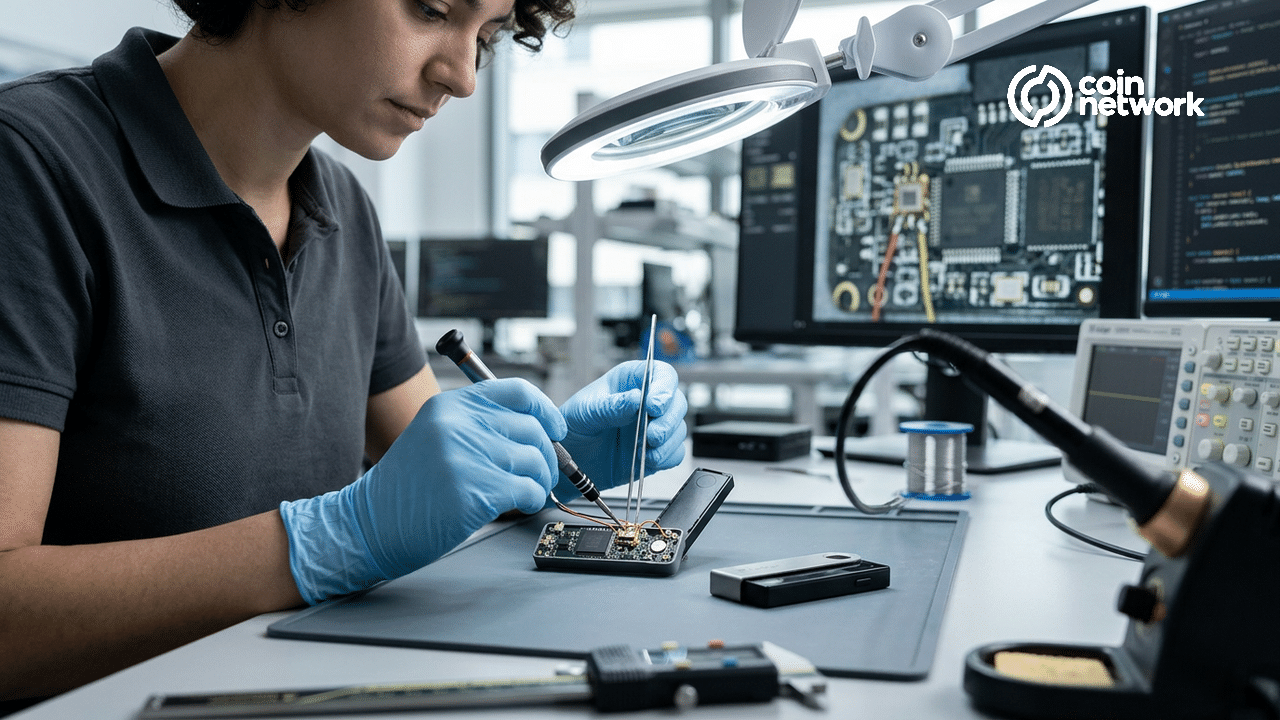
Hardware wallet maker Ledger has verified that an unauthorized hardware implant was detected inside a wallet owned by an impacted customer, coming as third-party researchers trace tens of millions of dollars in drained funds across blockchain networks.
The discovery came after buyers noticed their digital assets disappearing following purchases from CryptoBilis, a regional distributor based in Southeast Asia. The incident has raised questions about device verification mechanisms, as a modified device can pass integrity tests while housing an unauthorized hardware implant.
Implant Confirmation and Retail Fallout
Ledger issued a public statement on Saturday, Oct. 10, 2026, marking its initial admission that physical tampering impacted a client's hardware. According to Bitcoin.com News, the firm corroborated that an unauthorized hardware implant was discovered within a customer's device, reinforcing theories of a physical distribution compromise tied to CryptoBilis.
Following the reports, CryptoBilis halted all sales across its hardware wallet stock while an inquiry proceeds. Ledger confirmed the distributor froze its sales operations during the joint inquiry with law enforcement agencies.
Online responses to Ledger's social media announcement were heavily critical, Bitcoin.com News reported. Social media commentators questioned Ledger regarding responsibility for supply channels, with Others asking, "Are you gonna refund the victims?"
Attestation Limits and the Unauthorized Hardware Implant
Ledger's architecture relies on an attestation procedure to validate that a secure chip is authentic. Each chip produces a unique cryptographic key pair, passing its public key to a Ledger hardware security module. When a device interfaces with Ledger software, the company's servers dispatch a cryptographic challenge that the secure element signs using its hidden private key, enabling the network to approve valid units and block counterfeit units.
However, CryptoSlate reported that Ledger's operational model concedes the Genuine Check routine cannot detect unauthorized hardware implant devices or secondary spying modules if the genuine secure element is unaltered. Ledger noted that purchasing via licensed vendors reduces exposure because device attestation validates cryptographic integrity rather than physical handling across distribution routes.
To address this gap, Ledger pointed out that its signing units are engineered so owners can conduct manual hardware inspections. The company stated it is currently developing improved anti-tamper mechanisms to counter hidden physical modifications.
Research Into Secret Interception Tools
Former Mt. Gox chief executive Mark Karpelès has documented three generations of altered Ledger Nano X hardware through research unit Tibane Labs, CryptoSlate reported. Bitcoin.com News also reported that Karpelès documented modified hardware featuring hidden printed circuit assemblies and telecommunications gear engineered to intercept secrets.
During standard configuration, Ledger hardware produces a 24-word recovery phrase that restores balance management. According to CryptoSlate, researchers discovered that implants tap data traversing between the secure processor and the screen, allowing unauthorized parties to assemble the seed phrases and transmit them through cellular antennas without tampering with the secure chip directly.
Tibane's research has not established the specific engineering behind the CryptoBilis incident, and Ledger has withheld exact schematics regarding the unauthorized hardware implant found in the customer's wallet.
Loss Estimates and Company Response
Third-party research groups have assembled varying assessments of the losses. CryptoSlate and Bitcoin.com News noted that independent analysts estimate losses around $93.2 million, while Bitcoin.com News reported that tracker Yfarmx placed suspected thefts at $93.4 million, figures Ledger has not authenticated.
Ledger has not publicly shared how many wallets were altered or verified that the physical implant accounted for every reported balance draining. The firm sought to separate the localized tampering from its overarching technical network, insisting its core services and operational systems have sustained no security breach.
Ledger advised CryptoBilis clients against setting up newly purchased devices, while urging anyone who initialized their units to transfer funds using a fresh seed generated on a safe signer. The manufacturer reiterated that staff will never request an owner's 24-word backup phrase.
Beyond issuing warnings to purchasers, Ledger noted that it is reaching out directly to affected customers while coordinating inquiries alongside relevant authorities. The manufacturer highlighted its active development of additional, enhanced anti-tampering solutions designed to prevent illicit hardware modifications from bypassing security checks.
The discovery of an unauthorized hardware implant demonstrates how attackers can exploit physical distribution channels even when cryptographic verification systems operate as intended. While Ledger maintains its core security architecture was not compromised, the presence of modified hardware in user hands has prompted immediate security advisories and retailer halts across the region.
The broader crypto community finds itself confronting another security controversy as investigators continue working with Ledger to determine the full scope of the altered hardware and its link to missing customer funds.
Conclusion
Ledger has confirmed the physical alteration of an affected customer's unit while maintaining that its core digital infrastructure suffered no breach. Distributor CryptoBilis has suspended all wallet sales as independent researchers evaluate up to $93.4 million in suspicious transfers.
Moving forward, Ledger is cooperating with law enforcement agencies and working on enhanced anti-tampering defenses to address physical supply vulnerabilities.
Frequently Asked Questions
What did Ledger confirm regarding the CryptoBilis incident on Oct. 10, 2026?
Ledger confirmed on Oct. 10, 2026, that an affected user's hardware wallet housed an unauthorized physical implant. The admission followed thefts reported by users who bought devices through Southeast Asian authorized reseller CryptoBilis.
Why did the tampered device pass Ledger's Genuine Check?
Ledger's Genuine Check authenticates the device's secure element through a cryptographic attestation challenge. According to Ledger's threat model, this check cannot identify unauthorized spying implants if the authentic secure chip itself remains unmodified.
How much cryptocurrency was lost according to independent analysts?
Independent researchers have estimated losses ranging from $93.2 million to $93.4 million across affected blockchain addresses. Ledger stated that it has not verified these independent damage calculations.
What actions did reseller CryptoBilis take following the reports?
CryptoBilis, an authorized Ledger distributor in Southeast Asia, suspended all retail sales of its hardware wallet inventory while Ledger and law enforcement agencies investigate the incident.
Sources