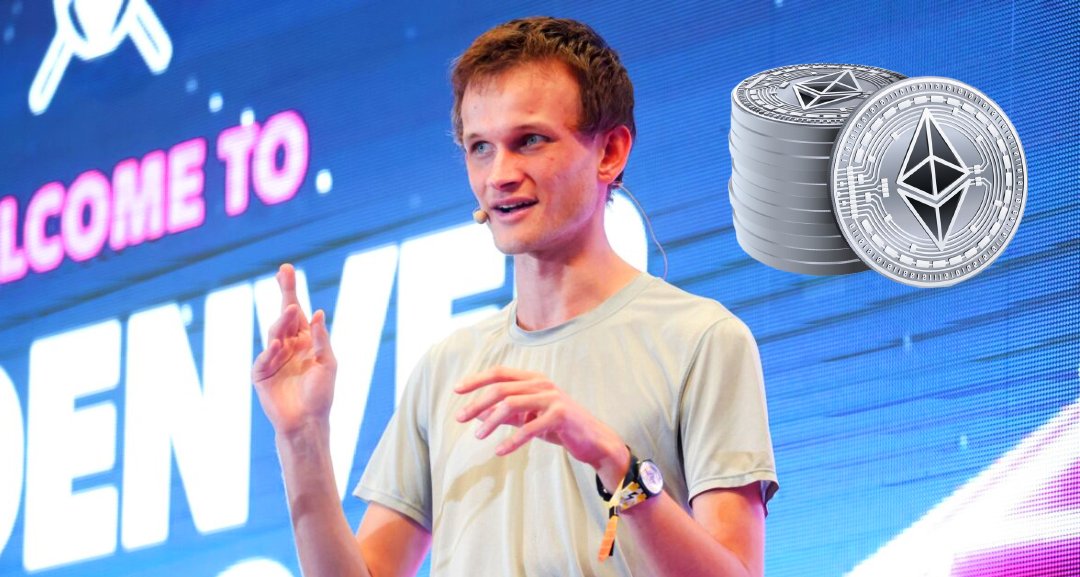
According to Vitalik Buterin, the co-founder of the Ethereum network, the much-anticipated software update of the Ethereum blockchain, which is referred to in the cryptocurrency industry as the Merge, is now expected to take place around September 13 to September 15.
The Merge signifies a movement in the manner that Ether tokens are generated and payments are verified, away from mining blocks utilizing challenging computational puzzles following the proof-of-work technique and toward the proof-of-stake approach. The proof-of-work method required miners to solve increasingly difficult problems to get new blocks. Holders of Ether may sign up to verify transactions on Ethereum using the POS mechanism, which is based on stashes of locked up tokens in their possession.
Buterin said that the proof-of-work version of Ethereum only has a roughly "fixed amount" of mining slots after the last test stage of the Merge known as Goerli earlier this week. Goerli was known as the name of the test stage. Because of this, engineers now have a better idea of when the formal network update will likely get underway.
An earlier projection suggested that the date would fall between September 15 and September 20. Next week, there will be another meeting with the engineers working on Ethereum to iron out any last-minute kinks in the Merge. During this call, a specific date will be decided upon and hammered out.
The Bellatrix hard fork
On the Ethereum blockchain, the long-awaited update to Ethereum 2.0 is set to get underway. Ethereum 2.0 refers to the method by which the cryptocurrency Ethereum (ETH) will transition from operating on a proof-of-work (PoW) basis to operating on a proof-of-stake (PoS) basis through a hard fork, also known as a separation process. Even though the Ethereum Foundation does not make use of the phrase "Ethereum 2.0," the word is often used in the industry to make things easier to understand.
A Bellatrix upgrade for ETH is slated for today, the day before the final merge. At that time, the Ethereum Epoch value on the proof-of-stake chain is expected to increase to 144,896. This will occur before the final merge. According to the Ethereum Foundation, one epoch is the amount of time that must pass to mine 30,000 blocks.
The most recent upgrade to Bellatrix is required for "the Merge" to be carried out without a hitch. This upgrade is the last one that will take place before the Paris Upgrade, which will take place after "the Merge." It brings together the proof-of-stake chain and the current execution layer (current proof-of-work).
Mining on the Ethereum Blockchain will be rendered obsolete as a result of the Paris Upgrade, which will also herald the transition from a proof-of-work validation system to a proof-of-stake system design.
An outline of the most recent changes to Ethereum
In the same way that Bitcoin was constructed, the Ethereum network was built using the proof-of-work (PoW) method. This suggests that mining, a process that uses a substantial amount of energy, is necessary for the production of Ethereum (ETH) coins.
To make the transition to a proof-of-stake (PoS) paradigm, however, various measures were made in preparation for the introduction of Ethereum 2.0 in 2020. The purpose of this project is to improve the speed, efficiency, and scalability of the Ethereum network to facilitate the execution of a greater number of transactions in parallel.
What will happen after The Merge?
At the beginning of this year, Ethereum's original developer, Vitalik Buterin, assigned a development progress rating of 50% to the project. In addition to this appraisal, he included a list of the many stages, such as merging, surge, verge, and others, that Ethereum must go through to reach 100%.
The update to Bellatrix is slated to take place today. As part of this process, the Beacon Chain will be integrated with the Ethereum mainnet, and the consensus method will be converted entirely from proof-of-work to proof-of-stake.
The zk-rollups layer 2 scaling solution will need to be implemented as the next stage of the surge. To aggregate and carry out several transactions all at once, a technique known as rollup makes use of an Ethereum sidechain.
The cryptocurrency (ethereum) market is growing to include more assets and chains available than ever before. Unfortunately, despite the number of assets at play, most decentralized exchanges (DEXs) are still unable to deliver and facilitate the frequency and volume of trades necessary to satisfy the market. As a result, these exchanges face a lack of liquidity and high slippage, often occurring when fractions of an order are completed at a lower price and the rest at a higher and less advantageous price.
For this reason, investors often seek out manual workarounds, including checking for the best trading prices on all DEXs before making a transaction. Despite so many exchanges at play, the market has yet to see an actual cross-chain liquidity aggregator that can facilitate transactions across multiple chains for a swap. At present, aggregators cannot access the full breadth of available chains, nor are they user-friendly. For reference, some tools force users to connect multiple wallets or manually swap them between protocols.
Chainge Finance addresses this pressing DeFi concern with the Chainge app, giving users access to the SUM liquidity of multiple DEXs across several chains at the same time. Powered by the Fusion DCRM tech, the DEX aggregates liquidity cross-chain to ensure that users get the best prices for their target swaps.
“The Chainge app is the door to Web3. An app that provides unmatched security, top trading prices and the best cross-chain solution on the market. Furthermore, advanced integrated DeFi tools such as a derivatives market, time-framing and yield farming offer crypto users the means to maximize their wealth’s potential in a 100% decentralized way,” Dejun Qian, the CEO of Chainge Finance, shares in response to the team’s efforts.
The result is that Chainge Finance users can tap into extensive cross-chain liquidity with a single tap.
A system consists of different factors upon which it builds itself and upon which it survives. These are the pillars resting upon which it moves towards success or failure, therefore cannot do without them. Likewise in the crypto industry, investors play an important role, which is quite evident and needs no mention. Therefore, whatever goes on in the system also affects those who are a part of it. Each action or change that is taken or made, cannot be taken into account excluding these important members of the system. One such instance is the Ethereum merge that has taken place most recently. This article endeavors to shed light on how this merger has offered a new place for several institutional investors.
What is the role and importance of investors?
There are several factors upon which the crypto industry, which in itself is quite volatile depends for its smooth operation. These factors or agencies include pension funds, insurance companies, institutional investors, etc. They have all collectively tried to help as well as trying to help solve the volatility issue that crypto is facing since its emergence.
Themegamergerst has occurred recently and has been referred to as one of the historic moments since the birth of Ethereum. Therefore, being such an important step it is needless to say, that it would bring certain changes for each and everyone involved in it.
Let's take a look at the merge
In the merge, a more than amazing transformation took place which left each and everyone associated with and those who witnessed it, in awe of it. Rye blockchain network shed down its previous proof-of-work status and adopted the new proof-of-stake mechanism. It has been widely appreciated and has even been compared to a courageous act and almost impossible task such as changing the jet engines while in the air. The best part is it functioned without any interference or glitch of any sort.
What are the other changes that followed?
Various other changes followed the merge. For example, Ethereum in its new form has endeavored to cut down on electricity consumption by a lot. It has almost lowered its energy consumption by an estimated 99.95%, which is a remarkable step taken by the crypto asset. This has also, for the moment, diverted those who were eagerly waiting to impose restrictions on the blockchain network due to environmental concerns.
Even though the merger has come with various benefits and is even estimated to give rise to more, there is still one concern that has not yet been solved. The issue of Ethereum's scalability remains. It has not yet taken any efficient step in solving its lack of scalability permanently. Even though it is magnificent, it has not yet been completely adopted by institutional investors. There are still various facets that need more attention and time to be resolved or reformed.
Conclusion
The merge, as mentioned above is a much-awaited step in the evolution of Ethereum and people have high expectations from it. However, some changes are required. The authorities at Ethereum have stated that there is yet another upgrade coming soon, which is expected to resolve all the unresolved issues. It is also expected to come up with new techniques that are said to increase the network speed by a lot.
However, keeping aside all other factors, the fact that the merger has been responsible for lowering energy consumption, is an achievement that needs to be acknowledged and appreciated. It is soon expected to bring about changes for not only itself but other crypto assets as well.
Slow transition speed and high cost have been two of the biggest hurdles for Ethereum. The platform focuses on decentralization and security. Though there is a lack of scalability. Hence, there is always a spike in traffic, and transaction speed and cost also tend to be solved. At the recently held Ethereum Community Conference (EthCC) in Paris, co-founder Vitalik Buterin stated that the network was only "40 percent complete". The reasons were the hurdles.
Buterin anticipated a future where Ethereum can hit the speed of 100,000 transactions per second (TPS). Buterin has also mentioned five key events that required it to happen. What the events mean for Ethereum, and how much time it will take, all are going to be explained in this article.
Overview Of The Merge :
The Ethereum community and developers consider the Ethereum Merge as one of the most critical and remarkable upgrades in the history of cryptocurrency. It is going to shift Ethereum's consensus protocol from proof-of-work (PoW) to proof-of-stake (PoS). The upgrade will automatically render mining obsolete along with shifting to staking for block validation and addition. This merger will massively decline the energy consumption of the network. According to some predictions, the power requirement is going to decrease by 99.9 percent.
This upcoming merge is wished to increase throughput. But the improvement is not predicted to be very massive. Ethereum developers are expecting the transaction speed will increase by a maximum of 10 percent. It will reduce the fee.
The Surge :
The move to PoS alone may not impact a massive enhancement in transaction speeds. But, it will open up the ways for future innovations, like sharding. It will massively affect the network performance.
Sharding is the secondary blockchain branch. It helps to process some transactional data and reduce the pressure on the mainnet or main blockchain. It will raise the throughput along with helping to bring down gas fees. An official Ethereum blog post noted, that Sharding should occur sometime in 2023. It will depend on how quickly and smoothly the Merge will work.
What Is The Verge :
The Verge refers to the technical updates like ‘Verkle proofs’ and ‘clientless states’. The updates are wished to optimize storage on the Ethereum blockchain. It also reduces node size. This helps to enable any network participants with a laptop along with a few megabytes of space to join in the validation process.
About The Purge :
This stage starts with 'purging' previous data that is not needed at present time. This process will decrease file sizes enough. It is for tiny computing units such as mobile phones to be able to run Ethereum nodes because of the need for low storage.
The Splurge Explained :
This stage is associated with minor changes. It will be done to ensure that the blockchain will be there permanently and run at its maximum capacity. Additionally, the assumption is that by this stage, the user will have a version of Ethereum that will be the best. It can be or can continuously process close to 100,000 transactions. presently, the network is actively searching for potential issues including preparing for emergencies.
Conclusion :
The Merge is a crucial and remarkable milestone for the Ethereum network, regardless of the whole crypto market. Though, this is not the ultimate destination. There is a long way waiting to climb before Ethereum is 100 percent complete. But, mainly the reduction of fees and increase in transaction speed is going to help out the users across the network. Bitcoin is continuing with the PoW mechanism, but Ethereum's improvement led major users to shift into the network.
Binance is the most popular and the biggest crypto trading platform when it comes to the trading volume. The platform allows users to buy or sell various digital currencies. Along with this, users also have the ability to review and compare other crypto options to do the trading. With $40 billion daily trades, Binance has become the world's biggest trading platforms.
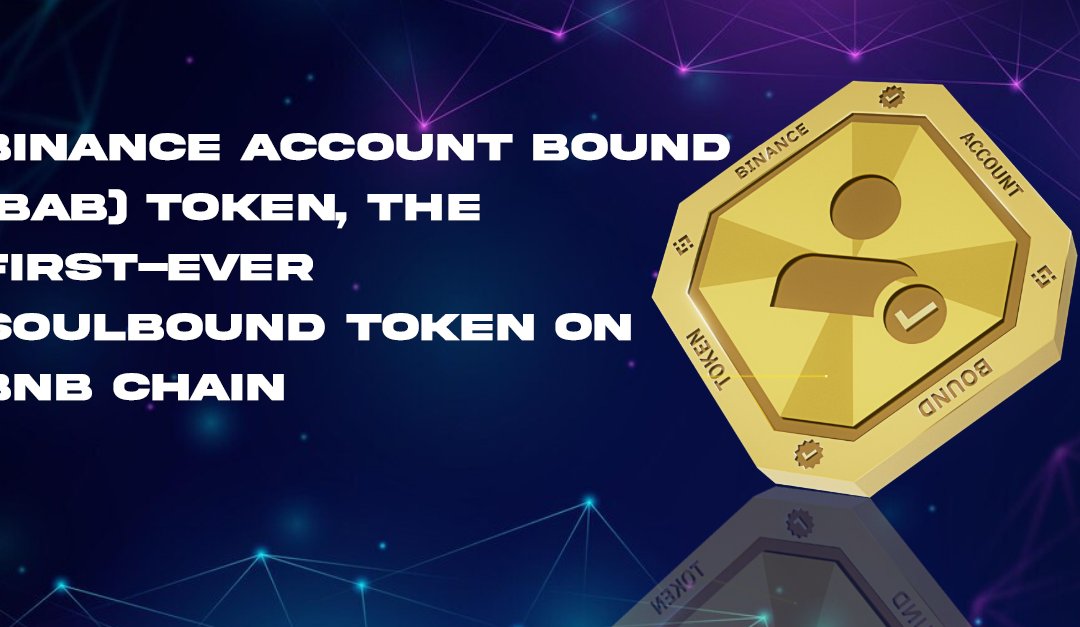
On 8th Sept. 2022, this leading digital currency trading platform launched the Binance Account Bound (BAB) token on BNB Chain which is suppose to work as a "soulbound token". BAB is basically launched to utilize as an identity proof for KYC verified Binance users. These soulbound tokens can't be transferred as each user on BNB Chain has its own unique token. In this way, a verified Binance client ID must be utilized to mint one BAB token on a BNB Chain. They are, notwithstanding, revocable, after which tokens will be locked for 72 hours.
However, remember that getting a BAB Token is completely optional for Binance users and it is not a compulsory requirement to use any products or services offered by Binance.
Everything you need to know about BAB:
Binance Account Bound (BAB) tokens or the soulbound tokens are mainly launched for Binance users who get verified after completing the whole KYC verification process. In simple words, these tokens are identity credentials for them. They are will issued on the BNB Chain by Binance and it is indicated that several other projects on BNB Chain will also be introducing the BAB tokens to their users as identity credentials. When a Binance verified user creates a BAB token, that particular user will be given the access to participate in building the supporting projects on the chain and get rewards. However, the complete details related to it are not revealed yet.
Till now, there are 15 projects that have partnered up with Binance to offer their users benefits related to the BAB tokens. The benefits include the things like exclusive airdrops, community and membership benefits, benefits on the social gaming metaverse, access to play-to-earn protocol, privileged reward programs along with many other VIP perks. This partnership news was also confirmed by BNB Chain.
BAB Features:
The token is non-transferable, which means that it can't be transferred by the user to another user. It’s unique for everyone.
It is revocable and users who have the token can simply revoke their BAB tokens.
One user ID that is verified by Binance is allowed to mint one BAB token just on the selected chain.
The launch of BAB tokens was encouraged by the whole community and the BNB chain users supported the whole idea behind it. For the first time in Web3, by minting BAB token to their wallet address on BNB Chain, Binance users will get exclusive access to programs which will be linked to real-world use cases.
So, that’s all for now, do let us know what do you all think about this token launch.