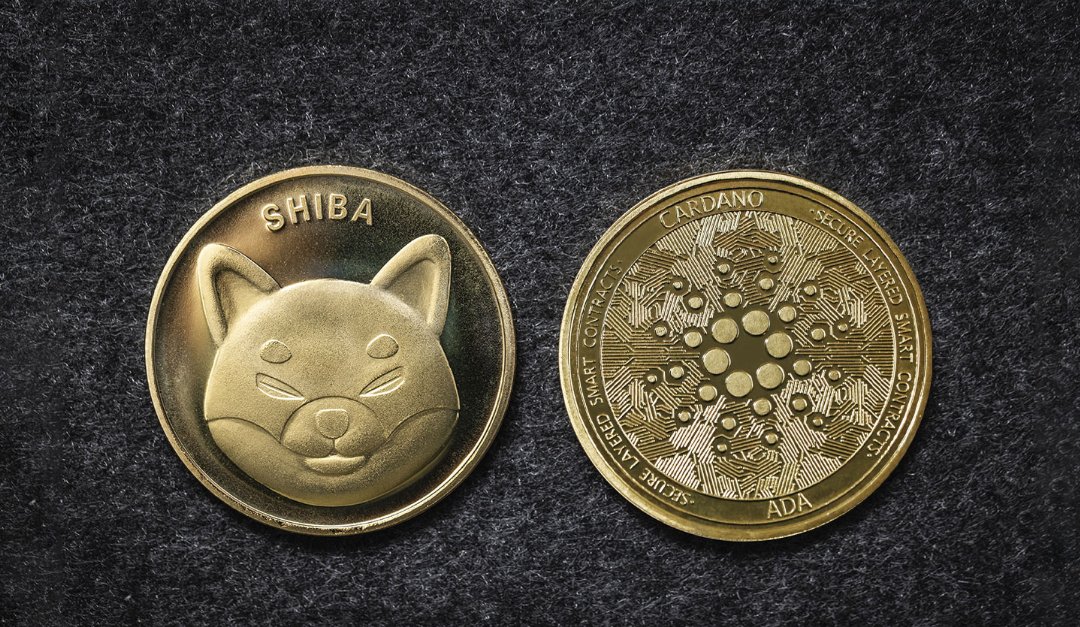
Cardano (ADA) is a proof-of-stake blockchain platform which aims to bring about positive global change. The open-source initiative also aspires to "redistribute power from unaccountable systems to the periphery to individuals," thus contributing to the creation of a more safe, transparent, and fair society.
Cardano was formed in 2017 and was named after Gerolamo Cardano, who was a 16th century Italian polymath. The native ADA token is named after Ada Lovelace, a 19th-century mathematician widely considered as the world's first computer programmer. The ADA token is designed to enable owners to participate in the network's operation. As a result, users who own the cryptocurrency have the ability to vote on any proposed modifications to the coin. According to the team behind the layered blockchain, there have already been several compelling use cases for its technology, which intends to facilitate modular development of decentralized apps and smart contracts.
Charles Hoskinson announced the introduction of the Alonzo hard fork in August 2021, leading the Cardano price to skyrocket, rising 116% the next month. The Cardano 'Alonzo' hard fork was formally implemented on September 12, 2021, providing smart contract features to the network. Over 100 smart contracts were implemented in the 24 hours following the launch.
Cardano is used by agricultural organizations to track fresh fruit from farm to fork, while other solutions created on the platform allow educational credentials to be securely saved and shops to combat counterfeit items.
What Is SHIBA INU (SHIB)?
SHIB is the "DOGECOIN KILLER," according to the SHIBA INU website, and is featured on their own ShibaSwap, a DEX., The Shiba Inu money was produced under the alias "Ryoshi" in August 2020. Ryoshi considers himself as a nobody and inconsequential, and he believes that any attempts to uncover his identity, even if successful, will be unsatisfactory.
This meme currency swiftly grew in popularity and value as a community of investors were pulled in by the coin's charming charm along with headlines and tweets from celebrities such as Elon Musk and Vitalik Buterin. Vitalik Buterin was long thought to be the creator of the Shiba Inu, however he contradicted this on the Lex Fridman podcast on June 5, 2021.
Shiba Inu has since piqued the curiosity of other exchanges. SHIB, Mexico's largest cryptocurrency exchange, said in September that it will begin trading on its platform. Giottus, an Indian cryptocurrency exchange, made the same announcement. Bitstamp, Europe's largest crypto exchange, said that Shiba Inu would be listed for trade in early 2022. Korbit, a South Korean exchange, became the first in the country to offer the SHIB coin in 2021.
ADA Underperforms SHIB, and Nansen CEO Makes Fun of Cardano Brothers
The creator and CEO of blockchain analytics company Nansen, Alex Svanevik, recently turned to Twitter to mock Cardano's native coin."Cardano brothers never thanked me for this," he tweeted. Svanevik was alluding to a forecast he made in March, adding, "Last chance to sell ADA over $30B market value." Svanevik appears to have been proven true, because ADA has had a bad year in terms of price performance. The cryptocurrency has dropped 91.67% from it's all-time high. Furthermore, it is down 81% year to year, which is higher than the meme coin Shiba Inu (77%).
Although ADA had a short-term bump in the run-up to the Vasil hard fork in September, it has been unable to gain traction since then. Despite its poor performance, ADA remains one among the top ten largest cryptocurrencies by market capitalization, with a valuation of almost $9 billion.
Svanevik's clairvoyance may have protected some investors from severe losses this year, but there doesn't appear to be much reason for optimism for those who are still hanging onto their ADA coins as we approach 2023. Market sentiment is very gloomy, with the sector still reeling from the FTX collapse and the US Federal Reserve refusing to abandon its hawkish monetary policies. According to U.Today, cryptocurrency expert Bobby Lee said that the next crypto bull market cycle will not begin until 2025. Svanevik's criticism of ADA is unsurprising given his backing for Ethereum, a key Cardano rival. The Ether cryptocurrency is 75.14% lower than its all-time high.
The Bitcoin price was $16,825.85, down -0.10% in the last 24 hours. The current price movement of Bitcoin has resulted in a market value of $323,794,533,258. Bitcoin has changed -63.61% so far this year. According to CoinDesk's Digital Asset Classification Standard, Bitcoin is classed as a currency (DACS). Bitcoin is the world's first decentralized cryptocurrency, a sort of digital asset that records, signs, and sends transactions across the Bitcoin blockchain without the control of a central authority.
The Bitcoin network (with an upper-case "B") was established in January 2009 by an unknown computer programmer or group of programmers under the alias "Satoshi Nakamoto." The network is a peer-to-peer electronic payment system that employs bitcoin (lower case "b") as a cryptocurrency to transmit value via the internet or as a store of value like gold and silver. Each bitcoin is composed of 100 million satoshis (the smallest unit of bitcoin), making each bitcoin divisible to eight decimal places. That implies that anyone may buy a fraction of a bitcoin for as low as one US dollar.
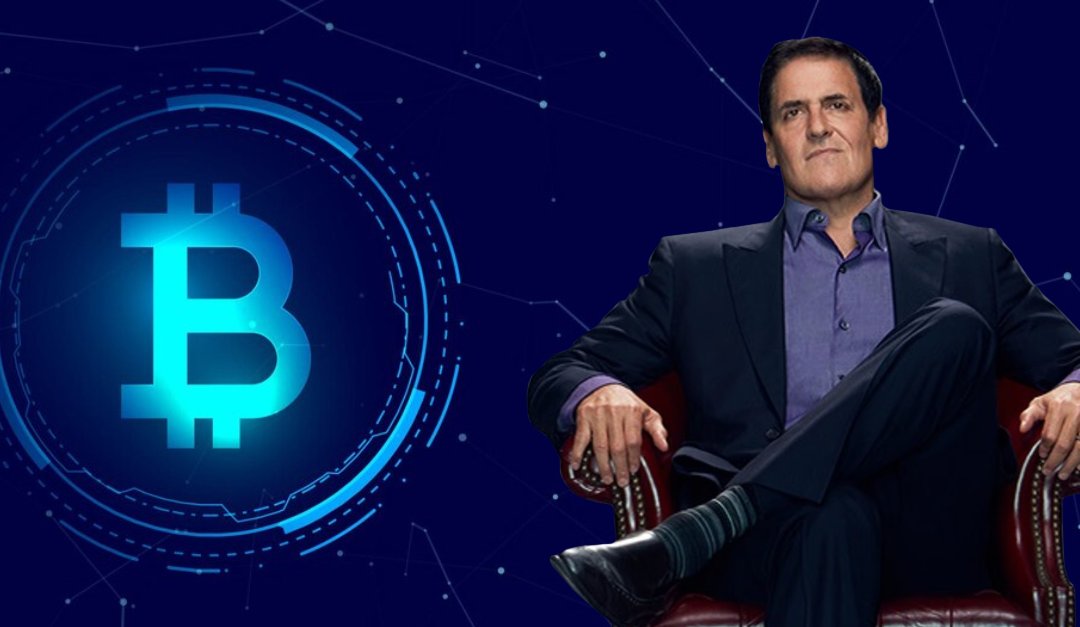
Billionaire software entrepreneur Mark Cuban is positive on Bitcoin, predicting that the price will continue to fall. "I want Bitcoin to fall a lot further so I can purchase some more," Cuban remarked on comedian Bill Maher's "Club Random" podcast. The owner of the NBA's Dallas Mavericks stated that investing in gold was not worthwhile, preferring digital assets. Mark Cuban, who is worth $6.25 billion, has long been a supporter of cryptocurrencies, notably Bitcoin, Ethereum, and Dogecoin.
"Gold is a store of value, as is Bitcoin," he explained when Maher made the analogy that what if everything had been to hell in a handbasket but they had a gold bar? Someone would have assaulted or murder you and stolen your gold bar. It is useless." Owning gold these days, according to the investor, it is essentially the same as owning a digital transaction, therefore he opted to invest in Bitcoin.
According to CoinGecko, bitcoin is currently selling at $16,844, which is more than 75% down from the all-time high of $69,044 it reached last year. In 2022, gold—and silver—performed far better as investments. Despite the fact that the crypto market and US equities have taken a beating, metals have mostly kept their worth. Gold is presently priced at $1,800 per ounce, up from $1,807 at this time last year.
Bitcoin, according to Maher, is not worth purchasing since it is not backed by anything. But Mark Cuban retorted, claiming that owning stock in "90% of the firms out there" was similarly meaningless. During the two-hour chat, the two agreed on at least one point: that San Francisco is no longer a good place to establish a digital startup, with Mark Cuban calling the city "pretentious."
Cuban said that an entire industry had been pushed out and the entire technical sector had deteriorated from and this is the latest thing, to just people urinating on the street. SEC Chair Gensler's attitude on bitcoin is criticised by Mark Cuban. Cuban was originally a sceptic of cryptocurrencies, but his NBA club now takes cryptocurrency for tickets and merchandising. It became the first basketball team to take Dogecoin in 2021. Since then, Mark Cuban, along with billionaire Elon Musk, has stated that Dogecoin, a cryptocurrency established as a joke, may be beneficial for making payments.
Using the underlying blockchain technology, Bitcoin is the first decentralized digital currency that permits peer-to-peer transfers without the use of any middlemen like banks, governments, agents, or brokers. Regardless of location, anyone on the network can send bitcoins to another user on the network; all you need to do is create an account on the network, deposit some bitcoins into it, and then you can send the bitcoins. You can either mine them or buy them online.
Bitcoin can be used for online transactions or as a kind of investment. The majority of its uses are to pay for products and services.
What Is Bitcoin Mining?
Using a global network of computers running the Bitcoin software, bitcoin mining refers to ensuring that transactions are genuine and added to the blockchain in the proper way. The mining process also produces brand-new Bitcoins.
● By mining bitcoins, which involves comparing new transactions to the Bitcoin network, new bitcoins are created.
● Mining is the process by which Bitcoin transactions are added to the blockchain and digitally confirmed on the Bitcoin network.
● Difficult cryptographic hash problems must be resolved in order to verify blocks of transactions that are updated on the decentralized blockchain ledger.
To answer these puzzles, sophisticated tools and a lot of processing power are needed. Bitcoin, which gives the activity its name, is given to miners in exchange for their work.
How Does Bitcoin Mining Work
Blockchain is a peer-to-peer decentralized network that has been praised for being extremely safe and transparent, and hence reliable. Due to the use of timestamps and cryptographic hash functions to protect entries in the blockchain network, it is nearly impossible and impractical to change transactions once they have been added to the ledger.
Blockchain security is fundamentally dependent on the absence of centralized control. Below is a description of what happens during bitcoin mining.
The Mining Conditions.
A bitcoin miner must first choose and set up their working equipment.
● Hardware GPUs (graphics processing units)
● SSDs for cryptocurrency mining, or mining software with ASICs (application-specific integrated circuits) are some examples.
● A wallet
● favorite mining pool (if one chooses the pool mining option instead of solo mining).
The system automatically starts mining as soon as everything is set up and operating. Any further human interaction only takes place when a network or system malfunctions, there is a power outage, or the system requires routine maintenance.
Bitcoin Transaction Elements
Three things happen when a transaction starts on the bitcoin network:
● An input transaction
● An output transaction
● The total amount of a transaction.
A bitcoin mining program creates a special cryptographic hash problem for each transaction input that is challenging to crack. The amount of transactions necessary to create a block is then organized into a Merkle tree by the program.
The SHA-256 algorithm and the Merkle Tree.
A Merkle tree, which acts as a summary of all the transactions in the block, is constructed using the hashes in a block. The SHA-256 method is used to repeatedly pair transaction IDs, or hashes of the entire tree. This hash is known as the Merkle root or the root hash. The Merkle tree enables efficient transaction verification on the bitcoin network.
Blocked Header
The Merkle root, which acts as a Merkle tree's distinctive identifier, is found in the block header. The following elements can be found in the block header, which contains information about the block:
● The bitcoin software's version number
● the block's prior block hash
● Merkle's root (root hash)
● Cryptographic nonce timestamp
● the target
Solving hash puzzle
This information will be used by miners to solve the hashing puzzle and add a block transaction. Understanding the Difficulty Requirement to Find the Hash Below a Given Target Miners must use the Difficulty Requirement to find the hash beneath a specified goal.
The target, which is represented as a 67-digit number included in the header, will be used to calculate the mining difficulty based on the number of miners vying to solve a hash function. Important: The difficulty varies according to how long it took miners to solve an equation in the 2016 blocks before the creation of each new block. This contributes to keeping the blockchain's appending pace at 10 minutes per transaction.
In an effort to solve the hash problem, miners would try to calculate a block's hash by repeatedly attaching a nonce to the block header until the resultant hash value is less than the target. A new block is successfully formed after a mining machine solves the puzzle, and it is validated in the Bitcoin network after there is agreement among the nodes. A block is added to the chain after being validated, which also verifies the transactions it contains. This occurs every ten minutes, as was previously mentioned.
Because there will be many miners (systems) competing to find the solution, the first miner to get the correct hash value wins a reward in bitcoin. This method has led to an increase in the number of Bitcoins in circulation.
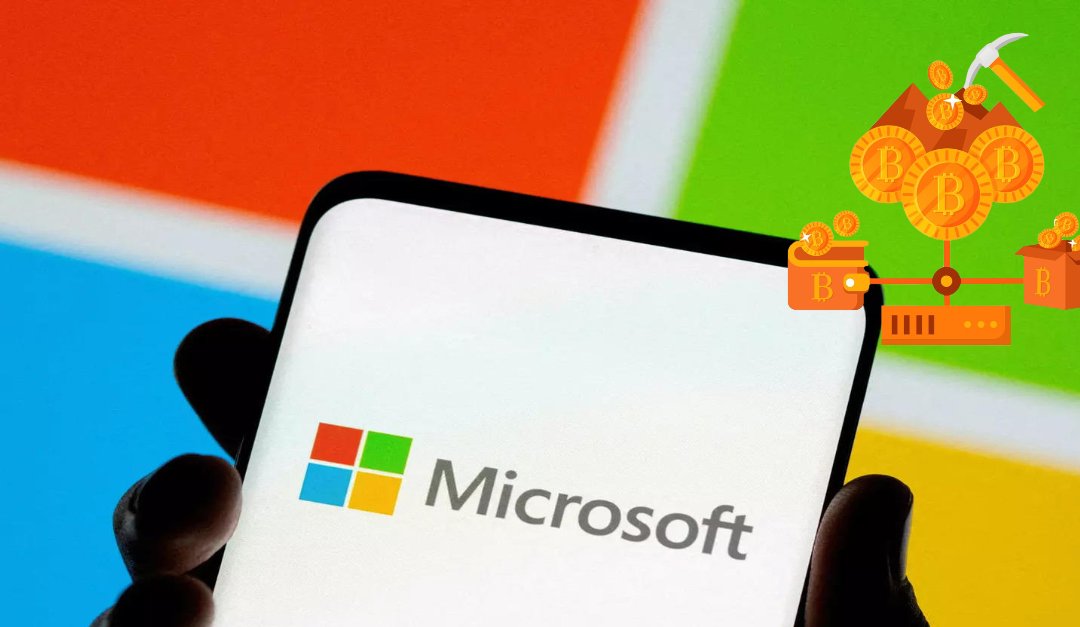
Microsoft forbids cryptocurrency mining to safeguard its cloud service users.
According to media sources, Microsoft has prohibited bitcoin mining from using its internet services in order to protect all of its cloud users. "Updated Acceptable Use Policy to clarify that mining cryptocurrencies are banned without prior Microsoft approval," reads Microsoft's summary of changes to the license. There wasn't much additional information in the license itself, according to The Register.
Microsoft was quoted as saying, "We made this move to help protect our customers and limit the risk of disrupting or impairing services on the Microsoft Cloud." It said, "Permission to mine crypto may be taken into account for testing and research for security detections.
A new cryptocurrency mining malware that can steal credentials, disable security measures, spread via emails, and eventually drop more tools for human-operated operations was the subject of a warning from Microsoft to users last year. In a variety of countries, including India, the "LemonDuck" crypto mining malware spread through phishing emails, security flaws, USB devices, and brute force attacks. Linux and Windows systems were its target.
Concerns over Changpeng Zhao's Binance's hegemonic position in the cryptocurrency market have grown since Sam Bankman-utter Fried's passing. The auditing firm Mazars Group halted work on paperwork intended to demonstrate that Binance and other cryptocurrency companies had the necessary cash reserves to handle any unanticipated increase in customer withdrawals on Friday, which raised concerns once again.
Zhao, who goes by the initials CZ, has emphasized time and time again that his exchange, Binance, doesn't misappropriate customer funds, unlike FTX, as well as that it can handle any volume of withdrawals that come its way. As evidence that it has survived prior "crypto winters," including a more than 80% drop in Bitcoin from to Binance has a longer track record than FTX.
Still, the past few days have been trying. The action by Mazars raises concerns about an accounting picture that many people already thought was murky. In fact, Mazars likely stopped working on "proof-of-reserves" reports because the market did not find them convincing. Critics had further fodder for another round of heckling after CZ was subjected to a barrage of questions regarding Binance's financial stability at a televised appearance earlier in the week.
Even for those who claim to support CZ and his exchange, Binance's dominance of the market following FTX's demise doesn't sit well in a sector that promotes decentralization. This week's drop in cryptocurrency prices that was accompanied by news about CZ's company raises more questions about whether Binance has developed into a "too big to fail" participant in the market. Unlike traditional finance, there is no one on hand to stop a failure, offer a rescue, or stop any contagion.
Mark Lurie, CEO, and co-founder of Shipyard Software, a maker of decentralized exchanges, said: "I don't think Binance is attempting to cause difficulties, but that organization is now a risk to all of us. There are several systematic dangers whenever one player controls a sizable amount of volume."
According to CryptoCompare, Binance has raised its market share to 52.9%, its greatest ever, and grown its share of derivatives trading to 67.2% while, Bankman-FTX Fried's empire went into bankruptcy and the 30-year-old former billionaire traded a fancy apartment for a Bahamas jail cell.
When the subject of Binance's dominance came up during a Senate committee hearing on FTX on Wednesday, Sen. Bill Hagerty of Tennessee warned it would be "catastrophic for the cryptocurrency sector, and it would prove catastrophic to all of the customers that use the market."
For his part, Binance's CZ has reaffirmed in tweets and public remarks that no client exodus will be enough to put the business under strain. This week, a surge in client withdrawal requests put that confidence to the test. The native coin of Binance, BNB, has taken a significant hit as well, falling 20% since Monday.
Despite $6 billion in net withdrawals between Monday and Wednesday, a spokeswoman for Binance said in an email on Friday that "we were able to fulfill them without breaking stride." According to the spokesman, Binance does not invest user funds and keeps clients' cryptocurrencies in separate accounts with 1-to-1 asset backing. The representative stated that Binance has a $1 billion emergency fund and a debt-free capital structure to protect users in dire circumstances.
CZ likes to attribute a large portion of the recent interest to the unfounded "FUD" (fear, uncertainty, and doubt) that has hounded cryptocurrency from its inception. The sky won't likely clear for him any time soon, though.
Even if Mazars' report on Binance's reserves didn't amount to a full audit and didn't completely restore confidence, the accounting firm's departure deprives CZ of a credible outside source to support his claims. Furthermore, in the post-FTX context, public confidence in the claims of crypto billionaires is declining more quickly than the value of their coins.
The spokesman for Binance said the exchange is looking into ways to increase transparency for users to see that their assets are on the blockchain and is looking for a different accounting firm to partner with it to demonstrate proof of its reserves. That might be challenging: The Wall Street Journal reported late on Friday that BDO was rethinking its work for cryptocurrency companies after recently endorsing the reserves of stablecoin juggernaut Tether.
Government Scrutinyfor Binance
Binance might prove impervious to the kind of bank run that brought down FTX and other companies this year, but CZ continues to be subject to legal risks and government scrutiny that might escalate into existential dangers to the company.
The Internal Revenue Service and Justice Department are both looking into Binance, according to a story from Bloomberg from last year. In 2020, Chainalysis Inc., a blockchain forensics company with clients that include U.S. federal agencies, came to the conclusion that Binance was the exchange through which more funds associated with criminal activities were transferred than any other cryptocurrency exchange.
According to Reuters on Monday, which cited people familiar with the situation, disagreements among the prosecutors are preventing the DOJ investigation from being completed. According to the report, some of the case's prosecutors want to analyze more evidence while others think the government has enough to press criminal charges against CZ and other executives of Binance. The corporate representative said on Friday that "Binance has created clear business policies to guarantee we operate globally in a regulatory compliant manner." (CZ worked from 2002 to 2005 at Bloomberg LP, the organization that owns Bloomberg News.)
The cryptocurrency community is also closely monitoring the possibility that FTX's bankruptcy case would lead to attempts to recoup the $2.1 billion that FTX paid to buy back Binance's investment in Bankman-business, Fried's much of which was paid in an FTX token whose value has since plummeted. Kevin O'Leary, a "Shark Tank" television personality who has millions of dollars in cryptocurrency from a sponsored sponsorship locked up in FTX, said to a Senate committee, "Maybe I want a Madoff clawback on those revenues."
When asked if he was willing to repay the $2.1 billion during a CNBC interview on Thursday, CZ responded, "I think we'll leave that to the attorneys," which sparked a fresh round of criticism on Twitter from the crypto community. Time will tell if they were merely more false information.
The unstable cryptocurrency market was shaken by the demise of FTX; it lost billions in value and fell below $1 trillion.
The fallout from FTX's abrupt slide and collapse will probably affect cryptocurrencies for a very long time to come and hurt other markets as well. Sam Bankman-Fried is accused in a class-action lawsuit filed on November 16 in a federal court in Florida of developing a fraudulent cryptocurrency scheme intended to take advantage of uneducated investors from all over the nation. Steph Curry, Shaquille O'Neal, Shohei Ohtani, Naomi Osaka, Larry David, and Kevin O'Leary are among the other famous people included in the case as people who allegedly assisted Bankman-Fried in carrying out the scheme.
The FTX bankruptcy has an effect on Genesis Global Capital, the Gemini cryptocurrency exchange, and BlockFi, a platform for crypto financing with substantial exposure to FTX. Due to FTX's bankruptcy on November 16, the lending division of cryptocurrency investment bank Genesis halted redemptions and new loans. Following the information, Genesis, a lending partner in Gemini, the cryptocurrency exchange founded by the Winklevoss twins, announced delays in withdrawals from its Earn product. BlockFi, a cryptocurrency lending company with substantial exposure to FTX, stopped allowing withdrawals and declared bankruptcy on November 28.
On November 18, the Bahamas Securities Commission assumed authority of the bitcoin holdings of the defunct exchange FTX. The U.S. House Financial Services Committee announced that it will hold a hearing on the FTX collapse in December 2022.
As part of the most recent development in the FTX affair, Reuters reported on December 6 that Bankman-Fried had retained white-collar defense lawyer Mark S. Cohen. In the sex trafficking trial that resulted in Ghislaine Maxwell's conviction on many counts, Cohen, a former assistant US attorney for the Eastern District of New York, represented her on behalf of Cohen & Gresser. Additionally, Caroline Ellison, who oversaw the trading company Alameda Research, has retained the legal services of Washington-based Wilmer Cutler Pickering Hale and Dorr.
Few rules that could avoid FTX’s demise
The FTX failure has made it clear that a sizable portion of the digital asset market thrives in regulatory grey areas and jurisdictional gaps, which makes the need for new rules and regulations even more pressing. Nevertheless, a lot of experts concur that despite being mainly outside of US jurisdiction due to its offshore location, FTX might have avoided failure if only certain tried-and-true guidelines had been followed. According to Carla Reyes, an associate professor of law at the SMU Dedman School of Law, FTX is a centralized corporation like any other corporate business. It wasn't a case of the regulations not being in place. It was an instance where they disobeyed them. Five topics have come to light as being essential for Congress and regulators to concentrate on in interviews with securities professionals and remarks from politicians and regulators.
1. Commingling of Assets
The inability to secure consumer assets lies at the heart of a series of crypto mishaps. The most severe example may be FTX, which used client cash to lend to its sister business, the hedge fund Alameda Research, to support dangerous investments.
In order to guarantee that customer assets are walled off in the event that a brokerage business collapses, the US Securities and Exchange Commission already has a consumer protection provision. The business has resisted filing with the government, arguing that tokens are not securities subject to the agency's regulations, therefore crypto client accounts are not protected.
Gary Gensler, the hated chairman of the SEC, disagrees with crypto fans. The same was true of Jay Clayton, his predecessor during the Trump administration. Both would use a criterion from a 1946 ruling by the US Supreme Court, which said that an asset falls under the SEC's purview when investors contribute funds to a business with the goal of benefitting from the leadership of the organization. Almost all tokens are now considered securities by the SEC.
According to James Cox, a professor specializing in business and securities law at Duke University School of Law, establishing that the majority of cryptocurrencies are securities is arguably the most significant action Congress could take.
Additionally, mixing client money is prohibited by the Commodity Futures Trading Commission, which currently regulates some crypto derivatives. But rather than commodities, its regulations apply to swaps and futures. Despite the fact that the majority of experts believe that Bitcoin is a commodity and not a security, no federal regulator currently controls crypto commodities, necessitating a congressional remedy to safeguard investors.
2. Separate Business Lines
To the disadvantage of their clients, several cryptocurrency businesses have provided a wide range of products and services that obscure the distinctions. The most notable example is cryptocurrency exchanges. The platforms carry out a wide range of tasks, including market-making, trading, custody, and securities lending. The arrangement, according to critics like Gensler, is fraught with problems. Contrarily, conventional financial institutions that offer many services normally register each of their distinct business lines with the relevant regulators. That also has to be done for crypto, according to experts.
3. More Disclosure
The foundation of financial regulation in US markets is risk disclosure. In crypto, however, disclosures are practically nonexistent. There are hardly any details available on the dozens of FTX offices outside the US. The American division, FTX US, is more understood, but there are still a lot of unknowns because it was a closely held private firm.
Existing SEC regulations for investment advisors and securities issuers would lessen the opaqueness of cryptocurrency, but Congress may need to strengthen them. In order to determine if programmers may, for example, influence token pricing, SMU's Reyes adds, "I'd like to know more about the code that produced the tokens."
Congress has been urged by a few state securities authorities to tighten disclosure rules for businesses valued at $700 million or more. While not crypto-focused, such a measure could have given investors a peek inside the crypto giants. Another option would be to treat crypto platforms like stock exchanges, which have their own registration and reporting requirements.
4. Advertising Standards
Although unrelated to cryptocurrencies, such a policy may have allowed investors to see inside the industry's titans. The treatment of cryptocurrency platforms similar to stock exchanges, which are subject to different registration and reporting requirements, is one alternative.
Crypto companies like FTX have prospered by luring throngs of commoners through glitzy advertisements, frequently including well-known celebrities like Tampa Bay Buccaneers quarterback Tom Brady and actor Matt Damon. Over 112 million people watched the Super Bowl in February when FTX and other cryptocurrency businesses broadcast advertisements.
Individuals cannot promote stocks without revealing payment information thanks to SEC regulations. The organization has utilized its power to punish celebrities for promoting cryptocurrency, including Kim Kardashian.
However, whether or not the token is regarded as security will affect these activities. The Federal Trade Commission, which regulates false or deceptive advertising, might also take enforcement action.
5. Corporate Governance
One of FTX's most startling flaws was the complete absence of corporate governance. The person in charge of FTX at the moment, John Ray III, gave the Delaware court in charge of the firm's bankruptcy proceedings the advice not to believe any of its financial statements. He said that most FTX organizations never conducted board meetings.
Last month, Erica Williams, the head of the US accounting watchdog, issued a warning that the US cannot inspect the audits of privately held crypto firms like FTX. Williams is essentially telling investors to exercise caution and ask more questions of crypto vendors. And they should be on high alert if they don't receive satisfactory responses.