The decentralized exchange (DEX) Binance - one of the greatest in terms of traffic, issues the cryptocurrency known as Binance (BNB) coin. As per the whitepaper, the ‘Binance’ word is a mashup of the words "binary finance" and gives a wide range of decentralized financial (DeFi) services on an approachable platform. However, using the support services given by the exchange, users can easily trade or earn yield.
Before Binance cryptocurrency, the exchanges were built by programmers without a background in finance or managing decentralized exchanges. These were basic exchanges which unable to handle high transaction volumes. At that time, the retail and institutional participants were equally impacted by the lack of liquidity on exchanges, which made things worse for investors. All of these issues significantly impeded the production of a strong crypto exchange for the general public. Binance's staff brings a plethora of expertise to the table to offer a secure, effective, rapid, and user-friendly decentralized exchange. Although the platform has undergone extensive testing and validation for security and with the help of its wide network of cryptocurrency partners, Binance was able to efficiently service the global market.
Binance has gradually developed into a multifaceted DeFi platform with the main focus on providing its users with a large variety of financial options in addition to trading and exchange. Binance Earn is one of the platform's features whose goal is to serve as the platform's one-stop shop for DeFi. The service comes with a money account where users may deposit cryptocurrencies and receive interest, among other advantages.
The Secure Asset Fund for Users is another noteworthy aspect of the platform (SAFU). It was created by Binance as a backup insurance fund to protect user assets. However, this fund was established to provide user compensation if exchange funds were stolen by dishonest individuals. But things don't stop there and a staking account, a liquidity pool, and a debit card that improved security features are also available through Binance.
Binance Coin (BNB) momentarily surpassed the $300 level on Friday, achieving the day's high of $303. Later on, BNB's price reversed, although it is still trading at the $300 mark today. However, BNB has limitations, which is unfortunate, but it is still holding its own in the indices when compared to other cryptos. This coin has made an effort to present itself in the best possible light despite the current year's unfavorable market conditions.
What Will Happen with Binance Coin (BNB)?
Despite the current downturn in crypto markets, top-known researcher Michael van de Poppe is still optimistic about BNB's future. What prevents Binance's price from collapsing like the other cryptocurrencies is the level of faith that investors have in the company.
BNB is one of the top 3 cryptocurrencies to keep an eye on in December 2022, according to Poppe, who has 164,000 YouTube subscribers. According to the analyst, BNB is currently in accumulation mode and could soar to new heights if its price breaches the $325 resistance.
According to Poppe, the next step for BNB might be $380 if it manages to overcome the $325 resistance level. Poppe predicts that if BNB overcomes the next hurdle of $380, it will soon approach $450 levels. BNB's price, which is currently $292, needs to increase by over 50% for that to happen.
BNB's progress toward $450
Binance Coin might reach $450 soon. For some weeks, the coin has been suppressed. Even for a little period, it fell below $300. However, it seems like there is a way to get $450, but there are two big obstacles to get in the way first.
$435 is the first obstacle that Binance Coin (BNB) is currently facing. BNB has attempted to pass this level on numerous occasions in the past but has failed. BNB may indicate more upside potential if it can close above this level.
The $336 threshold serves as the second barrier. Currently, Binance Coin is 10% below this mark. The coin may end the week higher than $336 if the market exhibits a more ferocious bullish trend tomorrow.
At the time of publication, Binance coin was down 2.8% over the previous day's trading and was trading at $292. BNB has likewise lost 57.5% of its value since hitting an all-time high of $686 in May of last year.
The biggest obstacle will, however, be the next one. For BNB to retake the lead, significant momentum must build. We do not believe the coin has sufficient upward momentum to reach $358, though. As opposed to that, it's more likely to test $336 before tumbling once more toward $310. There is also the possibility of certain negative outcomes. BNB might finally crash below $286 if the market does go sideways and fails to make any strong gain toward $336. The price of Binance Coin at the time of writing was $334.82. Over the previous several days, the native token of Binance has experienced a minor increase. But is still stuck in a symmetrical triangle configuration. Right now, BNB is trading at the peak of this formation.
If by the end of this week or early the following week Binance Coin (BNB) is unable to close above $358. BNB is most likely to start consolidating for $325. This is not always a bad thing because BNB will be well-positioned and have built a new, higher low. for a second try at an upside breakout in the upcoming weeks. Long-term, Binance Coin (BNB) continues to appear to be tremendously robust. Additionally, we think it will eventually reach $450 or even higher.
Conclusion- The bottom line
The initial step would be to assess the price momentum over the next two days. Don't buy if Binance's price remains constant between $308 and $318 for an additional two days.
In that situation, an upside breakout is more likely. BNB might be purchased for approximately $318 with a stop loss just below $308.
You might set a goal of $335 or even $350. If Binance Coin (BNB) moves to $350, our earlier prediction that it would enter a consolidation period would be incorrect. BNB could increase to $450 in the next weeks.
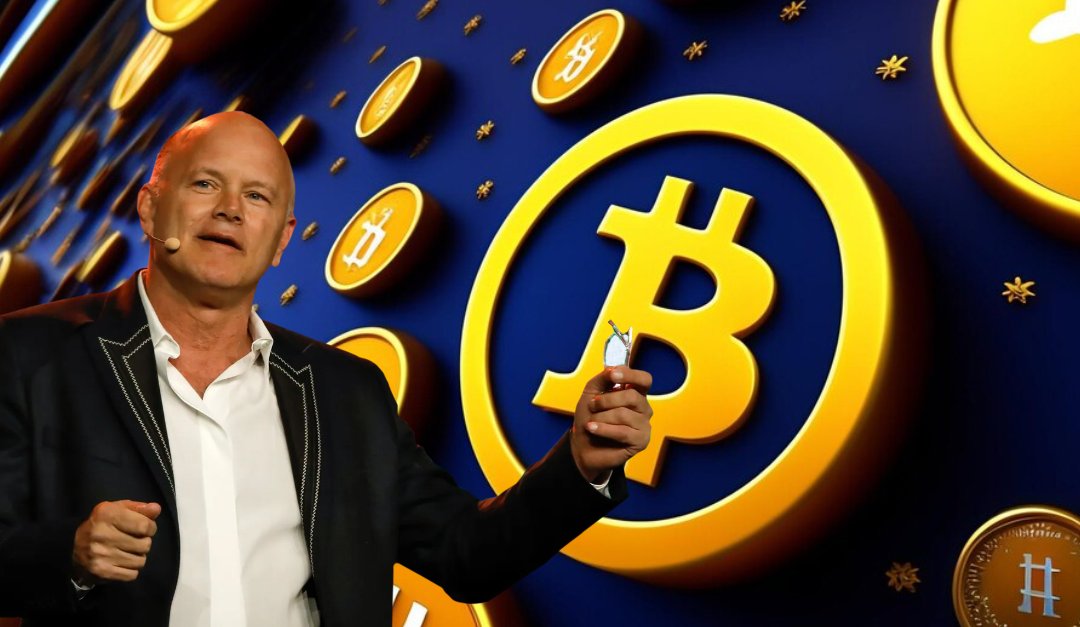
Bitcoin, the first decentralized cryptocurrency in the world, to record, sign, and send transactions across the Bitcoin blockchain without the intervention of a centralized authority and under Satoshi Nakamoto, an unidentified computer programmer or group of programmers introduced the Bitcoin network. Mike Novogratz, the founder, and CEO of Galaxy Digital predicted that a single Bitcoin (BTC) will be worth $500,000 in five years during a broadcast interview with Bloomberg Technology in March.
Knowledge of Bitcoin
The name Bitcoin.org domain was registered in August 2008 and this is WhoisGuard Protected today at least, which means the person who registered its identity is private. However, on the Cryptography Mailing List at metzdowd.com in October 2008, someone or some organization going by the fictitious name Satoshi Nakamoto posted that he has been working on a new electronic payment system that's peer-to-peer, with no trusted third party. The Bitcoin - A Peer-to-Peer Electronic Cash System, a now-famous white paper that was posted on Bitcoin.org, would go on to become the Magna Carta for how Bitcoin functions today.
The first Bitcoin block, known as Block 0, was mined on January 3, 2009. The line "The Times 03/Jan/2009 Chancellor on edge of the second bailout for banks" can be found in this block, which is also referred to as the "genesis block." This text may serve as both verifications that the block was mined on or after that date as well as political commentary.
For every 210,000 blocks, the incentives for Bitcoin are halved. As an illustration, in 2009, the block reward was 50 new bitcoins. The reward for finding a block was reduced to 6.25 bitcoins on May 11, 2020, as a result of the third halving.
The smallest unit of a bitcoin is known as a satoshi, and one bitcoin can be divided up to eight decimal places (100 millionths of one bitcoin). if modifications are required and approved by the participating miners, Bitcoin could be made divisible to even more decimal places.
Understanding Bitcoin as a type of digital currency isn't that difficult but for instance, if you have a bitcoin, you can send smaller amounts of that bitcoin to pay for goods or services using your cryptocurrency wallet. Therefore, when you attempt to grasp how it operates, it gets really difficult.
Blockchain Technology for Bitcoin
A blockchain and a network are needed to power it to contain cryptocurrency. Blockchain is a common database that houses data that is used for encryption techniques to protect data, so when a transaction occurs, data from the previous block is copied to a new block with the new data, encrypted, and the transaction is validated by validators, or miners, in the network and a new block is constructed and handed as a reward to the miner(s) that verified the data in the block once a transaction has been confirmed, and are then free to use, hold, or sell the new Bitcoin. However, the information held in the blocks on the blockchain is encrypted by bitcoin using the SHA-256 hashing algorithm and it is simply explained, a 256-bit hexadecimal integer can be used to encrypt transaction data that is stored in a block. All transactional information and details about blocks before that block are contained in that number.
Mike Novogratz, the founder, and CEO of Galaxy Digital predicted that a single Bitcoin (BTC) will be worth $500,000 in five years during a broadcast interview with Bloomberg Technology in March.
Cryptocurrencies are something Mike Novogratz firmly believes in. In reality, it is known that how Galaxy Digital and Goldman Sachs had joined to give clients of both firms access to an Ethereum investment fund for a minimum investment of $250,000. A similar Bitcoin investment fund was also being offered by Goldman and Galaxy.
Although no one is surprised by his support for Bitcoin, his price projection and time horizon are audacious considering the current market value of the cryptocurrency.
The cost of Bitcoin and its market value would have to rise by 12 times
According to CoinMarketCap, Bitcoin has the highest market cap, which is over $768 billion at the time of writing. Although Bitcoin's price rose by a healthy 60% last year, it has now fallen by just over 40% from its all-time high of about $69,000 on November 8, 2021.
The price of Bitcoin would need to rise by more than 12 times to reach $500,000, which would expand its market capitalization to an astounding $9.2 trillion in just five years. I haven't heard any analysts estimate that Google, Apple, or Amazon's respective company valuations will climb tenfold by 2027, so that's comparable.
The collapse of the FTX exchange in early November, however, made the cryptocurrency crisis far worse, and Bitcoin's price fell to its lowest point in two years. After a little comeback, the leading cryptocurrency is currently trading just above the $17,000 mark. According to U.Today, in a recent interview with CNBC, Mike Novogratz called former FTX CEO Sam Bankman-Fried "delusional" and said that the disgraced crypto guru needed to serve time in prison.
In an earlier prediction, Mike Novogratz stated that Bitcoin would hit $500,000 in 2028 after five years. Investors were persuaded by his incredibly bullish prediction that BTC will soar to new yearly highs. In May 2022, when TerraUST and LUNA lost all of their value and went to zero, Mike Novogratz reiterated his earlier assertion that he still thought Bitcoin would reach $500,000 in five years.
Bitcoin: Will It Achieve $500,000 by 2028?
The persistent and severe bearish market conditions have appeared to have dampened Mike Novogratz's enthusiasm for bitcoin.
Novogratz recently told Bloomberg that he no longer thinks Bitcoin will reach $500,000 in five years. The impending recession, he continued, will impede Bitcoin's rise and make rallies more difficult.
For those who are unaware, Mike Novogratz was one of the first to foresee that 2022 will be a worse year for cryptocurrency investors. His prediction came true, as the markets were in the red for the whole calendar year.
His prediction that Bitcoin would not reach $500,000 by 2028 may come to pass if the world economy continues to be unsteady. The markets are being pushed back by layoffs, inflation, and recession concerns, which is causing Bitcoin's price to decline.
In this capstone project, Wolf Pup 1147 presents the case that cryptocurrency’s role in a mature traditional finance portfolio is to collapse time towards your goals.
Introduction
Does crypto have any place in a mature traditional financial portfolio? Or is it nothing but downside, an asset made up out of thin air and destined to go to zero?
You’ll definitely run into this point of view when people know you’re interested in “that bitcoin stuff” or any other cryptocurrency. The discussion of the inherent value of cryptocurrency is well tread ground elsewhere, so for purposes of this discussion, let's stipulate that cryptocurrency has value (if you must, you can even caveat it with “value .. for now”). Now we can explore how you might add it into a portfolio like any other risk asset that might go to zero.
One of the first videos I saw in early 2022 when starting my The Guardian Academy (TGA)1journey proposed the idea: “Do you even need crypto in your portfolio?” My initial reaction was “Duh, Of course! Is that a trick question? With such a huge potential upside of getting MORE, how could I not get involved? That’s why I’m here!” Looking back now, I see that reaction as a huge red flag.
In this article, I’ll explore how crypto fits as “just another financial vehicle” in my portfolio. Let's go slowly and establish some shared traditional finance vocabulary. I’ll do this via the “lemonade stand economics”2 approach – rather than describe the complicated end result, I’ll build up to it via a story, then we’ll get back to crypto towards the end.
Through hard work and privilege, I’ve been a part of the internet industry starting in 1992 with web1, progressing to web2 in present day. And here we are at the transition to web3. Over those 30+ years I've had the opportunity to educate myself on how money works, accumulate some, and plan for my “retirement” in various guises, starting from where I imagine most people start.
The Goal: v1 - Retire
“Make a lot of money, then retire”
I think that’s where I started. The only way I was expected to do that was via the “go to school, get a good job” approach. Aka: Dollars for Hours. So I did it, without giving a lot of thought to the “.. then retire” part or what I wanted along the way. So I emerged from the education system in the mid 90s with a few degrees, and leveraged my early knowledge of HTML into a career.
What was lacking here, stated in terms of The Guardian Academy teachings, was an end goal: a Dream Life calculation and a set of Solvable Problems to achieve it. (more on this later)
The Goal: v2 - Cashing Out
The mid 90s was the dotCom era. It wasn't uncommon for folks to work at a startup, get very meager salaries and thousands of shares of (valued in pennies, essentially worthless) stock, worse yet, with no liquidity unless there was an IPO or buy out. The crypto equivalent would be joining a project and in lieu of a salary, you agree to $100,000 USD of the project’s $0.10 token, making you a 1M token holder. If the project takes off and rises to $1, you’re sitting on a million USD. During the dotCom bubble, it seemed like any company3could IPO and their stock skyrocket to $20, $50, $100 or even more ($700) .. suddenly making a large net worth for lots of unprepared people4.
Suddenly, those “what would you do if you won the lottery conversations” got shockingly real. It felt like very few of my peers had any idea how to manage money. At most of my jobs during the late 90s dotCom bubble, my coworkers and I sat around at lunch talking about “enough”. The dream was that if your latest startup took off (and IPO’d), you’d get “enough” money from selling your stocks, and put it to work getting a safe interest rate on the balance. You then withdraw only the interest (never touch the seed money) and replace your current salary.
What a cool idea, it seemed way more objective than “make a lot of money, then retire” as a goal.
For example, pick a nice round number like $3 Million as “enough”. Wait till your stock appreciates to that value, sell it, and park the money somewhere earning 4% – generating $120,000 in interest to live off .. forever. You’ve bought a money printing machine! You win!
What could possibly go wrong?
Of course, the downside risk rose up to smack most of us in the face (dotCom bubble burst, lack of diversification, etc) and that $3M “enough” seed money plummeted out of reach.
The Goal: v3 - Traditional Finance
Self Directed
Ok, some of us (ahem) blew ourselves up by HODL’ing vastly over-rated or over-inflated stocks. What if I diversified? Could I get multiple, smaller “money printing” machines running? What if I thought of my traditional finance options as money printers?
I’d always heard the maxim of “pay yourself first”, which I’d now refer to as a “bumper”5– in a moment of sobriety and clarity you set up a funnel to remove some money “off the top” and put it towards your goal – in this case funding my retirement accounts – so you’re not tempted to spend it. Typically, I would do it via payroll deductions directly to an IRA, ROTH and/or a 401k. The remainder would direct deposit to my checking. If I found I still consistently had a bit of extra spendable money, I’d divert it to an out of the way savings account to be swept into a retirement vehicle later.
My goal here was to fund various retirement vehicles and let time (and compounding) and the randomness (markets) work for me. I ignored the “why” or even a specific goal, other than the generic “it’s good to save for retirement”.
Typically for my peers these methods looked like an IRA, a 401k, an HSA and, if you had a family – a college fund and some basic term life insurance. The problem was that most of these money printing machines were time-locked and you couldn't withdraw from them until you were “old” (or dead).
In a blind quest for MORE, I sought to expand – I tried financial advisors, both fee based and assets under management. It's rare (or impossible) to find one who actually cares about your finances more than you do. However, I did learn alot about rebalancing, tax loss harvesting, tax advantaged or retirement options, etc. Over the course of time I even began to understand some of the more “fancy” options and ways to bypass some of the locks.
Looking back, I remember in my late 20s, I asked one of my financial advisors “What would it take to retire at 35?” and he laughed it off as a joke … I let him steal my dream. In hindsight, what I wanted was a discussion of “enough”, a “solvable problem” and how to rearrange my finances to make it possible to get what I wanted. I wanted to Rig the Game in my favor.
Stock Investing
Eventually I left the financial advisor and struck out on my own in search of MORE. I knew that short term trading didn't feel like my thing, but finding a few long term stocks to buy .. that sounded interesting. I didn't feel qualified to do my own research from scratch, so I used Motley Fool to help me vet long-term stock picks.
This gained me experience holding an investment long term, experiencing ups and downs. After a few years, paying attention and making moves got tedious and my frequency of exposure to market events was causing stress. I wanted to simplify.
Eventually the quest to “simplify” my portfolio led me to online “bogleHeads”6, where I learned about “buying the market” and shifted to S&P 500 matching ETFs or other whole market funds like VTSAX, FZROX, etc. And sometimes you could put these in your IRA or ROTH or 401k. Woot!
After getting swept up in a dotCom layoff, I abruptly realized I had been entirely relying on my W2 income to grow these positions. I was precariously undiversified as far as my income stream was concerned.
Hours for Dollars
The simplest revenue stream everyone is familiar with is “time for money” – I work at my W-2 job from 9-5 (or more) and get paid. Maybe I add a side hustle to get a new stream running. However, with 24 hours in a day, there’s an obvious cap – you can only exchange 24 hours for dollars. Your only other variable is your hourly rate, which sends you on the endless quest for the best salary.
This brought me to the concept of revenue streams, direct and passive.
Royalties
At the time, I dismissed the “royalties” review stream, thinking it was only available to successful content producers like authors, artists, musicians or celebrities. You produce something once, and enjoy a “perpetual”(ish) revenue stream from it.
Today this type of revenue stream and education about how to establish them is an entire industry into itself accessible via the internet.
Real Estate
The income streams from real estate typically show up as asset appreciation which unlocks the ability to borrow against the asset (HELOC). Or perhaps rental income, or fix-and-flip properties.
Despite being a well trod path to wealth building, I dismissed this revenue stream. When I started, I believed I didn’t have the “lump sum” to get into real estate. Furthermore, I thought it was a catch-22 .. you need $money to buy the asset to produce $money to buy more assets.
Today I feel there’s many more resources describing how to bootstrap yourself into this revenue stream.
Franchising / Multi-Level Marketing
Well, since I only have 24 hours in a day, what about if I looked into leveraging other people’s time and took a small percentage? That led to exploring franchising opportunities (expensive up front) or multi-level marketing (collecting a portion of your team’s sales).
I explored an MML for about a year. It turned out to be a lot of sales, and I could never shake the feeling of being slightly scammy. I now see that aside from any inherent dishonesty that might have been present, I was unlikely to succeed here, as I was focused on what I could get out of it, not what value I could provide.
In the end, I learned about the importance of sales, developing a strong mental mindset and investing in yourself as your greatest asset.
1,000 True Fans
Along comes 1,000 True Fans, which seems like a more honest approach towards “getting a small amount from a lot of people”. The idea is to develop an audience of 1,000 true fans7who are willing to engage with you and, ideally, subscribe for a monthly fee or purchase from you on a regular basis, somewhere in the range of $100/year. Find a sweet spot where there’s a relatively small, but underserved population, then service it in some fashion.
And people are definitely doing it ..
This screenshot from a Telegram channe shows a person8charging ~$100/mo [as of Nov 2022] for access to their group via patreon. The math is awesome. Is that really a revenue stream of $686,900 per month?!?
Wow! How do I get this working for me? I wracked my brain here for a while but nothing came to me. I finally realized I was thinking about it incorrectly. I was focused on me, or, less flatteringly, motivated by greed. I was thinking “How can I get 1,000 people to pay me $10 or $100?” That’s what it comes down to, right? In a sense, sure. But the energy and ideas comes easier if you rephrase it as “How can I solve a problem / entertain / educate someone where they’d be happy to send me $10 or $100”. Joe Polish covers this topic extensively in his book, “What’s In It For Them?”9
Once I identify “my game” and where I can add value, I believe this will be a great area to revisit.
So far, we’ve only examined the “income/growth” side. We’ve got a wide selection of financial vehicles in place, an awareness of many more and ideas for future income streams. What about the expense side? It’s definitely worthwhile to recapture resources by reducing expenses.
I won’t spend a lot of time here, but I'll touch on a few key pieces that came into play for crypto.
Debt
Some folks believe you shouldn't be investing in anything if you have high-interest debt like credit card balances, or some types of loan debt. The idea being that any investment you’re making is unlikely to positively impact your net worth if your debt obligations are draining value out faster than it can come in.
Debt can stem from systemic causes (medical debt, educational debt, etc) or behavior issues (restraint, short term focus, etc). In either case, debt can be surprisingly hard to get a handle on, as most ways of addressing it require behavioral shifts. As we know from other TGA teaching (The Adaptive Dilemma, etc) successfully changing behavior is a lot of work.
Leverage
It’s tempting to believe that with crypto’s high returns, you can overwhelm the outflows and maybe even pay off the original debt. If you’ve got an asset (real estate, stocks, college fund, pension, lottery winnings, goods, crypto or even a good reputation) someone will loan you money now against it for some risk-adjusted return..
Many credit cards10offer 0% intro rates that let you take a $10,000 cash advance, charge a 3% fee, and you don't have to pay it back for 21 months!! Throw that 10k into a moonshot! Attractive, right? But you’ve now got a timeline, an (interest free) recurring monthly payment, an up front cost, and need to track towards a final payment. You’ve removed the very elements we rely on for success – time (you need ~$10k in 21 months) and now randomness can (and does) cut both ways.
Maybe you can manage it, maybe you can’t. Maybe it’s simply more stress than you want in your life. I found myself anxiously checking my balance and worrying about missing minimum payments and incurring more costs. Too much stress for me. Working with leverage is quite high risk, as even the most well versed professional investment firms have found out – Three Arrows Capital, Alameda Research, etc.
From my perspective, budgeting can help people in two ways: “where is my money going”, and “making progress towards a goal”. I already had enough discipline and uncomplicated needs that budgeting didn't solve a real problem for me. I got some value from a visibility perspective: I spent $x on food, $y on vehicles, etc. Over time, things stabilize, typically falling into a rough 50/30/20 pattern - 50% for Needs, 30% for Wants and 20% for Savings. The 20% is the money you’re trying to make work for you.
Two unexpected takeaways
1. Occasionally it’s useful to do a “subscription audit” to see how much
money is being drained out by subscriptions you may not be getting
value out of anymore. I have a spreadsheet for this now.
2. Budgeting leads directly to forecasting, which is essentially dreaming married to planning. I enjoy forecasting. TGA has a nice activity called the Dream Life Calculator – you spec out all the things and services included in your perfect life and then apply costs to them. This yields a dollar amount, which you can then begin aiming (forecasting) towards.
FIRE
FIRE11stands for Financial Independence, Retire Early; Some sites drop the “RE” and rebranded as “FI” to avoid a stigma about “retirement” (“isn't that for old people?”) and have now shifted to “freedom” messaging.
The FI movement was what I was looking for back when I asked my financial advisor how I could retire at 35. In a nutshell, pick your “enough” number, and live off the interest. Sounds alot like my dotCom lunch discussions, right? The FI community contains endless discussion about how to choose your FI number. Followed by ways to game and arrange your expenses to get closer to enough, usually entailing some short term frugality to unlock long term freedom. Eg: Shifting some “needs” to “wants”, and discarding some “wants” in lieu of “savings”.
The frugality approach doesn't work for everyone (me). Rather than endure a miserly existence, I believed I had the option to increase my revenue. People of like mind call that the “Fat FI” approach. They discarded frugality and carefully chose personally meaningful expenses.
Eg: The same exercise as before, but you end up keeping more expenses in the “want” section. Your goal is to increase income while not inflating expenses. Eg: The next time you get a raise, make no lifestyle changes, all of the raise goes towards savings.
I found my FI journey was mostly a tuning exercise consisting of double/triple loop learning. I encountered the same concepts using different languages and lenses. The splashier crypto community (wen lambo) could learn a bit of restraint from the FI community, and the FI folks could carefully add crypto as a tool on their journey to Financial Independence.
What about systematic ways to evaluate and manage risk?
After all, failing to properly execute on a huge opportunity because I was unprepared to evaluate and manage risk is what set me on this path in the first place. There is endless discussion in traditional finance about risk management.
To keep it short, I'll just mention a few things.
The Goal: v5 - Risk Adjusted
Risk Tolerance Profile / Know Yourself
Most financial advisors start out by having you fill out a
“risk tolerance profile”12, where you self identify your risk tolerance. Frankly, these always seemed rather shallow, as they require a high level of self awareness and introspection. Perhaps they give some guidance for cookie-cutter portfolio advice. (no risk tolerance: “you should be in bonds”). I always felt they existed to serve the financial advisor – so the firm you work with can do some CYA later .. after you’ve lost a lot and say “too bad, you indicated you had a high risk tolerance”.
Ideally, the Risk Tolerance Profile would be an important opportunity to do some introspection. Fortunately, the journey in The Guardian Academy covers this in depth – being aware of your comfort level with risk and your evaluating your behaviors. For those brave enough to do some self evaluation, 2022 has offered everyone a great laboratory in which to evaluate your own Risk Tolerance in a very real way. It's one thing to read about, it's another thing to face your own greed on the way up or fear on the way down.
Once you feel you have a handle on your risk profile, how do you take action on that? Some financial advisors recommend The Bucket Plan13strategy to help navigate risk. The three buckets are “Now”, “Soon” and “Later”. Each bucket has different levels of risk and liquidity.
“Now” is “safe and liquid” – money to be used within 6-24 months. The Soon bucket is “conservative and income” with a time horizon of 2-10 years. Finally, the Later bucket is for long term growth and legacy planning, typically a 10+ year timeline. During actual implementation, these buckets are relatively fluid, but it does create an accessible way to talk about and organize your exposure to risk.
Examples (depends on your time horizon)
● NOW: checking, emergency fund, savings, short term CDs/Bonds
● SOON: conservative Stocks/Equities, medium term bonds,
● LATER: aggressive Stocks/Equities, Retirement accounts, Social Security, Life Insurance
One More Year
As people approach their FI number or retirement date, there’s
often a temptation to hang around for “one more year”14. The
general consensus on this phenomenon is that it stems from:
● Lack of clarity on the “other side” of your current lifestyle
● Uncertainty on being able to fund future expenses
● Unwilling to step away from a (typically) lucrative income
stream
How can we address or avoid this?
“If you’re playing your game, you're never not working” – (or, “.. you’re never working” )
Afterwards - The uncertainty around what to do “after” you retire stems from the impression that retirement means sitting around the house doing nothing. However, if you think of it as a transition to having the freedom to work on the things that you love, things that interest you or personal growth, this becomes less of a concern. You’re living either a “work optional” lifestyle, or you’re working on passion projects.
The other two issues are two sides of the same coin: uncertainty about being able to fund future expenses and being loath to walk away from a lucrative income stream. Both can be addressed via a “Rigging the Game” principle of defining a Solvable Problem.
Walking Away - On the bright side of the coin (walking away from income), once you define what you want out of your life, you can find out how much that will cost you. You’ve now got a goal to feed into a Solvable Problem and simply need a timeline. Once you have “enough” to fully fund the problem, you can walk away without worrying about banking “one more year”.
Expenses FUD - On the dark side of the coin (not being able to fund future expenses), we can leverage an old stoic technique I ran across via Tim Ferris, which he brands as “Fear Setting”. Simply put: dream up every possible nightmare scenario and then problem solve for a) lessening the probability of it happening and b) recovering or alleviating the impact should it happen. In the “one more year” scenario, this typically looks like
examining your exposure to catastrophic medical bills, disability, or even macro conditions like climate change or a recession.
When you’ve gone through those exercises, you’d typically have a new list of goals to achieve to help you feel comfortable with your position and have some certainty that you can step out of the “one more year” trap.
System Complexity & Diversity
Wow, building a system like this sounds complicated. Didn't we learn that the more complicated a system is, the more likely it is to fail?
“A complicated system is more likely to fail, as the overall success is a function of the success percentage of each individual component. “
However, the statement assumes a serial system. Wherein a critical path to success exists, where each component must succeed to reach the end state. Most well built portfolios, although made up of a lot of individual parts, are not serial systems – they’re distributed and diversified systems. The failure of one component (a bad real estate investment), should not catastrophically impact the overall success of the portfolio.
PS: Note that even a well diversified portfolio can be subject to macro or systemic issues (plague, recession)
Do I even need Crypto in my portfolio?
Finally, back to that first question I tripped over watching some of my first TGA videos: “Do you even need crypto in your portfolio?”
I must admit, this question caused a bit of a short circuit / open loop in my brain for months. Why not add upside? In fact, why not reallocate from my other buckets into this one? The risk was worth it, right? I could be there overnight! It was a reminder to slow down. To think about what I’d built, what I was after and what was at risk.
I appreciate that question a lot - it prompted me to think deeply about the downside risk. This was a mirror held up letting me see my own risky behavior, chasing “more” rather than “moving closer”. Aggressively utilizing cryptocurrencies exposes myself and my family to more risk than I need to get closer.
The obvious followup to “Moving Closer” is “Closer to What?” My second huge prompt to reexamine the concept of “retirement”, which is not a solvable problem w/o alot more details. I spent tons of time thinking about the tactics of managing money to get MORE, but close to zero thinking about the WHY. In the Dan Nicholson book15“Rigging the Game“, winning is defined as “getting what you want in life”, which necessitates defining what you want. And furthermore, determining how much that costs. Ah, here it is again, my old friend the dotCom lunch question “how much is enough?” But now I feel like I am armed with the tools to actually answer that question. And unafraid to take an initial guess, as I know I’ll be refining the answer as time goes on.
So yes, I want crypto in my portfolio. My Risk profile indicates that I can tolerate the risks. But “going all in” is more than I needed to hit my Solvable Problems in a timeframe that’s acceptable to me.
TGA teaches “3C’s” – Clarity, Certainty and Compressing time.
Explainer: Using a Maps.app immediately gives you GPS clarity (“you are here”), providing a destination gives you “goal clarity” (“I want to be there”). The Maps.app then provides the blue-line certainty (“follow these directions”'). Sometimes you are offered choices to compress time (“take the freeway”, or “take side streets to avoid a traffic jam”). Clarity – Armed with typical portfolio management tools, services and professionals, and looking at all the various financial assets I’d added to my portfolio over the years, I have pretty good financial clarity. I had a rudimentary goal (retire), but my exposure to concepts like the Solvable Problem and the Dream Life calculator has really helped me put some SMART (specific, measurable, achievable, realistic, time-bound) goals on my “winning life” list.
Certainty - Traditional financial offers many vehicles, levers and approaches to ensure you’ll be financially successful in retirement. These approaches contain a macro belief “markets always go up over time”16, (Many discussions about this, but that’s another paper), leverage a long timeframe (typically you’re encouraged to start with years ahead of your retirement date) and you expose yourself to randomness via as much diversification as your risk profile can tolerate. As you approach retirement age, you avail yourself of all sorts of techniques to adjust the certainty of your retirement income and lower risk. The certainty is built upon decades of societal experience using well understood tools. The paths and routes are frequently traveled, and you’ll generally “succeed”.
Now I’ve got Clarity and some degree of Certainty within the timeframes of my current financial instruments. What next?
Compressing Time : To YOLO or not to YOLO
Here’s where I think crypto comes into play. In the new version of the Goal, crypto’s job is to compress time. Or stated another way - accelerate progress towards my (financial) goals.
So how does that work? There’s certainly some temptation to YOLO various liquid funds (529, HSA, emergency funds) or extend leverage (HELOC loans, credit card debt, etc) into crypto with the expectation that it's gonna be 10x by some timeframe close to “now”. Perhaps you’ve heard of people who have risked (and lost) funds they couldn't not afford to lose as they chased more.
Not me, right? But no, even after spending the last 30+ years building my current portfolio, I was surprised to find how vulnerable I was to doing exactly those types of risky behavior. Thanks to some exposure to behavior education in TGA, I had set enough bumpers in place to slow myself down. Enough to realize there’s no need for 16 Stocks Go Up Over Time - https://www.marketplace.org/2021/10/21/will-stock-market-indexes-go-up-forever/ me to blow up a system I’ve spent decades building. For what? Getting it all now or some other version of overnight wealth? Not worth the risk.
But still.. From the financial perspective, crypto is just another tool. So how do I (safely) add a potential 10x or 100x (or 0x) investment into my existing portfolio? Answer: using Risk Management.
If we use the “Bucket Plan” risk model, if I was into moonshots or swing trading (I’m not), I’d pull assets from my short term “now” bucket. If they paid out, I'd use the results to fund any of the solvable problems that were underfunded. In effect collapsing time to solve the problem. Agreeing to only pull new funds or funds from the “now” area discourages me from eyeing my daughter’s college fund (hidden in the LATER bucket).
For crypto projects that I believe in, the Bucket Plan suggests those investments get placed in the SOON or LATER bucket where they have time to grow and benefit from a macro belief that they’ll go up/down in the short term, but trend upwards over time… w/o needing to be cashed out in a downturn. Personally, I’m looking to use a combination of the SOON time frame (2-10 years) for Compressing time and the LATER bucket to leave crypto as an inheritance. For me, funding is mostly new money, as rebalancing (converting) existing financial vehicles to crypto exposes me to too much risk for where I am in my journey.
Macro Belief in USD and Crypto
Alright, I’ve decided I want to add crypto, and how I'm going to add it to my portfolio. How do I deal with FIAT valuation and crypto?
That brings me to a macro belief17. The only way I can hold my traditional portfolio model in my head w/o cognitive dissonance is to recognize that I'm still USD based. I believe crypto-as-currency is still a long way from mass adoption ( I acknowledge that perhaps “slower than everyone wants, but faster than anyone thinks is possible” is apropos here ). I also realized that after 30+ years, I’m heavily invested (time and money-wise) in traditional finance. Essentially I’m working with a macro belief in USD in the short and medium term, but leaving myself long term optionality for a macro belief that crypto will play a role.
If my macro belief is presently USD, that means crypto is an asset that I need to convert back to FIAT.
By definition, for long term crypto assets, there’s no immediate need to convert back to FIAT. There’s just DCA (Dollar Cost Average18) in. I’m comfortable HODL’ing those positions with an open loop as to how they’d contribute to my financial future. What about the short and medium term crypto? Well, the opposite of DCA’ing in, is DCA’ing out.
But how? Time for a plan with tons of bumpers.
In a moment of calm sobriety (eg: ahead of time) you establish a system for taking profits.. and stick to it. As a crypto investor (rather than a trader), you want to buy (some) when the risk/valuation is low, and sell (some) when the risk/valuation is high.
As a human, I know I'm susceptible to greed (“its 5x, what if it goes to 10x?”) and loss aversion (“it’s down 50%, what if it drops another 50%?”). Having a Solvable Problem helps me feel good about taking profits at checkpoints on the way up, and having appropriate timeframes helps me feel better DCA’ing in during bear markets. The Investor Frame19helps me evaluate if or when to walk away. Furthermore, grouping my crypto assets via the Bucket Plan categorizations guides my timeframes (NOW vs SOON/LATER), which guides my actions (when to apply my DCA-out rules, and how much).
Time passes (it always has) and new information becomes available on risks or opportunities. Make sure you set up bumpers for when (and how) you’re allowed to adjust the system and ideally, some accountability for doing so.
Conclusion
I believe crypto currencies provide a tool that allows me to allocate a risk-adjusted portion of my portfolio towards accelerating my growth towards a well defined set of goals. I hope this has helped think or talk with others about how crypto currency can be a new and exciting addition to a mature traditional finance portfolio.
Blockchain technology took the world by storm, seemingly overnight. While investors are looking for the next 10x coin or “moonshot”, purpose driven companies are finding unique ways to use the new technology and web 3 culture to do good. Historically, small groups of dedicated people with a purpose make the biggest waves. “Using Blockchain As a Force For Good” is a short series exploring some of these projects.
Recently, Artist For Addicts had a stealth launch of Recovery Punks, a Crypto Punk inspired project designed to bring awareness to, change the conversation about and fund addiction recovery and connection.
“The Mission of Artists For Addicts is to change the global conversation surrounding addiction from one of judgement to one of compassion, using art as a force for good.”
Recovery Punks is an extension of that mission; using art on the blockchain as a force for good. The project is keeping marketing and “hype” to minimum and instead using education and connection to slowly mint out the entire 10k connection. The Recovery Punks community has contributed by opening up twitter spaces and inviting the public to join the conversation: a conversation about addiction recovery and connection, which Artist for Addicts believes is one of the most important conversations to be had in the current crypto landscape.
The royalties on Recovery Punks are set at 2.5%, 100% of which goes to Artist for Addicts to continue to find creative and fun ways to educate and change the global conversation about addiction.
The Recovery Punks community has formed a council that will allow them to create governance that can increase the royalties, build a community treasury and direct the project through community contribution and vote.
Many investors will continue to follow the hype, looking for the next big thing. The companies, projects and organizations that are finding ways to use new technology and web 3 culture to have an impact might have the last laugh. Their communities are small, but they are hyper-engaged and the reach extends beyond the early adopters of crypto.
While we will have to wait and see what happens, this is a recipe for massive impact and long term success. An important cause, a strong community, real world implications and a founder with an incredible track record. Our team will have our eyes glued to Recovery Punks in 2023.
Recovery Punks is one of the many projects published by Wolf Den Labs focused on having a real impact on people in the real world.
Central Bank Digital Currencies, or CBDCs, have likely become a more popular topic of conversation if you follow the cryptocurrency, DeFi, or overall landscape of blockchain-related activities in the past year.
Recently, countries all around the world have been vigorously testing the Central Bank Digital Currency (CBDC) waters. Though, only 35 nations were exploring a CBDC as of May 2020. However, 105 nations—representing more than 95% of the global GDP—were investigating a digital currency that was supported by the central banks by the middle of 2022. 19 of the G20 nations have a CBDC under analysis.
Attached below is a visual representation of the situation as of November 30, 2022. Especially, most nations are presently involved in exploring research, proof-of-concept testing, or pilot testing.
A Threat to Cryptos: CBDCs
according to a Central Bank of Bahamas research document from Q3 2022, between a CBDC and financial inclusion, CBDCs are very important for financial inclusion as there is a positive link.
However, people all across the world have been weakening their reliance on currency as the digital tendency has been developing quickly, and having electronic copies of other currencies would certainly come in helpful in this situation. Additionally, a fostering adoption will greatly benefit from the low volatility factor.
Howsoever, there are uncertainties that cryptocurrency's method of payment may be in danger in the future. Anastasia Kor, the CMO and board member of the cryptocurrency company Choise.com, explained the situation in a textual commentary to Watcher Guru, stating, The emergence of CBDCs could spell the end of cryptocurrencies for authoritarian governments like China, but experts generally envision a future were crypto and CBDCs can coexist.
In her opinion, "many operators" will favor the decentralized nature of privately produced digital currencies over the centralized nature of centrally backed e-currency since it brings with it "confidence and liberty."
A well-known Indian blockchain expert, Pushpendra Singh, also emphasized the centralized and decentralized components and while speaking with Watcher Guru, he claimed that he did not see CBDCs as any danger to the cryptocurrency ecosystem.
Are all the birds congregating in one place?
Ultimately, the Bahamas are regarded as being at the lead of the CBDC development globally following the debut of Sand Dollar, its CBDC, in October 2020 and It was the first realm in the area to familiarize a digital currency backed by a central bank.
Jamaica launched the JAM-DEX, making it the most recent nation to do so, this summer. Parallelly, the Central Bank Digital Currency was legalized by the Bank of Jamaica (BoJ), composing it equivalent to cash.
Somewhat, China is also ahead of the competition with the beginning of its first CBDC trial series in April 2020. According to reports, 261 million people have created digital wallets for the e-CNY as of January 2022, and more than $13 billion worth of transactions had been made with the digital currency available to overseas athletes competing in the Beijing 2022 Winter Olympics.
Rapid progress has also been made in testing real-world use cases and using CBDCs for settlements. Recently, France and its neighbor Luxembourg took part in a test of tokenized financial markets. To pay a bond for 100 million Euros [$104 million], the two countries developed an experimental CBDC. A well-designed CBDC might play a "vital role" in the establishment of a secure tokenized financial asset sector in Europe, according to the general director of the French central bank.
For its part, the Bank of Japan intends to begin testing the Digital Yen CBDC in the first quarter of 2023. Therefore, the central bank's strategy is to test the digital pilot for two years before deciding whether to continue with the issuance in 2026.
For its CBDC Project, Singapore has concurrently worked with the central banks of France and Switzerland. According to recent reports, the MAS has started its journey to investigate the potential of CBDC for international trade. The nation's central bank later designated the aforementioned project as Ubin+.
Current Situation in India
One of the most recent nations to jump on the testing and trialing bandwagon in India. The aforesaid Asian nation recently began testing its retail digital rupee (ex-R) on December 1.
More than a few other notable nations are well ahead of us in the CBDC competition and Kor gave Watcher Guru his view on whether India was in a disadvantageous position.
As the development team has learned from other central banks from across the world that has carried out their experiments, the Reserve Bank of India's CBDC study is timely.
In reality, Singh agreed with him and believed that India could strategically benefit from both the advantages and disadvantages of the models and designs of other countries.
However, Singh also emphasized how extremely popular the Unified Payments Interface, or UPI, was in India and believed that CBDCs will eventually surpass the mentioned payment method, Singh continued, though, by stating that adoption would take time. In a similar vein, Kon continued, that the Reserve Bank of India has always been thoughtful, and without a doubt, the future will vindicate the reasons why the trials were delayed up to this point as would be seen in how the Digital Rupee uplifts the local economy.
Ultimately, some retailers have already begun letting customers pay for their goods and services using the CBDC and in fact, in a recent interview with the Economic Times, the proprietor of the store chosen for testing the CBDC expressed his view that because the Reserve Bank of India was involved, the money would remain secure in the digital wallet.
Bottom Line
The ongoing research and pilot testing phases being carried out by several nations worldwide will probably be followed by future back-to-back launches, keeping in mind the success done thus far. The torch-bearers can serve as an inspiration to the nations now in the pre-launch phase. But whether or not that all the many monetary types would be able to coexist successfully depends on the time.