The recent reports stated that the Securities and Exchange Commission (SEC) of Thailand has brought new regulations about advertising for crypto businesses. It is the result of raising government scrutiny of the sector.
The SEC noted in a recent announcement that the new regulations will properly display investment hazards in marketing and offer a balanced index of expected risk and returns.
The Guidelines Of ASCI :
"Operators must provide details of advertisements and spending including the use of influencers and bloggers to the SEC along with terms and time frame," stated SEC, saying that operators had 30 days to become comfortable with the new rules.
India's rules and regulations for crypto ads
In February 2022, ASCI (Advertising Standards Council of India) kept a set of 12 guidelines regarding the advertisement and promotion of virtual digital assets (VDAs) and services. It included cryptos and non-fungible assets (NFTs) also. All advertisements that have been released or published on or after April 1, 2022, have to have adhered to the guidelines.
Thailand cryptocurrency businesses randomly promote their products on several social media platforms. There are also billboards to promote the sector all over the city of Bangkok.
According to the ASCI standards, cryptocurrency commercials must have added warnings regarding the unsafe atmosphere of the asset class. It should be much like mutual fund advertisements.
Background Information :
Notably, the Prime Minister of India, Narendra Modi, conducted a discussion about the regulatory prospects of cryptocurrencies in November 2021. According to media reports, a significant agreement took place at that time among the members. That aimed to take steps against ads that attempt to mislead the youth using over-promising and non-transparent ads.
Mentionable, In June 2022, a report of ASCI disclosed that over 400 crypto-associated advertisements violated advertising and promotion guidelines for virtual digital assets (VDAs) including guidelines for influencer advertising in the early five months of this year.
According to Manisha Kapoor, CEO of ASCI, "Some influencers discussed crypto confidently without total understanding of it. It creates an impression that it is secure, it's fine and a cool thing."
The recent data shows that 419 out of 453 complaints ASCI handled between January and May 2022 required revisions.
Previous Scenario :
Notably, Thailand had restricted the use of cryptocurrencies as a means of payment for goods and services. It was said that the wider use of digital assets would be unsafe for the nation’s financial system and economy.
Business operators along with crypto exchanges, must not offer such payment services. They were banned from providing such services that promote the use of digital assets to pay for goods or services. Was said by the Securities and Exchange Commission. Though, it was expected that the new regulation would not affect trading or investments in digital assets according to the agency.
The restrictions on the use of digital currencies for goods and services exchanges came into force starting April 1. Companies in Southeast Asia’s second-largest economy aimed to have until the end of April to be comfortable with the new rules as the regulator stated. It was said that the hurdles on cryptocurrencies such as Bitcoin for commercial transactions are in series with regulations in Europe, the U.K., South Korea, and Malaysia. Mentionable, countries like Japan, Canada, etc. are very much serious about crypto use among the public. Those countries are not only enthusiastic to use it on personal devices but also it is quite legalized in those countries. They also came up with crypto ATMs. Crypto ATMs are now one of the significant topics over the internet. Along with several uses, they balanced it through regulation and guidelines.
Thodex suddenly stopped trading in April 2021 due to an unspecified outside investment. It needed a four- to five-day pause in trading to work.
But after one day, Özer said that the company had been forcefully stopped trading due to cyberattacks. Though, claimed that customer funds were safe. That time, he promised to return the investors' capital shortly.
But on the same day of that claim, 62 people were confined by Turkish police. All the systems and computers of that company were seized. Also, accounts were frozen.
The Suspicion Raised :
After that incident, Özer flew to Albania to get rid of administrative activity. Though, the Turkish govt. was getting ready to have him extradited. The manhunt continued for months.
Later, Özer was found in Vlorë. Vlorë is a coastal city, the third most crowded region in Albania. Özer's identity was marked and confirmed through biometric documents.
In April 2021, it was claimed that Thodex had transferred $125 million in Bitcoin to Kraken. Kraken is a U.S. exchange. Thodex had transferred the amount before it closed. Whitestream, the Blockchain tracking firm that discovered the incident. It was said that it appeared to be a “cash out operation,” and executives stole customer funds.
The Govt. Steps :
The government of the country has expressed concern about high crypto uptake in the country. The govt. aimed to pass a bill seeking to establish new rules for the crypto industry.
Thodex was unable to access its digital assets due to the trading platform abruptly halted trading. The platform is filled with fraud allegations and thousands of criminal complaints.
Additionally, the platform shared a statement on its website this week. According to the statement, it would be closed for four to five days as a sale process is taking place.
According to the post, their services will be closed for about five working days until the share transfer completes. However, users do not need to worry about their investments.
Before that statement, the trading was considered the first halt for "six hours of planned maintenance work.”
But the users who were unable to withdraw their capital or access their accounts took to Twitter voicing the concern that they may have been scammed.
Defendant Statements Of The Founder :
Existing in the market since 2017, Thodex claimed that "negative” media reports regarding the company were not the truth.
It claimed that the Global prominent banks and funds, whose names they were going to announce when the agreement process will be completed, have been eager to invest in their company and even the companies proposed a partnership for a long time.
According to them, for that process, the transactions need to be stopped temporarily and the sale process required completion.
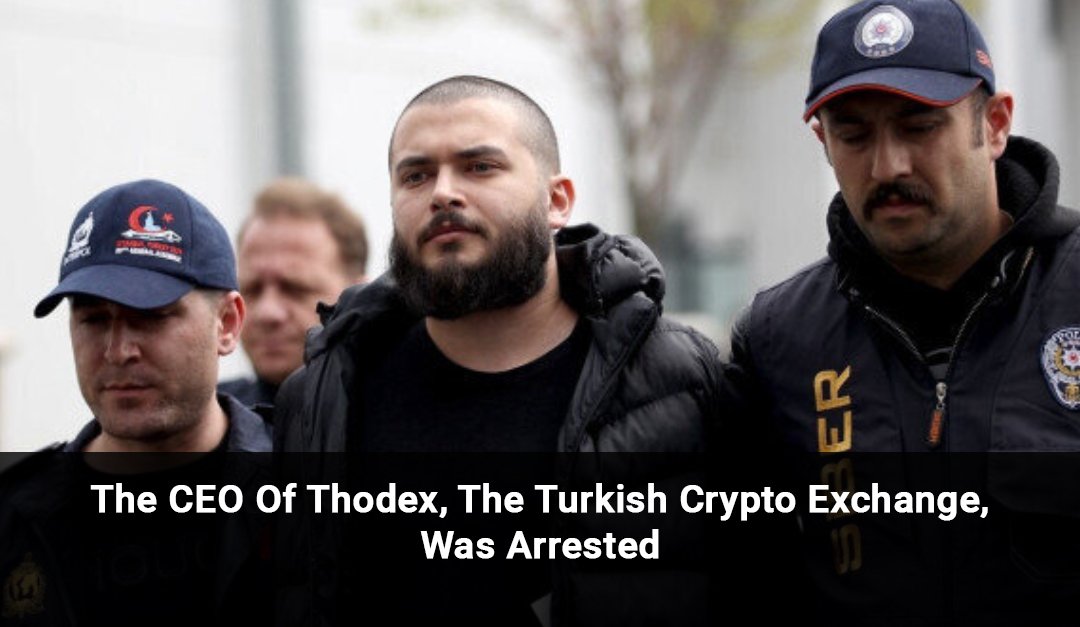
However, according to the primary assessment by police, Thodex CEO Faruk Fatih Özer had flown from Istanbul Airport. He is suspected to have fled to Thailand. He had with him $2 billion worth of digital assets. He has stopped all his social media accounts for safety as the reports say.
Later, Özer did not continue his silence. He published a new statement through the Thodex Twitter account.
Rejecting the allegations, Özer said that in the platform where approximately 700,000 users conduct crypto trading. So, the platform has never exploited or done any fraud to anyone, and nor will it in the future.
He also explained that when the company had undergone a cyberattack in 2018, it had gone through a total TL 25 million loss. But it never intends to fill the blank space through illegal activities. He added the platform has recently gone through "unusual fluctuations” in company accounts that took place during the almost three-month-long partnership negotiations.
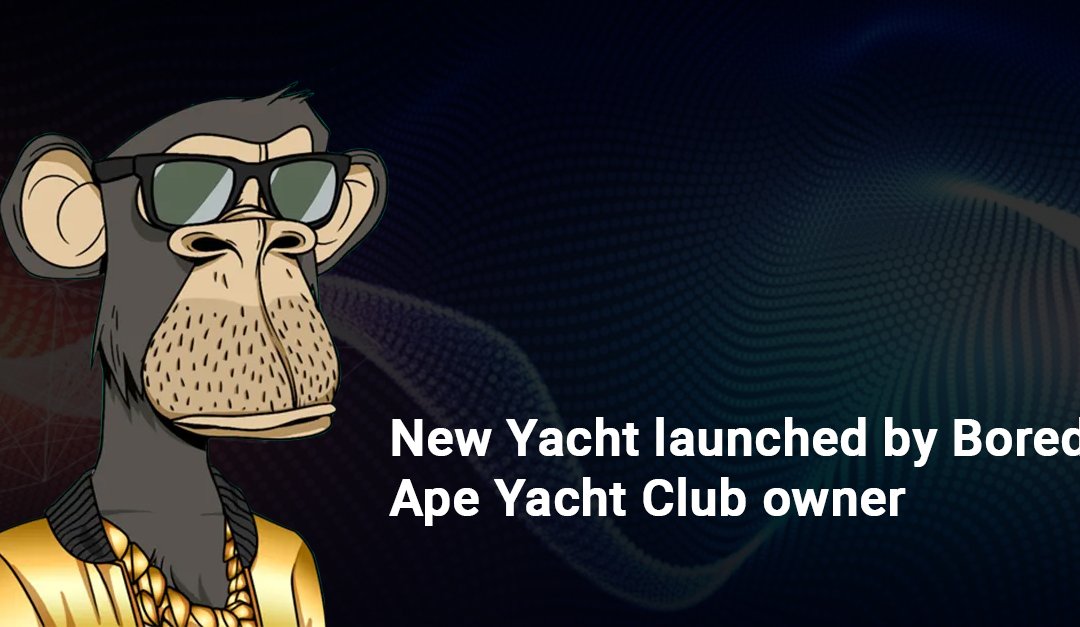
The Bored Ape Yacht Club has a suspiciously low number of boating chances while having a large number of Apes that seem bored or uninterested—10,000 of them, to be exact—in the form of NFTs. Now, one Bored Ape NFT holder—who also happens to be a boat owner—plans to alter that by launching a decentralized yachting club.
What is Bored Ape Yacht Club?
Bored Ape Yacht Club (BAYC), which is often referred to informally as Bored Apes or just Bored Ape, is a collection of non-fungible tokens (NFTs) that was constructed on the Ethereum network. The collection is comprised of profile photographs of cartoon apes that have been created procedurally by an algorithm.
Yuga Labs is the firm that Bored Ape Yacht Club reports to as its parent. After being issued for the first time on April 20, 2021, the project was made available for live pre-sale beginning on April 23, 2021. Owners of a Bored Ape NFT are given entry to an exclusive online club, invitations to exclusive in-person events, and rights to the image's intellectual property.
BAYC’s latest initiatives
The Bored Yachts Club intends to establish a decentralized, NFT-gated yachting platform to provide its members with the opportunity to charter actual yachts in a variety of locations around the globe, with the revenues from these charters being donated to charitable organizations. The effort will begin with "Lady Amanda," the only boat owned by club founder Jad Comair. However, the long-term objective is to recruit other yacht owners while allowing them the freedom to donate monies to charitable organizations of their choosing.
Melanion Capital is a French investment business that established a Bitcoin-themed exchange-traded fund (ETF) focusing on crypto sector firms in 2021. The CEO and the founder of Melanion Capital are Comair. According to his statements to Decrypt, he started investing directly in the most prominent cryptocurrency much earlier, in 2014.
An NFT, or non-fungible token, is a kind of blockchain token that may be used to represent ownership of an object. Over the last few years, the market for digital products such as Bored Ape-style profile photos, digital artwork, and collectibles has exploded. The market generated a total of $25 billion in trade volume in only the year 2021, and the Bored Ape Yacht Club is considered to be one of the most remarkable achievements in this sector.
Comair, an avid art collector, drew into non-fungible tokens (NFTs), and he has said that he discovered an affinity with the celebrity-packed Bored Ape Yacht Club as a sort of digital identity, in addition to the possible financial prospects.
Latest updates on the yacht
Bored Ape NFT holders are granted wide permission to utilize their artwork in the creation of derivative works and projects of any kind, courtesy of Yuga Labs. Others have used their Apes to produce items like clothing, toys, food and marijuana packaging, and even themed restaurants that serve fast food. Comair decided to transform his ape into a made-up version of the yacht's mascot and fake skipper.
There is no official connection between the Bored Yachts Club and Yuga Labs, and participants do not need to have a genuine Bored Ape NFT to purchase and make use of one of these NFT membership permits. His ownership of an ape came long before the conception of a decentralized marketplace for boat rentals.
Final thoughts
Comair expresses the hope that the platform will attract additional yacht owners from all over the world. This, according to Comair, can help fulfill the dual purpose of letting those yacht owners fill up empty charter windows when the boat is not being rented) while also contributing to charitable organizations in the process. In addition, because boats are able to operate on international seas outside of the authority of land-based authorities, Comair views the Bored Yachts Club as a possible stepping stone to a "crypto city" of sorts that is connected to a port.
The emergence of the crypto industry has led to a need for it in today's world which many firms have realized over time. It has generated a huge demand for the various cryptocurrencies with many companies coming forward to adopt them and integrate them into their operations. However, there is still a need for more awareness and the need to explore it more. It needs to be propagated or advertised in a way that it gets accepted by larger communities. Various organizations have come up with various ways that can help with crypto mining.
One such initiative has been taken by Maple Finance who very recently launched a lending pool worth three hundred million dollars that could assist firms in the mining of Bitcoin.
An in-depth analysis of the initiative taken by Maple Finance
It is imperative for each and everyone who is associated with the crypto industry to learn about its development and the changes being introduced in it, continuously to make informed decisions. It helps to be on top of things and be updated with the recent news and updates. Therefore, it is important to not only know what is going on in the market but to get to its roots. This article endeavors to do the same and provide readers with a detailed analysis of how the new initiative is going to help Bitcoin mining firms.
In an announcement made by Maple Finance as well as Icebreaker Finance, they would be extending a three hundred million dollars funding to all the private as well as public companies that are engaged in Bitcoin mining. Those industries can apply for funds that have the eligibility standards to meet treasury management as well as power strategies standard that are situated all over North America.
What is there in store for investors and allocators?
They also have provision made for those who invest in it. They have planned low-risk returns for the investors as well as the allocators, i.e. to almost as low as 13% per annum. However, there are certain guidelines that an investor must follow to be able to invest in it. First of all, an investor first needs to be accredited and be eligible enough by meeting the standard of income or having the appropriate net worth within the limits of jurisdiction.
More about the loans
It has also been mentioned by those at Maple Finance that the loans that are already existing in the lending pool would stay there for almost twelve to eighteen months and shall have a rate of interest of almost 20%. There are also some provisions made for the securing of the loans which are to be done by taking any physical or intellectual asset of the borrower.
However, it has also been mentioned by the authorities at Maple Finance that miners are important to the cause of any cryptocurrency and therefore provisions should be made to facilitate it. With this vision in mind, Maple Finance has rolled out a new finance system to assist and advertise Bitcoin mining further.
Conclusion
Various surveys and records have also found that Maple Finance constitutes the largest share in the crypto lending market. With such provisions in place, it is needless to say that, the crypto industry would be benefited in numerous ways and shall soon see a rise in its growth. The crypto market being highly volatile has been a risk that many are unwilling to take. However, with the right initiative in place and with the right steps taken, the whole scenario can change for the better.
Wolf's Clothing is the first startup accelerator that focuses on the Bitcoin Lightning Network and the Taro protocol, and it was founded by asset management company Stone Ridge, the parent company of Bitcoin company NYDIG (Wolf).
Wolf's Clothing (Wolf), a startup accelerator founded by asset management company Stone Ridge will be focused on fostering the development of Bitcoin-related products, the team exclusively revealed to TechCrunch.
According to Kelly Brewster, CEO of Wolf, the program will bring four cohorts per year to New York City from all over the world for eight weeks at a time to concentrate on building on the Bitcoin-centric Lightning Network and Taro protocol. Each cohort will be made up of eight to twelve teams, or roughly 30 to 50 founders.
How Will It Work?
Built on top of Bitcoin, the Lightning Network is a layer-2 payment system that seeks to facilitate quicker payment processes. Separately, the Taro protocol was introduced in April of this year to assist in the issuance of digital assets on the blockchain of Bitcoin that can then be instantaneously transferred to the Lightning Network in low-fee transactions.
Brewster stated, "It's like creating an HTTP accelerator; they're both generic and useable enough in such a wide range of applications. Though it is a specialized technology, the business use cases can be very diverse. However, we have a significant competitive advantage due to our intense concentration, which can be a major attraction for founders.”
Small startup teams and early-stage enterprises will all be represented in the accelerator by teams. According to Brewster, they will each get an investment of $250,000, and one cohort winner will also receive an additional $500,000 for a total of $750,000.
Micropayments and tipping using Lightning and Taro are two topics that Brewster is eager in seeing entrepreneurs develop.
Along with training and funding from operating businesses and venture capital firms with a focus on bitcoin, NYDIG, a division of Stone Ridge, is also supporting the accelerator. According to Brewster, the names of the companies contributing outside funding won't be disclosed. But he also pointed out that all mentors and investors are already using Lightning and Bitcoin. This includes public fintech and banking companies, as well as specialized VCs, focused on Lightning up.
Bitcoin Lightning Network
A layer-2 payment mechanism called Lightning Network, which was developed on top of Bitcoin, seeks to give the blockchain rapid payments and scalability at a reasonable price. It enables users to send or receive Bitcoin quickly by conducting transactions outside of the primary blockchain network, or, as Coinbase put it, "like an HOV lane on a highway."
At Stone Ridge, we've been keeping an eye on Lightning for a while, Brewster said, "Over the past 12 months, the network has reached critical mass, and there is enough capacity today that real-world activities can be conducted on the network with relative ease."
Brewster remarked that Lightning had grown extraordinarily over the previous year. In some ways, it is the ideal time to take a step back and determine where there is a signal and where there is only noise. Lightning is generating some of the most distinct signals right now. The rate of expansion and network capacity has been glacial.
The announcement comes at an unusual moment for NYDIG, which, according to a Wall Street Journal report published last week, recently let go of around 33% of its workforce. NYDIG raised $1 billion in December 2021, valuing the business at over $7 billion, according to the company.
Conclusion
Numerous cryptocurrency accelerator programs are emerging all across the ecosystem. Some of them range from generic web3-focused tools like Alliance DAO to layer-2 blockchain-specific accelerators like Polygon. While some startups provide funding, as Wolf intends to do, others invite investors to demo days in the hopes that they will fund the startups' initiatives. In situations like this, Brewster asserted, "the businesses that are developed will capture these secular patterns and truly take hold as they accelerate." Therefore, we believe that now is the ideal time to create rather than try to do something at Stone Ridge ourselves. We want to support and enable hundreds of other founders.