







Ethereum Blob Fees Explained: How Proto-Danksharding Changes L2 Costs

Ethereum Blob Fees Explained: How Proto-Danksharding Changes L2 Costs

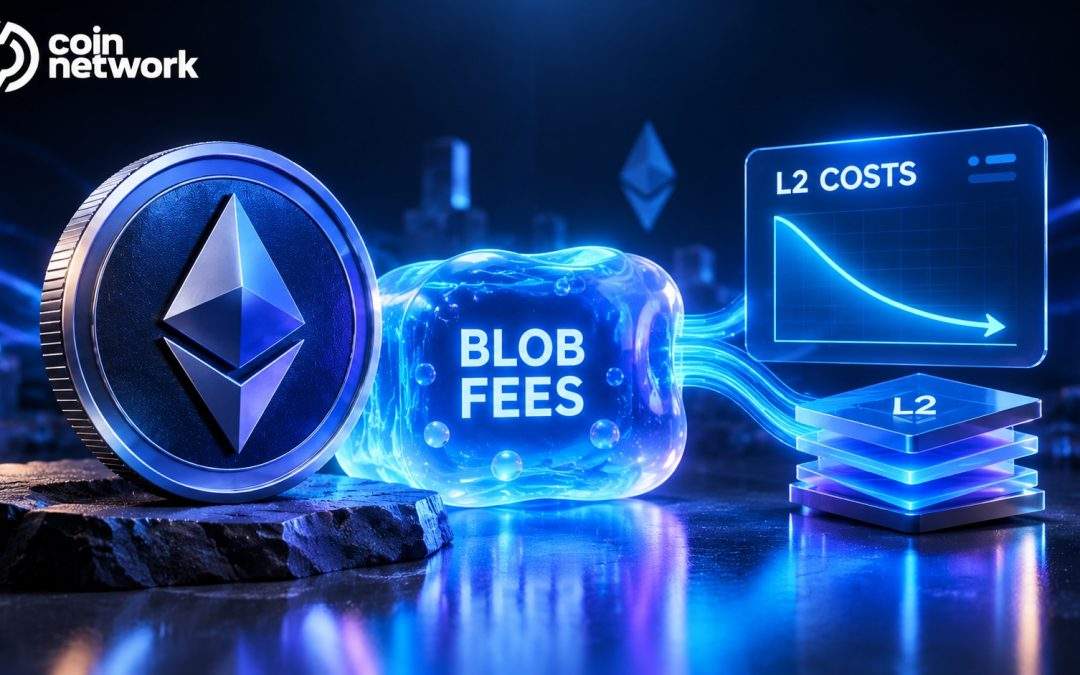
Ethereum Blob Fees: What Are They?

Ethereum Blob Fees are the fees paid for including temporary data blobs in Ethereum transactions. They were introduced through EIP-4844, also known as Proto-Danksharding, as part of the Dencun upgrade in March 2024.

Blobs provide Layer 2 rollups with a dedicated way to publish transaction data to Ethereum without using the traditional calldata pricing model. Ethereum’s official EIP-4844 specification describes blob gas as a separate fee market with its own base fee.

This distinction matters because Ethereum has two different resource markets involved in these transactions:

  • Regular execution gas
  • Blob gas

The price of one does not directly determine the price of the other.

For Layer 2 users, this creates a potentially important cost-saving mechanism because rollups can batch transactions and publish compressed data through blobs.

What Is Proto-Danksharding?

Proto-Danksharding is the first major stage of Ethereum’s longer-term danksharding roadmap.

Ethereum’s Danksharding roadmap explains that Proto-Danksharding adds data blobs to Ethereum blocks, giving rollups a cheaper way to publish data.

The term can sound complicated, but the basic idea is relatively straightforward.

A Layer 2 processes many transactions away from Ethereum Mainnet. It then needs to publish sufficient information back to Ethereum so that the rollup’s state can be independently verified.

Before blobs, rollups relied heavily on calldata for this data publication.

With EIP-4844, rollups can use dedicated blob space instead.

This does not mean blobs are permanent storage. Ethereum documentation states that blobs are intended to remain available for roughly 18 days, after which they can be pruned from ordinary clients. Long-term archival availability is a separate concern.

How Ethereum Blob Fees Work

The blob fee market is similar in concept to Ethereum’s EIP-1559 execution-fee market, but it operates separately.

EIP-4844 introduced:

  • Blob gas
  • A blob base fee
  • A target amount of blob space
  • A maximum amount of blob space
  • An excess blob gas value used to adjust pricing

The protocol calculates the blob base fee according to blob-space demand.

When blob usage exceeds the target, excess blob gas accumulates and the blob base fee can rise.

When demand is lower, the fee can move downward.

The Ethereum EIP-4844 specification defines this adjustment mechanism and the formula used to calculate the blob base fee.

This means Ethereum Blob Fees are driven primarily by demand for blob space rather than by the computational complexity of ordinary smart-contract execution.

Ethereum Blob Fees vs Normal Gas Fees

One of the easiest mistakes is treating blob fees and normal Ethereum gas fees as the same thing.

They are not.

A normal Ethereum execution fee is associated with computation and other execution-layer resources.

A blob fee is associated with data availability space.

A rollup transaction can therefore be affected by both.

Ethereum’s gas and fees documentation explains how normal gas measures computational work, while its transaction documentation describes blob-carrying transactions as a separate transaction type.

This separation allows the blob market to respond specifically to demand for Layer 2 data availability.

How Ethereum Blob Fees Affect L2 Costs

Layer 2 users typically do not pay the raw Ethereum blob fee as a separate line item.

Instead, rollup operators incur costs for publishing data to Ethereum and generally incorporate those costs into the L2 fee structure.

For optimistic rollups, Ethereum identifies several components of user fees, including L1 data publication, blob gas, and L2 operator costs. Ethereum’s optimistic-rollup documentation explains how these components work together.

For ZK-rollups, fees can also include data publication, L2 operator costs, and proof-related expenses. Ethereum’s ZK-rollup documentation describes these components.

This means lower Ethereum Blob Fees can reduce one important cost faced by rollups, but they do not automatically make every L2 transaction free or equally cheap.

Why Blobs Are Cheaper Than Calldata

Calldata and blobs both allow rollups to publish information to Ethereum, but they have different pricing and storage characteristics.

Calldata remains part of Ethereum’s permanent historical data and is priced through regular execution gas.

Blobs are temporary data objects with a dedicated fee market.

Ethereum’s documentation explains that blobs were designed specifically for rollup data and are generally cheaper than calldata for this use case. The data remains available during the protocol’s required serving window, while longer-term access can be handled by archival systems.

The difference is therefore not simply that blobs are “cheap storage.”

They are better understood as temporary data availability infrastructure designed for rollups.

Ethereum Blob Fees and Data Availability

Data availability is essential to rollup security.

A rollup publishes data to Ethereum so independent participants can reconstruct and verify the rollup’s state.

Ethereum’s data availability documentation explains why publishing rollup data is necessary for permissionless verification.

This is one reason blob fees matter beyond simple transaction pricing.

The goal is not merely to reduce costs. Ethereum needs a scalable way for rollups to make relevant data available without overwhelming node operators.

Proto-Danksharding therefore attempts to balance:

  • Rollup data availability
  • Network capacity
  • Node-resource requirements
  • L2 affordability
  • Ethereum security

Ethereum Blob Fees and Blob Capacity in 2026

The blob system has expanded significantly since EIP-4844 first launched.

The original Dencun configuration targeted 3 blobs per block and allowed a maximum of 6 blobs.

Ethereum later increased these limits through subsequent upgrades.

Following Fusaka and its Blob Parameter Only upgrades, Ethereum reached a target of 14 blobs per block and a maximum of 21 blobs per block in January 2026.

Ethereum’s January 2026 protocol checkpoint described this as a 2.3× increase in L2 data space compared with the pre-Fusaka configuration. The canonical BPO2 specification records the 14-target and 21-maximum configuration.

This is important for L2 economics because more available blob space can reduce the likelihood that rollups compete for a severely constrained data-availability resource.

However, greater capacity does not guarantee permanently low blob fees.

If demand increases faster than capacity, blob prices can rise again.

Current 2026 Ethereum Blob Fee Conditions

A recent Blobscan Ethereum Mainnet snapshot shows blob gas pricing at only a few million wei per blob gas unit, equivalent to roughly 0.005 Gwei per blob gas in the snapshot reviewed for this article.

The same snapshot showed approximately 22 million blobs, around 4.5 million blocks, and about 2.67 TiB of total blob data size recorded on Ethereum Mainnet.

These figures change continuously, so they should be treated as a point-in-time snapshot rather than a permanent average.

They also illustrate an important feature of the blob market: prices can remain low when available blob capacity comfortably exceeds current demand.

A June 2026 Blobscan block example showed a blob gas price of approximately 0.011 Gwei, again indicating how low blob pricing can become during periods of relatively modest demand.

For live conditions, readers should use a current blob explorer rather than relying on a historical article snapshot.

Why Low Ethereum Blob Fees Do Not Guarantee Cheap L2 Transactions

It is tempting to conclude that low blob fees automatically mean extremely cheap L2 transactions.

The relationship is more complicated.

An L2 transaction can include several cost components:

  • L1 data publication
  • L2 execution
  • L2 operator fees
  • Proof generation
  • Proof verification
  • Sequencer-related costs
  • Network-specific overhead

For example, ZK-rollups may have additional proof-generation and verification costs that do not appear in the blob market itself.

Transaction complexity also differs between applications.

A simple token transfer may require less data than a more complex DeFi interaction.

Therefore, Ethereum Blob Fees are an important variable, but they are only one component of the final amount a user pays.

Ethereum Blob Fees and Rollup Compression

Compression is another major part of L2 fee economics.

Rollups do not necessarily publish every transaction in the same raw format used by users.

Instead, transaction data can be compressed and batched so that one Ethereum publication covers many L2 transactions.

This spreads the cost of posting data across a larger number of users.

Ethereum’s Layer 2 scaling documentation explains how rollups batch transactions and publish data to Ethereum to reduce per-transaction costs.

This is why changes in blob pricing can have different effects across rollups.

An L2 with efficient compression and large batches may respond differently from an L2 with higher data requirements.

Ethereum Blob Fees and Rollup Competition

A larger blob market can influence competition between Layer 2 networks.

When data availability is scarce and expensive, rollups face greater costs for posting batches.

As blob capacity increases, that constraint can become less severe.

This can give rollups more room to scale transaction throughput without paying the same data-publication cost.

Ethereum’s 2026 protocol roadmap continues to prioritize additional blob scaling. The Ethereum Foundation’s 2026 protocol priorities update states that further blob-parameter increases remain part of the broader scaling work.

This suggests the blob market is still an evolving component of Ethereum’s scaling architecture rather than a finished design.

Ethereum Blob Fees and Full Danksharding

Proto-Danksharding is not the final destination.

Ethereum’s longer-term danksharding roadmap aims to expand data availability substantially while using data-availability sampling.

The Ethereum Danksharding roadmap explains that later stages are designed to allow validators to verify blob availability through sampling rather than requiring every node to process the entire data set in the same way.

The objective is greater data capacity while preserving Ethereum’s security and decentralization properties.

Proto-Danksharding therefore provides the current infrastructure and fee market from which future scaling improvements can evolve.

How Traders and Developers Should Think About Ethereum Blob Fees

For developers building on L2s, blob economics can influence transaction costs, batching strategies, and application design.

For users, the main point is simpler:

L2 fees are not determined by Ethereum Mainnet gas alone.

Blob demand is another important variable.

When blob fees are low, rollups may face lower L1 data-publication costs. When demand rises and blob space becomes more competitive, those costs can increase.

A useful way to understand the market is to track:

  • Blob base fee
  • Blob utilization
  • Target vs maximum blob count
  • L2 transaction fees
  • Data-compression efficiency
  • Rollup activity
  • Ethereum execution fees

Readers following broader Ethereum developments can also explore Coin Network’s Ethereum section and its DeFi coverage for related network and market developments.

Common Misunderstandings About Ethereum Blob Fees

Blob Fees Are the Same as ETH Gas Fees

They are separate pricing mechanisms, even though both are measured through gas-like units.

Blobs Are Permanent Ethereum Storage

They are temporary data-availability objects rather than permanent archival storage.

Low Blob Fees Mean Every L2 Transaction Is Cheap

L2 fees include other components beyond blob publication.

More Blobs Always Mean Lower Fees

More capacity can reduce scarcity, but demand can increase at the same time.

Proto-Danksharding Is Full Danksharding-

Proto-Danksharding is an intermediate stage of Ethereum’s broader data-availability scaling roadmap.

Ethereum Blob Fees: Practical Checklist

When evaluating L2 cost trends, check:

  • Blob base fee: What is the current blob price?
  • Utilization: Is blob capacity heavily used?
  • Target: How many blobs does Ethereum currently target?
  • Maximum: What is the per-block maximum?
  • L2 data usage: How much data does the rollup publish?
  • Compression: How efficiently does the L2 batch transactions?
  • Execution fees: What does the L2 charge for computation?
  • Proof costs: Are proof-generation or verification expenses significant?
  • Network activity: Is L2 demand rising?
  • Capacity roadmap: Are additional blob increases planned?

For additional educational material, Coin Network’s Cryptopedia archive provides broader blockchain explainers.

Conclusion

Ethereum Blob Fees are a separate pricing mechanism for the temporary data space introduced by Proto-Danksharding.

EIP-4844 gave Layer 2 rollups a dedicated way to publish data to Ethereum, reducing reliance on more expensive calldata for rollup data.

Since its introduction, Ethereum has expanded blob capacity. By January 2026, the network had reached a 14-blob target and 21-blob maximum per block, providing substantially more L2 data capacity than the original Dencun configuration.

Current 2026 blob-market snapshots also show periods of very low blob pricing, although the fee can change as demand changes.

The most important takeaway is that blob fees should be viewed as one component of L2 economics, not as the entire transaction fee.

Rollup execution, data compression, operator costs, proof-related expenses, and Ethereum’s broader data-availability capacity all influence what users ultimately pay.

Proto-Danksharding therefore represents not simply a fee reduction, but a change in how Ethereum prices and supplies the data-availability resource needed for rollup scaling.

FAQs

1. What are Ethereum Blob Fees?

Ethereum Blob Fees are fees charged for using Ethereum’s temporary blob data space.

They operate through a separate blob-gas market introduced by EIP-4844.

2. What is Proto-Danksharding-Ethereum Blob Fees?

Proto-Danksharding is the first stage of Ethereum’s danksharding roadmap.

It introduced blobs through EIP-4844 to provide rollups with cheaper data availability.

3. Why were blobs introduced-Ethereum Blob Fees?

Blobs were introduced to give Layer 2 rollups a more efficient way to publish transaction data to Ethereum.

This can reduce an important component of L2 data-publication costs.

4. Are blob fees the same as Ethereum gas fees?

No.

Blob gas and normal execution gas use separate pricing mechanisms.

A transaction involving blobs can therefore have both execution-related and blob-related costs.

5. How are Ethereum Blob Fees calculated?

Blob fees depend on the amount of blob gas used and the current blob base fee.

The EIP-4844 specification defines the calculation and dynamic adjustment mechanism.

6. How many blobs can Ethereum currently include?

Following BPO2 in January 2026, Ethereum’s mainnet blob target is 14 blobs per block and the maximum is 21 blobs per block.

The BPO2 specification records these current protocol parameters.

7. Are blobs permanent?

No.

Ethereum requires blob data to remain available for a limited serving period of roughly 18 days. Blobs are not designed to replace permanent archival storage.

8. Do lower blob fees automatically reduce L2 transaction fees?

They can reduce an L2’s data-publication costs, but the final user fee also depends on execution, operator charges, compression, proof costs, and other factors.

9. Do ZK-rollups use blobs?

Yes.

Ethereum’s ZK-rollup documentation explains that ZK-rollups can publish data using blobs or calldata.

10. Do optimistic rollups use blobs?

Yes.

Optimistic rollups can publish compressed transaction data through blobs, reducing their dependence on calldata for data publication.

Ethereum’s optimistic-rollup documentation explains how blob gas fits into their fee structure.

11. What happens when blob demand increases?

When blob usage exceeds the target, the blob base fee can increase through Ethereum’s dynamic pricing mechanism.

This makes blob space more expensive until demand and supply conditions change.

12. Where can I track Ethereum Blob Fees?

Live blob conditions can be monitored through Blobscan’s Ethereum Mainnet explorer, while protocol parameters can be checked against the official Ethereum EIP-4844 specification.

For broader Ethereum and DeFi developments, Coin Network’s Ethereum coverage and DeFi section provide additional context.

Ethereum Whales Sold 880K ETH: Is there a Silver Lining?

Ethereum Whales Sold 880K ETH: Is there a Silver Lining?

Following the demise of cryptocurrency exchange FTX, Ethereum (ETH) is under intense selling pressure. According to Ali Martinez, ETH whales traded about a million coins in December 2022, escalating investor concerns. According to Martinez, whales with between $10,000 and $100,000 in ETH sold or dispersed around 880,000 coins. At the time of publication, trading volume had declined by 3.05% in 24 hours. However, trading volume increased 23% to $4.5 billion the day before, while the market cap fell 2%.

To put it mildly, Ethereum's price performance in December was poor. The key causes of the market's lack of momentum were poor fundamentals, a grim economic background, and a lack of network activity. However, after investigating whale wallets, it appears that the fundamental problem is rather more basic. According to on-chain statistics, Ethereum whales with up to 100,000 ETH have sold or moved up to 880,000 ETH since the beginning of the month. At least a portion of the money was most certainly sold on the market, mirroring the selling pressure we experienced all month.

Ethereum has had a difficult year, with its value plummeting by 75.5% from its all-time high and 70.4% in a single year. Many people are concerned that the value of ETH may fall much more as we enter the new year. ETH has dropped below $1200 and may continue to decrease if it does not rise over $1215. Furthermore, since mid-December, issuance has grown.

While trading activity on Ethereum has been slow in December, with the market's low liquidity, merely 500,000 ETH of selling pressure would be enough to push the market's second largest cryptocurrency below the $1,200 barrier.

Another significant contributor to active asset redistribution was the global trend of capital migrating from centralised cryptocurrency exchanges to self-custody. Although migration from exchanges to wallets is not directly tied to selling activities, it may be a factor since some investors choose to liquidate their holdings rather than simply shift them to their own wallets.

As previously said, the primary cause for the ETH price drop might be related to decreased network activity as more investors leave the sector for good, or at least until the market rebounds. At the time of writing, Ethereum is trading at $1,199, attempting to hold the $1,200 price mark, which serves as a platform for any advance toward the next resistance.

What may propel Ethereum higher?

With issuance growing, the most likely scenario would be a rise in coin issuance with a gradual decline in supply following the new year. If more investors return to the market and produce more activity, the market's burning process will speed up.

Guy of Coin Bureau, a well-known cryptocurrency specialist, forecasts that Ethereum will have a spectacular year in 2023. Guy believes that the upcoming Ethereum Shanghai upgrade will lead Ether's trend to reverse. The Shanghai update will be unveiled in the first quarter of 2023.

If billions of dollars in ETH tied up in smart contracts are released, the analyst believes that investors will be enticed to stake their tokens for a potentially stress-free investment experience. The Shanghai update, among other things, will allow ETH stakers and validators to withdraw cash from the Beacon Chain. At the time of publication, ETH was trading at $1,194.74, up 0.2% in the previous 24 hours. However, in the previous 14 days, the cryptocurrency has fallen by 8.8%.

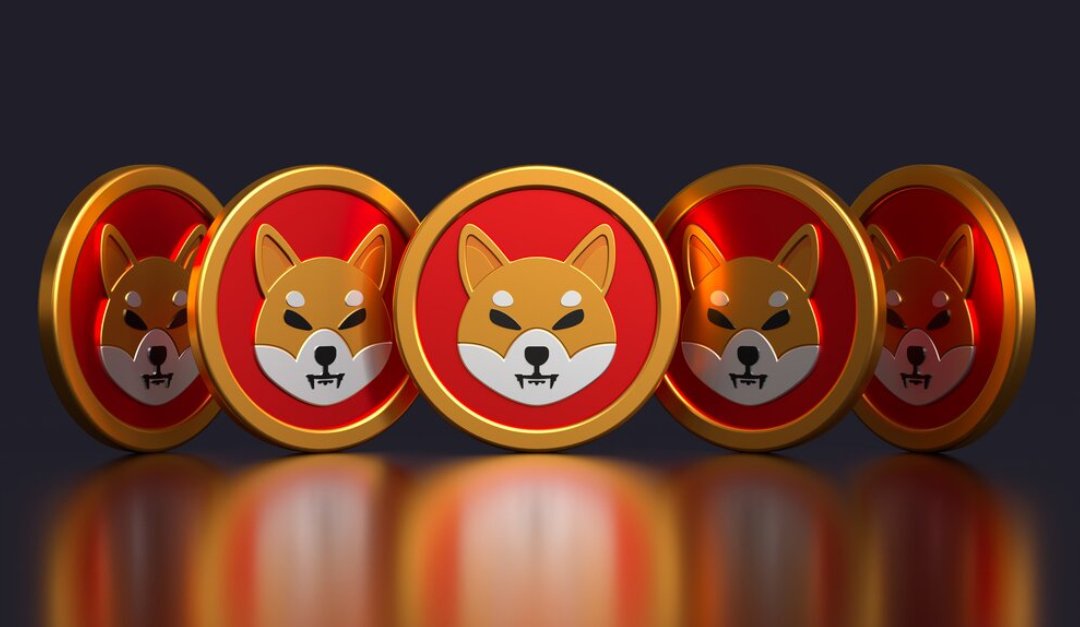
Shiba Inu among the most popular cryptocurrency in 2022, alongside Bitcoin and Ethereum.

Shiba Inu among the most popular cryptocurrency in 2022, alongside Bitcoin and Ethereum.

What Is Shiba Inu (SHIB)?

A cryptocurrency other than Bitcoin called Shiba Inu (SHIBUSD) is built on Ethereum and has the Shiba Inu, a Japanese hunting dog breed, as its mascot. Shiba Inu is frequently mentioned as a Dogecoin substitute; in fact, its proponents refer to it as the Dogecoin killer.

Shiba Inu and Dogecoin are two instances of meme coins. Meme coins are digital currencies associated with a certain topic, in this case, the Shiba Inu dog. Meme coins are typically introduced as inside jokes or parodies rather than as useful digital products. Unlike Dogecoin, which was introduced in December 2013, Shiba Inu was developed in August 2020 by an unidentified person or group called Ryoshi.

The Shiba Inu Ecosystem

The following three coins make up the Shiba Inu ecosystem:

  • SHIB: Shiba Inu: This serves as the project's primary unit of exchange. Starting with a supply of 1 quadrillion, or 1,000 trillion, Ryoshi gave half to Ethereum co-founder Vitalik Buterin for storage and then locked half in Uniswap for liquidity reasons. When India was suffering from the Delta version of the coronavirus in May 2021, Buterin sent the country more than 50 trillion Shiba Inu coins, which were then worth over $1 billion, to a COVID-19 relief fund there. Shortly after, Buterin added 40% of the whole supply of Shiba Inu to a so-called "dead wallet," or permanently deleted it from circulation.
  • Leash (LEASH): Leash is the second token in the Shiba Inu ecosystem and symbolizes the opposite end of the ecosystem's spectrum with a total supply of just 107,646 tokens as opposed to the billions of Shiba Inu tokens.
  • Bone (BONE): With a total supply of 250,000,000 tokens, Bone falls in the middle of the other two tokens in terms of its supply in circulation. On subsequent proposals, the SHIBArmy will be able to vote using it as a governance token.
  • ShibaSwap: ShibaSwap is a DeFi platform that aims to offer a secure cryptocurrency trading environment while remaining decentralized. The best site to purchase and sell SHIB and LEASH is on ShibaSwap.
  • Shiba Inu Incubator: The incubator looks for ways to value originality and ingenuity while refocusing attention away from well-known artistic forms including painting, photography, and computer portrayal.
  • Shiboshis: They are non-fungible tokens (NFTs) created by 10,000 Shiba Inus and recorded on the Ethereum blockchain. Each Shiboshi has a unique set of characteristics that makes it collectible.

Understanding Shiba Inu (SHIB)

A "woof paper"—possibly a play on the word "white paper"—that is accessible on the ShibaToken.com website lays out the fundamental principles of the Shiba Inu ecosystem.

The article claims that Shiba Inu was created as a response to the following straightforward query: "What would happen if a cryptocurrency project was 100% managed by its community?" Ryoshi, the organization's founder, explains that it began as an "experiment in decentralized spontaneous community creation." Ryoshi asserts that collective decentralization has the ability to forge stronger bonds than a centralized team could possibly manage.

The SHIBArmy's base of more than 500,000 members upholds its founding tenets, which are: 

  • The project started from scratch, with nothing, in the spirit of building something from nothing; 
  • It was not established on the foundation of an already established group or pre-formed team; and 
  • A professed love of Shiba Inu dogs.

Being an ERC-20 token based on Ethereum, Shiba Inu was created on and is hosted on the Ethereum blockchain rather than its own blockchain. The Shiba Inu ecosystem was built on Ethereum because, as Ryoshi said in the paper, it was already secure, and dependable, and allowed the project to keep its decentralized nature.

Shiba Inu joins Bitcoin and Ethereum as the most popular cryptocurrencies in 2022.

Numerous other types of assets have entered the cryptocurrency market throughout time. Most, however, fell short of rivaling well-known cryptocurrencies like Bitcoin [BTC] or Ethereum [ETH]. As its ubiquity increased, the meme coin Shiba Inu [SHIB] changed this story. The product was well-liked even if its worth dropped somewhat this year.

The biggest cryptocurrency exchange in the world, Binance, tweeted about the cryptocurrency that will be most popular in 2022. It was anticipated that BTC and ETH would be on the list. But the presence of the Shiba Inu caught a lot of people off guard. But the Shib Army was jubilant. Clearly, 2022 was a very important year for Shiba Inu. The network generated a lot of buzz with the launch of its own video game and a restaurant with a SHIB theme. 

Alongside this, network developers could be observed making fun of the locals regarding Shibarium. The SHIB network started a surprise countdown earlier today. While many people thought this countdown had something to do with Shibarium, several people disagreed. The countdown had reached 14 hours, 45 minutes, and 11 seconds at this point.

Shiba Inu holding count clears the way for healing

After this year's holder count significantly increased, a decline in the total number of unique addresses began in December. However, the Shib Army was once more seen seeking to raise its numbers before 2022 came to an end. The number of addresses on SHIB at the time of publication was 1,268,344, which was a record high for the network.

As was already established, despite the asset's price is in freefall, Shiba Inu's popularity did not change. SHIB is currently trading 90.34 percent below its October 2021 $0.00008845 record high.

Shiba Inu was selling for a low of $0.000008537 at the time of publication, with a daily increase of 3.19 percent. In light of this, numerous members of the community pointed out that SHIB may be on level in terms of popularity with BTC and ETH. However, it was extremely doubtful that the price of the meme coin would ever reach those levels, at least anytime soon.

Changing The Conversation About NFTs With Wolf Pups

Changing The Conversation About NFTs With Wolf Pups

“Slow is smooth, smooth is fast”
“Slower than anyone wants, faster than anyone believes is possible”

Just two of the many through provoking quotes you will hear coming out of the Wolf Pup NFT powered Wolf Den. Wolf Pups are an exclusive collection of 5,000 unique Wolf Pups. As a Wolf Pup holder you get access to a private community, private events and the pride of displaying your Wolf Pup NFT as your profile picture on your favorite social media platform.

That is all fairly standard in the NFT space and amongst the Web 3 community. As the founder of the Wolf Den states:

“Only innovate where you differentiate. There is no need to change what works, the distinction is in the details that are unique to each person or project”

Anyone paying attention would agree: the individuals around the web rocking a Wolf Pup PFP are… different.

Wolf Pups are NFT’s, digital collectibles that are transferred, stored and secured on the blockchain. Wolf Pups are hosted on the Ethereum blockchain, up to this point all of the purchases and transactions have been done in Ethereum as the currency. The Wolf Den plans to change that, which we will explore later.

Each Wolf Pup has a unique blend of over 160 possible traits including background color, fur color, sword type shield type, eye color and tail color. While they have rarities that are programmed in, the Wolf Den is also changing how NFTs can be valued; another thing for later.

Each trait was carefully chosen by the creators to represent a reflection of the human condition. The Wolf Pup holders that pay very close attention have been posting publicly and in the private communities how much they have learned about themselves and how to interface with others effectively just by being part of the community.

As of today, 4,046 of the 5,000 Wolf Pups have been minted. When you ask the community members why they don’t push harder to get the rest minted the answer is a version of “slow is smooth, smooth is fast”. The community is far more interested in developing a strong culture that people want to not only be a part of but actively contribute to, than they are in traditional NFT metrics. The byproduct?

Only .6% of the minted wolf pups are listed on the marketplace. Wolf Pup holders don’t want to let go go their Wolf Pups. They’re busy registering them, naming them and creating stories for them, stories that the community is gravitating towards and paying attention to.

The idea is that, although each NFT has a programmatically and randomly designated rarity, holders can turn their specific Wolf Pup into a “niche celebrity” - the more someone identifies with, follows or learns form a Wolf Pup the more they value the IP, regardless of the randomly assigned programmed traits. The Wolf Pups are “born” with an objective value, but through their contribution and leaning into their uniqueness they can rise above and become more valuable to the community.

Understanding this, Wolf Pup holders have been empowered to create - specifically in a way that adds value through entertainment, education, support, etc.

The Wolf Den mission is a big one. They’ve already created their naming registry, had multiple in person events and given sneak peeks of their metaverse and gaming platform. The real mission, according to tweets and documents fom the team, is to build a web 3 world of significant contribution through building a publishing platform and publishing purpose driven projects onto the blockchain and into the Guard FDN ecosystem.

They have already published The Guardian Academy, an educational project that thousands of students learning and contributing to the web 3 space and Recovery Punks, a project by Artists for Addicts, committed to changing the global conversation about addiction recovery and connection.

The plan is to move all of the published projects, collaborators and partners over the ‘Guard FDN ecosystem’ - where they will all use Guard as their primary currency and, together, use the governance structure of the Guard FDN to create a a world of hundreds of projects all working together to use blockchain tech and web 3 community to continue to make a meaningful contribution to the world.

We’re along for the ride.

To learn more about the Wolf Den and their Wof Pups visit: https://www.wolfdenlabs.com/

Links:

Guardian Academy
Recovery PunksGuard FDN
Wolf Pup Registry

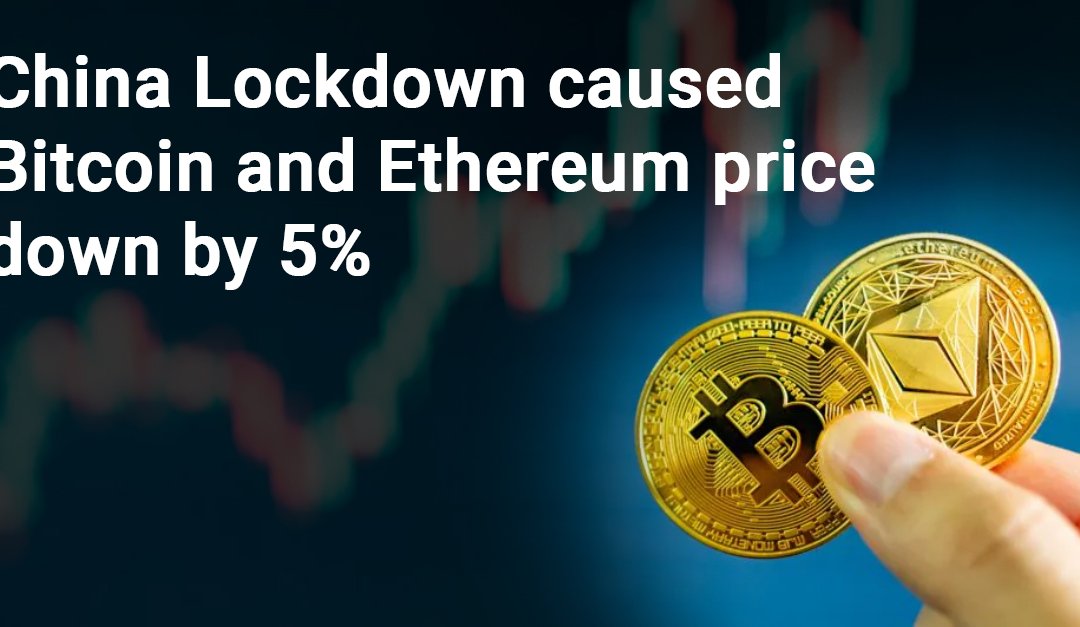
China Lockdown caused Bitcoin and Ethereum price down by 5%

China Lockdown caused Bitcoin and Ethereum price down by 5%

Due to a series of events that have significantly harmed any altcoin, including Bitcoin and Ethereum, the crypto winter may last longer. Bitcoin, the most popular cryptocurrency, fell more than 3% to $16,160 after failing to break out of a descending triangle pattern in the market. Similarly, Ethereum, the second-most valuable cryptocurrency, has fallen nearly 5% to $1,171, following Bitcoin's lead.

It looks like that the bad time of crypto is not going to end any time soon. The recent FTX collapse has also affected the entire crypto industry and most of the big coins are going down when it comes to their price. Just recently, we have seen the sudden crash of BTC going below $17000 which looks quite alarming to all Bitcoin holders. While on the other hand, for the people who were thinking to buy BTC, it may be a good time for them since they are now less expensive than their value before the collapse.

China’s Situation:

China Lockdown Causes a Sell-Off in Global Markets.  Cryptocurrencies fell as a result of investor apprehension in global markets brought on by protests in China against Covid restrictions. Outraged by the stringent COVID-19 regulations, protesters demanded the resignation of China's powerful leader.

On Sunday, officials in at least eight cities attempted to suppress demonstrations that posed a direct threat to the ruling Communist Party. This was a rare rebuke. Nearly three years into the pandemic, dissatisfaction with President Xi Jinping's well-known zero-COVID policy has sparked a surge of public disobedience on the mainland not seen since President Hu Jintao took office a decade ago.

The COVID-19 regulations are also having an impact on the second-largest economy in the world. The largest demonstrations against the ruling party in decades have taken place since and have spread to cities like Beijing, the capital, and dozens of university campuses.

China's role in the cryptocurrency slump:

The second-largest economy in the world, China has a significant impact on global financial markets; therefore, financial backers are searching for a place of refuge to stop their speculations. Since stocks and digital currencies are not considered safe havens, today's price action is bearish.

However, Bitcoin and other currencies may experience a sharp bullish reversal as the situation in China improves and the protest ends.

However, given that some investors are beginning to believe that Chinese stocks may have reached a crossroads following the recent sharp gains, the protests may dampen sentiment. This is the case in spite of a growing chorus of bullish China calls on Wall Street, which cited favorable policies and low valuations.

The unrest in China may also dampen hopes that a gauge of currencies from emerging markets will experience its strongest monthly rally in six years on global markets.