Major media agencies and experts have repeatedly failed to provide readers with a clear interpretation of what happened, despite the fact that Sam Bankman-cryptocurrency Fried's venture was revealed as a hoax in recent weeks. August publications have made several significant revelations on the incident, but they have also frequently appeared to downplay those revelations in ways that minimized Fried's and Bankman's guilt.
The listed Fraud.
It is clear that what happened at the FTX cryptocurrency exchange and the hedge fund Alameda Research involved several intentional and deliberate fraud efforts intended to defraud both investors and users of their money. Therefore, a recent New York Times interview came under fire for appearing to attribute FTX's demise to bad management rather than criminal activities. A Wall Street Journal article has deplored the loss of FTX's charitable donations, presumably validating Fried's strategic philanthropy Bankman-pretensions. Vox co-founder Matthew Yglesias, a court chronicler of the neoliberal status quo, sought to conceal his personal involvements while avoiding the idea that the Bankman-funds Fried's were truly embezzled by attributing them to helping Democrats in the 2020 elections. The most outrageous element of this is that some media outlets have referred to what happened at FTX as a "bank run" or a "run on deposits," despite Bankman-repeated Fried's claim that the business was simply overleveraged and poorly managed. Both of these attempts to cast blame for the consequences obfuscate the real problem, which is the misappropriation of client monies. Banks are vulnerable to "bank runs" since they are obviously in the business of lending client money out to generate profits. They could momentarily run out of money if everyone withdraws at once, but there won't be any long-term problems. Although not banks, FTX, and other cryptocurrency exchanges are not. Since they don't (or shouldn't) participate in lending, even a very sudden increase in withdrawals shouldn't generate a liquidity squeeze. Customers were clearly guaranteed that the firm would never lend out or otherwise use the bitcoin when they committed it to the FTX exchange. Actually, the funds were moved to the affiliated trading firm Alameda Research, where it seems they were just thrown away. Simply said, this is theft on a level that is practically unheard of. Even though the total losses have not yet been determined, a bankruptcy filing claims that up to one million consumers might be impacted. A large number of further decisions and activities that, even in the absence of crypto-specific legislation, would have been regarded as financial fraud if FTX had been a U.S.-regulated firm have been uncovered in less than a month as a result of reporting and the bankruptcy process. These schemes are nonetheless subject to legal action in U.S. courts to the extent that they made it possible for American people's property to be effectively stolen.
Their many crimes.
1. The link to Alameda
The connections between Bankman-hedge Fried's fund, Alameda Research, and FTX, the exchange that attracted ordinary speculators, are at the center of his deception. Unlike an exchange, which eventually makes money from transaction fees on assets owned by users, a hedge fund like Alameda seeks to make money by actively trading or investing funds it controls.
2. The FTT print and 'collateralized' loans
The majority of the FTX exchange token, FTT, which FTX and Alameda held, was produced by FTX, but only a small piece of it was traded on open markets. As a result, their holdings were practically illiquid and couldn't be sold for the open market price. In spite of this, Bankman-Fried recorded its worth at that false market value.
3. Margin liquidation exemption for Alameda Research
According to legal documents submitted by the new CEO overseeing FTX's bankruptcy and liquidation, Alameda Research was said to have special user status on the platform, including a "hidden exemption" from the platform's liquidation and margin trading restrictions.
4. Alameda leading the FTX lists
According to the crypto analytics company Argus, Strong evidence suggests that Alameda Research had access to knowledge regarding FTX's plans to sell certain coins. Alameda was able to buy significant quantities of these tokens ahead of the listing and subsequently sell them since an exchange listing often has a beneficial effect on a token's price.
5. Executive personal loans of a large amount
FTX officials are said to have received loans totaling $4.1 billion from Alameda Research, including substantial personal loans that were likely unsecured. According to documents from bankruptcy proceedings, Bankman-Fried received a staggering $1 billion in personal loans as well as a $2.3 billion loan to a firm called Paper Bird in which he had a 75% ownership interest. Director of engineering Nishad Singh received a $543 million loan, while co-CEO of FTX Digital Markets Ryan Salame received a $55 million personal loan. And the list goes on…
In the year 2013, DOGE or Dogecoin was developed as a fun alternative to start cryptocurrencies like Bitcoin. The Shiba Inu emblem and moniker are set up on a meme. DOGE is purposely ample concerning Bitcoin, which was created to be insufficient. Its supply is unlimited as 10,000 new coins are produced every minute. Dogecoin was mostly thought of throughout its inception as a humorous "meme coin," loved by its community but having very sporadic use. The situation changed in 2021, and although each coin is only worth a few cents, Dogecoin is now one of the ten largest cryptocurrencies by market cap, with a total market price of more than $50 billion. How is it even doable? because of the large global Dogecoin population. Unlike Bitcoin, which was designed to be uncommon and inflation-resistant, Dogecoin was created to be widespread. There is around 130 billion DOGE in use, and 10,000 more are added every minute by miners. (In comparison, just 12.5 BTC are mined every ten to fifteen minutes in the case of the approximately 19 million bitcoin). Dogecoin was created as a lighthearted, lower-risk alternative to Bitcoin; a key element of the design is abundance. When Doge was first presented in late 2013, it immediately drew a fervent online community. Members of this community have used DOGE for anything from paying random people for smart Reddit comments to paying for the Jamaican bobsled team's trip to the 2014 Sochi Winter Olympics.
Why does Dogecoin have value?
Based on supply and demand, the market values DOGE similarly to how it values any other asset. Given the enormous and growing supply, prices had to rise dramatically in order to reach their recent levels. Retail investors on Reddit (particularly the wallstreetbets forum that gave rise to the "meme stock" mania), the broader crypto bubble, and other factors caused prices to climb by around 7,000 percent in the first quarter of 2021. Months of tweets from Tesla founder Elon Musk that showed to be made in gag, lead up to his appearance on Saturday Night Live in May 2021. In the year 2021, the rapidly rising prices of DOGE obtained a lot of media attention, which for a while started a loop that attracted other investors and greater price increases. When an asset has such a significant increase, FOMO, or "fear of missing out," attracts a flood of new traders. DOGE is still a very volatile cryptocurrency, therefore there is no way to predict if its value will increase or decrease in the future.
Dogecoin's Bitcoin-Beating Bounce Can Be A Bad News for the Market
Despite the increased credit risk that significant industry participants are now facing in the aftermath of FTX's collapse, bitcoin (BTC) and the broader crypto market appear to have stabilized. However, there is still one aspect that raises the possibility that the slump is still ongoing. Dogecoin (DOGE), a meme cryptocurrency, has increased 40% in value over the last 10 days, beating ether's (18%) and bitcoin's (8%) gains. According to statistics from CoinDesk, the total market value has climbed by 10% to $808 billion. The difference is noteworthy because historically, disproportionate rises in DOGE and other meme currencies like Shiba Inu (SHIB) have signaled a market-wide sell-off. Blockchain analytics company Santiment said in a market insights report that "every time [the] price of DOGE starts climbing fast, there's a market-wide drop following only seconds afterward. We are now noticing such a surge. The issue now is: Is this moment unique?" The graphic demonstrates how rallies in DOGE, which were initially just a joke in 2013, have changed over the past 12 months into contrarian indications, causing investors to reduce their bullish positions in bitcoin and other cryptocurrencies. The most famous instance would be DOGE's late-October spike, which predicted bitcoin's mid-November decline to 24-month lows due to FTX. Whether the past will be repeated is yet to be seen.
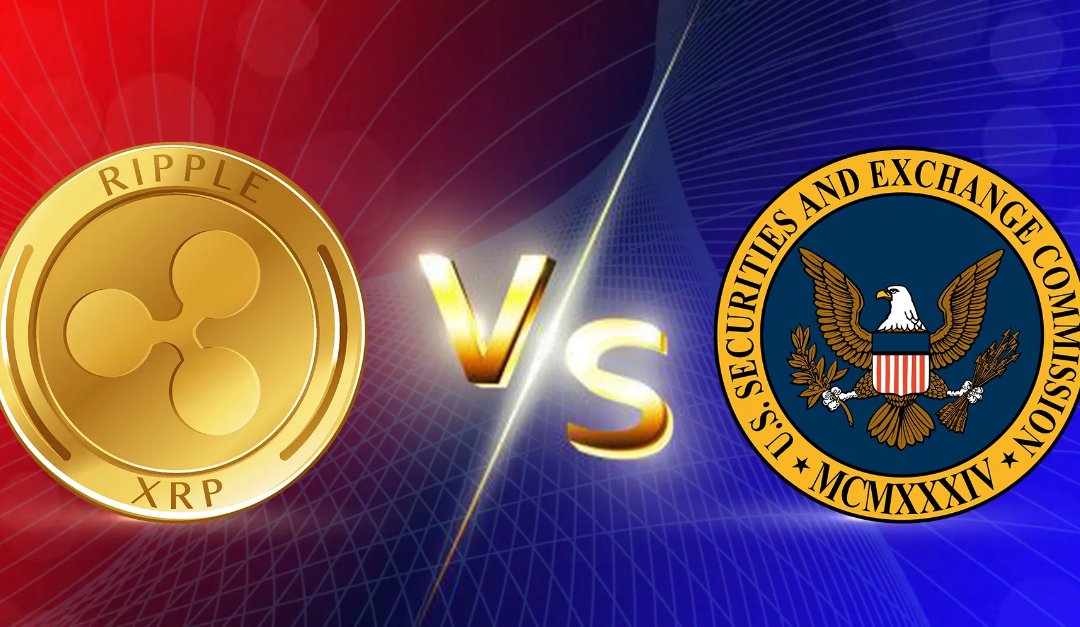
It's possible that the legal battle between Ripple Labs and the US Securities and Exchange Commission (SEC), which has been going on since 2020 and will serve as a model for the cryptocurrency sector, will soon be over. The SEC and Ripple Labs, the company behind ripple (XRP), have both filed motions for summary judgment.
In December 2020, a day before former SEC Chair Jay Clayton resigned, the SEC filed a lawsuit against Ripple Labs, its CEO Brad Garlinghouse, and its Chairman Chris Larsen, alleging that the company had raised over $1.3 billion through unregistered XRP sales. Over the past two years, the parties have filed a number of discovery motions without actually litigating the underlying issue of whether Ripple violated securities law by selling XRP. The motions for summary actually mean that both parties are asking the court to really conclude whether either the SEC or Ripple has sufficiently given enough proofs to demonstrate somehow whether there was an infringement.
About Ripple:
Ripple, a blockchain-based alternative to SWIFT, the global interbank messaging system that facilitates daily payments totaling trillions of dollars, was established in 2012. Banks and fintech companies buy software from the company. Additionally, Ripple makes use of XRP, the sixth-largest cryptocurrency in terms of market value, to facilitate international trade. The majority of the 100 billion XRP tokens in circulation are owned by the company, which periodically releases them from an escrow account to maintain stable prices.
Updates regarding the legal battle:
Stuart Alderoty, Ripple's general counsel, tweeted that the company's response was its final submission. In the filing, the company requested a judgment in its favor, according to him. Alderoty stated that the cryptocurrency company was pleased with the defense it put up for the crypto industry. The SEC has failed to demonstrate the existence of an investment contract as indicated in the redacted court filing from December 2.
According to the company, both Ripple founders had the right to summary judgment regarding their decision to sell on foreign exchanges. The business claims that the SEC was unable to provide any material facts to the contrary.
When Fox Business reported on November 14 that Ripple had reached a settlement agreement with the SEC, there was some confusion. However, a later report by one of its reporters revealed that a Ripple spokesperson had refuted these assertions. Throughout the two-year legal battle, Ripple received significant support from the crypto community. Cryptocurrency businesses like Coinbase and others submitted around a dozen amicus curiae briefs. In addition, approximately 70,000 holders of XRP submitted a brief in support of the business.
BlockFi, a cryptocurrency lender, announced on Monday that it would be filing for Chapter 11 bankruptcy protection. The company was harmed earlier this month when it was exposed to the spectacular collapse of the FTX exchange. The court filing in New Jersey comes as crypto prices have dropped dramatically. The price of Bitcoin, the most widely used digital currency, has dropped by more than 70% since its peak in 2021.
About BlockFi:
BlockFi is an entire ecosystem for advanced cryptocurrency traders. It has more than one million verified users and assets worth more than $10 billion. BlockFi's customers may appreciate the variety of products it offers. BlockFi is a crypto exchange that also offers low-interest loans, an interest-bearing account with an APY of up to 8% and a crypto rewards credit card. It was established in 2017 and has its headquarters in Jersey City, New Jersey. Reimagining and expanding access to banking resources in communities that traditional banking services had not served is this company's primary mission. BlockFi has grown into a global company with over 800 employees since its inception. BlockFi provides a number of useful products in addition to 13 digital assets that can be purchased. In general, it can be a good choice for experienced cryptocurrency traders.
Factors leading towards BlockFi Bankruptcy:
BlockFi had links with FTX, which petitioned for security in the US recently after brokers pulled $6bn from the platform in the time span of three days, and opponent trade Binance deserted a rescue deal. BlockFi listed FTX as its second-largest creditor in a court filing on Monday, with $275 million owed on a loan extended earlier this year. It stated that more than 100,000 creditors owe it money.
BlockFi was to receive a $400 million revolving credit facility as part of a July agreement with FTX, and FTX had the option to purchase it for up to $240 million. In addition, BlockFi's bankruptcy filing comes after Celsius Network and Voyager Digital, two of BlockFi's largest rivals, filed for bankruptcy in July citing extreme market conditions that had caused losses at both businesses.
During the pandemic, crypto lenders, the de facto banks of the cryptocurrency industry, flourished by offering retail customers interest rates in the double digits in exchange for cryptocurrency deposits.On the other hand, institutional investors who wanted to make leveraged bets, like hedge funds, paid higher interest rates to borrow the money from the lenders, who made money from the difference. BlockFi claimed in its bankruptcy filing that it had appointed Berkeley Research Group as a financial advisor and Haynes & Boone and Kirkland & Ellis as bankruptcy counsel. According to them, a third of BlockFi's $1.8 billion in outstanding loans were unsecured at the end of June.
Take a look at the volatility that cryptocurrency investors have experienced if you think the stock market has been through a bad year. As of the evening of December 1, the total value of all crypto currencies fall by more than 70% to $853 billion, after the aggregate valuation of more than 20,000 digital currencies peaked at $3 trillion approximately 13 months ago.
2021-2022 has been a wild ride for cryptocurrencies, but the Shiba Inu coin has benefited from this situation. Despite its low current value, the Shiba Inu Coin has attracted attention for a variety of reasons. Nevertheless, the coin is establishing itself as an excellent investment option and taking over a significant portion of the crypto market. However, what exactly is Shiba Inu coin and will it be able to reach $1 in 2023? Let's figure it out!
Chances of Shiba hitting $1:
Only 659 merchants accept the token as payment for goods and services at the moment, and if that number does not significantly rise, Shiba Inu will remain on the margins of the financial industry.
To help make the token more useful, Shiba Inu developers are developing new technologies like a complete metaverse. Although the Shiba Inu is not yet available for purchase, some brand-new concept images were made public in the month of November, resulting in some buzz on social media. Owners of virtual land within the virtual world will be able to rename their plots by paying a fee in Shiba Inu tokens when it finally launches.
The price of each Shiba Inu token will naturally rise in proportion as a result of the tokens' burning or permanent removal from circulation. The burning system is a component of numerous Shiba Inu-themed projects, including the Shiba Coffee Organization, pointed toward decreasing the token's tremendous supply of 589 trillion units.
So, can it hit to $1?
Well, with 589 trillion tokens in circulation, the Shiba Inu's total value would rise to $589 trillion at a price of $1 per token, making it the world's most valuable asset. Unfortunately, even the most optimistic crypto investors don't think that's possible, so the only way to get that price is to cut back on supply.
It is highly unlikely that novelties like the metaverse will cause the supply of Shiba Inu to decrease by 99.99998% in order to mathematically bring the price to $1. In fact, as of this writing, only 30 million tokens have been burned in the last 24 hours. It would take over 64,000 years to reduce the supply enough for Shiba Inu to reach $1 if that rate is maintained at 10.9 billion tokens per year. Therefore, it is likely that investors will be disappointed if they anticipate Shiba Inu is going to rise up to $1 in 2023. To make it happen, the burn rate would have to swell by a ridiculous amount.