Solana is a highly functional open source project that leverages the permissionless feature of blockchain technology to create decentralised finance (DeFi) solutions. While the project's concept and first development began in 2017, the Solana Foundation, based in Geneva, Switzerland, formally launched Solana in March 2020.
The Solana protocol is designed to make it easier to develop decentralised applications (DApps). It seeks to boost scalability by merging a proof-of-history (PoH) consensus with the underlying proof-of-stake (PoS) consensus of the blockchain. Solana's innovative hybrid consensus process has grabbed the interest of both retail and institutional traders. The Solana Foundation is dedicated to increasing the availability of decentralised money.
What distinguishes Solana?
Anatoly Yakovenko's proof-of-history (PoH) consensus is one of the critical breakthroughs Solana brings to the table. This idea provides for higher protocol scaling, which improves usefulness. Solana is well-known in the cryptocurrency field for the blockchain's lightning-fast processing speeds. The hybrid protocol developed by Solana considerably reduces transaction and smart contract validation times. Because of its lightning-fast processing rates, Solana has also grabbed the interest of institutions. The Solana protocol is intended for both casual and corporate users.
Solana assures customers that they will not be surprised by increasing fees and taxes. The protocol is meant to have minimal transaction costs while ensuring scalability and quick processing. Solana is ranked number 7 in the CoinMarketCap rating as of September 2021, when combined with the lengthy professional skills developers Anatoly Yakovenko and Greg Fitzgerald offer to the project. This followed a spectacular bull run in which the price of Solana increased by approximately 700% from mid-July 2021.
Following the release of the Degenerate Ape NFT collection, SOL reached an all-time high (ATH) of more than $60, and it has been steadily rising since, owing largely to increased developer activity on the Solana ecosystem, increased institutional interest, a growing DeFi ecosystem, and the rise of the Solana NFTs and gaming vertical.
Solana achieved an all-time high of $216 on September 9, 2021.
Solana has garnered a lot of attention for its speed and performance, and it has even been mentioned as a competitor to Ethereum and the dominating smart contract platform. However, the network has experienced repeated outages, undercutting its pricing and ambitions to become the "Visa of cryptocurrency." Furthermore, its ecosystem has been accused of unfair tokenomics that favours venture capitalists. Despite the fact that we are in a bear market, institutions are interested in Solana. It has regularly generated positive flows, making it the institutions' preferred bad market companion. SOL inflows totaled $0.4 million, as previously reported.
The next week, the figure improved much further. SOL reported a $0.7 million positive flow in mid-December. All other crypto asset-related instruments [excluding short bitcoin products], as stated below, saw negative flows. Deribit, the world's largest options exchange, said on Monday that it will no longer provide Solana inverse products. This implies that following the impending December 30, 2022 expiry, no new Solana inverse options or futures will be listed on the market. Deribit's Twitter thread did not elaborate on the cause for the deletion. People in the neighbourhood, on the other hand, ascribed the same to perhaps low demand.
Recovery of Futures OI Notes
Aside from inverse Solana products, the Open Interest for conventional Solana futures contracts has recently increased. The same may be said about fresh money entering the ecosystem. On December 17, the total SOL OI [futures] was $163.66 million. Following the progressive slope, the figure is now north of $217 million. In the same time period, the figure on Deribit increased from $1.89 million to $2.03 million.
New money entering the ecosystem is not necessarily a good indication because traders may be collectively channeling them towards shorting the asset. That appears to be the case for Solana this time. The financing rate was somewhat negative on all major exchanges. The same stated that short traders currently have the upper hand since they are ready to support long traders. As a result, the aggregate trader mood is somewhat pessimistic. SOL has lost 2% on a daily basis and 7.5% on a weekly basis. The market-cap asset valued $4.1 billion was trading at $11.31 at press time.
For the greater part of 2022, stablecoins have been a source of contention. However, Japan has taken a position that may influence the course of this story. For crypto investors residing in Japan, Japanese officials are evaluating potentially substantial limits on the use of stablecoins such as Tether USDT and USD Coin USDC.
Japan will simplify stablecoin operations in 2023.
According to the Nikkei, a Japanese news source, in 2023, the Financial Services Agency (FSA) will lift the restriction on the domestic circulation of foreign-issued stablecoins. If the limitation on foreign-issued stablecoins is abolished, the body in charge of stablecoins in the nation becomes the distributor by default. To protect the tokens' value, distributors will handle them rather than the offshore issuers, according to the newspaper.
The country's new stablecoin law would allow local exchanges to support stablecoin trade in return for asset preservation via deposits and a limit remittance amount. According to the paper, if the usage of stablecoins grows, international remittances might become speedier and less expensive.
In 2023, Japan will eliminate its restriction on foreign-issued stablecoins.
The guidance requires that issuers of stablecoins established inside the region must prepare guaranteed value-added assets and that issuers are confined to banks, registered transfer agents, trust organisations, and so on.
After December 26, the Financial Services Authority will start polling on the guidelines. According to the FSA, authorising stablecoin distribution in the country will demand new anti-money laundering rules. As previously reported, the country's parliament passed legislation preventing non-banking companies from issuing stablecoins beginning in June 2022. Because no local exchanges currently provide trading in stablecoins like USDT or USDC, the new action will have a significant impact on the trading services accessible in the country.
According to official statistics, none of the 31 Japanese exchanges registered with the FSA, including BitFlyer and Coincheck, handled stablecoin trading as of November 30, 2022. Meanwhile, the maximum amount of remittances for such stablecoins is suggested to be 1 million yen, or $7,500 per transaction.
However, it is unclear which stablecoins will return to the Japanese market. One of the stablecoins to join the market might be the USDC created by the American corporation Circle. Tether (USDT), the largest stablecoin, might be another participant.
The current crypto ecosystem in Japan
Recently, Japanese authorities have started creating crypto-related rules. On December 15, Japan's ruling Liberal Democratic Party's tax committee approved a plan to exclude crypto firms from paying taxes on paper gains issued tokens. Local authorities had already warned against the usage of algorithmic stablecoins such as TerraUSD (UST).
The Web3 project team proposed eliminating the tax on paper gains in an intermediate policy proposal. It also included legislative recommendations for decentralised autonomous organisations (DAO) of the LLC variety, as well as support for the issuance of yen-based permissionless stablecoins, governance improvements are being implemented at the Japan Virtual Currency Exchange Association, which is in charge of token screening and auditing requirements for crypto firms. Furthermore, the Digital Agency of Japan said in November that it will establish its own decentralised autonomous organisation (DAO) before obtaining its legal standing.
Furthermore, the Japanese Ministry of Economy has set up a web3 policy agency. Meanwhile, Binance has devised a strategy to re-enter the Japanese market. This follows a year of withdrawal from the market in response to warnings from domestic regulators. The top exchange by volume may purchase the Japanese cryptocurrency exchange Sakura Exchange Bitcoin in an effort to re-enter the market.
Meanwhile, Square Enix and the crypto-heavyweight SBI announced a new collaboration. The Tokyo Stock Exchange-listed gaming firm and SBI agreed to a crypto gaming merger and acquisition deal. In addition to stablecoin legislation, officials are encouraging long-term collaboration with the country's cryptocurrency miners. The partnership between Tokyo Electric Support (TEPCO) and equipment manufacturer TRIPLE-1 will use excess grid electricity to support bitcoin mining.
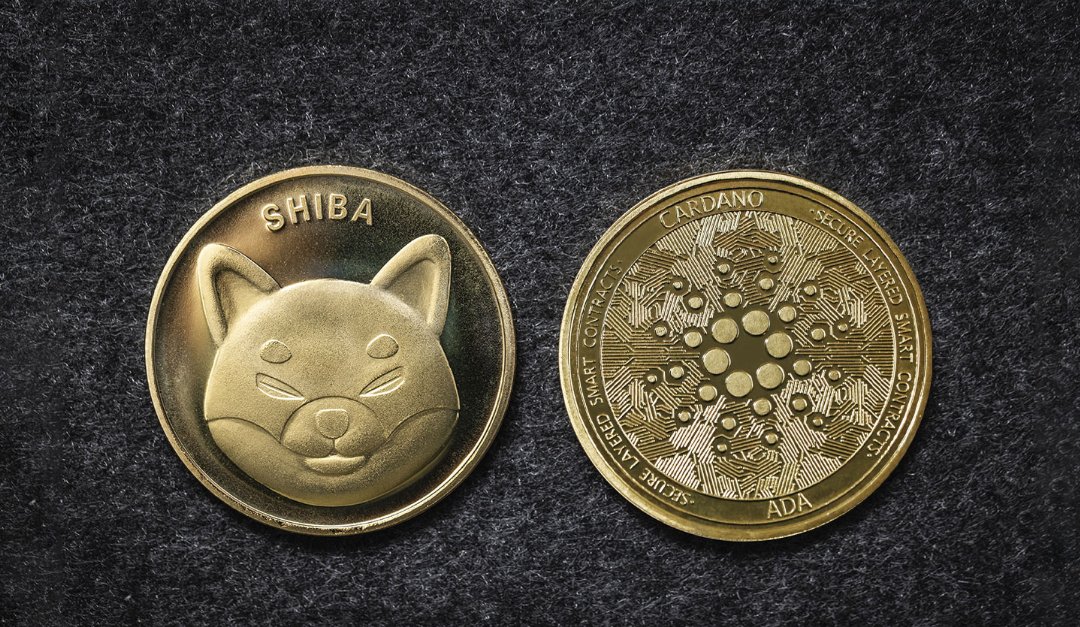
Cardano (ADA) is a proof-of-stake blockchain platform which aims to bring about positive global change. The open-source initiative also aspires to "redistribute power from unaccountable systems to the periphery to individuals," thus contributing to the creation of a more safe, transparent, and fair society.
Cardano was formed in 2017 and was named after Gerolamo Cardano, who was a 16th century Italian polymath. The native ADA token is named after Ada Lovelace, a 19th-century mathematician widely considered as the world's first computer programmer. The ADA token is designed to enable owners to participate in the network's operation. As a result, users who own the cryptocurrency have the ability to vote on any proposed modifications to the coin. According to the team behind the layered blockchain, there have already been several compelling use cases for its technology, which intends to facilitate modular development of decentralized apps and smart contracts.
Charles Hoskinson announced the introduction of the Alonzo hard fork in August 2021, leading the Cardano price to skyrocket, rising 116% the next month. The Cardano 'Alonzo' hard fork was formally implemented on September 12, 2021, providing smart contract features to the network. Over 100 smart contracts were implemented in the 24 hours following the launch.
Cardano is used by agricultural organizations to track fresh fruit from farm to fork, while other solutions created on the platform allow educational credentials to be securely saved and shops to combat counterfeit items.
What Is SHIBA INU (SHIB)?
SHIB is the "DOGECOIN KILLER," according to the SHIBA INU website, and is featured on their own ShibaSwap, a DEX., The Shiba Inu money was produced under the alias "Ryoshi" in August 2020. Ryoshi considers himself as a nobody and inconsequential, and he believes that any attempts to uncover his identity, even if successful, will be unsatisfactory.
This meme currency swiftly grew in popularity and value as a community of investors were pulled in by the coin's charming charm along with headlines and tweets from celebrities such as Elon Musk and Vitalik Buterin. Vitalik Buterin was long thought to be the creator of the Shiba Inu, however he contradicted this on the Lex Fridman podcast on June 5, 2021.
Shiba Inu has since piqued the curiosity of other exchanges. SHIB, Mexico's largest cryptocurrency exchange, said in September that it will begin trading on its platform. Giottus, an Indian cryptocurrency exchange, made the same announcement. Bitstamp, Europe's largest crypto exchange, said that Shiba Inu would be listed for trade in early 2022. Korbit, a South Korean exchange, became the first in the country to offer the SHIB coin in 2021.
ADA Underperforms SHIB, and Nansen CEO Makes Fun of Cardano Brothers
The creator and CEO of blockchain analytics company Nansen, Alex Svanevik, recently turned to Twitter to mock Cardano's native coin."Cardano brothers never thanked me for this," he tweeted. Svanevik was alluding to a forecast he made in March, adding, "Last chance to sell ADA over $30B market value." Svanevik appears to have been proven true, because ADA has had a bad year in terms of price performance. The cryptocurrency has dropped 91.67% from it's all-time high. Furthermore, it is down 81% year to year, which is higher than the meme coin Shiba Inu (77%).
Although ADA had a short-term bump in the run-up to the Vasil hard fork in September, it has been unable to gain traction since then. Despite its poor performance, ADA remains one among the top ten largest cryptocurrencies by market capitalization, with a valuation of almost $9 billion.
Svanevik's clairvoyance may have protected some investors from severe losses this year, but there doesn't appear to be much reason for optimism for those who are still hanging onto their ADA coins as we approach 2023. Market sentiment is very gloomy, with the sector still reeling from the FTX collapse and the US Federal Reserve refusing to abandon its hawkish monetary policies. According to U.Today, cryptocurrency expert Bobby Lee said that the next crypto bull market cycle will not begin until 2025. Svanevik's criticism of ADA is unsurprising given his backing for Ethereum, a key Cardano rival. The Ether cryptocurrency is 75.14% lower than its all-time high.
The Bitcoin price was $16,825.85, down -0.10% in the last 24 hours. The current price movement of Bitcoin has resulted in a market value of $323,794,533,258. Bitcoin has changed -63.61% so far this year. According to CoinDesk's Digital Asset Classification Standard, Bitcoin is classed as a currency (DACS). Bitcoin is the world's first decentralized cryptocurrency, a sort of digital asset that records, signs, and sends transactions across the Bitcoin blockchain without the control of a central authority.
The Bitcoin network (with an upper-case "B") was established in January 2009 by an unknown computer programmer or group of programmers under the alias "Satoshi Nakamoto." The network is a peer-to-peer electronic payment system that employs bitcoin (lower case "b") as a cryptocurrency to transmit value via the internet or as a store of value like gold and silver. Each bitcoin is composed of 100 million satoshis (the smallest unit of bitcoin), making each bitcoin divisible to eight decimal places. That implies that anyone may buy a fraction of a bitcoin for as low as one US dollar.
Billionaire software entrepreneur Mark Cuban is positive on Bitcoin, predicting that the price will continue to fall. "I want Bitcoin to fall a lot further so I can purchase some more," Cuban remarked on comedian Bill Maher's "Club Random" podcast. The owner of the NBA's Dallas Mavericks stated that investing in gold was not worthwhile, preferring digital assets. Mark Cuban, who is worth $6.25 billion, has long been a supporter of cryptocurrencies, notably Bitcoin, Ethereum, and Dogecoin.
"Gold is a store of value, as is Bitcoin," he explained when Maher made the analogy that what if everything had been to hell in a handbasket but they had a gold bar? Someone would have assaulted or murder you and stolen your gold bar. It is useless." Owning gold these days, according to the investor, it is essentially the same as owning a digital transaction, therefore he opted to invest in Bitcoin.
According to CoinGecko, bitcoin is currently selling at $16,844, which is more than 75% down from the all-time high of $69,044 it reached last year. In 2022, gold—and silver—performed far better as investments. Despite the fact that the crypto market and US equities have taken a beating, metals have mostly kept their worth. Gold is presently priced at $1,800 per ounce, up from $1,807 at this time last year.
Bitcoin, according to Maher, is not worth purchasing since it is not backed by anything. But Mark Cuban retorted, claiming that owning stock in "90% of the firms out there" was similarly meaningless. During the two-hour chat, the two agreed on at least one point: that San Francisco is no longer a good place to establish a digital startup, with Mark Cuban calling the city "pretentious."
Cuban said that an entire industry had been pushed out and the entire technical sector had deteriorated from and this is the latest thing, to just people urinating on the street. SEC Chair Gensler's attitude on bitcoin is criticised by Mark Cuban. Cuban was originally a sceptic of cryptocurrencies, but his NBA club now takes cryptocurrency for tickets and merchandising. It became the first basketball team to take Dogecoin in 2021. Since then, Mark Cuban, along with billionaire Elon Musk, has stated that Dogecoin, a cryptocurrency established as a joke, may be beneficial for making payments.
Using the underlying blockchain technology, Bitcoin is the first decentralized digital currency that permits peer-to-peer transfers without the use of any middlemen like banks, governments, agents, or brokers. Regardless of location, anyone on the network can send bitcoins to another user on the network; all you need to do is create an account on the network, deposit some bitcoins into it, and then you can send the bitcoins. You can either mine them or buy them online.
Bitcoin can be used for online transactions or as a kind of investment. The majority of its uses are to pay for products and services.
What Is Bitcoin Mining?
Using a global network of computers running the Bitcoin software, bitcoin mining refers to ensuring that transactions are genuine and added to the blockchain in the proper way. The mining process also produces brand-new Bitcoins.
● By mining bitcoins, which involves comparing new transactions to the Bitcoin network, new bitcoins are created.
● Mining is the process by which Bitcoin transactions are added to the blockchain and digitally confirmed on the Bitcoin network.
● Difficult cryptographic hash problems must be resolved in order to verify blocks of transactions that are updated on the decentralized blockchain ledger.
To answer these puzzles, sophisticated tools and a lot of processing power are needed. Bitcoin, which gives the activity its name, is given to miners in exchange for their work.
How Does Bitcoin Mining Work
Blockchain is a peer-to-peer decentralized network that has been praised for being extremely safe and transparent, and hence reliable. Due to the use of timestamps and cryptographic hash functions to protect entries in the blockchain network, it is nearly impossible and impractical to change transactions once they have been added to the ledger.
Blockchain security is fundamentally dependent on the absence of centralized control. Below is a description of what happens during bitcoin mining.
The Mining Conditions.
A bitcoin miner must first choose and set up their working equipment.
● Hardware GPUs (graphics processing units)
● SSDs for cryptocurrency mining, or mining software with ASICs (application-specific integrated circuits) are some examples.
● A wallet
● favorite mining pool (if one chooses the pool mining option instead of solo mining).
The system automatically starts mining as soon as everything is set up and operating. Any further human interaction only takes place when a network or system malfunctions, there is a power outage, or the system requires routine maintenance.
Bitcoin Transaction Elements
Three things happen when a transaction starts on the bitcoin network:
● An input transaction
● An output transaction
● The total amount of a transaction.
A bitcoin mining program creates a special cryptographic hash problem for each transaction input that is challenging to crack. The amount of transactions necessary to create a block is then organized into a Merkle tree by the program.
The SHA-256 algorithm and the Merkle Tree.
A Merkle tree, which acts as a summary of all the transactions in the block, is constructed using the hashes in a block. The SHA-256 method is used to repeatedly pair transaction IDs, or hashes of the entire tree. This hash is known as the Merkle root or the root hash. The Merkle tree enables efficient transaction verification on the bitcoin network.
Blocked Header
The Merkle root, which acts as a Merkle tree's distinctive identifier, is found in the block header. The following elements can be found in the block header, which contains information about the block:
● The bitcoin software's version number
● the block's prior block hash
● Merkle's root (root hash)
● Cryptographic nonce timestamp
● the target
Solving hash puzzle
This information will be used by miners to solve the hashing puzzle and add a block transaction. Understanding the Difficulty Requirement to Find the Hash Below a Given Target Miners must use the Difficulty Requirement to find the hash beneath a specified goal.
The target, which is represented as a 67-digit number included in the header, will be used to calculate the mining difficulty based on the number of miners vying to solve a hash function. Important: The difficulty varies according to how long it took miners to solve an equation in the 2016 blocks before the creation of each new block. This contributes to keeping the blockchain's appending pace at 10 minutes per transaction.
In an effort to solve the hash problem, miners would try to calculate a block's hash by repeatedly attaching a nonce to the block header until the resultant hash value is less than the target. A new block is successfully formed after a mining machine solves the puzzle, and it is validated in the Bitcoin network after there is agreement among the nodes. A block is added to the chain after being validated, which also verifies the transactions it contains. This occurs every ten minutes, as was previously mentioned.
Because there will be many miners (systems) competing to find the solution, the first miner to get the correct hash value wins a reward in bitcoin. This method has led to an increase in the number of Bitcoins in circulation.
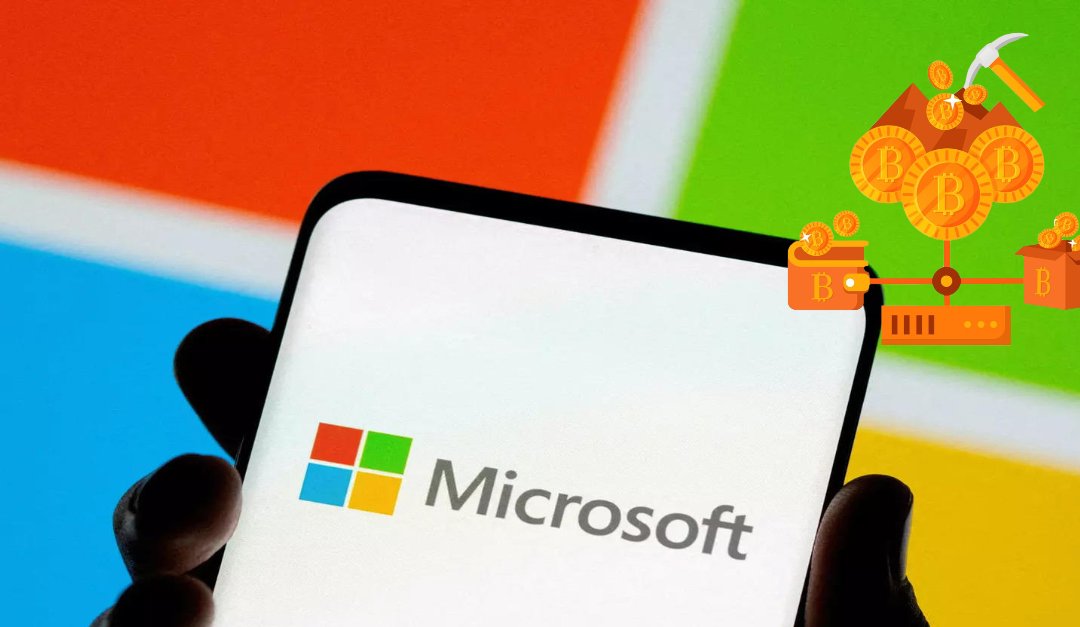
Microsoft forbids cryptocurrency mining to safeguard its cloud service users.
According to media sources, Microsoft has prohibited bitcoin mining from using its internet services in order to protect all of its cloud users. "Updated Acceptable Use Policy to clarify that mining cryptocurrencies are banned without prior Microsoft approval," reads Microsoft's summary of changes to the license. There wasn't much additional information in the license itself, according to The Register.
Microsoft was quoted as saying, "We made this move to help protect our customers and limit the risk of disrupting or impairing services on the Microsoft Cloud." It said, "Permission to mine crypto may be taken into account for testing and research for security detections.
A new cryptocurrency mining malware that can steal credentials, disable security measures, spread via emails, and eventually drop more tools for human-operated operations was the subject of a warning from Microsoft to users last year. In a variety of countries, including India, the "LemonDuck" crypto mining malware spread through phishing emails, security flaws, USB devices, and brute force attacks. Linux and Windows systems were its target.