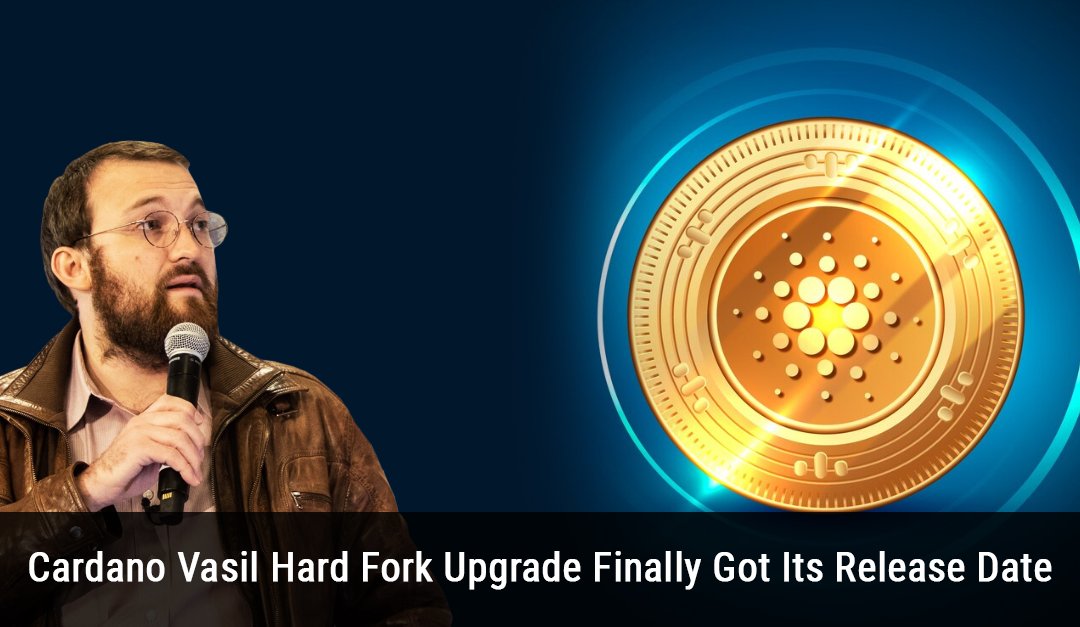
The Vasil hard fork is now one of the attention-grabbing matters in the crypto market. It is a part of Cardano's third development process. It was named after Bulgarian mathematician and prominent Cardano community member, Vasil Dabov. The fork means improving network capacity along with lower transaction costs. It aims to make the network more developer-friendly also.
The Ethereum Beacon merge is another hot topic for the network. But it is not alone in the market. Cardano's Vasil hard fork is also fixed to launch this month. It will be live on September 22. The date is just a week after Ethereum switched to the proof-of-stake consensus mechanism.
The Release Date :
The Cardano Vasil hard fork upgrade has finally got its release date. Currently, the upgrade is one of the crucial ones for the blockchain.
Vasil took a long time to be ready. Earlier, it was scheduled to launch on June 29, 2022. But, it has been delayed multiple times as the goal was to get the right time instead of not being rushed.
How does Will The Vasil Hard Fork work?
The hard fork is going to introduce so many Cardano Improvement Proposals (CIPs) and bug fixes items. Three crucial improvement proposals are CIP 33, CIP 31, and CIP 32.
The apps that were developed on Cardano are written in a programming language. The language is known as Haskell. That time, the code was converted into Plutus. Notably, Plutus is the native smart contract language for Cardano.
Though, the Plutus script is not accumulated on the blockchain. So, when a transaction takes place, it requires carrying all the app data along with it. Massive data with the transaction causes slow performance and also increases cost.
CIP 33 will initiate reference scripts that act "in place" of the script the user wants to use. They can be added to outputs. Also, it can point the Cardano Virtual Machine to a reference script instead of the whole script with the transaction. However, this will work for small and lighter transactions. It will produce a quicker process and lower fees.
Additionally, Cardano developers will introduce a new kind of input with CIP 31. It is known as reference input. It will allow users to consider outputs without spending them.
CIP 32 is going to introduce an on-chain data storage feature for the user community. It is expected that it would improve Cardano's decentralized architecture.
The Vasil fork also contains CIP 40 and diffusion pipelining. CIP 40 will bring a new type of output transaction. It will be known as collateral output. On the other hand, diffusion pipelining will upgrade information extension regarding a newly added block before it is approved.
How will the Vasil update Impact ADA Rates?
Before Vasil, there have been three Cardano hard forks. The hard forks are followed by Shelley, Mary, and Alonzo. All these hard forks impacted the price of ADA timely. One general matter is that prices rallied due to these hard forks and decreased after the upgrade. That price dropping has happened with Shelley and Alonzo. But, during Mary's upgrade, prices continued to rise.
The same scenario was seen for the Vasil fork. The prices were rallying over the last couple of days after the reveal of Vasil's launching date. Prices raised from $0.453 on September 2 to $0.496 during the time of the post. It means a 9 percent price increase within a couple of days.
ADA is trading now at $0.4969. That is up 0.27 percent in the last 24 hours. Whereas, Trading volume is now at $737 million and down 8.20 percent at the same time.
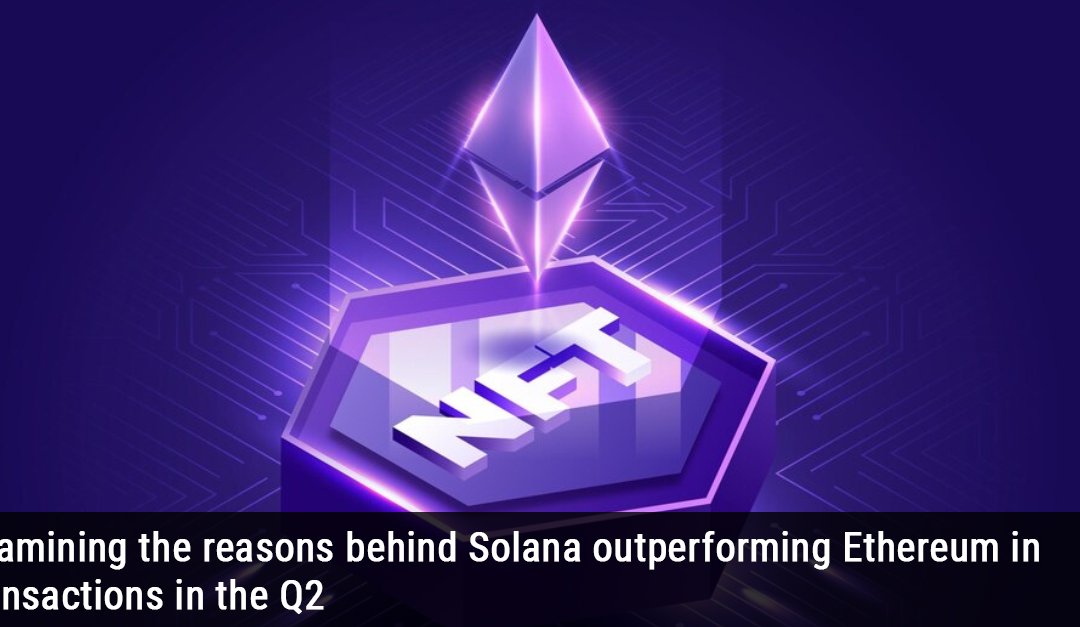
In the highly volatile market of the crypto industry, it is obvious that one crypto asset might get ahead of others. It is a never-ending race in which at one point some may fall behind and at the other point, leave other crypto assets behind. It is therefore important to keep track of it all if those who are associated with it want to be on the safe side and place their bets in the right cryptocurrency. One such event occurred more recently when Solana performed extremely well and left behind Ethereum based on its performance.
A closer look at the transactions in Solana
With time Solana has gained huge popularity and many transactions are now being made in the Solana blockchain. In recent times, these transactions have been steadily rising on the Solana blockchain, and this led to almost as many as 40 million daily transactions. In comparison to this, Ethereum failed to get as many transactions and could manage to make only one million transactions. These transactions were done specifically in April, May, and June.
What is the reason behind such performance?
Needless to say, the popularity of a crypto coin depends majorly upon the consensus of the general public. The more crypto manages to gather favor, the more its value increases. However, it is not always the case. It does not happen always that a crypto coin that is at the peak of popularity gets used more often of which Solana is an example. Even though there have been various ups and downs in its path, and despite being less popular than Ethereum, it managed to show its exemplary performance in the current season.
Solana's magnificent rise to the top
The best part about the rise that has been witnessed quite recently is that it has been steady throughout. This rise was analyzed by various experts and was even tracked based on daily non-vote transactions. There have been various factors that have been responsible for the rise Solana has been enjoying. There have been various decentralized apps such as Switchboard, that have contributed majorly to its spike.
Later when the vote transaction was taken into account, it showed that Solana managed to father almost as many as 100 to 200 million transactions in a day. This spike gave rise to the number of wallets being used all over the world.
Other factors responsible for the growth
There have been various other factors that too are responsible for the rise in Solana transactions. It is also a result of the funding that it began receiving right from mid-2020. Solana managed to attract so much funding as it was supposed to extend its support to other platforms such as Gamefi, Defi, and the nonfungible token ecosystem. No matter what the organization is, the Solana market is at its peak and is expected to continue at its peak as well.
Conclusion
There have been various such news doing rounds in the market about the emergence of a Helium blockchain network, that is supposed to transition into Solana. This shift has been waited and is highly recommended because it would help with various other issues that Solana has been facing. Primarily it would help with facilitating its operations and improve the scalability. The community is well set on fixing the number of problems that the crypto is facing and to come up with a renewed or reformed system for the betterment of all.
The higher authorities at Solana have even promised that the transition is supposed to bring about a plethora of changes.
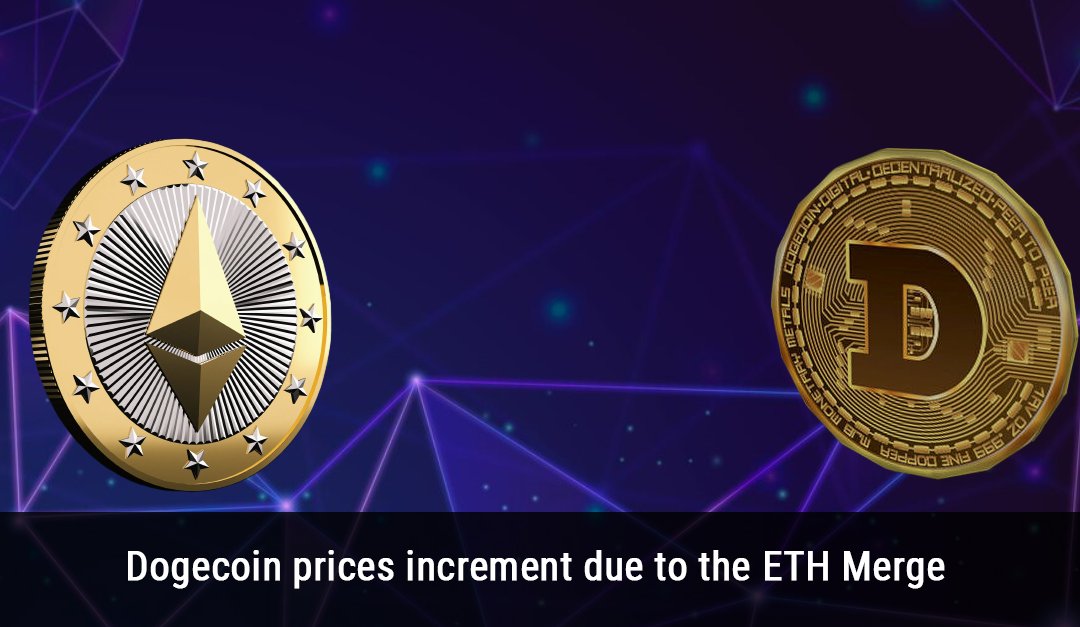
Since the beginning of this year, everyone's attention has been focused on the Ethereum network and the Merge, the much-awaited upgrade that the network is undergoing. This ground-breaking update caused a wide variety of changes not just inside the ETH environment but also in the outside world. After Ethereum completed its move to proof-of-stake [PoS], the proof-of-work [PoW] cryptocurrency market was taken over by ETH's equivalent, Dogecoin [DOGE], which is now the second biggest cryptocurrency overall.
What is DOGE?
Dogecoin, abbreviated as DOGE, is a cryptocurrency that is peer-to-peer and open-source. The picture of a Shiba Inu dog serves as its trademark, and the cryptocurrency was introduced in December of 2013, making it an alternative cryptocurrency. The blockchain technology that underpins Dogecoin, which was originally developed for Litecoin, has some value. Dogecoin, which makes use of an algorithm known as script, is notable for several reasons, including its cheap price and its endless supply.
DOGE coin price increment
Dogecoin is a cryptocurrency based on a meme that was first created as a joke in 2013 and has now grown to become the second-largest proof-of-work (PoW) cryptocurrency after Bitcoin. This breakthrough comes only one day after the Ethereum blockchain completed its switch to the power-efficient proof-of-stake (PoS) mining model from the power-intensive proof-of-work (PoW) mechanism it had previously used.
The native cryptocurrency of Ethereum, known as Ether, has also, as a result, lost its position among the PoW currencies. Dogecoin, on the other hand, is now selling at $0.059 (which is equivalent to around Rs. 5), and its market value is at $7.83 billion at the moment.
Why are DOGE investors so happy?
The community around Dogecoin was overjoyed with the successful completion of the Merge, which was being celebrated by the whole community. Dogecoin was able to move up in the ranks to a position just behind Bitcoin [BTC] once Ethereum entered the world of proof-of-stake transactions. DOGE was at the top of the PoW cryptocurrency list when it came to market cap. Dogecoin paved the path for other cryptocurrencies such as Ethereum Classic [ETC], Litecoin [LTC], and Monero [XMR].
The market capitalization of Dogecoin was estimated to be $7.87 billion at press time, but its price saw a daily decrease of 2%. The price of Elon Musk's preferred cryptocurrency was $0.0592 at present. As a result, many in the DOGE community started to rejoice over this victory. Several people were taken aback and were unable to believe what had just taken place.
How was the Merge responsible for Doge prices?
The transition from PoW to PoS on Ethereum was met with a great deal of resistance. By making adjustments, several people pointed out that the Ethereum network was going against the spirit of cryptography. In addition to this, opponents pointed out that the network was also interfering with the process of decentralization.
Following the recent statements made by SEC head Gary Gensler, the network is also under pressure from regulatory authorities. Since Ethereum transitioned to Proof-of-Stake, the community has been voicing their worries about the cryptocurrency being mistaken for security.
It is expected that the cryptocurrency sector will continue to focus on Bitcoin, DOGE, and other cryptocurrencies that are generated using proof-of-work algorithms. For example, Ethereum Classic received a significant amount of attention in the middle of the Merge. As a result, it is very possible that proof-of-work (PoW) cryptocurrencies could see greater attention in the days and weeks ahead.
Should Dogecoin go into proof-of-stake?
Despite the Merge, Dogecoin was still able to create headlines. Along the way, though, discussions on the potential of Dogecoin to enter the Point-of-Sale market were also started. Considering the intense attention that has been placed on PoW cryptocurrency for its energy usage, some people have pointed out the need for DOGE to include an alternate approach. However, several other people pointed out that Dogecoin uses a great deal less power than Bitcoin does.
There have been a total of six unique individuals that have inquired about the Finance Department. Two different narratives that, at first glance, appear to have nothing in common with one another. One quite horrible precedence to pursue. The safety and security of your personally identifiable information are of the utmost significance. Coinbase has announced that it will be extending financial assistance to the United States Treasury Department to litigate one constitutional dispute. Donations of money will be made to provide this assistance. Four persons have initiated a civil case with the cooperation of a cryptocurrency exchange, which is providing financial aid to the process. The objective of the process is to challenge particular penalties that were imposed on Tornado Cash.
STATEMENTSRELEASED BY THE AUTHORITIES
And on September 9th, the Chief of such Securities and Exchange Commission, Gary Gensler, announced the news about how he was vigorously working with Congress to establish measures that would increase bitcoin restrictions. Gensler is the Chief of such Securities and Exchange Commission. Gensler is currently serving as the Chief Executive Officer of the Securities and Exchange Commission (SEC).
However, these two points of view are not at all incompatible with one another and can be discussed together. This chain of events explains why authorities are only responding in a retaliatory manner rather than taking preventative measures to decentralized financial affairs (Defi).
A look at the Tornado Crash
At the beginning of August, the Office of Foreign Assets Control (OFAC) concluded that Tornado Cash should be subject to sanctions. OFAC accusations say that a blockchain-based blender was used to enable the trafficking of more than seven billion dollars worth of bitcoin from the very beginning of its construction in 2019. This would be in 2019 when the blockchain was first introduced. The amount shows that cyber criminals who claimed to have connections to North Korea as well as the Lazarus Group stole more than $455 million in total.
The Chief Executive Officer of Coinbase, Brian Armstrong, issued a press release in which he argued that the Treasury Department may have exceeded its authority by imposing "the arbitrary decision of banning a broad ecosystem rather than individual officers." The Treasury Department is responsible for regulating cryptocurrencies such as bitcoin and Ethereum. This statement was made by Armstrong at some point during the press release. Coinbase asserted that the remedies, as well as its argument that the penalties were beyond the power allocated to such administration, were in breach of the provisions of the agreement. Coinbase also asserted that the penalties exceeded the power allotted to such administration.
Remove the capacity of customers to protect their private information and security, put innocent bystanders in danger, and prohibit the capability of embedding content.
Regulations imposed on Defi enterprises
The next day, Gensler had a change of heart and decided to discontinue their hunt for stronger regulations governing such Defi enterprises. They did this even though they had previously argued that bitcoin businesses cannot be competitive if they do not have these regulations. Everything that has to do with the cryptocurrency industry is, and will continue to be, in full conformity with the law that regulates the buying and selling of stocks. Regardless of the approaches that are used as a basis, it seems as though one of the most crucial considerations to make is how to safeguard the investment.
Conclusion
There are numerous justifications for exercising caution, including the regulations that govern the security of personal data. However, the threshold that was imposed more by operations targeting Tornado Cash is something that everyone interested in crypto assets has to be concerned about. This is because these activities were the ones that imposed the threshold. In addition to the fact that blockchain technology and cryptology are continuously developing. There is also a wide variety of legitimate applications for technological developments that are comparable to blockchain technology. One example is the use of smart contracts, which are decentralized ledgers that record and verify transactions in a distributed ledger. The provision of security is the most essential and fundamental component of decentralized financial systems. The term "decentralized finance" already provides a fairly accurate description of how the system works.
Colony Lab, the accelerator for the Avalanche ecosystem, has teamed up with the decentralized cryptocurrency index platform Phuture to produce CAI, the first index token to give exposure to the AVAX ecosystem. Colony Avalanche Index, more often referred to as CAI, is an investment instrument that allows users to profit from the expansion of the Avalanche ecosystem as a whole by holding only one token. The CAI is a basket that contains AVAX and Avalanche application tokens. These tokens are distributed over many distinct themed areas, including GameFi, Defi, and others.
Steps were undertaken by the CAI
In addition to this, the CAI token has natively integrated yield-bearing capabilities as a result of an interface with Yield Yak. The assets included within it are used to generate more yield via the aggregator, which provides a method that is not only secure but also effective for the multiplication of earnings.
Investors that are enthusiastic about the Avalanche ecosystem but would rather obtain exposure in a measured, more efficient, and effective manner that maximizes money for them are the target audience for CAI.
In addition to very successful GameFi initiatives like DeFi Kingdoms, which operate on their subnets, the network has only been operational for a total of 22 months; yet, it is now the third biggest DeFi ecosystem in terms of total value locked. Given that the ecosystem will keep growing and changing at a quick pace, it is impossible to determine who the final winners will be at this time.
The purpose of the union
CAI will do a rebalancing operation every month to ensure that it always includes the assets that are ranked highest both in terms of liquidity and capitalization. This is done to take into account the dynamic nature of the Avalanche ecosystem. The use of the dynamic rebalancing process guarantees that CAI will always be invested in the assets that provide the highest returns.
CAI, on the other hand, provides access to all of the advantages of index investing. Because of diversification, purchasers are less likely to be adversely impacted by certain occurrences that drive down the price of a single individual token. It also provides an easy approach to retaining discipline, since spending more time in the market often yields better results than trying to time the market. To increase returns for investors, the increased yield makes the most of Avalanche's most successful yield methods.
The debut of CAI couldn't have come at a better time, since the Avalanche ecosystem is getting ready for even more rapid expansion. Avalanche maintains its position as the industry leader in terms of both the number of new users and the number of innovative features it has introduced. Subnet-based games like DFK, Crabada, and many more are seeing huge activity that matches that of the EVM-compatible Avalanche C-Chain itself. Projects such as Platypus and Trader Joe's provide intriguing innovations, while others, such as DFK, are witnessing massive activity.
What is Colony?
The colony is a community-driven accelerator that is transitioning into an inclusive DAO intending to foster the expansion of Avalanche's ecosystem. Colony evaluates networks via stacking capabilities, allocates cash inside Avalanche on early-stage projects, offers liquidity to DeFi protocols, and maintains an index (CAI) on the top Avalanche projects. The genuine support and value created by Colony's investments are redistributed back to the community in the form of staking rewards, buybacks, and airdrops.
What is Phuture?
Phuture (PHTR) is a decentralized cryptocurrency index platform that streamlines the investing process by using automated, thematic index funds built on Ethereum and Avalanche. Phuture is now offering the Colony Avalanche Index in addition to the Phuture DeFi Index (PDI), which was only just introduced (CAI). Phuture was established in 2019 and has so far raised $3.75 million.