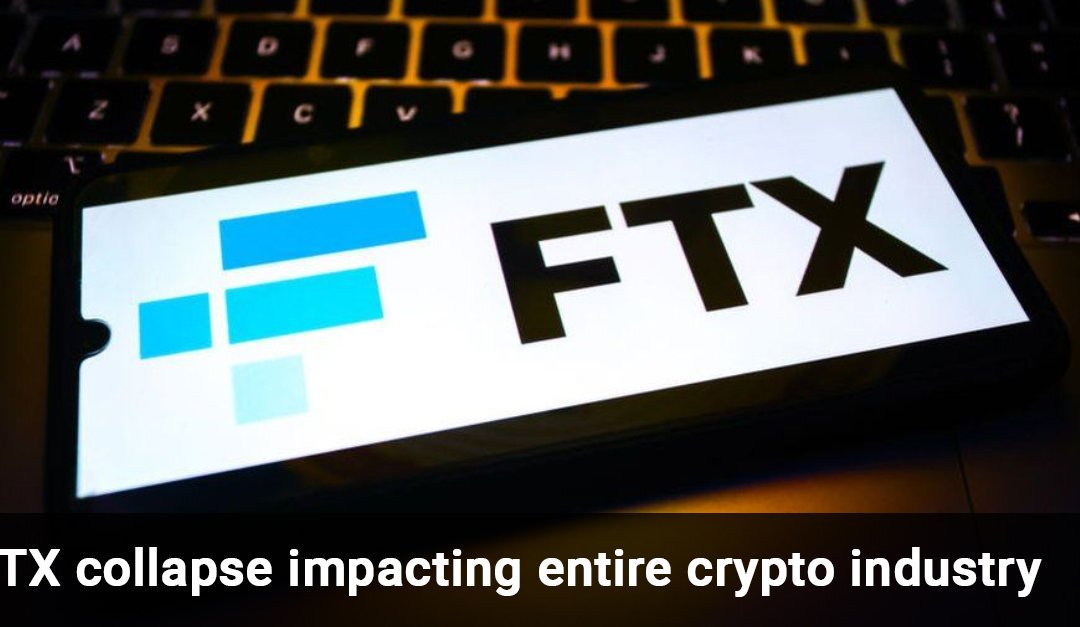
The recent FTX collapse has impacted the entire crypto industry and even US stocks quite badly. Due to the collapse, the prices of even some of the most popular coins i.e. BTC and ETC went down.
What is FTX?
Before getting into FTX collapse, let’s just talk a little bit about it. Founded in 2018 by former Jane Street Capital international exchange-traded funds trader and an MIT graduate “Sam Bankman-Fried”, FTX Exchange is considered one of the leading centralized cryptocurrency exchanges that specialize in derivatives and leveraged products. Derivatives, Leveraged tokens, options & volatility products are the products offered by FTX. It also provided spot markets in more than 300 cryptocurrency trading pairs including BTC/USDT, ETH/USDT, XRP/USDT, and its native token FTT/USDT.
The FTX Collapse:
FTX petitioned for Chapter 11 bankruptcy protection on Nov. 11, 2022, after a quick go-wrong. The organization's valuation plunged from $32 billion to liquidation surprisingly fast, hauling down the CEO Sam Bankman-Fried’s $16 billion total assets to approach zero. FTX's collapse was a huge shock for the volatile crypto market. It all resulted in billions of lost in value and dropped under $1 trillion.
The outcomes of FTX collapse and breakdown will probably affect cryptocurrencies well into the future and really might haul down more extensive business sectors. On Nov. 16, 2022, a legal claim was filed in a Florida government court, charging that Sam Bankman-Fried made a fake cryptocurrency scheme intended to exploit unsophisticated financial backers from the nation over. Different VIPs named in the claim incorporate Steph Curry, Shohei Ohtani, Shaquille O'Neal, Kevin O'Leary, Naomi Osaka, and Larry David, who supposedly assisted Bankman-Fried with the plan.
At the point when the cryptocurrency industry encountered a $2 trillion crash in May, FTX offered monetary lifesavers to a few falling firms. Its fall has undulated through the market: Lenders, for example, BlockFi and Genesis have reported a pause in their operations due to this collapse. The cost of FTT, a local cryptocurrency token for FTX, has gone down to more than 90% since Nov. 8. The cost of Bitcoin is down around 19% this month, and the cost of Ether is down around 24%.
This year for sure was not the best one for the crypto industry. Let’s hope for the best and see what’s waiting for us in the future of crypto.
Decentralized solutions are gradually removing control from Big Tech companies and returning it to developers and users.
Marc Andreessen's seminal 2011 essay, "Why Software Is Eating the World," was well-regarded even at the time it was written and has since shown to be even more prescient than it seemed. Andreessen stated that every firm was now ostensibly a software company, whether the company wanted it or not, at the beginning of a decade in which software would prove invaluable to almost every facet of modern life.
His ideas eventually applied to businesses that either hadn't fully defined their markets or didn't even exist yet but would go on to generate billions in market share, including Uber, Lyft, TikTok/ByteDance, Robinhood, and Coinbase, to name a few. He adapted his argument to many of the market leaders at the time. Software was probably going to be a crucial component in becoming a unicorn in the twenty-first century.
The rise of actual cloud computing and cloud giants, an industry in which Andreessen himself had been a pioneer at a time when many within and outside computers were scoffing at the notion, was the covert force behind this entire transformation of modern economies and life.
But making so many aspects of life so simple came at a high price.
They had stopped scoffing entirely by the second decade of the twenty-first century. Global spending on cloud computing increased by more than quintupling in the 2010s, going from $77 billion to $411 billion. The computer in our pockets relied on it to make everything available at the touch of a button.
As with anything else, the mobile-powered software revolution had trade-offs even if it made life as simple as pressing a button. Software has taken over the globe, making very few, very huge cloud hosting firms the dominant force. Currently, 65% of the market for cloud hosting is dominated by Amazon, Google, and Microsoft.
By using cloud hosting, this established a monopoly of sorts. For instance, hosts can remove services from clouds when using cloud hosting, like Amazon did with the infamous social media service Parler. The Apple App Store likewise prohibited Parler from using it.
Whether or not you concur with a service like Parler doesn't matter when it comes to the bigger issue at hand. The episode proved that, in the post-software world, it just takes two corporations—Amazon and Apple—to totally shut down a service, effectively forcing it out of existence.
What happens if a developer or service violates a less serious Amazon policy or term of service? The internet has been forced into a corner where it can no longer fully function as a marketplace for open ideas and growth, especially if that development is in some way seen as a threat by businesses like Amazon and Microsoft.
Creating a new world is possible with Apple nodes.
Newer blockchain protocols have the potential to "break" data in a world where software and oligopolistic firms have taken over, just as Bitcoin "broke" money and allowed people to think about the exchange of value in new ways. Web3 and the initiatives it will spawn promise to fundamentally alter how information lives and is transmitted via the internet in a transparent and self-sufficient manner. Ecosystems that prioritise decentralisation and community promise to return control to creators and users. This will make it possible to create a common framework that supports best practises and economies of scale and can compete with the biggest centralised internet corporations. Ecosystems that prioritise decentralisation and the community offer to return control to programmers and, by extension, the users of their decentralised applications (DApps) and software.
Latin American women are becoming more interested in Web3, as groups try to encourage involvement by providing instructional materials and grants.
Despite the weak market in cryptocurrencies, interest in Web3 is still rising. According to a recent McKinsey report, Web3 received venture capital investments totalling more than $18 billion in the first half of 2022. According to Cointelegraph Research's findings, Web3 was the area of the blockchain that caught venture capitalists' attention the most during the second quarter of this year.
Although noticeable, a dearth of diversity has emerged in the Web3 industry. For instance, it was discovered that just 16% of those who create nonfungible tokens (NFTs) are women. Women are showing interest in owning digital assets, notwithstanding the limited number. As a result, according to industry experts, women are finding it difficult to enter the field of Web3, especially those from underrepresented regions like Latin America.
Encouraging Latina Women to Join WBE3
According to Sandy Carter, senior vice president and channel chief of Unstoppable Domains, a distributor of NFT domain names and a digital identity platform, women in Brazil, Columbia, and numerous other Spanish-speaking nations, including Spain, are increasingly interested in Web3 material.
She spoke about her organization-, Unstoppable Women of Web3 which is a diversity and education organisation that focuses on developing talent to level the playing field in Web3 and was created by Unstoppable Domains on March 8, 2022. After that, more Latinas contacted her asking for Web3 content in various languages.
Carter stated that Unstoppable Domains just established a target to onboard 5 million Latin American women into Web3 by 2030 in order to satisfy these requirements. Carter stated that this effort is being launched in collaboration with the Spanish-language cryptocurrency education portal CryptoConexión and the women-led developer DAO H.E.R. DAO LATAM, which promotes diversity.
According to her The first step in creating a more inclusive Web3 is education. To assist in the development of Spanish-language teaching materials about Web3, her organisation has teamed with women from 25 various organisations. Additionally, they are providing five million Latinas with free NFT domains valued at over $25 million as a method to assist them to create and maintain their digital identity and opening doors to the market.
The fact that women who are natives of or have Latin American ancestry continue to be underrepresented in the tech sector, in Carter's opinion, makes initiatives like this all the more crucial. In order to put this into perspective, data from the online digital community Built In revealed that women of Latin American heritage only hold 2% of computing-related employment in the United States. The same is true for Latin America, where women are notably underrepresented in fields related to science, technology, engineering, and math, per an IDB study.
Founder of CryptoConexión, Monica Talan has an initiative called "WAGMI LatAm," where their mission is to ensure access to Web3 content in English, Spanish, and Portuguese, the motivation is to make that organization must take an education-first approach that incorporates different languages to bridge the Web3 diversity gap.
Furthermore, Laura Navarro Muoz, the governor of H.E.R. DAO LATAM, informed Cointelegraph that the group supports Latin American women in their migration to Web3 by offering travel grants for conferences and hackathons.
Organizations like CryptoConexión and H.E.R. DAO LATAM have already begun to have an influence. After receiving a scholarship from H.E.R. DAO LATAM to attend a cryptocurrency event, Bricia Gabriela Guzmán Chávez, community manager at Web3Equity, a Web3 platform promoting gender equality, told Cointelegraph that she landed her first job in the industry.
Guzmán Chávez claims that H.E.R. DAO LATAM also founded the "Hacker Mom Scholar" scholarship programme after ETH Mexico, which allowed her to attend Devcon VI with her three kids. She is currently working full-time remotely on Web3 projects, and any opportunity that these projects give her to attend Web3 events is a chance to enhance the quality of her life, according to Guzmán Chávez.
Talan added that given the demand for Web3 in the area, particularly in countries like Mexico, it is crucial for Latin American women to participate in the industry.
Mexico was the second-largest beneficiary of remittances in the world last year, according to data from the World Bank. Due to this, a lot of Web3 businesses are opening offices in Mexico to facilitate cryptocurrency transfers. The company requires information on the applications of cryptocurrency remittances. If there are more women producing these goods, then it can be assumed that the goal can be accomplished more effectively, according to Talan.
Women in Latin America face challenges when seeking jobs in the Web3 sector
While it's noteworthy that groups are working to increase the number of Latin American women working in the Web3 sector, obstacles including hiring restrictions and lack of access to technology could make adoption more difficult. For instance, statistics from Crypto Jobs List showed that compared to the last bull market in February 2022, there are around 30%-40% fewer job listings and people engaged in the sector.
On the other hand, Web3 is opening up more remote employment options, which might promote a diverse workforce. Web3 is assisting people, wherever they may be, in obtaining high-paying jobs. Since all they require are the necessary abilities, education comes first, Navarro Muoz noted.
Web3 researcher Diana Carolyn Olvera Gómez told Cointelegraph that H.E.R. DAO LATAM gave her the chance to take part in her first hackathon. She was also given Spanish-language teaching materials by the group. Olvera Gómez responded by revealing that she contributes remotely to Coinmiles, a Bitcoin rewards network, and Web3Montréal, a Canadian nonprofit organisation specialising in Web3.
However, Olvera Gómez pointed out that for many women living in areas like Latin America, access to technology, such as Web3 efforts, might be challenging. However, she thinks that as more women participate, a domino effect would increase their involvement.
According to Carter, women-focused Web3 networks offer a chance to address the gender gap in the workplace and there is a demand among women who want to engage in Web3, but the next problem is to provide the appropriate instructional content: Even if the market is in a bear market, now is the time to build. There is still a lot of passion and energy in the area. Just exactly what education can be to folks who are interested in knowing more?
Describe Ethereum. that's a reasonable question for someone new to the cryptocurrency world to ask, as long as they are likely used to seeing Ethereum and its native (Eth) token alongside Bitcoin in the media and on exchanges. It's not exactly fair to compare Ethereum in with Bitcoin. Its characteristics, objectives, and even technology are distinct.
According to Cointelegraph, with Ethereum, users can conduct transactions, stake their holdings to earn interest, utilise and store nonfungible tokens (NFTs), trade cryptocurrencies, play games, access social media, and far more. Ethereum may be a decentralised blockchain network powered by the Ether token.
A bank or a web brokerage like Vanguard or Fidelity won't let you acquire cryptocurrency. you want to instead make use of a bitcoin trading platform. There are many cryptocurrency exchanges accessible, with dashboards that range from basic to complex for knowledgeable traders. Before registering, it is a good idea to conduct some research on the various platforms because they have varying pricing structures, security measures, and other features.
You'll almost probably have to provide some personal information and have your identity validated to register an account with a cryptocurrency exchange. then, you'll add money to your account by linking a debit card or bank account. counting on the option you select, fees may change.
As with any investment account, funding your account doesn't mean you have purchased Ethereum, and you do not want your unspent money to sit there. to take a position at this time, you want to first buy Ethereum.
After your account has been credited, you'll exchange your dollars for Ethereum. Enter just the dollar amount you would like to convert to Ethereum. you'll purchase shares of a single Ethereum currency, counting on the price of the cryptocurrency and the amount you choose to invest. A percentage of the whole amount of ether coins will be shown as your purchase.
If you simply have a small amount, it's simpler to go away your cryptocurrency investment in your exchange account. However, a digital wallet might offer additional security if you select to move your holdings to a more secure storage site. Digital wallets are available in many different forms, each with differing levels of security, like paper wallets or mobile wallets.
Should you buy Ethereum?
According to market capitalization, Ethereum is the second-most valued cryptocurrency and is viewed as the silver to Bitcoin's gold. like all investments, there is a chance that Ethereum's higher risk will also result in higher rewards. In any case, the year 2009 is not longer relevant because Ethereum has advanced past the proof-of-concept stage, and now's the perfect time for investors to start looking into this asset class.
Do your research before investing a large portion of your retirement money in Ethereum or any other cryptocurrency due to the unpredictability and volatility of the market. But it is often worthwhile to take into account as an aggressive growth option in a diversified portfolio. Naturally, never risk extra money than you can afford to lose.
The future of Ethereum
The Ethereum blockchain has become increasingly well-known in recent months as a result of the development of numerous NFTs and decentralised finance projects. Advocates claim that the arrival of new applications like these, which are among the primary ones to operate on a public blockchain, has already resulted in a significant network effect, where new developers are drawn to Ethereum due to the increased activity.
However, there are still fundamental questions over whether Ethereum, which is not on time due to a complex series of technological upgrades, are going to be able to compete with more agile rivals and whether any consensus on its long-term function will emerge as the cryptocurrency industry expands.
As a result of Ethereum's long-term significance, investors like Garg warn that the cryptocurrency markets could also be due for a turnaround, with Bitcoin returning to undisputed dominance.
Following Elon Musk's acquisition of Twitter, a new age of cryptocurrency and network-based token integration has begun on the social media site. Alongside the announcement of Musk's $41.39 billion buyout of Twitter, the beta test of NFT tweet tiles was made public. A subset of users are now testing the functionality in conjunction with the markets on multiple blockchain protocols used by Magic Eden, Rarible, Dapper Labs, and Jump.trade.
The wealthy CEO of Tesla, Elon Musk, commenced his takeover of the social media behemoth, and the platform began testing interesting new NFT features at the same time. The integration of NFT trading was first made available on Twitter as part of a beta test for a limited number of users. Through a newly implemented rollout, Elon Musk's Twitter is currently powering NFT trading.
The new NFT feature
Following the successful completion of Elon Musk's purchase of Twitter for $41.39 billion, the social media platform pushed out a feature that allows for NFT trading. In conjunction with the following four major marketplaces—Magic Eden, Rarible, Dapper Labs, and Jump.trade—Twitter has announced that it would enable its users to immediately purchase, sell, and display non-fungible tokens (NFTs) via tweets.
NFT Tweet Tiles is the name of the integration, and what it does is show the artwork of an NFT in a panel that is included inside a tweet. Users may access the listing on the marketplace by clicking on the provided button, which takes them there. For the purpose of the beta test, four distinct marketplaces have been included as partners. The developer of the Flow blockchain, Jump.trade, along with leading NFT marketplace platforms Rarible and Magic Eden, are actively participating in testing the connection.
A number of alternative blockchains, including Ethereum, Solana, Flow, Polygon, Tezos, and Immutable X, are serving as hosts for the markets that are a part of Elon Musk's launch for Twitter. According to a spokesman from Twitter who spoke with Decrypt, the "feature is presently being tested with select Twitter users across iOS and web."
Users who are included in the test will see the NFT Tweet Tile integration, and contrary to common perception, a premium membership is not necessary to utilize the functionality. Users who are included in the test will see the integration.
Since 2021, Twitter has embraced cryptocurrencies and non-fiat tokens (NFTs), first by allowing users to pay content producers using Bitcoin and Ethereum and later by allowing verified NFT profile images to be shown on user profiles. It is essential to keep in mind that the social media platform will currently only handle Ethereum NFTs for the foreseeable future.
Musk takes over Twitter
Following a drawn-out court struggle and many months of unpredictability, Elon Musk has finally assumed ownership of Twitter. The issue that arises now is what exactly the Tesla CEO, who is worth a billion dollars, will do with the social networking site.
In a tweet that he sent on Friday, Musk provided a hint as to the direction he is going by declaring that there would be no judgments made on content or the reinstatement of accounts until a "content moderation committee" is established. He noted that there will be a variety of perspectives on the council.
It is generally anticipated that there would be significant staff changes, with Musk having fired some of Twitter's senior executives on Thursday. In a tweet, a fourth individual confirmed that he would be leaving.
But Elon Musk, the tech expert and self-proclaimed "Chief Twit," has frequently made contradicting pronouncements about his vision for the firm, and he has disclosed few detailed ideas for how he would operate it after purchasing it for $44 billion. Musk has also been called the "Chief Twit."