THORChain, a Cosmos ecosystem blockchain dedicated to delivering cross-chain liquidity, started operations on Friday after being halted due to a software problem.
On Thursday, the THORChain development team tweeted that it was aware of an outage and that developers had "discovered the likely cause owing to a unique transaction type (nothing to do with solvency)."
A spokeswoman for THORChain said in an email to CoinDesk on Friday morning: "The network stop has been lifted as of 10:20 AM (ET) on Friday, and the THORChain mainnet is once again creating blocks. Trading will be halted until the outgoing queue is cleared. Trading will resume once all outstanding outbound transactions have been executed."
A THORChain representative told Cointelegraph that the chain had been paused for safety reasons, but that it planned to "revert once the root of non-determinism is uncovered." THORSwap, a token-swapping platform, said that it was still accepting Ethereum and ERC-20 swaps during the outage.
A Non-Determinism of Nodes
After the blockchain administrators recognized the outage of the THORChain network on Twitter on Thursday due to a software error, the network's administrators claimed that solvency was unconnected to the halt and was caused by non-determinism between individual nodes. After confirming that the interruption had nothing to do with solvency, the company went on to tell its customers that they were working hard to find a solution as soon as possible.
According to a previously public update by THORChain, the company discovered the sources of non-determinism between nodes that were creating the problem four hours after the first alarm.
According to the researchers, consensus halts in a distributed state machine emerge from sources of inter-node non-determinism and protect the ledger from corruption. The network administrators outlined the steps required to resolve the problem, noting that they were almost there: finding the source of non -determinism, posting an update, and restarting the state machine.
After Running Back On, THORChain Claims It Was String Manipulation
After another three hours of waiting for the firm's response, the team claimed that they had recognized the problem as string manipulation. According to their statement, the developers should have recognized the issue because the wrong message was promptly switched out and never inserted into the block. Because the block contained a queue that prevents the swap from synthesizing on the same block, the wrong memo was written in the block, which damaged the mainnet.
According to the company, the code was pushing a cosmos. Uint into a string (rather than an uint64), leading the string to get the enormous int's point rather than its real value, resulting in different memo strings on different nodes. The erroneous memo is never written to disc or block. As a result, the statement missed this.
The chain was halted due to safety concerns, but a THORChain representative stated that the company intended to "revert once the source of non-determinism is discovered." THORSwap, a token-swapping platform, stated that Ethereum and ERC-20 swaps were still supported during the outage.
Conclusion
Most blockchains do not experience chain halts; stability and consistent uptime are frequently noted as important advantages of decentralized networks versus centrally controlled alternatives. The THORChain outage lasted around 20 hours. Other big blockchains have had network failures that have impacted users. According to Solana co-founder Anatoly Yakovenko, outages — allegedly caused by low-cost transactions — have been the blockchain's "curse," with at least seven occurring since its introduction in 2020. The Cosmos SDK was used to build the independent blockchain THORChain, which would serve as a decentralized cross-chain trade (DEX). It employs an automated market maker (AMM) mechanism akin to early versions of Uniswap (Uniswap) or Bancor (BNT), with THORChain's native token (RUNE) serving as the primary swap pair.
In March 2017, Equifax, one of the credit reporting companies that evaluate the financial health of almost everyone in the United States, suffered a data breach that exposed the personally identifiable information of hundreds of millions of people.
Numerous scandals and controversies resulted from the incident: Equifax was condemned for everything from their negligent security posture to their clumsy response to the leak, and key executives were charged with corruption in the days that followed. The issue of who was responsible for the breach also has significant political ramifications on a worldwide scale.
What information was compromised, and how many people were impacted?
Attackers targeted a third-party online gateway that had been patched for a known vulnerability, but Equifax had not updated to the most recent version. For around two and a half months, the hackers had access to the companies' servers, during which time they stole millions of documents containing private data.
As per reports, Equifax spent $1.4 billion on legal costs and bolstering its security measures as a result of the breach. The company paid a $700 million fine levied by the United States Federal Trade Commission and Consumer Financial Protection Bureau in July 2019.
The information that was stolen and compromised by the attackers was fairly detailed and covered a large number of people because Equifax especially deals in personal data. Names, addresses, dates of birth, Social Security numbers, and driver's license numbers were disclosed, possibly affecting 143 million people or more than 40% of the US population. Only a small portion of the records—on the order of 200,000—also included credit card numbers; these individuals most likely paid Equifax directly to view their credit reports.
Equifax is Developing the Web3 KYC Solution
To create a Know Your Customer (KYC) solution, blockchain company Oasis Labs has teamed with credit reporting business Equifax, which is well known for having experienced one of the biggest customer data breaches to date. On October 26, Equifax and Oasis announced that the latter would develop a ddddddddddddd identity management and KYC solution for the industry on Oasis' platform, utilizing application programming interfaces (APIs) to aid with checks and user identification.
The release made no mention of the precise technology that will support this service, and neither business immediately responded to Cointelegraph's request for comment.
The term "Web3" alludes to the subsequent iteration of the internet, which its supporters predict would be more decentralized, based on blockchain networks, and employ cryptocurrencies.
Both companies contend that there hasn't been a KYC solution specifically designed for Web3 that offers "high privacy protection," and their suggested product is intended to fill this gap by sending wallets of users anonymized KYC credentials.
According to the statement, his credentials will be regularly updated, and Oasis promises that its "privacy-preserving features" will ensure that data is processed in confidence while keeping a record on the company's blockchain.
Dock and Quadrata are the two Web3 companies that provide comparable solutions based on decentralized identification and each of their products is based on a decentralized identity. Few Web3 natives might be wary of the alliance in light of the serious data leak Equifax experienced in 2017.
Conclusion
As a result, the two businesses will collaborate to develop a solution by sending "anonymous KYC-ed credentials" to customers' Web3 wallets. When Decrypt contacted Equifax and Oasis for more information regarding its technology, neither company answered right away.
In a news statement, Professor Dawn Song, the founder of Oasis Labs, stated, "We are trying to not only construct a better, more efficient decentralized identification and on-chain KYC solution but to help speed the adoption of Web3 and provide more trust to the sector."
In the crypto industry, as in every other industry, when one starts a trend that seems to be beneficial or has the potential to lead to positive results, others tend to follow it too. This article deals with one such event wherein the Indian exchange WazirX, led on in the footsteps of Binance and tried to adopt its ways. It has also decided to come up with new ways and intermix them with the ways Binance chose for delisting USDC. It is planning on employing BUSD auto-conversion for keeping a track of the USDC, and USDP balances. These are supposed to be done in a 1:1 ratio.
Let's take a look at WazirX steps for delisting USDC
After thorough consideration, WazirX has come up with a plan to delist coins coin. These coins are therefore supposed to be evicted from the platform and whatever remains of them shall and must be converted into Binance USD stablecoin. This announcement was made by WazirX on a Monday. In this announcement, he further stated that it has put an end to the deposition coins such as USD, Pax dollar, TUSD, etc. It has put an end to it all for good and has decided to adopt the new or to be more specific Binance.
Reasons for introducing BUSD to users
It is obvious that when something goes on in the crypto market, the authorities feel obligated to share the news with the people to help them make informed decisions. The main reason for the introduction of BUSD stablecoin is primarily to give liquidity a little more boost up as well as help users are more capital efficient. It is also planning upon applying this technique to convert the balance that is already existing in the account of the users.
The authorities have further stated that the users can be able to see their stablecoin only in the account that is under BUSD. It is to be done after the conversion is fully completed. The Indian exchange assets, WazirX is still tet to reach a decision regarding the list of stablecoin that is appropriate for conversion.
What are its plans with another stablecoin?
To shed further light upon this aspect it has also been stated that the withdrawal related to USDC, USDP, etc shall exist there on the WazirX for a very few days. After a period of a few days, this stablecoin shall permanently be delisted from their spot trading pairs. There have been various reports that have suggested in what way WazirX used to handle USDC. It has already delisted several stablecoins and the only surviving one includes, USDC trading against Tether, which is there on the platform.
However, when compared between the two one can see that BUSD is present on the WazirX platform, in not only one but two pairs. Thes two parts of BUSD have been trading at the same time, One against USDT stablecoin and the other against the Indian rupee. The amount of total trading volume has been estimated to be around 5,700 to 5,200 dollars.
Conclusion
Before everything, it is important to also undertake the original USDC. It was created by the fintech firm Circular as well as the Coinbase crypto exchange. It has also established itself as one of the most popular stablecoins which are also referred to as the second largest stablecoin. The decision to remove USDC by WazirX has been taken right after Binance published its decision saying that the USDC shall henceforth be eradicated from its platform.
It also stated the same things under the changes that users might expect. Even though the two, Binance and WazirX sound similar in their ways, they are both unrelated to each other which was even made clear properly.
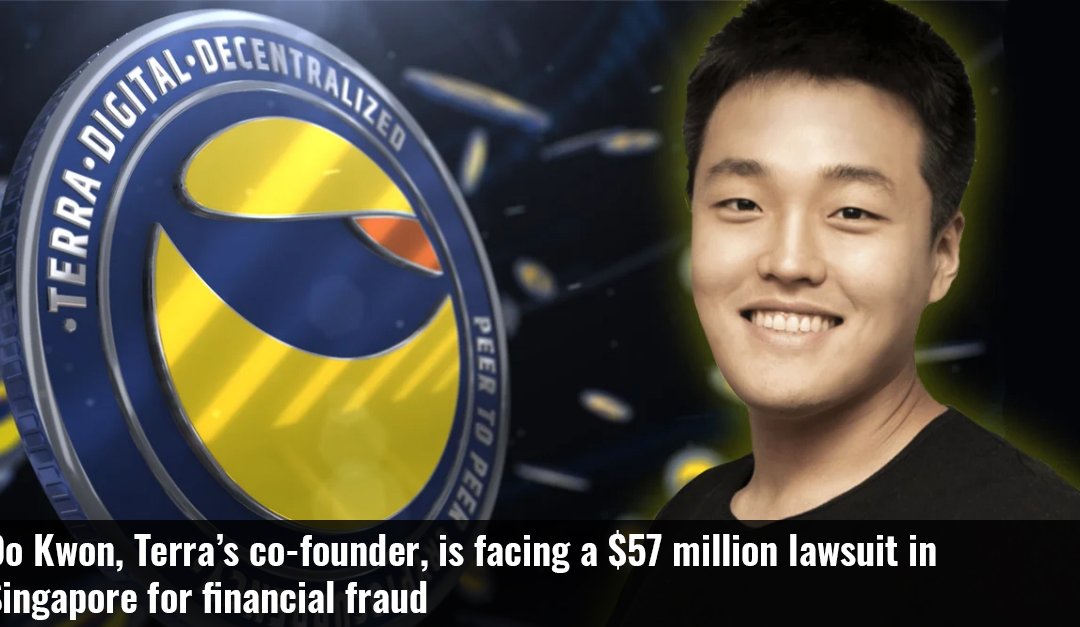
Victims of the UST-induced market crisis that saw over $40 billion in crypto assets evaporate in May have filed a fresh lawsuit in Singapore against embattled Terra Form laboratories CEO Do Kwon, the Luna Foundation Guard (LFG), and Terra founding partner Nicholas Plates.
What Went Wrong with TerraUSD?
Do Kwon's promises were readily swept away by waves on May 9, 2022, when the TerraUSD (UST), valued at $18 billion at the time, collapsed.
The cryptocurrency failed to hold its $1 peg, falling to $0.35. LUNA, a token designed to keep the UST price from plummeting precipitously, saw its value plummet from $80 to a few cents.
The TerraUSD collapse occurred in three stages, beginning with two dealers violating the currency's peg. Terraform Labs and three allies attempted to "fix" the situation by acquiring $2 billion in UST. As a result, the funds were depleted due to an uncontrolled sell-off.
The development did not end there, as it hyperinflated LUNA and eventually destroyed the prices of the two assets, forcing the crypto market to lose almost $40 billion.
Do Kwon’s Legal Headache
According to documents filed in Singapore's high court on September 23, 359 people claimed that Kwon and his co-defendants made false representations about Terra's algorithmic stablecoin TerraUSD's reliability (UST). The plaintiffs expressly claimed that Do Kwon was aware of "the structural fragility of algorithmic stablecoins" as a result of his engagement with Basis Cash (BAC), another stablecoin that failed under his supervision in early 2021, before the launch of UST.
The claimants further claimed that the defendants "knew or should have known that the claimants wanted to buy and hold digital stablecoins that were not susceptible to the volatility of the broader market and yield a respectable passive return." The claimants sustained significant losses on their UST holdings as well as additional damages as a result of the trio's acts. The claims asked the court to give them approximately $57 million for their losses and to force the trio to pay "aggravated damages."
The case comes amid an intensifying search for Kwon, who has now become an international fugitive after South Korea issued an arrest warrant. Therefore, the Terra blockchain ecosystem collapsed in May, Kwon has been the victim of many legal actions and threats. In September, South Korean authorities issued an arrest order for the Terra co-founder, which was later rejected, and Interpol added Kwon to its Red Notice list, urging that law enforcement identify and possibly jail him. On October 6, the South Korean Ministry of Foreign Affairs issued a notification ordering Kwon to return his passport within 14 days, or it would be invalidated.
Since his Terra empire collapsed in May, leaving millions of investors with severe losses, the Korean-born developer has been the target of several litigation lawsuits in the United States and South Korea over the last four months.
Eventually, local media reported that prosecutors were "in the process of freezing" tokens "believed to be owned by Kwon." These coins were allegedly stored on an unknown "overseas" cryptocurrency exchange that was "cooperating" with the Seoul Southern District Prosecutors' Office.
Despite not identifying his location, Kwon has been active on social media amid the issue and stated in September that he was "making zero attempt to conceal." In reaction to the complaint, one Redditor said Kwon was "doing a bad job at acting innocent for a guy who is innocent." Others speculated that he had undergone plastic surgery to conceal his features.
Conclusion
While it is unclear where Kwon is, Korean authorities reportedly claimed that he left Singapore for Dubai last month. However, no documents were found indicating that Kwon had entered the city, prompting Korea to ask neighbouring countries to assist in tracking his location. Kwon denied being on the run in a recent interview but refused to identify his location.
These days, the cryptocurrency industry could use some encouraging news. Additionally, it received some on Wednesday. This improvement, which eventually became known as simply "the merge," is already being hailed as a pivotal juncture in the annals of cryptography's long and illustrious history.
The most popular cryptocurrency platform, Ethereum, appears to have successfully upgraded its software architecture by switching from a type of blockchain known as "proof of work" to a type of blockchain known as "proof of stake." Ethereum has been running a "proof of work" blockchain ever since it was launched in 2015, but the upgrade occurred recently.
What is the Ethereum Merge?
The Merge is an update to the Ethereum blockchain, which enables crypto ecosystem breakthroughs such as non-fungible tokens (NFTs). Formerly, the Ethereum blockchain, much like the Bitcoin blockchain, functioned on a proof-of-work paradigm, in which network nodes competed to solve complex arithmetic problems.
The update shifted Ethereum to the proof-of-stake paradigm, which is a more environmentally friendly and energy-efficient technology. It involves selecting nodes based on an algorithm that favors nodes that possess more of a network's money.
When did the Merge take place?
Dozens of Ethereum developers convened on a jubilant Zoom call that was hosted by the Ethereum Foundation early on Thursday morning. The meeting took place as the first proof-of-stake transactions were being validated.
Vitalik Buterin, the creator of Ethereum, addressed the gathering and said that "this is the first step in Ethereum's huge journey towards becoming a mature system." "The merging, in my opinion, represents the transition from the early stages of Ethereum to the Ethereum that we have always desired,"
And many supporters of cryptocurrencies have high hopes that it will turn things around for the cryptocurrency movement, which has been plagued over the last year by losses totaling billions of dollars, a spate of big frauds and hacks, and a fresh wave of regulatory scrutiny.
The positive effects on the crypto market
To begin, it was by no means a guarantee that the merger would be successful. Changing the so-called consensus mechanism of a blockchain, which refers to how it processes and validates new transactions, is a frighteningly complicated operation. (Some creators of cryptocurrencies have likened it to switching out a spaceship's engine in the middle of its journey.)
Before the merge, no one had ever attempted such a move on a cryptocurrency platform that was even close to the scale of Ethereum, and it took engineers several years of testing and study (not to mention a significant number of setbacks) before they felt confident enough to try it. Hundreds of billions of dollars worth of bitcoin transactions, NFT collections, and Defi protocols may have been irreversibly disrupted if the merging hadn't gone according to plan. Ethereum is an open-source platform.
The new Ethereum blockchain is far less harmful to the environment than the previous one, which is the second reason why supporters of cryptocurrencies are ecstatic about the integration. In the past, the security of Ethereum was provided by a distributed network of very powerful computers.
These machines battled one another to solve cryptographic riddles, resulting in a significant amount of wasted energy. Now, it will be protected by a method that is known as "staking." Staking is a procedure in which investors agree to deposit their cryptocurrencies in a common pool in return for the opportunity to receive monetary benefits.
Final Thoughts
There are other advantages to the merging, such as the fact that it is anticipated to make Ethereum quicker and more efficient in the long term; nevertheless, the biggest and most immediate gain is the reduction in the environmental impact. Researchers in the cryptocurrency space predicts that the updated Ethereum blockchain will have an energy footprint that is 99.95 percent less than the previous version.