Wolf's Clothing is the first startup accelerator that focuses on the Bitcoin Lightning Network and the Taro protocol, and it was founded by asset management company Stone Ridge, the parent company of Bitcoin company NYDIG (Wolf).
Wolf's Clothing (Wolf), a startup accelerator founded by asset management company Stone Ridge will be focused on fostering the development of Bitcoin-related products, the team exclusively revealed to TechCrunch.
According to Kelly Brewster, CEO of Wolf, the program will bring four cohorts per year to New York City from all over the world for eight weeks at a time to concentrate on building on the Bitcoin-centric Lightning Network and Taro protocol. Each cohort will be made up of eight to twelve teams, or roughly 30 to 50 founders.
How Will It Work?
Built on top of Bitcoin, the Lightning Network is a layer-2 payment system that seeks to facilitate quicker payment processes. Separately, the Taro protocol was introduced in April of this year to assist in the issuance of digital assets on the blockchain of Bitcoin that can then be instantaneously transferred to the Lightning Network in low-fee transactions.
Brewster stated, "It's like creating an HTTP accelerator; they're both generic and useable enough in such a wide range of applications. Though it is a specialized technology, the business use cases can be very diverse. However, we have a significant competitive advantage due to our intense concentration, which can be a major attraction for founders.”
Small startup teams and early-stage enterprises will all be represented in the accelerator by teams. According to Brewster, they will each get an investment of $250,000, and one cohort winner will also receive an additional $500,000 for a total of $750,000.
Micropayments and tipping using Lightning and Taro are two topics that Brewster is eager in seeing entrepreneurs develop.
Along with training and funding from operating businesses and venture capital firms with a focus on bitcoin, NYDIG, a division of Stone Ridge, is also supporting the accelerator. According to Brewster, the names of the companies contributing outside funding won't be disclosed. But he also pointed out that all mentors and investors are already using Lightning and Bitcoin. This includes public fintech and banking companies, as well as specialized VCs, focused on Lightning up.
Bitcoin Lightning Network
A layer-2 payment mechanism called Lightning Network, which was developed on top of Bitcoin, seeks to give the blockchain rapid payments and scalability at a reasonable price. It enables users to send or receive Bitcoin quickly by conducting transactions outside of the primary blockchain network, or, as Coinbase put it, "like an HOV lane on a highway."
At Stone Ridge, we've been keeping an eye on Lightning for a while, Brewster said, "Over the past 12 months, the network has reached critical mass, and there is enough capacity today that real-world activities can be conducted on the network with relative ease."
Brewster remarked that Lightning had grown extraordinarily over the previous year. In some ways, it is the ideal time to take a step back and determine where there is a signal and where there is only noise. Lightning is generating some of the most distinct signals right now. The rate of expansion and network capacity has been glacial.
The announcement comes at an unusual moment for NYDIG, which, according to a Wall Street Journal report published last week, recently let go of around 33% of its workforce. NYDIG raised $1 billion in December 2021, valuing the business at over $7 billion, according to the company.
Conclusion
Numerous cryptocurrency accelerator programs are emerging all across the ecosystem. Some of them range from generic web3-focused tools like Alliance DAO to layer-2 blockchain-specific accelerators like Polygon. While some startups provide funding, as Wolf intends to do, others invite investors to demo days in the hopes that they will fund the startups' initiatives. In situations like this, Brewster asserted, "the businesses that are developed will capture these secular patterns and truly take hold as they accelerate." Therefore, we believe that now is the ideal time to create rather than try to do something at Stone Ridge ourselves. We want to support and enable hundreds of other founders.
On Tuesday, the inventor of Ethereum, Vitalik Buterin, said that the Ethereum merge is projected to take place "around" September 13 to September 15 and that this date is now on schedule. This is the day at which the proof-of-work consensus technique that requires a lot of energy will be abandoned by the second biggest cryptocurrency in the world.
The market shifts
The merging is only the most recent improvement to the Ethereum blockchain, which is being done in the interest of establishing a trustworthy decentralized environment for the future of money. The transition to proof of stake delivers several advantages, one of which is the alleviation of worries around energy use.
Block transactions are validated using proof of stake by validators who have bet a certain amount of their tokens on the outcome of the transaction. The greater the number of tokens that a person has linked to the blockchain, the greater the likelihood that they will be randomly selected to serve as a network validator.
In contrast to this, proof of work is an energy-intensive technique that depends on computers to solve mathematical formulas to mine tokens. This rate of energy consumption is a key critique of proof of work, which will remain the basis of Bitcoin mining when Ethereum abandons the procedure. Despite this criticism, proof of work remains the foundation of Bitcoin mining.
Apart from the problem with energy, and on top of the recent meltdowns of crypto lenders, the cryptocurrency sector as a whole is facing a multitude of macroeconomic issues. These concerns range from political tensions to high inflation rates to hawkish national monetary policies. These large-scale variables are generally regarded as the spark that ignited the latest bear market.
Price pressures are seen lately
In November of 2021, the price of a bitcoin hit an all-time high, which was $69,000. Since then, the price of Bitcoin along with the rest of the market has suffered as a result of the challenging economic circumstances. The short-term price forecast for the most popular cryptocurrency is still unclear as Bitcoin's price continues to fluctuate and encounters some resistance near $20,000.
It is not apparent what type of event or change may assist Bitcoin is making a comeback. As the volatility of leading cryptocurrencies continues to worry mainstream investors, they may become more critical of the fundamentals of Bitcoin. Furthermore, the network upgrades that Ethereum is planning to implement to position its ecosystem as the currency of the future could place even more pressure on Bitcoin's usability.
Vitalik Buterin voiced his worries about Bitcoin's proof-of-work issuance model during an interview that took place one week ago with the journalist Noah Smith on the topic of security, governance, and consensus mechanism models. Buterin is concerned not just about the amount of energy that is being used in the present, but also about how the continuous issue of a proof-of-work token may impact future validation.
Following China's crackdown on cryptocurrency mining, which resulted in a large reduction in the proportion of renewable energy sources that power the network, the study was strengthened. Alex de Vries, a researcher and skeptic of cryptocurrencies, observed that "Bitcoin became dirtier following the Chinese mining crackdown in 2021."
Is the event being hyped unnecessarily?
However, not everyone is persuaded that this will result in Ethereum being the dominant cryptocurrency. The majority of the current narrative has been driven by the fact that analysts such as Glen Goodman from eToro have pointed out how the price of Ethereum has outperformed the price of Bitcoin in recent weeks. In the end, it is unclear what the future of Bitcoin will be like following the integration. There are several issues at play, including regulation, worries about energy use, and competitiveness. Inventors are apprehensive of the possible economic dangers at a time when their greatest rival is ready to claim a major technological advantage.
Bitcoin is the world's first decentralized cryptocurrency, a sort of digital asset that records, signs, and sends transactions across the Bitcoin blockchain without the oversight of a central authority. The BTC network was established in January 2009 by an anonymous computer programmer or group of programmers under the alias "Satoshi Nakamoto." The network is a peer-to-peer electronic payment system that employs bitcoin as a cryptocurrency to transmit value via the internet or as a store of value like gold and silver.
The newsletter's publishing date will stay unchanged, and the content will continue to focus on technical and fundamental analysis of cryptocurrencies from a macro perspective to spot important movements in investor mood and market structure.
Is it time to go long?
Bitcoin's (BTC tickers down $20,737) price has risen this week, reaching $21,000 on Oct. 26. This prompted a few traders to declare that the bottom had been reached or that BTC was entering the next phase of some technical structure such as Wyckoff, a range break, or some form of support resistance flip.
Before we get all positive and open 10x longs, let's go back to a previous analysis to see if anything has changed in Bitcoin's market structure and whether the recent burst of bullish momentum is indicative of a larger trend change.
When the last update was released on September 30, Bitcoin was trading at about $19,600, remaining within the range of the previous 136 days of price action. I discovered bullish divergences on the weekly relative strength index (RSI) and moving average confluence divergence at the time (MACD). There were also a few potential "bottoming" signs from other on-chain indicators that were at multi-year lows.
The Bollinger Bands are Quite Tight.
The Bollinger Bands on the daily period remain constrained, and this week's leap to $21,000 was the expected expansion or increase in volatility. After breaking out from the upper arm, the price has retraced to test the mid-line/mid-band (20MA) as support, as is customary.
Despite the severity of the rise, Bitcoin's price remains capped below. For the past two weeks, Bitcoin's "record-low volatility" has been the talk of the town, and when utilizing the Bollinger Bands, GMMA, and BVOL, the tighter price range does hint at expansion, but in which direction is unknown.
Bitcoin has been trading in the $18,600-$24,500 area for 36 days, and the price remains towards the middle of that range according to technical analysis. The rise to $21,000 did not result in a substantial daily higher high or break out of the present range, which is effectively a lateral chop.
For the time being, the price is above the 20-day moving average, but it has yet to cross over the 50-day moving average, and the majority of the Oct. 26 gain has been retraced back to the low $20,000 area.
In The Future
Multiple data points appear to indicate that Bitcoin's price is undervalued and in the process of forming a bottom, but none indicates that the market bottom has been reached.
Several Bitcoin mining companies have openly acknowledged the need to restructure debt, and the possibility of missed debt payments, and some have even hinted at impending bankruptcy this week and in previous months.
Since June, most publicly traded miners have been selling the majority of their mined BTC, and recent stories about Compute North and Core Scientific suggest that Bitcoin's price is still vulnerable owing to solvency difficulties among industrial miners.
Conclusion
According to Glassnode data, the aggregate size of miner balances is roughly 78,400 BTC and is "held by miners we have labeled (accounting for 96% of current hash rate).” According to Glassnode, in the event of "income stress," miners may be obliged to liquidate tranches of these reserves in the open market, and the effect on Bitcoin's price might be the next spark of a sell-off to new yearly lows.
There have been various news doing the rounds regarding the new changes that are about to occur. These new changes are said to bring new rate hikes that will ultimately affect two of the major crypto assets. To shed light on this aspect, this article has delineated the reasons and consequences as well as the nature of the new upcoming reformations. The Federal Reserve has decidedly upon increasing the rate of interest somewhat around the current week and the whole industry is waiting eagerly to witness what consequences it gives rise to.
Expectations of traders from the increase in interest rate
There are a lot of expectations that are hooked to this surge and traders are awaiting to watch how the hike of a meager 0.75% can lead to a rally in the crypto market. As it is now known to those who are associated with the crypto industry, this particular industry is quite volatile and thus prone to fluctuations. It has witnessed various ups and downs of various crypto assets since the time it emerged on the scene but has been able to spread quite a strong base in the financial system.
A brief analysis of different crypto assets
In recent times, several crypto assets have taken a major hit and have even witnessed their worst downward trend. For example, the S&P and the Nasdaq Composite had to go through one of their worst periods and were even not able to perform properly.
There have been various reasons and concerns that have led to its downfall to a large extent such as the concern that haunts the investors regarding the Federal Reserve's persistent endeavors to bring about sudden changes in monetary policy. These policies are being put in place to bring about a diversion from inflation however, it could give rise to a recession in the United States.
How did Bitcoin get affected by this?
As Bitcoin has always been in close contact with the S&P 500, it is thus, obvious that it would also witness a fall in its value in recent times. It has been estimated that the fall is going to be almost 9% in recent weeks. It has also been predicted that if this codependency continues, the current situation of the market and the S&P could lead to a further decline of the coin.
There have been various expectations from the Fed and how it plans to bring about a hike in the rates. While some expect it to be on a 75-point basis others have predicted it to be on 100 point basis. However, all the lingering tension in the crypto market has added to its volatile nature and has made all the traders rather eager and impatient. The anticipation and the wait have already started causing more troubles while the wait is still on and the consequences are still uncertain.
Conclusion
However, there is a plus side to it all that can benefit buyers as well as the crypto industry. If the rates decided by the Fed fall in sync with what the market expects from them, it can potentially get more buyers interested in the crypto industry. It can thus act as a factor that could help in adding to the popularity of the crypto industry. But this might not be true for all crypto assets but for some of the most popular ones that have the potential to yield better benefits. One can easily get details on the various cryptocurrencies that are going to go on a positive trend in the coming times.
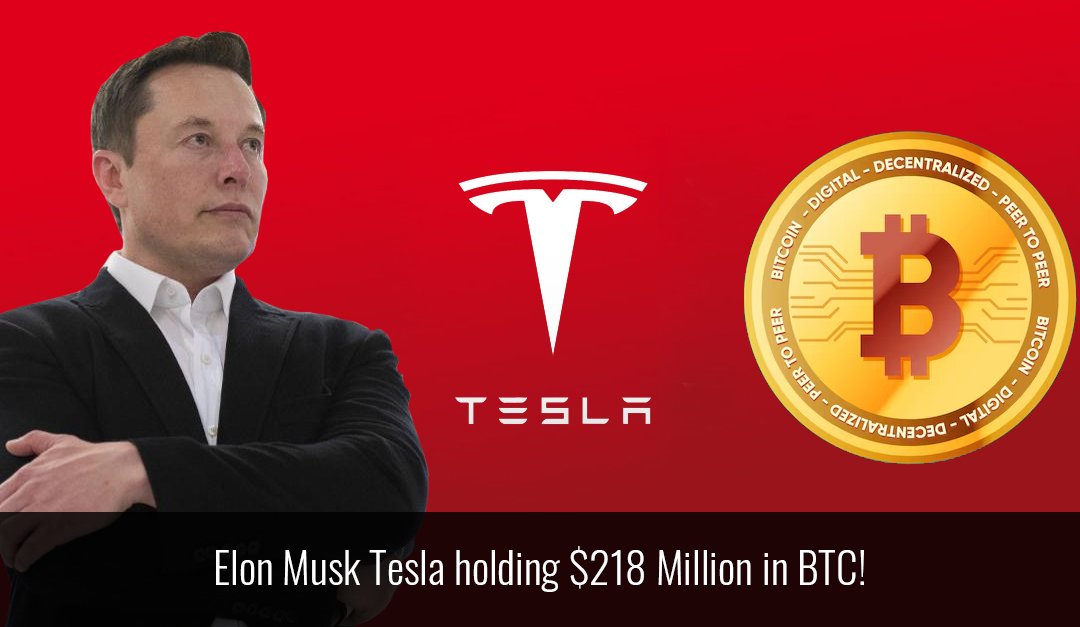
Just recently, Tesla Inc. came forward with its third-quarter earnings report. Tesla's Q3 financial reports show that Tesla didn't sell any BTC during the quarter. Its accounting report further reveals that $218 million are in digital resources, unchanged from the second quarter.
At the time of writing this post, the cost of Bitcoin is $19,431.70. Tesla purchased $1.5 billion worth of the digital currency in mid 2021 and has not bought any more since. The organization sold around 75% of its BTC possessions in the second quarter of this year.
In the third quarter, Tesla's income rose to $21.5 billion, contrasted with experts' projections of $22.1 billion. Benefit excluding a few things rose to $1.05 per share, surpassing the $1.01 normal of evaluations incorporated by Bloomberg.
During the Tesla's Q3 profit call, Elon Musk stated that Tesla could be worth more than the consolidated worth of Apple and Saudi Oil Organization (Saudi Aramco) in the coming years. The two companies are at present the world's biggest organizations by market cap. Elon further explained that interestingly I see a way for Tesla to be generally two times the worth of Saudi Aramco.
At this time, Saudi Aramco's market cap is $2.09 trillion while Apple's market cap is at $2.31 trillion. Tesla's market cap is $695.76 billion. Elon Musk likewise shared his economic outlook during the call. He stated that China is encountering a downturn of sorts generally in the property markets and Europe has a downturn of sorts driven by energy. North America's in very great wellbeing, albeit the Federal Reserve is raising loan costs more than they ought to, yet I think they'll ultimately understand that and cut them down once more.
Just recently, we also heard the news of Elon musk buying twitter and on that news he said that he amped up for the Twitter situation. Elon and other financial backers are clearly overpaying for Twitter at the present time however the drawn out potential for Twitter in his view is a significant degree more prominent than its ongoing worth.
Musk as of late uncovered that purchasing Twitter speeds up the making of "X - The everything app." He initially attempted to back out from purchasing the virtual entertainment platform yet switched the decision towards buying it. The court has given Musk time until Oct. 28 to close the acquisition to avoid a trial.