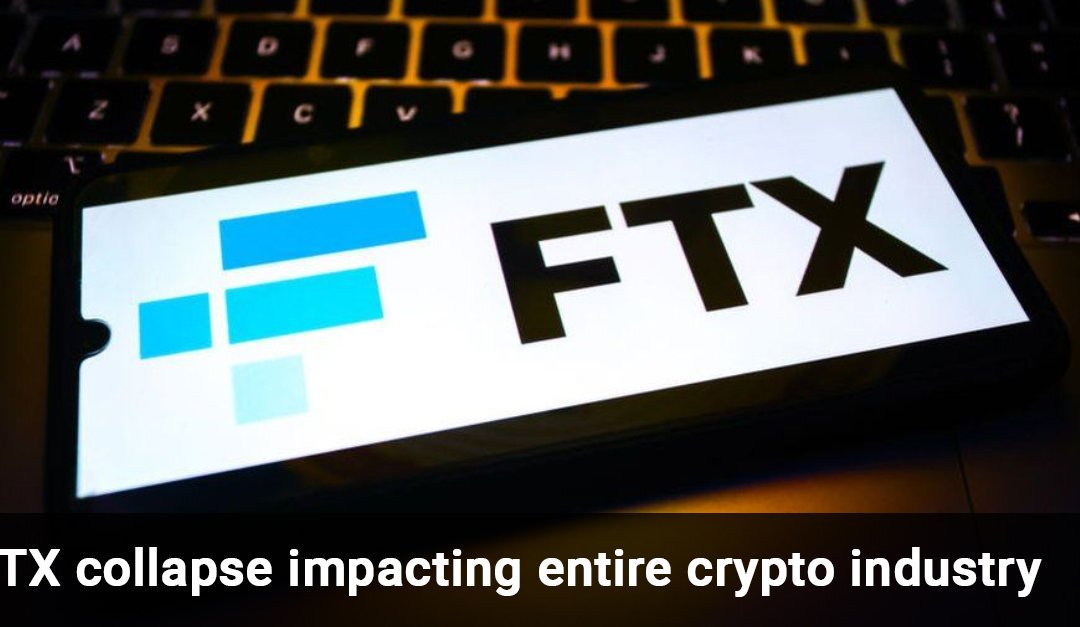
The recent FTX collapse has impacted the entire crypto industry and even US stocks quite badly. Due to the collapse, the prices of even some of the most popular coins i.e. BTC and ETC went down.
What is FTX?
Before getting into FTX collapse, let’s just talk a little bit about it. Founded in 2018 by former Jane Street Capital international exchange-traded funds trader and an MIT graduate “Sam Bankman-Fried”, FTX Exchange is considered one of the leading centralized cryptocurrency exchanges that specialize in derivatives and leveraged products. Derivatives, Leveraged tokens, options & volatility products are the products offered by FTX. It also provided spot markets in more than 300 cryptocurrency trading pairs including BTC/USDT, ETH/USDT, XRP/USDT, and its native token FTT/USDT.
The FTX Collapse:
FTX petitioned for Chapter 11 bankruptcy protection on Nov. 11, 2022, after a quick go-wrong. The organization's valuation plunged from $32 billion to liquidation surprisingly fast, hauling down the CEO Sam Bankman-Fried’s $16 billion total assets to approach zero. FTX's collapse was a huge shock for the volatile crypto market. It all resulted in billions of lost in value and dropped under $1 trillion.
The outcomes of FTX collapse and breakdown will probably affect cryptocurrencies well into the future and really might haul down more extensive business sectors. On Nov. 16, 2022, a legal claim was filed in a Florida government court, charging that Sam Bankman-Fried made a fake cryptocurrency scheme intended to exploit unsophisticated financial backers from the nation over. Different VIPs named in the claim incorporate Steph Curry, Shohei Ohtani, Shaquille O'Neal, Kevin O'Leary, Naomi Osaka, and Larry David, who supposedly assisted Bankman-Fried with the plan.
At the point when the cryptocurrency industry encountered a $2 trillion crash in May, FTX offered monetary lifesavers to a few falling firms. Its fall has undulated through the market: Lenders, for example, BlockFi and Genesis have reported a pause in their operations due to this collapse. The cost of FTT, a local cryptocurrency token for FTX, has gone down to more than 90% since Nov. 8. The cost of Bitcoin is down around 19% this month, and the cost of Ether is down around 24%.
This year for sure was not the best one for the crypto industry. Let’s hope for the best and see what’s waiting for us in the future of crypto.
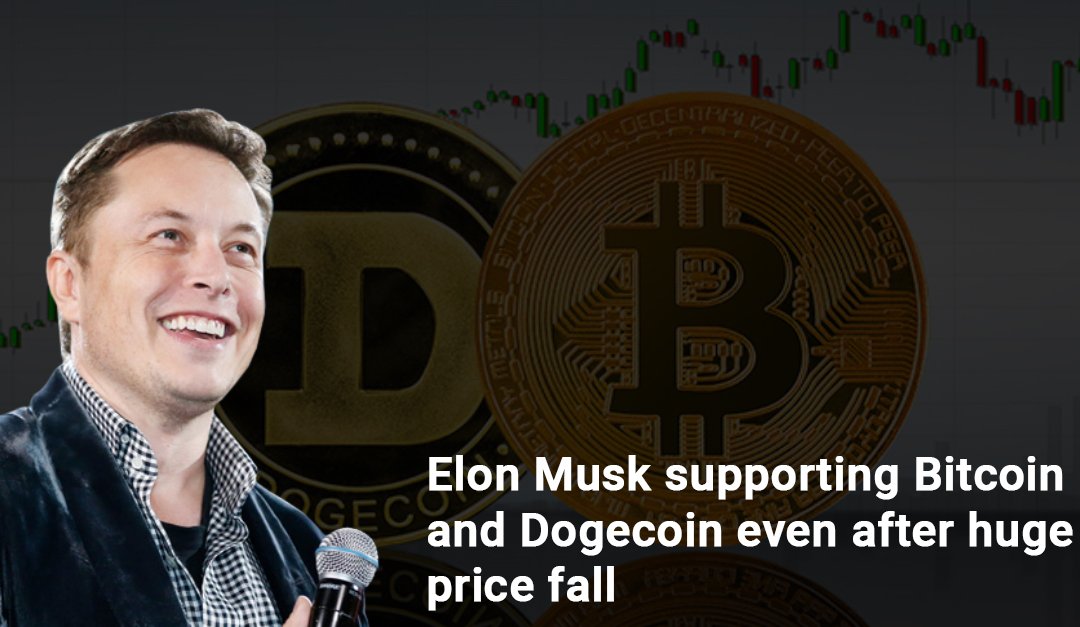
Tesla CEO Elon Musk has made bullish statements about Bitcoin and Dogecoin despite crypto market sell-offs. He predicted the price of Bitcoin will increase further, and stated that there is a future for both these digital currencies i.e. Dogecoin & Bitcoin. Tesla CEO and Twitter chief Elon Musk stated about Bitcoin that “Bitcoin will make it” and “DOGE to the moon.”
Musk is very clear about his support for Dogecoin and its potential as a meme cryptocurrency. He also invested in the Dogecoin economy last year. He plans to buy larger amounts of the cryptocurrency over time and has long been a supporter of the meme crypto. The thing that billionaires like Elon Musk also joined the community has simply added to the Dogecoin craze. Dogecoin is growing, gaining momentum, and being used as a payment method for almost anything. The community has responded by making it the second most popular virtual currency after Bitcoin and the only one to beat Litecoin. Today, it is the tenth biggest digital currency by market cap and it is worth 8.4 billion dollars.
Dogecoin holders have been increasing through July 2022 regardless of the low cost of DOGE. Experts found out that Dogecoin accumulation expanded gigantically in the initial fourteen days of July. DOGE was among the main 10 purchases for BSC whales - with one BSC whale alone purchasing Dogecoin more than $1.25 million worth of.
Also, recently, Tesla Inc. came forward with its third-quarter earnings report. Tesla's Q3 financial reports show that Tesla didn't sell any Bitcoin during the quarter. Its accounting report further reveals that $218 million are in digital resources, unchanged from the second quarter. Tesla purchased $1.5 billion of digital currency in mid-2021 and has not bought any more since. The organization sold around 75% of its BTC possessions in the second quarter of 2022.
Tesla CEO Elon Musk was asked about the future of cryptocurrencies during his appearance at the Space Exploration Technologies Corp. (SpaceX) annual meeting on Saturday (12th November). He stated that investors should keep their cryptocurrencies in a “cold wallet,” not an exchange, and Bitcoin, Dogecoin and Ethereum has a future.
All these moves of the world’s richest man, Elon Musk, clearly show how much support he shows for Bitcoin and Dogecoin. So, if you believe in Elon Musk then it’s high time to invest in these digital currencies to see what benefits are waiting for you in the future.
Huobi Global cites adherence to local laws as the justification for leaving New Zealand off of its list of nations where it conducts derivatives trading.
Bitcoin exchange The suspension of derivatives trading in New Zealand has been announced by Huobi Global. According to Huobi's statement, the new prohibitions against derivatives offerings are necessary to comply with local laws.
Users in New Zealand will no longer be able to access derivatives trading services, such as futures and swaps with coin margining, contracts with Tether margining, options, and exchange-traded goods.
On August 23, the new limitations will go into effect. Huobi Global will stop accepting users with New Zealand Know Your Customer-verified locations as well as IP addresses from the country on the same day. Only on and after the restrictions' effective date are users permitted to close out open positions.
The Huobi Group reacted to Cointelegraph in a formal statement, saying that the Group is trying to make an effort to abide by the local laws and regulations in each nation and region where they do business. Compliance is a need before releasing goods and services in any new country, and Huobi shall always adhere to this fundamental tenet.
There are 11 jurisdictions on Huobi's list of prohibited countries, which is always growing. nations like the United States, Canada, and Japan are included in this list. Derivative trading is not available in the United Kingdom, Taiwan, and mainland China.
This comes just after news broke that Huobi co-founder Leon Li wanted to sell a $1 billion+ majority stake in the business. Huobi Global was established in 2013 and manages a daily trading volume of more than $1 billion.
Despite the New Zealand development, the corporation has recently taken steps to broaden its product offers. Early in August, Huobi got approval from Australian authorities—a nation next to New Zealand—to operate as an exchange provider.
Through a subsidiary called HBIT, Huobi obtained a Money Services Business licence from the U.S. Financial Crimes Enforcement Network in July.
These advancements coincide with Huobi's $1 billion investment initiative, which focuses on the growth of Web3 and decentralised finance.
Thai affiliate of Huobi Global closes as Dubai and New Zealand licenses are granted.
Huobi, a cryptocurrency trading platform, has obtained additional licences in New Zealand and the United Arab Emirates as part of its ongoing global expansion. Huobi Group secured the company's first-ever licence at the Dubai International Financial Centre (DIFC) by obtaining the Innovation License under the DIFC.
Lily Zhang, the chief financial officer of Huobi Group, reports that the business has been granted a DIFC licence by Dubai's Virtual Assets Regulatory Authority (DIFC). The DIFC enables Huobi to encourage technology businesses to establish operations in Dubai rather than serving as a trade licence. In order to provide its services in New Zealand, Huobi has also been registered on the Financial Services Provider Register (FSPR). The Virtual Assets Regulatory Authority (VARA) in Dubai will grant Huobi a Virtual Asset MVP License, enabling it to provide a variety of cryptocurrency exchange goods and services.
All exchanges are obliged to register on the platform in order to provide trading services to local users, therefore the FSPR registration is the first step Huobi Group has taken toward growing its bitcoin trading business in New Zealand.
The registration enables it to offer money exchange services and services for the movement of money or value in New Zealand. A spokeswoman for Huobi informed Cointelegraph, that they would want to stress that Huobi Thailand was not a part of Huobi Global, but rather an independent company founded in 2019 as part of Huobi Cloud. The registration enables HBGL New Zealand Limited, a local subsidiary of Huobi, to run a regulated foreign exchange business and provide money or value transfer services in New Zealand.
An increasing number of cryptocurrency service providers are closing their doors permanently in the midst of the bear market, including the German crypto bank Nuri.
Three Arrows Investment. Celsius. Voyager Electronics In 2022, the number of cryptocurrency bankruptcies, closures, and trade freezes seemed never-ending. The year is still not over. Nuri, a German cryptocurrency bank, asked users to withdraw money this week in advance of the company's anticipated liquidation in December. At least users of Nuri received adequate notice.
The market has been mercilessly purified of excess, leverage, bad risk management, and outright scams by the cryptocurrency bear. If business forecasters are to be believed, the market may experience one more surrender before things start to get better.
The closure of Nuri, the most recent drama involving Voyager Digital, and Silvergate Capital's challenging quarter are all covered in this week's Crypto Biz.
500K consumers are advised by the German cryptocurrency bank Nuri to withdraw money before the closure.
Nuri informed its 500,000 subscribers this week that it would suspend operations on December 18 after citing liquidity concerns in August. Users have two months to withdraw their money before the business closes the shop as a result of the bear market. Users were given the reassurance that all assets in their Nuri account are safe and untouched by Nuri's insolvency by Nuri CEO Kristina Mayer. Although the industry wasn't helped by Nuri's collapse, Celsius handled its insolvency far worse by locking user withdrawals.
Voyager Digital won't sue its executives for negligence and will instead make a claim against its insured.
This week, the story of Voyager Digital took another unexpected turn when the business decided against suing its management for negligence for their part in enabling the Three Arrows Capital disaster (and Voyager's in the process). For those who are not familiar with the drama: Without conducting adequate due diligence, Voyager provided Three Arrows Capital with a $675 million loan. This loan was never repaid, and it played a significant role in Voyager's bankruptcy. Why then don't the executives face legal action? They reportedly got immunity from the lawsuit when FTX US purchased the assets of Voyager through an auction in late September.
Crypto-to-fiat transactions at Silvergate Capital fell by $50 billion from the 3rd Quartile of 2021 to the 3rd Quartile of 2022.
Silvergate Capital's crypto-to-fiat transfers are among the statistics that best illustrate how severe the crypto winter has been. This week, the company revealed that transfers on its network fell by $50 billion year over year in Q3, which is worrying news for those hoping for widespread adoption of cryptocurrencies by financial institutions. However, there was a bright spot: Silvergate's profits increased by 84% to $43.328 million from the previous year. In response to the announcement, investors sold off Silvergate shares, which fell 20% on October 18.
Cryptocurrency miners can now apply for $500 million loans from Binance.
Binance, a cryptocurrency exchange, has announced the launch of a new $500 million financing programme to assist struggling Bitcoin miners during the current bear market. By putting up physical or digital assets as collateral and paying 5% to 10% in interest, miners will have access to loans with terms of 18 to 24 months through the new Binance Pool. For the financing, only "blue-chip" miners are eligible. A spokesman for Binance informed Cointelegraph that one of the requirements is that the applicant is a Binance VIP member and connects at least 500 PH/s to the Binance Pool for at least 24 months after the loan is provided.
When will the crypto market bear market end?
Are you over the bear market in cryptocurrencies? How much time is left before the market turns? Even though no one has a crystal ball, I am still adamant that Bitcoin will most likely reach a cyclical bottom in the coming months, which will be followed by a protracted accumulation phase. I sat down with fellow analysts Marcel Pechman and Benton Yaun to talk about the near-term forecast for cryptocurrencies in this week's Market Report. Every Thursday, Crypto Biz is a weekly email that gives you a pulse on the blockchain and cryptocurrency industries.
Latin American women are becoming more interested in Web3, as groups try to encourage involvement by providing instructional materials and grants.
Despite the weak market in cryptocurrencies, interest in Web3 is still rising. According to a recent McKinsey report, Web3 received venture capital investments totalling more than $18 billion in the first half of 2022. According to Cointelegraph Research's findings, Web3 was the area of the blockchain that caught venture capitalists' attention the most during the second quarter of this year.
Although noticeable, a dearth of diversity has emerged in the Web3 industry. For instance, it was discovered that just 16% of those who create nonfungible tokens (NFTs) are women. Women are showing interest in owning digital assets, notwithstanding the limited number. As a result, according to industry experts, women are finding it difficult to enter the field of Web3, especially those from underrepresented regions like Latin America.
Encouraging Latina Women to Join WBE3
According to Sandy Carter, senior vice president and channel chief of Unstoppable Domains, a distributor of NFT domain names and a digital identity platform, women in Brazil, Columbia, and numerous other Spanish-speaking nations, including Spain, are increasingly interested in Web3 material.
She spoke about her organization-, Unstoppable Women of Web3 which is a diversity and education organisation that focuses on developing talent to level the playing field in Web3 and was created by Unstoppable Domains on March 8, 2022. After that, more Latinas contacted her asking for Web3 content in various languages.
Carter stated that Unstoppable Domains just established a target to onboard 5 million Latin American women into Web3 by 2030 in order to satisfy these requirements. Carter stated that this effort is being launched in collaboration with the Spanish-language cryptocurrency education portal CryptoConexión and the women-led developer DAO H.E.R. DAO LATAM, which promotes diversity.
According to her The first step in creating a more inclusive Web3 is education. To assist in the development of Spanish-language teaching materials about Web3, her organisation has teamed with women from 25 various organisations. Additionally, they are providing five million Latinas with free NFT domains valued at over $25 million as a method to assist them to create and maintain their digital identity and opening doors to the market.
The fact that women who are natives of or have Latin American ancestry continue to be underrepresented in the tech sector, in Carter's opinion, makes initiatives like this all the more crucial. In order to put this into perspective, data from the online digital community Built In revealed that women of Latin American heritage only hold 2% of computing-related employment in the United States. The same is true for Latin America, where women are notably underrepresented in fields related to science, technology, engineering, and math, per an IDB study.
Founder of CryptoConexión, Monica Talan has an initiative called "WAGMI LatAm," where their mission is to ensure access to Web3 content in English, Spanish, and Portuguese, the motivation is to make that organization must take an education-first approach that incorporates different languages to bridge the Web3 diversity gap.
Furthermore, Laura Navarro Muoz, the governor of H.E.R. DAO LATAM, informed Cointelegraph that the group supports Latin American women in their migration to Web3 by offering travel grants for conferences and hackathons.
Organizations like CryptoConexión and H.E.R. DAO LATAM have already begun to have an influence. After receiving a scholarship from H.E.R. DAO LATAM to attend a cryptocurrency event, Bricia Gabriela Guzmán Chávez, community manager at Web3Equity, a Web3 platform promoting gender equality, told Cointelegraph that she landed her first job in the industry.
Guzmán Chávez claims that H.E.R. DAO LATAM also founded the "Hacker Mom Scholar" scholarship programme after ETH Mexico, which allowed her to attend Devcon VI with her three kids. She is currently working full-time remotely on Web3 projects, and any opportunity that these projects give her to attend Web3 events is a chance to enhance the quality of her life, according to Guzmán Chávez.
Talan added that given the demand for Web3 in the area, particularly in countries like Mexico, it is crucial for Latin American women to participate in the industry.
Mexico was the second-largest beneficiary of remittances in the world last year, according to data from the World Bank. Due to this, a lot of Web3 businesses are opening offices in Mexico to facilitate cryptocurrency transfers. The company requires information on the applications of cryptocurrency remittances. If there are more women producing these goods, then it can be assumed that the goal can be accomplished more effectively, according to Talan.
Women in Latin America face challenges when seeking jobs in the Web3 sector
While it's noteworthy that groups are working to increase the number of Latin American women working in the Web3 sector, obstacles including hiring restrictions and lack of access to technology could make adoption more difficult. For instance, statistics from Crypto Jobs List showed that compared to the last bull market in February 2022, there are around 30%-40% fewer job listings and people engaged in the sector.
On the other hand, Web3 is opening up more remote employment options, which might promote a diverse workforce. Web3 is assisting people, wherever they may be, in obtaining high-paying jobs. Since all they require are the necessary abilities, education comes first, Navarro Muoz noted.
Web3 researcher Diana Carolyn Olvera Gómez told Cointelegraph that H.E.R. DAO LATAM gave her the chance to take part in her first hackathon. She was also given Spanish-language teaching materials by the group. Olvera Gómez responded by revealing that she contributes remotely to Coinmiles, a Bitcoin rewards network, and Web3Montréal, a Canadian nonprofit organisation specialising in Web3.
However, Olvera Gómez pointed out that for many women living in areas like Latin America, access to technology, such as Web3 efforts, might be challenging. However, she thinks that as more women participate, a domino effect would increase their involvement.
According to Carter, women-focused Web3 networks offer a chance to address the gender gap in the workplace and there is a demand among women who want to engage in Web3, but the next problem is to provide the appropriate instructional content: Even if the market is in a bear market, now is the time to build. There is still a lot of passion and energy in the area. Just exactly what education can be to folks who are interested in knowing more?