Do Kwon, the South Korean inventor of the bankrupt cryptocurrency Terra, has denied being on the run after Singapore detectives indicated he was not in the city-state as previously assumed. Kwon's whereabouts have been called into doubt following a late-Saturday statement from Singapore police, and his tweets have not revealed where he is. Terraform Labs' failure earlier this year resulted in the loss of around $40 billion in investor funds. Kwon has been accused of fraud by five South Korean investors; he is being probed by a financial crimes unit and the Securities and Exchange Commission in the United States.
On Wednesday, a South Korean court issued an arrest order for Kwon. He tweeted early Sunday, "I am 'not on the run' or anything related," but did not specify where he was. He stated that they are fully cooperating with every agency that has shown a desire to connect, and that they have nothing to conceal.
They are defending themselves in many jurisdictions and hope to prove the truth in the coming months. Previously, the 31-year-old was assumed to be in Singapore, where he gave his first media interview since the crypto operator declared bankruptcy in May. "Do Kwon is now not in Singapore," the Singapore police agency stated in an email late Saturday.
"SPF will help the Korean National Police Agency (KNPA) in accordance with our domestic regulations and international commitments," the short statement added, without going into further detail. According to the Straits Times, Kwon's work visa in Singapore was set to expire on December 7, but his application for renewal may now be jeopardized.
Prosecutors in South Korea have also issued arrest orders for five additional persons associated with the stablecoin TerraUSD and its sibling cryptocurrency Luna. Kwon's Terra/Luna system imploded in May, with the prices of both tokens dropping to near zero and the repercussions affecting the broader crypto market. Its demise resulted in losses of more than $500 billion.
Stablecoins are intended to be reasonably steady in price and are typically tied to a real-world commodity or money. TerraUSD, on the other hand, was algorithmic, utilising programming to keep its price around one US dollar. Many investors lost their life money when the Luna and Terra crashed, and South Korean authorities have launched various criminal investigations into the catastrophe.
Executives implicated in a $1.5 billion cryptocurrency exchange fraud in South Korea have been imprisoned
The current court decision brings the total number of V Global executives behind bars to seven, after the CEO was previously sentenced to 22 years in jail. Six executives implicated in the $1.5 billion (2 trillion won) South Korean crypto exchange scam V Global were sentenced to up to eight years in jail, although three were not arrested so they could continue to fight charges in court. Between July 2020 and April 2021, V Global attracted over 50,000 investors by promising 300% profits as well as large bonuses for referring new consumers.
According to a translation of December 26 stories from South Korean media sites such as Economist.co.kr, two high-ranking executives, Mr. Yang and Mr. Oh, were sentenced to eight and three years in prison, respectively, for their roles in cheating investors. Another four anonymous executives were sentenced to three years in prison and five years on probation. Three of the six have not yet been jailed because they have claimed innocence and have the right to defend them in court.
"The defendants exclusively trusted the VGlobal management team, avoided accountability, and once the inquiry began, they destroyed evidence and interfered with the investigation," stated the judge from the 12th Criminal Division of the Suwon District Court. The judge, on the other hand, was said to have been kind with the defendants because the real amount of fraud and number of investors affected was smaller than first estimated last year. According to Kyeongin's February reporting, this was due to later evidence indicating that about 10,000 investors had received returns from V Global through payments from multilevel marketing incentives such as customer recruiting bonuses.
Many are alleged to have re-invested their winnings before the portal was shut down. It was claimed in June of last year that the company had paid out $1,000 customer referral incentives to current investors via the infusion of funds from new users in a Ponzi-like method. The recent court action takes the total number of V Global executives behind bars to seven, following the February conviction of the CEO, known as Mr. Lee, for 22 years in prison.
Cryptocurrency is any digital or virtual money that employs encryption to secure transactions. Cryptocurrencies operate without a central issuing or governing organization, instead relying on a decentralized mechanism to record transactions and issue new units.
What exactly is cryptocurrency?
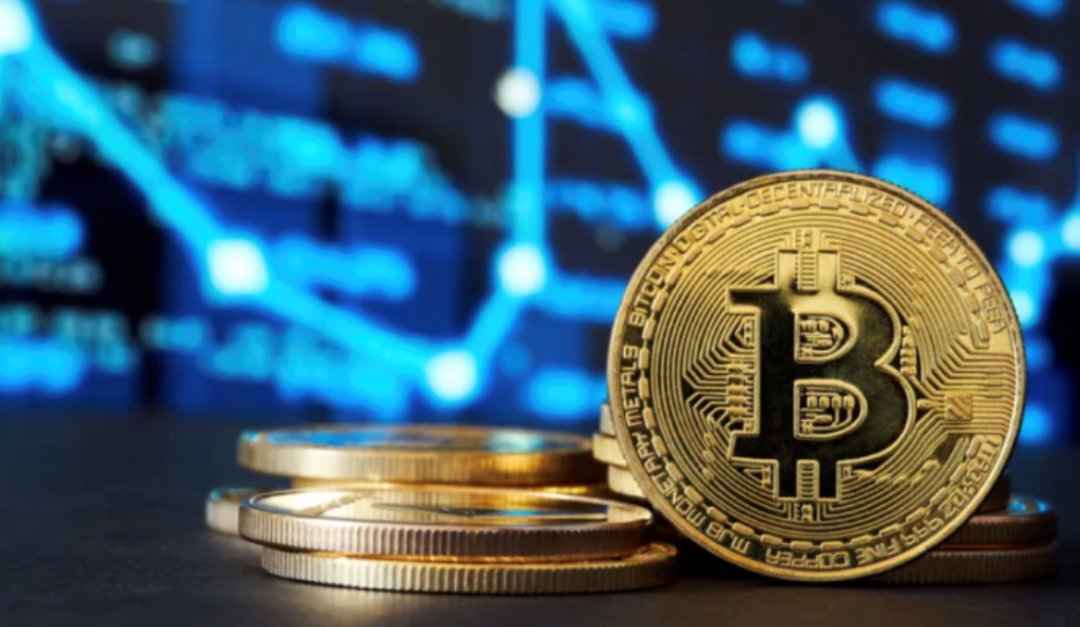
Cryptocurrency is a digital payment system that does not require transaction verification from banks. It is a peer-to-peer payment system that lets anybody send and receive money from anywhere. Cryptocurrency payments exist purely as digital entries to an online database that identify individual transactions, rather than as physical money that can be carried about and exchanged in the real world.
Transactions which involve Bitcoin funds are recorded on a public ledger. Cryptocurrency is stored in digital wallets. The use of encryption to validate transactions is referred to as cryptocurrency. This implies that in order to store and transmit bitcoin data between wallets and public ledgers, a specialized code is necessary.
Encryption's goal is to ensure security and safety. Bitcoin was the first cryptocurrency and remains the most well-known to this day. Much of the interest in cryptocurrencies is speculative, with speculators often driving prices stratospheric.
How does cryptocurrency function?
Cryptocurrencies operate on a distributed public ledger known as the blockchain, which keeps track of all transactions that are updated and retained by currency holders. Mining is a method of constructing bitcoin units that employ computer power to solve complicated mathematical problems. Users may also purchase the currencies from brokers, then store and spend them using cryptographic methods.
If you hold bitcoin, you don't own anything tangible. You have a key that allows you to transmit a record or a unit of measurement from one person to another without the need for a trustworthy third party.
Although Bitcoin has been around since 2009, cryptocurrencies and blockchain technology applications are still in their early stages in terms of financial use, with more utilization expected in the future. Bonds, stocks, and other financial assets may eventually be swapped utilizing the technology. Dmitry Medvedev believes that the US dollar and euro will lose their clout, while cryptocurrencies will grow in favor.
Dmitry Medvedev, a Russian politician who served as President of the country from 2008 to 2012, believes the International Monetary Fund (IMF) and the World Bank will fail in 2023. He stated that such an occurrence may weaken the euro and the dollar while increasing the use of cryptocurrencies. Justin Sun, the founder of Tron, agreed with Medvedev's "insightful statement." He also stated that crypto acceptance in China is progressively increasing and that "the best is yet to come."
Medvedev's Crypto Prediction
Numerous important celebrities and political leaders took advantage of the nearing end of 2022 to reveal their predictions for the coming year. The most recent was Dmitry Medvedev, the former President of Russia and Prime Minister of the world's largest country by landmass.
He believes that the Bretton Woods system (an international monetary accord that standardized currency exchange rates) might fail, resulting in the demise of major financial organizations such as the IMF and the World Bank. As a result, the euro and the dollar, two of the world's top fiat currencies, may lose their supremacy as global reserve currencies, spurring widespread cryptocurrency adoption.
Tron CEO Justin Sun emphasized the politician's argument, saying that cryptocurrency had the capacity to "revolutionize the global reserve currency." In a subsequent tweet, the Chinese said that crypto use is increasing in his nation and that the reopening of borders following the COVID-19 wave, as well as the strength of the economy, are promising signals for the country's monetary system's future.
The List Expands
Medvedev's list of forecasts included some unusual possibilities such as the United Kingdom rejoining the European Union (EU), the emergence of the "Fourth Reich," and a subsequent conflict between France and the "Fourth Reich."
The 57-year-old lawmaker also predicted that all major financial markets and economic activity will transfer from the United States and Europe to Asia.
Furthermore, he believes that a civil war might erupt in the United States, after which Texas and Mexico could become allied states. Elon Musk believes that once the military battle is over, he may win the presidential election in a number of states.
Solana is a highly functional open source project that leverages the permissionless feature of blockchain technology to create decentralised finance (DeFi) solutions. While the project's concept and first development began in 2017, the Solana Foundation, based in Geneva, Switzerland, formally launched Solana in March 2020.
The Solana protocol is designed to make it easier to develop decentralised applications (DApps). It seeks to boost scalability by merging a proof-of-history (PoH) consensus with the underlying proof-of-stake (PoS) consensus of the blockchain. Solana's innovative hybrid consensus process has grabbed the interest of both retail and institutional traders. The Solana Foundation is dedicated to increasing the availability of decentralised money.
What distinguishes Solana?
Anatoly Yakovenko's proof-of-history (PoH) consensus is one of the critical breakthroughs Solana brings to the table. This idea provides for higher protocol scaling, which improves usefulness. Solana is well-known in the cryptocurrency field for the blockchain's lightning-fast processing speeds. The hybrid protocol developed by Solana considerably reduces transaction and smart contract validation times. Because of its lightning-fast processing rates, Solana has also grabbed the interest of institutions. The Solana protocol is intended for both casual and corporate users.
Solana assures customers that they will not be surprised by increasing fees and taxes. The protocol is meant to have minimal transaction costs while ensuring scalability and quick processing. Solana is ranked number 7 in the CoinMarketCap rating as of September 2021, when combined with the lengthy professional skills developers Anatoly Yakovenko and Greg Fitzgerald offer to the project. This followed a spectacular bull run in which the price of Solana increased by approximately 700% from mid-July 2021.
Following the release of the Degenerate Ape NFT collection, SOL reached an all-time high (ATH) of more than $60, and it has been steadily rising since, owing largely to increased developer activity on the Solana ecosystem, increased institutional interest, a growing DeFi ecosystem, and the rise of the Solana NFTs and gaming vertical.
Solana achieved an all-time high of $216 on September 9, 2021.
Solana has garnered a lot of attention for its speed and performance, and it has even been mentioned as a competitor to Ethereum and the dominating smart contract platform. However, the network has experienced repeated outages, undercutting its pricing and ambitions to become the "Visa of cryptocurrency." Furthermore, its ecosystem has been accused of unfair tokenomics that favours venture capitalists. Despite the fact that we are in a bear market, institutions are interested in Solana. It has regularly generated positive flows, making it the institutions' preferred bad market companion. SOL inflows totaled $0.4 million, as previously reported.
The next week, the figure improved much further. SOL reported a $0.7 million positive flow in mid-December. All other crypto asset-related instruments [excluding short bitcoin products], as stated below, saw negative flows. Deribit, the world's largest options exchange, said on Monday that it will no longer provide Solana inverse products. This implies that following the impending December 30, 2022 expiry, no new Solana inverse options or futures will be listed on the market. Deribit's Twitter thread did not elaborate on the cause for the deletion. People in the neighbourhood, on the other hand, ascribed the same to perhaps low demand.
Recovery of Futures OI Notes
Aside from inverse Solana products, the Open Interest for conventional Solana futures contracts has recently increased. The same may be said about fresh money entering the ecosystem. On December 17, the total SOL OI [futures] was $163.66 million. Following the progressive slope, the figure is now north of $217 million. In the same time period, the figure on Deribit increased from $1.89 million to $2.03 million.
New money entering the ecosystem is not necessarily a good indication because traders may be collectively channeling them towards shorting the asset. That appears to be the case for Solana this time. The financing rate was somewhat negative on all major exchanges. The same stated that short traders currently have the upper hand since they are ready to support long traders. As a result, the aggregate trader mood is somewhat pessimistic. SOL has lost 2% on a daily basis and 7.5% on a weekly basis. The market-cap asset valued $4.1 billion was trading at $11.31 at press time.
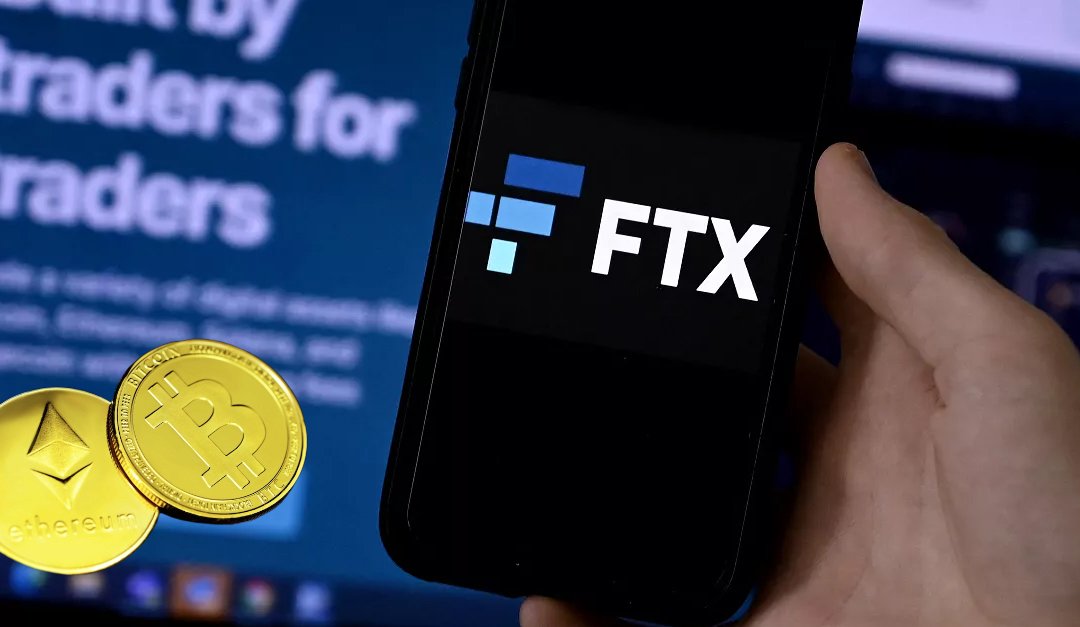
Concerns over Changpeng Zhao's Binance's hegemonic position in the cryptocurrency market have grown since Sam Bankman-utter Fried's passing. The auditing firm Mazars Group halted work on paperwork intended to demonstrate that Binance and other cryptocurrency companies had the necessary cash reserves to handle any unanticipated increase in customer withdrawals on Friday, which raised concerns once again.
Zhao, who goes by the initials CZ, has emphasized time and time again that his exchange, Binance, doesn't misappropriate customer funds, unlike FTX, as well as that it can handle any volume of withdrawals that come its way. As evidence that it has survived prior "crypto winters," including a more than 80% drop in Bitcoin from to Binance has a longer track record than FTX.
Still, the past few days have been trying. The action by Mazars raises concerns about an accounting picture that many people already thought was murky. In fact, Mazars likely stopped working on "proof-of-reserves" reports because the market did not find them convincing. Critics had further fodder for another round of heckling after CZ was subjected to a barrage of questions regarding Binance's financial stability at a televised appearance earlier in the week.
Even for those who claim to support CZ and his exchange, Binance's dominance of the market following FTX's demise doesn't sit well in a sector that promotes decentralization. This week's drop in cryptocurrency prices that was accompanied by news about CZ's company raises more questions about whether Binance has developed into a "too big to fail" participant in the market. Unlike traditional finance, there is no one on hand to stop a failure, offer a rescue, or stop any contagion.
Mark Lurie, CEO, and co-founder of Shipyard Software, a maker of decentralized exchanges, said: "I don't think Binance is attempting to cause difficulties, but that organization is now a risk to all of us. There are several systematic dangers whenever one player controls a sizable amount of volume."
According to CryptoCompare, Binance has raised its market share to 52.9%, its greatest ever, and grown its share of derivatives trading to 67.2% while, Bankman-FTX Fried's empire went into bankruptcy and the 30-year-old former billionaire traded a fancy apartment for a Bahamas jail cell.
When the subject of Binance's dominance came up during a Senate committee hearing on FTX on Wednesday, Sen. Bill Hagerty of Tennessee warned it would be "catastrophic for the cryptocurrency sector, and it would prove catastrophic to all of the customers that use the market."
For his part, Binance's CZ has reaffirmed in tweets and public remarks that no client exodus will be enough to put the business under strain. This week, a surge in client withdrawal requests put that confidence to the test. The native coin of Binance, BNB, has taken a significant hit as well, falling 20% since Monday.
Despite $6 billion in net withdrawals between Monday and Wednesday, a spokeswoman for Binance said in an email on Friday that "we were able to fulfill them without breaking stride." According to the spokesman, Binance does not invest user funds and keeps clients' cryptocurrencies in separate accounts with 1-to-1 asset backing. The representative stated that Binance has a $1 billion emergency fund and a debt-free capital structure to protect users in dire circumstances.
CZ likes to attribute a large portion of the recent interest to the unfounded "FUD" (fear, uncertainty, and doubt) that has hounded cryptocurrency from its inception. The sky won't likely clear for him any time soon, though.
Even if Mazars' report on Binance's reserves didn't amount to a full audit and didn't completely restore confidence, the accounting firm's departure deprives CZ of a credible outside source to support his claims. Furthermore, in the post-FTX context, public confidence in the claims of crypto billionaires is declining more quickly than the value of their coins.
The spokesman for Binance said the exchange is looking into ways to increase transparency for users to see that their assets are on the blockchain and is looking for a different accounting firm to partner with it to demonstrate proof of its reserves. That might be challenging: The Wall Street Journal reported late on Friday that BDO was rethinking its work for cryptocurrency companies after recently endorsing the reserves of stablecoin juggernaut Tether.
Government Scrutinyfor Binance
Binance might prove impervious to the kind of bank run that brought down FTX and other companies this year, but CZ continues to be subject to legal risks and government scrutiny that might escalate into existential dangers to the company.
The Internal Revenue Service and Justice Department are both looking into Binance, according to a story from Bloomberg from last year. In 2020, Chainalysis Inc., a blockchain forensics company with clients that include U.S. federal agencies, came to the conclusion that Binance was the exchange through which more funds associated with criminal activities were transferred than any other cryptocurrency exchange.
According to Reuters on Monday, which cited people familiar with the situation, disagreements among the prosecutors are preventing the DOJ investigation from being completed. According to the report, some of the case's prosecutors want to analyze more evidence while others think the government has enough to press criminal charges against CZ and other executives of Binance. The corporate representative said on Friday that "Binance has created clear business policies to guarantee we operate globally in a regulatory compliant manner." (CZ worked from 2002 to 2005 at Bloomberg LP, the organization that owns Bloomberg News.)
The cryptocurrency community is also closely monitoring the possibility that FTX's bankruptcy case would lead to attempts to recoup the $2.1 billion that FTX paid to buy back Binance's investment in Bankman-business, Fried's much of which was paid in an FTX token whose value has since plummeted. Kevin O'Leary, a "Shark Tank" television personality who has millions of dollars in cryptocurrency from a sponsored sponsorship locked up in FTX, said to a Senate committee, "Maybe I want a Madoff clawback on those revenues."
When asked if he was willing to repay the $2.1 billion during a CNBC interview on Thursday, CZ responded, "I think we'll leave that to the attorneys," which sparked a fresh round of criticism on Twitter from the crypto community. Time will tell if they were merely more false information.
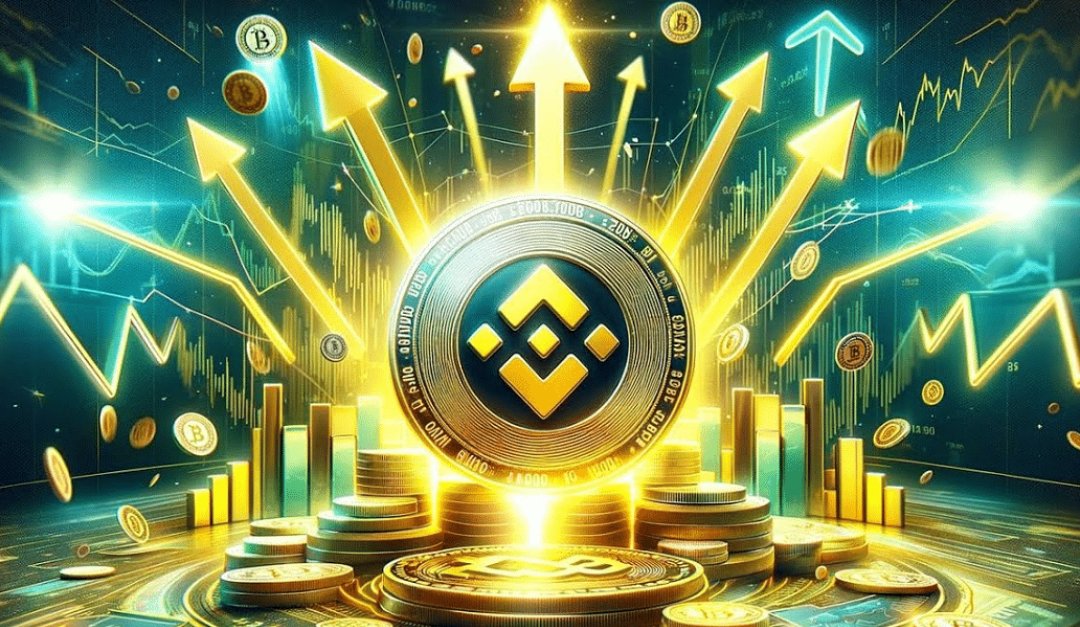
The decentralized exchange (DEX) Binance - one of the greatest in terms of traffic, issues the cryptocurrency known as Binance (BNB) coin. As per the whitepaper, the ‘Binance’ word is a mashup of the words "binary finance" and gives a wide range of decentralized financial (DeFi) services on an approachable platform. However, using the support services given by the exchange, users can easily trade or earn yield.
Before Binance cryptocurrency, the exchanges were built by programmers without a background in finance or managing decentralized exchanges. These were basic exchanges which unable to handle high transaction volumes. At that time, the retail and institutional participants were equally impacted by the lack of liquidity on exchanges, which made things worse for investors. All of these issues significantly impeded the production of a strong crypto exchange for the general public. Binance's staff brings a plethora of expertise to the table to offer a secure, effective, rapid, and user-friendly decentralized exchange. Although the platform has undergone extensive testing and validation for security and with the help of its wide network of cryptocurrency partners, Binance was able to efficiently service the global market.
Binance has gradually developed into a multifaceted DeFi platform with the main focus on providing its users with a large variety of financial options in addition to trading and exchange. Binance Earn is one of the platform's features whose goal is to serve as the platform's one-stop shop for DeFi. The service comes with a money account where users may deposit cryptocurrencies and receive interest, among other advantages.
The Secure Asset Fund for Users is another noteworthy aspect of the platform (SAFU). It was created by Binance as a backup insurance fund to protect user assets. However, this fund was established to provide user compensation if exchange funds were stolen by dishonest individuals. But things don't stop there and a staking account, a liquidity pool, and a debit card that improved security features are also available through Binance.
Binance Coin (BNB) momentarily surpassed the $300 level on Friday, achieving the day's high of $303. Later on, BNB's price reversed, although it is still trading at the $300 mark today. However, BNB has limitations, which is unfortunate, but it is still holding its own in the indices when compared to other cryptos. This coin has made an effort to present itself in the best possible light despite the current year's unfavorable market conditions.
What Will Happen with Binance Coin (BNB)?
Despite the current downturn in crypto markets, top-known researcher Michael van de Poppe is still optimistic about BNB's future. What prevents Binance's price from collapsing like the other cryptocurrencies is the level of faith that investors have in the company.
BNB is one of the top 3 cryptocurrencies to keep an eye on in December 2022, according to Poppe, who has 164,000 YouTube subscribers. According to the analyst, BNB is currently in accumulation mode and could soar to new heights if its price breaches the $325 resistance.
According to Poppe, the next step for BNB might be $380 if it manages to overcome the $325 resistance level. Poppe predicts that if BNB overcomes the next hurdle of $380, it will soon approach $450 levels. BNB's price, which is currently $292, needs to increase by over 50% for that to happen.
BNB's progress toward $450
Binance Coin might reach $450 soon. For some weeks, the coin has been suppressed. Even for a little period, it fell below $300. However, it seems like there is a way to get $450, but there are two big obstacles to get in the way first.
$435 is the first obstacle that Binance Coin (BNB) is currently facing. BNB has attempted to pass this level on numerous occasions in the past but has failed. BNB may indicate more upside potential if it can close above this level.
The $336 threshold serves as the second barrier. Currently, Binance Coin is 10% below this mark. The coin may end the week higher than $336 if the market exhibits a more ferocious bullish trend tomorrow.
At the time of publication, Binance coin was down 2.8% over the previous day's trading and was trading at $292. BNB has likewise lost 57.5% of its value since hitting an all-time high of $686 in May of last year.
The biggest obstacle will, however, be the next one. For BNB to retake the lead, significant momentum must build. We do not believe the coin has sufficient upward momentum to reach $358, though. As opposed to that, it's more likely to test $336 before tumbling once more toward $310. There is also the possibility of certain negative outcomes. BNB might finally crash below $286 if the market does go sideways and fails to make any strong gain toward $336. The price of Binance Coin at the time of writing was $334.82. Over the previous several days, the native token of Binance has experienced a minor increase. But is still stuck in a symmetrical triangle configuration. Right now, BNB is trading at the peak of this formation.
If by the end of this week or early the following week Binance Coin (BNB) is unable to close above $358. BNB is most likely to start consolidating for $325. This is not always a bad thing because BNB will be well-positioned and have built a new, higher low. for a second try at an upside breakout in the upcoming weeks. Long-term, Binance Coin (BNB) continues to appear to be tremendously robust. Additionally, we think it will eventually reach $450 or even higher.
Conclusion- The bottom line
The initial step would be to assess the price momentum over the next two days. Don't buy if Binance's price remains constant between $308 and $318 for an additional two days.
In that situation, an upside breakout is more likely. BNB might be purchased for approximately $318 with a stop loss just below $308.
You might set a goal of $335 or even $350. If Binance Coin (BNB) moves to $350, our earlier prediction that it would enter a consolidation period would be incorrect. BNB could increase to $450 in the next weeks.