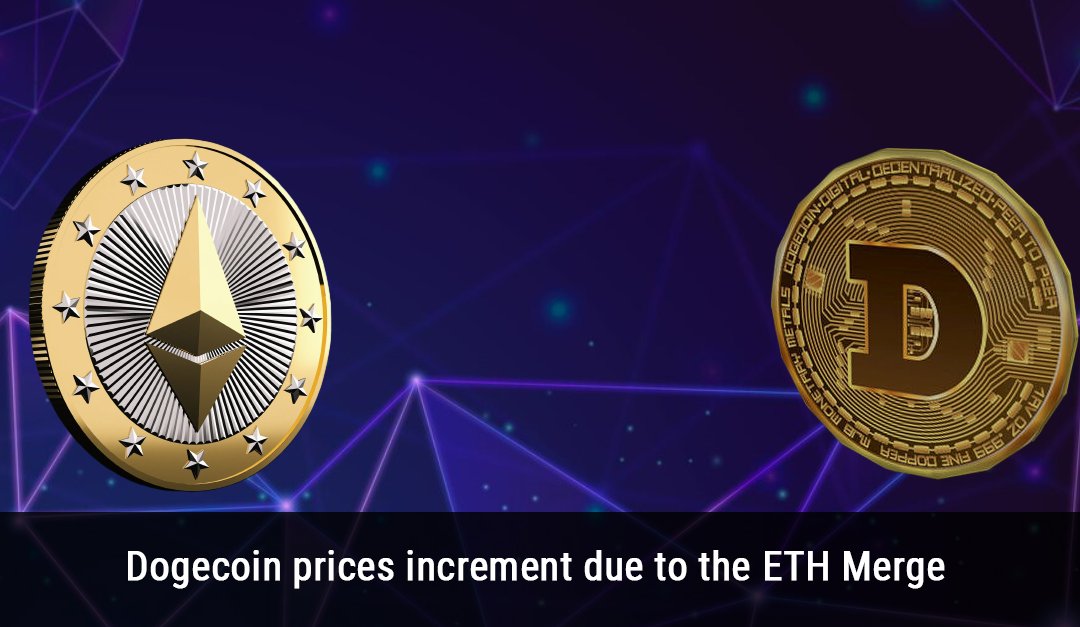
Since the beginning of this year, everyone's attention has been focused on the Ethereum network and the Merge, the much-awaited upgrade that the network is undergoing. This ground-breaking update caused a wide variety of changes not just inside the ETH environment but also in the outside world. After Ethereum completed its move to proof-of-stake [PoS], the proof-of-work [PoW] cryptocurrency market was taken over by ETH's equivalent, Dogecoin [DOGE], which is now the second biggest cryptocurrency overall.
What is DOGE?
Dogecoin, abbreviated as DOGE, is a cryptocurrency that is peer-to-peer and open-source. The picture of a Shiba Inu dog serves as its trademark, and the cryptocurrency was introduced in December of 2013, making it an alternative cryptocurrency. The blockchain technology that underpins Dogecoin, which was originally developed for Litecoin, has some value. Dogecoin, which makes use of an algorithm known as script, is notable for several reasons, including its cheap price and its endless supply.
DOGE coin price increment
Dogecoin is a cryptocurrency based on a meme that was first created as a joke in 2013 and has now grown to become the second-largest proof-of-work (PoW) cryptocurrency after Bitcoin. This breakthrough comes only one day after the Ethereum blockchain completed its switch to the power-efficient proof-of-stake (PoS) mining model from the power-intensive proof-of-work (PoW) mechanism it had previously used.
The native cryptocurrency of Ethereum, known as Ether, has also, as a result, lost its position among the PoW currencies. Dogecoin, on the other hand, is now selling at $0.059 (which is equivalent to around Rs. 5), and its market value is at $7.83 billion at the moment.
Why are DOGE investors so happy?
The community around Dogecoin was overjoyed with the successful completion of the Merge, which was being celebrated by the whole community. Dogecoin was able to move up in the ranks to a position just behind Bitcoin [BTC] once Ethereum entered the world of proof-of-stake transactions. DOGE was at the top of the PoW cryptocurrency list when it came to market cap. Dogecoin paved the path for other cryptocurrencies such as Ethereum Classic [ETC], Litecoin [LTC], and Monero [XMR].
The market capitalization of Dogecoin was estimated to be $7.87 billion at press time, but its price saw a daily decrease of 2%. The price of Elon Musk's preferred cryptocurrency was $0.0592 at present. As a result, many in the DOGE community started to rejoice over this victory. Several people were taken aback and were unable to believe what had just taken place.
How was the Merge responsible for Doge prices?
The transition from PoW to PoS on Ethereum was met with a great deal of resistance. By making adjustments, several people pointed out that the Ethereum network was going against the spirit of cryptography. In addition to this, opponents pointed out that the network was also interfering with the process of decentralization.
Following the recent statements made by SEC head Gary Gensler, the network is also under pressure from regulatory authorities. Since Ethereum transitioned to Proof-of-Stake, the community has been voicing their worries about the cryptocurrency being mistaken for security.
It is expected that the cryptocurrency sector will continue to focus on Bitcoin, DOGE, and other cryptocurrencies that are generated using proof-of-work algorithms. For example, Ethereum Classic received a significant amount of attention in the middle of the Merge. As a result, it is very possible that proof-of-work (PoW) cryptocurrencies could see greater attention in the days and weeks ahead.
Should Dogecoin go into proof-of-stake?
Despite the Merge, Dogecoin was still able to create headlines. Along the way, though, discussions on the potential of Dogecoin to enter the Point-of-Sale market were also started. Considering the intense attention that has been placed on PoW cryptocurrency for its energy usage, some people have pointed out the need for DOGE to include an alternate approach. However, several other people pointed out that Dogecoin uses a great deal less power than Bitcoin does.
There have been a total of six unique individuals that have inquired about the Finance Department. Two different narratives that, at first glance, appear to have nothing in common with one another. One quite horrible precedence to pursue. The safety and security of your personally identifiable information are of the utmost significance. Coinbase has announced that it will be extending financial assistance to the United States Treasury Department to litigate one constitutional dispute. Donations of money will be made to provide this assistance. Four persons have initiated a civil case with the cooperation of a cryptocurrency exchange, which is providing financial aid to the process. The objective of the process is to challenge particular penalties that were imposed on Tornado Cash.
STATEMENTSRELEASED BY THE AUTHORITIES
And on September 9th, the Chief of such Securities and Exchange Commission, Gary Gensler, announced the news about how he was vigorously working with Congress to establish measures that would increase bitcoin restrictions. Gensler is the Chief of such Securities and Exchange Commission. Gensler is currently serving as the Chief Executive Officer of the Securities and Exchange Commission (SEC).
However, these two points of view are not at all incompatible with one another and can be discussed together. This chain of events explains why authorities are only responding in a retaliatory manner rather than taking preventative measures to decentralized financial affairs (Defi).
A look at the Tornado Crash
At the beginning of August, the Office of Foreign Assets Control (OFAC) concluded that Tornado Cash should be subject to sanctions. OFAC accusations say that a blockchain-based blender was used to enable the trafficking of more than seven billion dollars worth of bitcoin from the very beginning of its construction in 2019. This would be in 2019 when the blockchain was first introduced. The amount shows that cyber criminals who claimed to have connections to North Korea as well as the Lazarus Group stole more than $455 million in total.
The Chief Executive Officer of Coinbase, Brian Armstrong, issued a press release in which he argued that the Treasury Department may have exceeded its authority by imposing "the arbitrary decision of banning a broad ecosystem rather than individual officers." The Treasury Department is responsible for regulating cryptocurrencies such as bitcoin and Ethereum. This statement was made by Armstrong at some point during the press release. Coinbase asserted that the remedies, as well as its argument that the penalties were beyond the power allocated to such administration, were in breach of the provisions of the agreement. Coinbase also asserted that the penalties exceeded the power allotted to such administration.
Remove the capacity of customers to protect their private information and security, put innocent bystanders in danger, and prohibit the capability of embedding content.
Regulations imposed on Defi enterprises
The next day, Gensler had a change of heart and decided to discontinue their hunt for stronger regulations governing such Defi enterprises. They did this even though they had previously argued that bitcoin businesses cannot be competitive if they do not have these regulations. Everything that has to do with the cryptocurrency industry is, and will continue to be, in full conformity with the law that regulates the buying and selling of stocks. Regardless of the approaches that are used as a basis, it seems as though one of the most crucial considerations to make is how to safeguard the investment.
Conclusion
There are numerous justifications for exercising caution, including the regulations that govern the security of personal data. However, the threshold that was imposed more by operations targeting Tornado Cash is something that everyone interested in crypto assets has to be concerned about. This is because these activities were the ones that imposed the threshold. In addition to the fact that blockchain technology and cryptology are continuously developing. There is also a wide variety of legitimate applications for technological developments that are comparable to blockchain technology. One example is the use of smart contracts, which are decentralized ledgers that record and verify transactions in a distributed ledger. The provision of security is the most essential and fundamental component of decentralized financial systems. The term "decentralized finance" already provides a fairly accurate description of how the system works.
Colony Lab, the accelerator for the Avalanche ecosystem, has teamed up with the decentralized cryptocurrency index platform Phuture to produce CAI, the first index token to give exposure to the AVAX ecosystem. Colony Avalanche Index, more often referred to as CAI, is an investment instrument that allows users to profit from the expansion of the Avalanche ecosystem as a whole by holding only one token. The CAI is a basket that contains AVAX and Avalanche application tokens. These tokens are distributed over many distinct themed areas, including GameFi, Defi, and others.
Steps were undertaken by the CAI
In addition to this, the CAI token has natively integrated yield-bearing capabilities as a result of an interface with Yield Yak. The assets included within it are used to generate more yield via the aggregator, which provides a method that is not only secure but also effective for the multiplication of earnings.
Investors that are enthusiastic about the Avalanche ecosystem but would rather obtain exposure in a measured, more efficient, and effective manner that maximizes money for them are the target audience for CAI.
In addition to very successful GameFi initiatives like DeFi Kingdoms, which operate on their subnets, the network has only been operational for a total of 22 months; yet, it is now the third biggest DeFi ecosystem in terms of total value locked. Given that the ecosystem will keep growing and changing at a quick pace, it is impossible to determine who the final winners will be at this time.
The purpose of the union
CAI will do a rebalancing operation every month to ensure that it always includes the assets that are ranked highest both in terms of liquidity and capitalization. This is done to take into account the dynamic nature of the Avalanche ecosystem. The use of the dynamic rebalancing process guarantees that CAI will always be invested in the assets that provide the highest returns.
CAI, on the other hand, provides access to all of the advantages of index investing. Because of diversification, purchasers are less likely to be adversely impacted by certain occurrences that drive down the price of a single individual token. It also provides an easy approach to retaining discipline, since spending more time in the market often yields better results than trying to time the market. To increase returns for investors, the increased yield makes the most of Avalanche's most successful yield methods.
The debut of CAI couldn't have come at a better time, since the Avalanche ecosystem is getting ready for even more rapid expansion. Avalanche maintains its position as the industry leader in terms of both the number of new users and the number of innovative features it has introduced. Subnet-based games like DFK, Crabada, and many more are seeing huge activity that matches that of the EVM-compatible Avalanche C-Chain itself. Projects such as Platypus and Trader Joe's provide intriguing innovations, while others, such as DFK, are witnessing massive activity.
What is Colony?
The colony is a community-driven accelerator that is transitioning into an inclusive DAO intending to foster the expansion of Avalanche's ecosystem. Colony evaluates networks via stacking capabilities, allocates cash inside Avalanche on early-stage projects, offers liquidity to DeFi protocols, and maintains an index (CAI) on the top Avalanche projects. The genuine support and value created by Colony's investments are redistributed back to the community in the form of staking rewards, buybacks, and airdrops.
What is Phuture?
Phuture (PHTR) is a decentralized cryptocurrency index platform that streamlines the investing process by using automated, thematic index funds built on Ethereum and Avalanche. Phuture is now offering the Colony Avalanche Index in addition to the Phuture DeFi Index (PDI), which was only just introduced (CAI). Phuture was established in 2019 and has so far raised $3.75 million.
According to Vitalik Buterin, the co-founder of the Ethereum network, the much-anticipated software update of the Ethereum blockchain, which is referred to in the cryptocurrency industry as the Merge, is now expected to take place around September 13 to September 15.
The Merge signifies a movement in the manner that Ether tokens are generated and payments are verified, away from mining blocks utilizing challenging computational puzzles following the proof-of-work technique and toward the proof-of-stake approach. The proof-of-work method required miners to solve increasingly difficult problems to get new blocks. Holders of Ether may sign up to verify transactions on Ethereum using the POS mechanism, which is based on stashes of locked up tokens in their possession.
Buterin said that the proof-of-work version of Ethereum only has a roughly "fixed amount" of mining slots after the last test stage of the Merge known as Goerli earlier this week. Goerli was known as the name of the test stage. Because of this, engineers now have a better idea of when the formal network update will likely get underway.
An earlier projection suggested that the date would fall between September 15 and September 20. Next week, there will be another meeting with the engineers working on Ethereum to iron out any last-minute kinks in the Merge. During this call, a specific date will be decided upon and hammered out.
The Bellatrix hard fork
On the Ethereum blockchain, the long-awaited update to Ethereum 2.0 is set to get underway. Ethereum 2.0 refers to the method by which the cryptocurrency Ethereum (ETH) will transition from operating on a proof-of-work (PoW) basis to operating on a proof-of-stake (PoS) basis through a hard fork, also known as a separation process. Even though the Ethereum Foundation does not make use of the phrase "Ethereum 2.0," the word is often used in the industry to make things easier to understand.
A Bellatrix upgrade for ETH is slated for today, the day before the final merge. At that time, the Ethereum Epoch value on the proof-of-stake chain is expected to increase to 144,896. This will occur before the final merge. According to the Ethereum Foundation, one epoch is the amount of time that must pass to mine 30,000 blocks.
The most recent upgrade to Bellatrix is required for "the Merge" to be carried out without a hitch. This upgrade is the last one that will take place before the Paris Upgrade, which will take place after "the Merge." It brings together the proof-of-stake chain and the current execution layer (current proof-of-work).
Mining on the Ethereum Blockchain will be rendered obsolete as a result of the Paris Upgrade, which will also herald the transition from a proof-of-work validation system to a proof-of-stake system design.
An outline of the most recent changes to Ethereum
In the same way that Bitcoin was constructed, the Ethereum network was built using the proof-of-work (PoW) method. This suggests that mining, a process that uses a substantial amount of energy, is necessary for the production of Ethereum (ETH) coins.
To make the transition to a proof-of-stake (PoS) paradigm, however, various measures were made in preparation for the introduction of Ethereum 2.0 in 2020. The purpose of this project is to improve the speed, efficiency, and scalability of the Ethereum network to facilitate the execution of a greater number of transactions in parallel.
What will happen after The Merge?
At the beginning of this year, Ethereum's original developer, Vitalik Buterin, assigned a development progress rating of 50% to the project. In addition to this appraisal, he included a list of the many stages, such as merging, surge, verge, and others, that Ethereum must go through to reach 100%.
The update to Bellatrix is slated to take place today. As part of this process, the Beacon Chain will be integrated with the Ethereum mainnet, and the consensus method will be converted entirely from proof-of-work to proof-of-stake.
The zk-rollups layer 2 scaling solution will need to be implemented as the next stage of the surge. To aggregate and carry out several transactions all at once, a technique known as rollup makes use of an Ethereum sidechain.
The government of the United States has placed limits on the export of certain types of chip sales. Nvidia, an American multinational technology corporation, said on Wednesday that Chinese regulators requested that it cease shipping two of its most advanced processing processors for use in artificial intelligence-related projects. Nvidia said that it had been informed by American authorities that the new regulation "would address the potential that the covered items may be utilized in, or diverted to, a military end use' or military end user' in China."
Nvidia and AMD, two of the top chipmakers in the United States, both stated late Wednesday that additional limitations had been implemented by the United States government to prevent China and Russia from obtaining high-end artificial intelligence processors. Although the measures' primary purpose is to limit China's and Russia's military capabilities, there is a possibility that they will also impede technological progress in other fields.
What is the new AI chip ban?
Nvidia revealed on Wednesday evening in a filing with the United States Securities and Exchange Commission that Chinese customers would no longer be able to purchase the company's "A100 and forthcoming H100 integrated circuits." The company also stated that this decision could result in a loss of up to $400 million in revenue from sales of high-end chips. Artificial intelligence (AI), data analytics, and high-performance computing data centers are powered by Nvidia's A100 chipset.
According to the petition, the United States government informed Nvidia that the new prohibition will assist in ensuring that Nvidia's goods are not "used in" or "diverted to" military equipment manufactured in either Russia or China. Nvidia said that its Chinese clients can petition the United States government for exemptions from the restrictions; however, the company added that it has not received any "assurances" that the government would give such exemptions.
Russia is included in the scope of the sale restriction order, in addition to China. Nvidia does not presently offer any of its products in Russia; nevertheless, the company does have a large number of satisfied clients in China.
How will the ban affect China and Russia?
Since the 26th of August, the price per share of NVDA has been going down. The most recent statement, as was to be anticipated, caused an even steeper price decline. The price of the stock, which was $95 at the end of trading on Wednesday, was at a level that hadn't been seen in the market since the middle of July. In addition, the price of Nvidia shares dropped by 6.6% after the market closed.
It is important to keep in mind that the husband of U.S. House Speaker Nancy Pelosi sold all of his Nvidia stock around the end of July when the House was considering whether or not to pass the chip bill. The multibillion-dollar law, in and of itself, seeks to expand chip production in the United States, and investors' excitement over this prospect drove up the price of NVDA shares.
According to the regulatory statement that Nancy Pelosi submitted, her husband, Paul Pelosi, sold 25,000 shares of Nvidia on Tuesday for $165.05, bringing in a total of $4.1 million. The document indicated that Pelosi had incurred a loss of 341,365 dollars as a result of the transaction.
The shares of Advanced Micro Devices, which competes with Nvidia, also responded to the recent order. In the after-market hours, it had a loss of 3.7%. The aforementioned action could make it more difficult for Chinese companies to carry out complex tasks like image recognition. Concurrently, the ruling will have the effect of restricting Nvidia's commercial activities in China.
Why was the ban implemented?
The business said that the prohibition, which affects its A100 and H100 processors meant to speed up machine learning activities, might interfere with the company's ability to complete the development of the H100, which is the flagship chip that Nvidia revealed this year.
The United States Department of Commerce said, without providing any information, that it has examined its policies and procedures towards China to "keep sophisticated technology out of the wrong hands."
In the same vein, a representative for AMD was quoted by Reuters as saying that the business had been informed of new licensing requirements that would prevent the shipment of its MI250 artificial intelligence processors to China. Despite this, the company thinks that its MI100 chips will not be impacted in any way. AMD, on the other hand, has said that it does not expect the new restrictions would have a significant influence on the company's operations.