Bitcoin is the world's first decentralized cryptocurrency, a sort of digital asset that records, signs, and sends transactions across the Bitcoin blockchain without the oversight of a central authority. The BTC network was established in January 2009 by an anonymous computer programmer or group of programmers under the alias "Satoshi Nakamoto." The network is a peer-to-peer electronic payment system that employs bitcoin as a cryptocurrency to transmit value via the internet or as a store of value like gold and silver.
The newsletter's publishing date will stay unchanged, and the content will continue to focus on technical and fundamental analysis of cryptocurrencies from a macro perspective to spot important movements in investor mood and market structure.
Is it time to go long?
Bitcoin's (BTC tickers down $20,737) price has risen this week, reaching $21,000 on Oct. 26. This prompted a few traders to declare that the bottom had been reached or that BTC was entering the next phase of some technical structure such as Wyckoff, a range break, or some form of support resistance flip.
Before we get all positive and open 10x longs, let's go back to a previous analysis to see if anything has changed in Bitcoin's market structure and whether the recent burst of bullish momentum is indicative of a larger trend change.
When the last update was released on September 30, Bitcoin was trading at about $19,600, remaining within the range of the previous 136 days of price action. I discovered bullish divergences on the weekly relative strength index (RSI) and moving average confluence divergence at the time (MACD). There were also a few potential "bottoming" signs from other on-chain indicators that were at multi-year lows.
The Bollinger Bands are Quite Tight.
The Bollinger Bands on the daily period remain constrained, and this week's leap to $21,000 was the expected expansion or increase in volatility. After breaking out from the upper arm, the price has retraced to test the mid-line/mid-band (20MA) as support, as is customary.
Despite the severity of the rise, Bitcoin's price remains capped below. For the past two weeks, Bitcoin's "record-low volatility" has been the talk of the town, and when utilizing the Bollinger Bands, GMMA, and BVOL, the tighter price range does hint at expansion, but in which direction is unknown.
Bitcoin has been trading in the $18,600-$24,500 area for 36 days, and the price remains towards the middle of that range according to technical analysis. The rise to $21,000 did not result in a substantial daily higher high or break out of the present range, which is effectively a lateral chop.
For the time being, the price is above the 20-day moving average, but it has yet to cross over the 50-day moving average, and the majority of the Oct. 26 gain has been retraced back to the low $20,000 area.
In The Future
Multiple data points appear to indicate that Bitcoin's price is undervalued and in the process of forming a bottom, but none indicates that the market bottom has been reached.
Several Bitcoin mining companies have openly acknowledged the need to restructure debt, and the possibility of missed debt payments, and some have even hinted at impending bankruptcy this week and in previous months.
Since June, most publicly traded miners have been selling the majority of their mined BTC, and recent stories about Compute North and Core Scientific suggest that Bitcoin's price is still vulnerable owing to solvency difficulties among industrial miners.
Conclusion
According to Glassnode data, the aggregate size of miner balances is roughly 78,400 BTC and is "held by miners we have labeled (accounting for 96% of current hash rate).” According to Glassnode, in the event of "income stress," miners may be obliged to liquidate tranches of these reserves in the open market, and the effect on Bitcoin's price might be the next spark of a sell-off to new yearly lows.
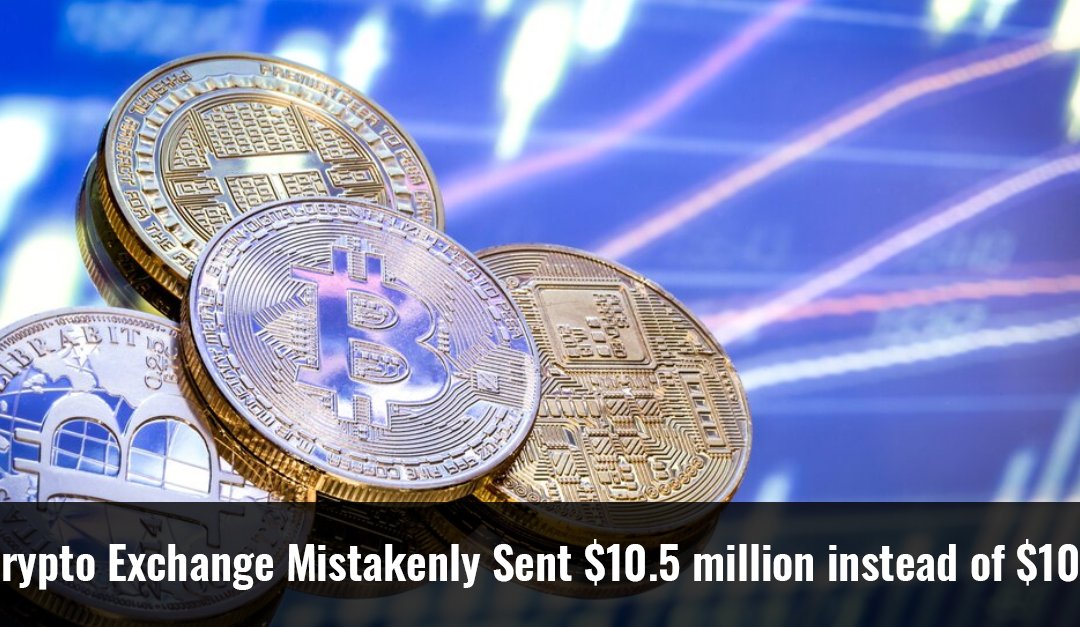
A massive crypto platform blunder happened in crypto exchange Crypto.com. The error was disclosed after 7 months after the incident. A huge amount of crypto has been transferred mistakenly. Nearly AU$10.5 million ($7.2 million) worth of crypto has accidentally been transferred to a woman in Melbourne.
But the blunder became a more complicated issue as the Australian woman Thevamanogari Manivel spent a massive amount of the crypto. According to reports, five-bedroom property in suburban Melbourne was purchased from the crypto. The spent amount is AU$1.35 million.
How Did it Happen?
In December 2021, during an audit, that crypto firm disclosed that it had made a mistake in processing an AU$100 refund. That happened seven months earlier than that disclosure. That time the error was unnoticed.
The firm did this blunder during the payment process to the Australian lady. It entered the account number of that woman into the payment amount space.
Getting back the funds that were mistakenly transferred, the state of Victoria’s Supreme Court has ordered the home. It was ordered to sell the properties that were bought by capital and the money was returned to the company.
Recent reports show that the case is expected to back into court next month in October 2022.
The Legal Actions :
It was reported that the firm, Crypto.com had launched legal action to get back the amount
in the Victoria Supreme Court.
Following the court's order, the Australian Woman's bank account was frozen in February 2022. Unfortunately, the major amount of money either has already been spent or transferred to other bank accounts.
The court judgment stated that the money that was accidentally sent from the firm, was distributed to other relatives of that lady. Manivel sent $430,000 from that amount to her daughter in January 2022. Apart from that, she purchased a house in Craigieburn, a suburb of Melbourne. The house is priced at $1.35 million.
The court has ordered to sell the house and return $1.35 million to the firm along with its interest. As the interest was added, the amount is going to be raised at a high level to return it.
If that sister duo will not put their property for sale, Cypto.com will reportedly appoint a receiver to sell the house and will recover its money from the proceeds.
Also, if the lady will not cooperate with the court's proceeding, they are going to dip into more troublesome legal actions. Additionally, the court has also ordered the ladies to pay for the court's proceedings.
Present Condition Of The Market :
Notably, in this crypto winter, all the crypto platforms along with the major ones are suffering from their losses. Several exploits and scams are taking place in the market. Users and investors are panicking to invest in the market. Bad actors are luring the users through fake air drops and several other offers to gain tokens. Along with the platforms, its user community is also suffering from its losses. In those circumstances, that kind of error made by Crypto.com led it to a more risky financial structure. To play safe, the platform reportedly hid its blunder. There are so many reasons to hide that error from the other community. As the users are going backward in terms of believing any platform, the platform chose not to disclose its error. Additionally, for more advancement, the crypto platforms are choosing to adopt web3 technologies along with Metaverse projects. That is why web2 platforms are now into a hard competition to exist in the market. The gaming platforms to Defi, all are switching to that web3 mechanism.
As a direct response to the ongoing invasion of Ukraine by Russian forces, the United States Department of the Treasury has today announced the addition of 24 individuals and two entities with ties to the Russian government to the sanctions list maintained by the Office of Foreign Assets Control (OFAC).
The list includes organizations that OFAC claims backed Russia's invasion of Ukraine. These organizations include Task Force Rusich, an alleged neo-Nazi paramilitary outfit that the agency claims fought with Russia's troops in Ukraine.
Evasion prevention and a more isolated financial system in Russia
In retaliation for Russia's continuation of its invasion of Ukraine in February 2022, the United States and an international coalition of friends and partners moved swiftly to significantly cut off Russia's access to the world's financial system. They did this in reaction to Russia's actions. As a direct result of this, Russia has been working feverishly to develop innovative approaches to the processing of payments and the execution of transactions. The unjustified war being waged by the Kremlin has been sponsored both directly and indirectly by Russia's financial technocrats.
The designations announced today are directed at such efforts. Given the extensive sanctions that have been imposed on Russia's financial system this year, OFAC is also publishing a Frequently Asked Question (FAQ) document to provide additional guidance on the increased risk of assisting Russia's efforts to evade sanctions through the expanded use of the National Payment Card System (NSPK) or the Mir National Payment System. This is being done to provide information on the increased risk of doing so.
Vladimir Valerievich Komlev (Komlev) serves as both the Chairman of the Management Board and the Chief Executive Officer of NSPK. NSPK is a corporation that is owned by the Central Bank of the Russian Federation and is responsible for operating the Mir payment card network inside that nation. In 2014, because of concern about potential penalties from the United States and Europe, Russia established its card payment system that is managed by the state. As part of his job, Komlev has been traveling across the world spreading awareness about the Mir network, which has the potential to help Russia evade international sanctions.
The reason behind the actions
This action is being taken in cooperation with those taken by the United States Department of Commerce, which is imposing further export control restrictions to better align with allies and partners as well as by the United States Department of State, which is attacking Russia's military and high-technology businesses.
OFAC did not stop at just adding Task Force Rusich to its list of sanctioned organizations; the organisation also disclosed and blacklisted cryptocurrency addresses associated with Bitcoin, Ether, and USDT.
Before Russia began its invasion of Ukraine in February of this year, crypto currency contributions started streaming into the country as both sides looked to supporters all over the world and used digital assets to get around limitations on border crossings.
According to a report published in July by the blockchain analytics company Chainalysis, organizations with ties to Russia had raised a total of $2 million in cryptocurrency. The vast majority of the funds raised were transferred in the cryptocurrencies Bitcoin ($1.45 million) and Ethereum ($590,000), with "considerable quantities" also transferred in the cryptocurrencies Tether, Litecoin, and Dogecoin.
Final Thoughts
On the other hand, Bitcoin, Ethereum, TRON, Polkadot, Dogecoin, and Solana were among the cryptocurrencies that contributed to Ukraine's over $100 million in cryptocurrency contributions by March 2022, according to the blockchain analytics platform Elliptic. These cryptocurrencies included Solana. Among these gifts was a sum of five million dollars from Vitalik Buterin, the co-founder of Ethereum. In recent months, OFAC has increased its investigation and penalizing of cryptocurrency addresses. As part of this expansion, the organization has included the Tornado Cash coin mixing service as well as multiple Ethereum addresses, claiming the usage of the service in money laundering.
dYdX has decided to stop its controversial promotion, citing "overwhelming demand." The swift cancellation is a response to the significant backlash received from the community in response to the demand for a face recognition scan to be eligible for the deposit bonus.
What exactly is dYdX?
At this time, dYdX is the preeminent leader among decentralized exchanges that offer everlasting trading. Users can trade directly with one another on the dYdX platform, which is powered by smart contracts on the Ethereum blockchain.
dYdX is a non-custodial and decentralized platform for margin trading that offers synthetic exposure to crypto assets. On top of the fundamental assets, known as ERC-20 tokens, perpetual contracts are constructed. As a consequence of this, dYdX makes it possible to create new asset classes, the value of which is derived from the assets that are underpinning them.
An Overview of dYdX
dYdX is a decentralized exchange that was constructed on the Ethereum network. It provides users with essential financial instruments such as perpetual, margin trading, spot trading, and lending and borrowing capabilities. dYdX provides traders with off-chain order books that are settled on the blockchain. It also gives traders the ability to short-sell tokens, expand their exposure by longing with leverage, or collect interest on deposited tokens so that they can move rapidly. dYdX makes use of StarkWare's Layer 2 to do away with the need for trading while trusting a centralized exchange. As a result, it combines the security and transparency of a decentralized exchange with the speed and use of a centralized exchange.
The controversial campaign
The decentralized cryptocurrency derivatives exchange dYdX has announced that it has discontinued its controversial $25 initial deposit bonus promotion. This comes in the wake of a wave of criticism directed against the exchange's insistence that new members provide face recognition.
The exchange, on the other hand, only said that "overwhelming demand" was the basis for the short-lived promotional campaign, which was terminated on Thursday "effective immediately." The promotion in question went live on Wednesday, and it promised new customers a bonus of $25 if they deposited at least $500 into the platform.
The only catch was that they had to agree to undergo a "liveness check" via webcam to authenticate their identity, which caused several members of the community to feel uncomfortable. After what was supposedly enrolling thousands of new customers, dYdX announced that it will halt the promotion "due to highly overwhelming demand." This was around 24 hours after the first announcement.
The underestimated popularity of the ad campaign
The group that is responsible for the DEX did not specify how long the promotional effort would run when the first announcement was made; however, they did admit that they did not have any idea about the attention that the campaign will receive.
Notably, dYdX did not address the backlash from the community in its most recent tweet; however, in an earlier post, the company defended its utilization of the facial recognition software by stating that it was only used to verify that users were not creating multiple accounts to qualify for the bonus.
Final Thoughts
Some members of the community don't buy it, with some assuming that the cancellation was mostly the consequence of the disagreement, while other members have voiced issues with the platform's use of such technologies in the first place. Adam Cochran, a contributor to Yearn. finance tweeted to his 153,100 followers that he will be leaving the platform and selling his DYDX tokens until he sees "meaningful changes there:" even though he has been a major advocate for dYdX in the past, Cochran stated that he will be leaving the platform.
Celsius has submitted a motion requesting that a portion of the total $225 million that is being detained in the "Custody Program and Withhold Accounts" be returned to the owners for $50 million.
The financially troubled cryptocurrency lender Celsius Network has only yesterday submitted a move to the United States Bankruptcy Court requesting permission to enable consumers to withdraw digital assets that are currently stored in specific accounts. However, there is a catch: the motion will only apply to Custody and Withold Accounts, and only for assets that are being held in custody that are valued at $7,575 or less.
The motion that will be applied
Custody and Withhold Accounts, which operate as storage wallets, have been designed by Celsius in such a manner that users are still able to legally claim ownership of bitcoin stored in such accounts. This ownership does not, however, extend to assets that are stored in accounts that provide yearly crypto earnings or lending services (Earn and Borrow accounts).
A variety of reactions have been received from members of the community in response to the motion. Some creditors are pleased that Celsius Network has acknowledged that the monies held in its "Custody Program and Withhold Accounts likely do represent the property of their estates."
However, according to a tweet that was posted by the CEO of BnkToTheFuture.com, Simon Dixon, the community feels that the amount Celsius intends to release is a far smaller amount than what is fair.
Why is the motion being set?
As Dixon points out, just $50 million of the $210 million held by 58,300 customers in custody accounts is due to be released. Furthermore, the released sum will not include any monies beyond $7,575 that were moved from the Earn Program and the Borrow Program into Custody and Withhold accounts.
Celsius is unable to avoid transferring sums to creditors that are less than the "statutory cap" of $7,575, as specified under section 547(c)(9) of the Bankruptcy Code. This provision means that Celsius must comply with requests from creditors to transfer amounts that are less than $7,575.
In addition, the statement states that as of Monday, about 5,000 clients retained a total of $15.33 million in their Withhold Accounts.
The attorneys for Celsius have made a distinction between "Pure Custody/Withhold Assets" and "Transferred Custody/Withhold Assets" in order to arrive at the $50 million figure. "Pure" assets are assets that have not been transferred from the Earn or Borrow Programs, and "Transferred" assets are assets that have been transferred. The distribution of this cash has not been warmly accepted by the residents of the community.
In reaction to a tweet that Celsius sent on Friday on Twitter, a large number of members of the community have made it clear that they demand nothing less than the return of all of their monies. According to Celsius, assets that are secured under the Earn and Borrow Programs are most likely part of their estates. Transferring these assets to Custody or Withholding accounts is referred to as "a transfer of the Debtors' property to customers," and Celsius maintains that this is the case.
Final Thoughts
The motion was filed just one day after an ad hoc group of sixty-four holders of custodial accounts filed a complaint alleging that the terms of use for the accounts state that title to custody assets "always remains with the user."
The group is attempting to recover assets valued at more than twenty-two and a half million dollars. The motion is going to be heard on October 6, and in the meanwhile, users' assets have been kept hostage on the platform for more than two months. The hearing is slated to take place on October 6.