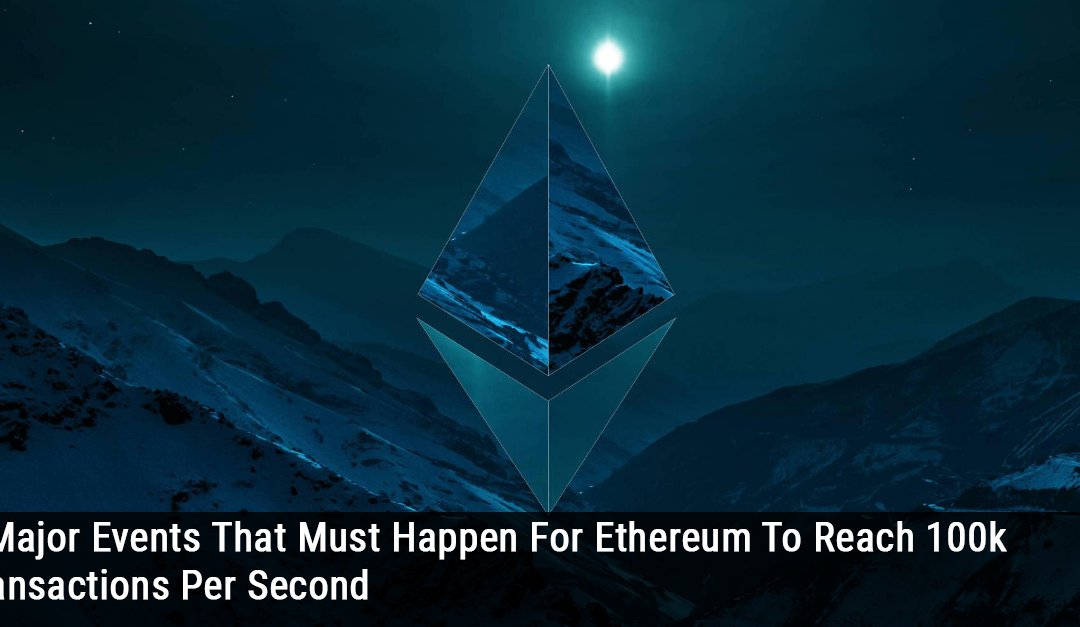
Slow transition speed and high cost have been two of the biggest hurdles for Ethereum. The platform focuses on decentralization and security. Though there is a lack of scalability. Hence, there is always a spike in traffic, and transaction speed and cost also tend to be solved. At the recently held Ethereum Community Conference (EthCC) in Paris, co-founder Vitalik Buterin stated that the network was only "40 percent complete". The reasons were the hurdles.
Buterin anticipated a future where Ethereum can hit the speed of 100,000 transactions per second (TPS). Buterin has also mentioned five key events that required it to happen. What the events mean for Ethereum, and how much time it will take, all are going to be explained in this article.
Overview Of The Merge :
The Ethereum community and developers consider the Ethereum Merge as one of the most critical and remarkable upgrades in the history of cryptocurrency. It is going to shift Ethereum's consensus protocol from proof-of-work (PoW) to proof-of-stake (PoS). The upgrade will automatically render mining obsolete along with shifting to staking for block validation and addition. This merger will massively decline the energy consumption of the network. According to some predictions, the power requirement is going to decrease by 99.9 percent.
This upcoming merge is wished to increase throughput. But the improvement is not predicted to be very massive. Ethereum developers are expecting the transaction speed will increase by a maximum of 10 percent. It will reduce the fee.
The Surge :
The move to PoS alone may not impact a massive enhancement in transaction speeds. But, it will open up the ways for future innovations, like sharding. It will massively affect the network performance.
Sharding is the secondary blockchain branch. It helps to process some transactional data and reduce the pressure on the mainnet or main blockchain. It will raise the throughput along with helping to bring down gas fees. An official Ethereum blog post noted, that Sharding should occur sometime in 2023. It will depend on how quickly and smoothly the Merge will work.
What Is The Verge :
The Verge refers to the technical updates like ‘Verkle proofs’ and ‘clientless states’. The updates are wished to optimize storage on the Ethereum blockchain. It also reduces node size. This helps to enable any network participants with a laptop along with a few megabytes of space to join in the validation process.
About The Purge :
This stage starts with 'purging' previous data that is not needed at present time. This process will decrease file sizes enough. It is for tiny computing units such as mobile phones to be able to run Ethereum nodes because of the need for low storage.
The Splurge Explained :
This stage is associated with minor changes. It will be done to ensure that the blockchain will be there permanently and run at its maximum capacity. Additionally, the assumption is that by this stage, the user will have a version of Ethereum that will be the best. It can be or can continuously process close to 100,000 transactions. presently, the network is actively searching for potential issues including preparing for emergencies.
Conclusion :
The Merge is a crucial and remarkable milestone for the Ethereum network, regardless of the whole crypto market. Though, this is not the ultimate destination. There is a long way waiting to climb before Ethereum is 100 percent complete. But, mainly the reduction of fees and increase in transaction speed is going to help out the users across the network. Bitcoin is continuing with the PoW mechanism, but Ethereum's improvement led major users to shift into the network.
Binance is the most popular and the biggest crypto trading platform when it comes to the trading volume. The platform allows users to buy or sell various digital currencies. Along with this, users also have the ability to review and compare other crypto options to do the trading. With $40 billion daily trades, Binance has become the world's biggest trading platforms.
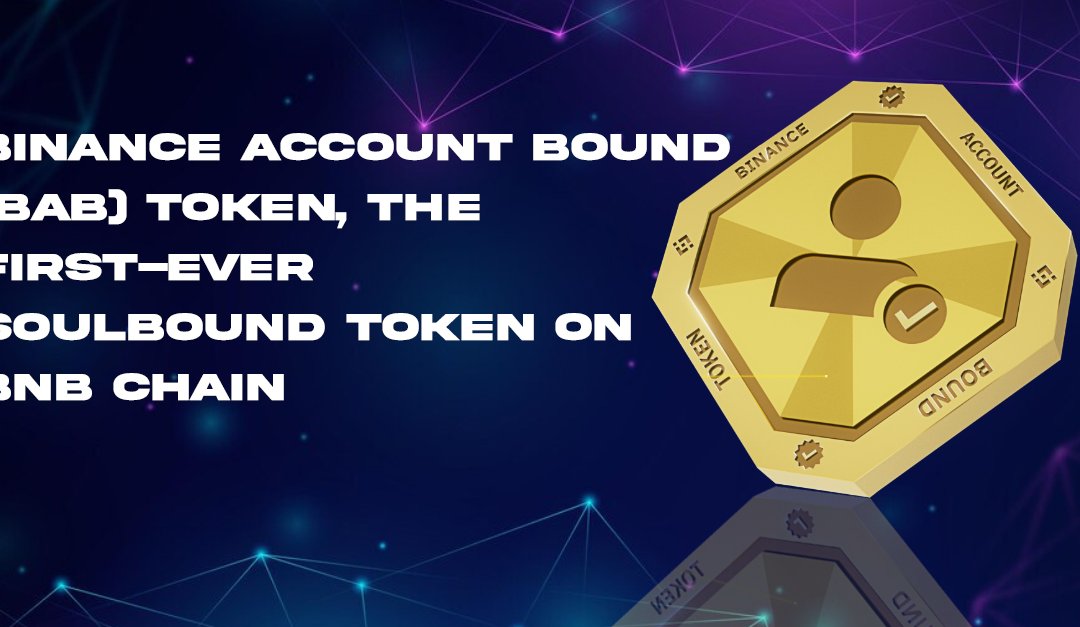
On 8th Sept. 2022, this leading digital currency trading platform launched the Binance Account Bound (BAB) token on BNB Chain which is suppose to work as a "soulbound token". BAB is basically launched to utilize as an identity proof for KYC verified Binance users. These soulbound tokens can't be transferred as each user on BNB Chain has its own unique token. In this way, a verified Binance client ID must be utilized to mint one BAB token on a BNB Chain. They are, notwithstanding, revocable, after which tokens will be locked for 72 hours.
However, remember that getting a BAB Token is completely optional for Binance users and it is not a compulsory requirement to use any products or services offered by Binance.
Everything you need to know about BAB:
Binance Account Bound (BAB) tokens or the soulbound tokens are mainly launched for Binance users who get verified after completing the whole KYC verification process. In simple words, these tokens are identity credentials for them. They are will issued on the BNB Chain by Binance and it is indicated that several other projects on BNB Chain will also be introducing the BAB tokens to their users as identity credentials. When a Binance verified user creates a BAB token, that particular user will be given the access to participate in building the supporting projects on the chain and get rewards. However, the complete details related to it are not revealed yet.
Till now, there are 15 projects that have partnered up with Binance to offer their users benefits related to the BAB tokens. The benefits include the things like exclusive airdrops, community and membership benefits, benefits on the social gaming metaverse, access to play-to-earn protocol, privileged reward programs along with many other VIP perks. This partnership news was also confirmed by BNB Chain.
BAB Features:
The token is non-transferable, which means that it can't be transferred by the user to another user. It’s unique for everyone.
It is revocable and users who have the token can simply revoke their BAB tokens.
One user ID that is verified by Binance is allowed to mint one BAB token just on the selected chain.
The launch of BAB tokens was encouraged by the whole community and the BNB chain users supported the whole idea behind it. For the first time in Web3, by minting BAB token to their wallet address on BNB Chain, Binance users will get exclusive access to programs which will be linked to real-world use cases.
So, that’s all for now, do let us know what do you all think about this token launch.
The fourth BTC halving was scheduled to take place in 2024 but according to many resources, the chances are that it can take place sooner i.e. maybe at the end of 2023. Before getting deep into it let’s just dive into what halving actually is.
All you need to know about fourth BTC Halving:
Bitcoin halving is an occasion where the compensation for mining new BTC blocks is halved. Because of the halving, miners get half less BTC for authenticating the transactions. This event of halving happens after every four years or technically speaking, after every 210,000 blocks. In simple words, through the halving process, Bitcoin makes a fake inflation that decreases by half by every four years till it is issued and being used.
How does halving works:
Bitcoin halving works on account of its network's fundamental blockchain technology software which directs the rate at which new Bitcoins are made. The software requires PCs in the blockchain network to contend to verify exchanges known as Bitcoin mining. Bitcoin miners are rewarded by the mining with a few new Bitcoins when they can demonstrate that the exchanges that have been chosen by them are valid. These transactions are confirmed in bunches known as blocks, and the blockchain network is coded to halve the reward received by miners after every 210,000 blocks.
Why is it important?
Well, a lot of you might be thinking that why the halving takes places after every 4 years or so and what the purpose is. The reason behind it is that through Bitcoin halving the quantity of new Bitcoins made each block reduces which decreases the quantity of new Bitcoins accessible and raises the price of getting one.
And, as you all may already know that a constant demand and decreased supply can simply result in a higher cost. Because of the fact that it restricts the supply of new Bitcoins while keeping a steady demand, halving results in Bitcoin's most prominent surges.
The Next BTC Halving…
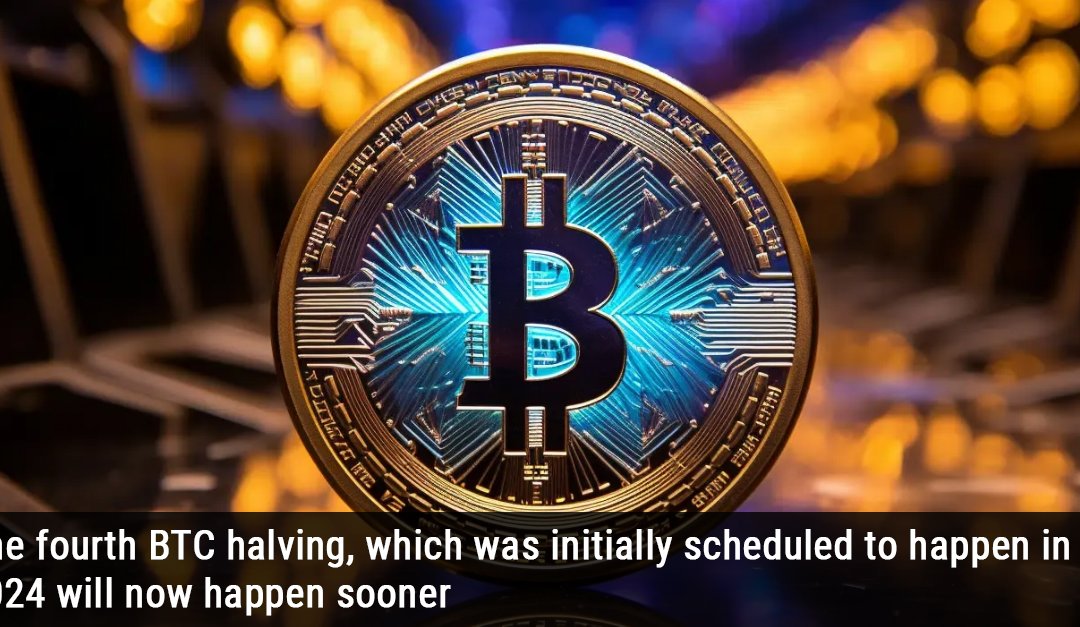
The fourth BTC halving, which was at first planned to occur in 2024 is now suppose to take place sooner than the scheduled date. As per the news roaming around, BTC's next halving will occur in one year and 157 days, and that implies we can now expect it in December 2023. "That Martini Guy" who is a well known crypto influencer, likewise talked about this new development in his latest tweet. The fact that it is now going to take place sooner is a good sign for BTC, as the information suggests that halving is occurred due to significant price surges. For instance, during the 2020's BTC halving, Bitcoin was at the price of $8,500 and after halving in only a couple of months it went up to more than $27,000. However the whole picture appears to lean in the favor of buyers in the market.
Mining Bitcoin and other digital currencies is become quite difficult right now and it has developed from something people could do sitting in their apartments. It has turned into a costly task, requiring specific equipment and it keeps on being staggeringly energy-intensive. This fairly conflicts with one of the first principles of blockchains which is that they ought to be decentralized. The Ravencoin project addresses something of an endeavor to counter these things and to make it workable for anybody with a simple PC to do the mining, issue the tokens, and then transfer assets.
Why Ravencoin activity increased?
The activity related to Ravencoin had proactively increased because proof-of-work miners are now searching for choices, as mining Ethereum or BTC will soon not be a choice for them. The miners of Ethereum are hoping to proceed with their operations after the Ethereum blockchain changes to a proof-of-stake algorithm so they can mine Ravencoin.
For those who don’t know about the Ethereum merge, the merge is an Ethereum upgrade that was being planned for quite a long time. The main purpose of the upgrade is to improve the network and make it better for its users. This update is being considered as one of the most important ones that can be very beneficial for the whole ecosystem and can completely change it. This may also have long lasting effects on the whole crypto market.
The Merge will indeed merge the Ethereum mainnet with Beacon Chain. As of now, the two chains exist in parallel and the Ethereum mainnet, which presently utilizes a component called proof of work, is handling all the exchanges. After the most awaited merge, the Ethereum mainnet will shift from proof of work to the Beacon Chain’s proof of stake mechanism. The proof stake is a type of consensus mechanism that differs from the conventional proof of work.
Currently, Ethereum utilize the energy-intensive proof-of-work mechanism. In the past, Ethereum mining was profoundly productive and profitable as the always growing ecosystem expected a large number of miners to keep up with the network, the expense of which exceeded millions of dollars in just the equipment.
After the ETH merge, the miners will be left with not many choices. They can either surrender their mining business and start staking ETH or begin mining other blockchains. While Ravencoin isn't too popular or as utilized as the second biggest digital currency by market capitalization, it tends to be mined with rigs that utilize graphics processing units (GPUs).
Ravencoin's hash rate has expanded fundamentally this month. It was observed expanding from 2.79 Th/s on September 6 to 6.46 TH/s as of press time. Its network difficulty additionally multiplied from 37.78k to 83.12k.
As we all know that the merge in Ethereum blockchain just took place on 15th Sep and changed a lot of things. The change in the ETH blockchain has not just affected itself but also the entire crypto market.
The merge is basically an Ethereum upgrade that was being planned for quite a long time. The main purpose of the upgrade is to improve the network and make it better for its users. This update is being considered as one of the most important ones that can be very beneficial for the whole ecosystem and can completely change it. With the merge, Ethereum mainnet just got shifted from proof of work to the Beacon Chain’s proof of stake mechanism. The proof stake is a type of consensus mechanism that differs from the conventional proof of work.
Effects of Merge in ETH Miners:
Since the blockchain is now fully shifted to PoS mechanism, the miners also faced some major changes. For all the Ethereum miners, it has become progressively difficult to make money after the merge as huge number of miners is making their ways towards other coins.
Thursday, 15th Sep, Ethereum, which is the world's second-biggest blockchain network, changed its consensus algorithm from PoW to PoS to support productivity and lower energy utilization. In any case, the software update - named the Merge- likewise implied that miners were not generally expected to secure the whole network, thus rig operators moved their machines to other PoW blockchains. GPU mining was seen dead within a time span of just 24 hours after the merge took place. The three biggest GPU chains have exceptionally low profits, and the main coins showing profits have no market cap or liquidity.
The hashrate, or power that is used to mine PoW altcoins like ethereum classic and ravencoin got doubled in a few hours after ETH merge took place. Along with rising hashrate, the troubles for miners are rising as well. This means that the ETH miners are less likely to effectively mine a block and receive the block reward.
The reward for mining an Ethereum Classic (ETC) block 24 hours prior was ETC 0.0186484 or around 70 cents, however a check after the merge indicated that the reward went down to just ETC 0.00030658 which is not more than around 11 cents. The merge that took place is just the first step in the Ethereum's blockchain. Ether miners are trying hard to stack up their losses by moving to other digital currencies, for example, Ethereum Classic and Ravencoin. There is a long way for ETH blockchain to become a mature system and even after the merge, there are many things left.