Crypto-analyst Arthur Hayes says Hong Kong has a vital part to play in the development of the global Bitcoin and other virtual currencies market. The next cryptocurrency bull run, according to the former CEO of BitMEX, a market leader in cryptocurrency futures, will begin when China enters the market again.
The Hong Kong government's announcement about introducing a bill to regulate crypto is a sign that China is trying to ease its way back into the market. This could be because Hong Kong acts as "the proxy through which China interacts with the world," according to former Bitcoin co-creator Sean Hayes.
He commented, “When China loves crypto, the bull market will come back and It will be a slow process, but the red shoots are budding.”
As per Hayes, Hong Kong might serve as Beijing's test market for its experiments with cryptocurrency markets and as a conduit for Chinese capital entering the international cryptocurrency markets:
Further, he stated, “If these flows actually materialize in the way I imagine, they will be a strong supporting pillar of the next bull market.”
In a survey by Forex Suggest released in July 2022, Hong Kong has named the nation best poised for the broad adoption of cryptocurrencies. Numerous aspects were taken into account, including startup culture, crypto ATM installations, and crypto-friendly regulations.
Unfortunately, it is said that by the end of September this year, Hong Kong has lost this position partly because of its murky cryptocurrency regulations. Due to this, a number of significant crypto-focused companies and events were obliged to relocate their operations to Singapore and other nations and territories that were viewed as more welcoming.
Despite having one of the largest economies on earth, China has generally been hostile to the cryptocurrency sector. The nation's initial ban, which forbade banks from processing Bitcoin transaction, was enacted back in 2013.
When Beijing conducted numerous regulatory operations to banish Bitcoin mining from the nation and declared all cryptocurrency transactions to be banned in 2021, it stepped up its crackdown on the industry.
But as per Hayes, “China has not left crypto — it has just been dormant.”
In September 2022, China did start up its Bitcoin mining once more, and Chainalysis stated in its 2022 Global Crypto Adoption Index that China had re-entered the top ten this year after coming in 13th place in the previous year.
Given the Chinese government's assault on cryptocurrencies, the Global Crypto Adoption Index's authors said they considered the development "particularly noteworthy," but their data shows that "the prohibition has either been unsuccessful or lightly implemented."
How China is essential for Hong Kong's cryptocurrency growth?
Arthur Hayes, co-founder of BitMex, commented on news of Hong Kong's "comeback" efforts on his blog, saying that access to Chinese consumers is essential for Hong Kong's appeal to cryptocurrency businesses.
As cryptocurrency investors, we are concerned about Hong Kong's capacity to meet China's capital needs, he stated. The regular wealthy Chinese people are what drive the Hong Kong economy, whether it is through retail sales or capital flows.
He also voiced concerns about how China could use its influence over Hong Kong to undermine any pro-crypto measures such as, "What's to say Beijing won't reconsider tomorrow and roll back all these advantageous crypto policies?"
But he went on to say that he thought this time, "China is for real."
Conclusion
By the end of the month, the nation is anticipated to make its position on digital assets known. As previously reported, the Hong Kong Special Administrative Region of China will make a policy announcement at the next Hong Kong Fintech Week event, which is set to take place between October 31 and November 1.
The Merge, an upgrade to the Ethereum [ETH] network that has been much awaited, has piqued the curiosity of many individuals. The proof-of-work (PoW) phase of the network's development will come to an end as it makes preparations to transition to the proof-of-stake (PoS) protocol. As a direct consequence of this, the network will almost certainly be upgraded, and it will also be greatly affected by the shift.
The Proof-of-Work (PoW) consensus algorithm is being replaced with the Proof-of-Stake (PoS) algorithm with the Merge update (PoS). In addition to this, it will change the role of miners to that of stakers, who will be responsible for verifying transactions on the blockchain.
Sharding is another essential part of the Ethereum ecosystem, which became an important part after the Ethereum Merge. The blockchain will be made more robust as a result of sharding, which is a crucial component of Ethereum 2.0.
What is the Ethereum merge?
The Ethereum blockchain, which powers the second most valuable cryptocurrency and many other technologies in the cryptocurrency ecosystem, such as non-fungible tokens, will get an update in the form of The Merge (NFTs). It's anticipated to take place in September.
The proof-of-work paradigm is now used to power the Ethereum blockchain, much as it is used to power the Bitcoin blockchain. This approach requires nodes, which are individual computers that are connected to a larger network, to compete with one another to solve difficult mathematical problems. Those who are successful are then able to mine the subsequent block of a transaction and produce additional currencies.
The update will move Ethereum toward the proof-of-stake paradigm, which is a system that is both more ecologically friendly and efficient in terms of the use of energy. It involves selecting nodes via the use of an algorithm that gives precedence to nodes that possess a greater amount of a network's money than any other nodes.
What exactly does "Ethereum Sharding" mean?
The word "sharding" is a fundamental concept derived from the field of computer science. It refers to the practice of horizontally slicing a database to help distribute the workload more evenly. Sharding Ethereum will be an update implemented in stages, each of which will contribute to scaling Ethereum and increasing its capacity.
The task of separating and equitably dispersing the load of a huge quantity of data may be simplified with the help of the sharding technique. Because of this distribution, the load will be less, there will be less congestion in the network, and the processing of transactions will go more quickly.
The blockchain will eventually break into shards, each of which will be able to operate independently of the others. Sharding will enable safe data storage needs distribution, make rollups cheaper, and make it simpler to operate nodes. It will also simplify the operation of nodes.
Through the use of sharding, the hardware requirements for operating a node may be reduced. Because it will allow users to operate the network using a laptop or even a phone, it will also help to increase the number of people who participate in the network.
When is it going to be available?
According to the statement made by the Ethereum Foundation, the first implementation of sharding will take place sometime in 2023. It relies mostly on the amount of development that may be made after the merger. Depending on how swiftly development develops after The Merge, the release of Sharding is projected to take place sometime in 2023. The capacity of Ethereum to store and retrieve data will be increased thanks to these shards; nevertheless, these shards will not be utilized for the execution of code.
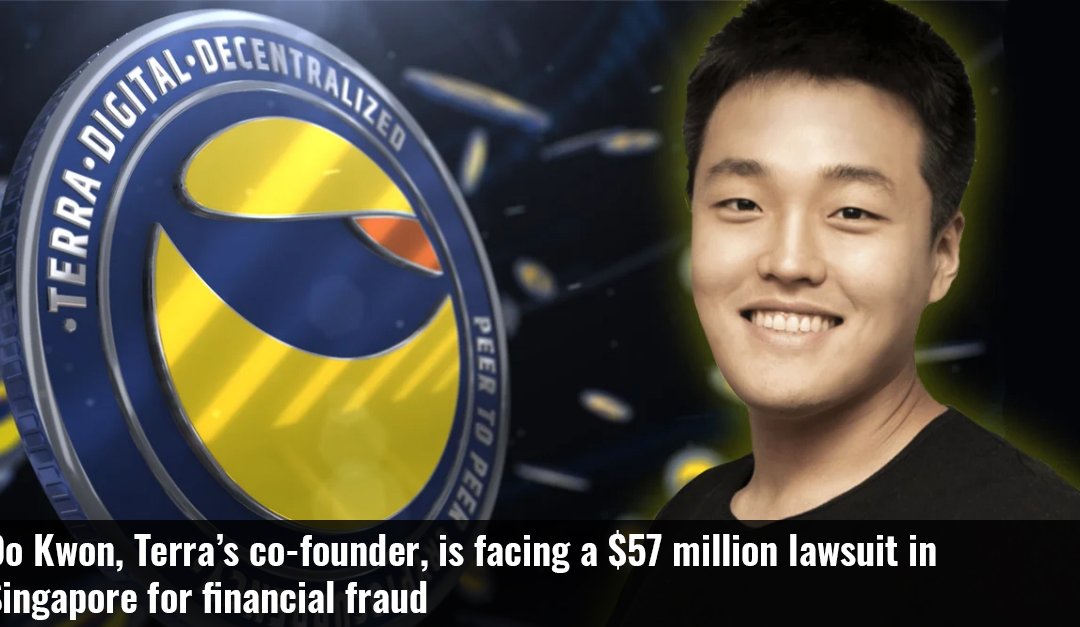
Victims of the UST-induced market crisis that saw over $40 billion in crypto assets evaporate in May have filed a fresh lawsuit in Singapore against embattled Terra Form laboratories CEO Do Kwon, the Luna Foundation Guard (LFG), and Terra founding partner Nicholas Plates.
What Went Wrong with TerraUSD?
Do Kwon's promises were readily swept away by waves on May 9, 2022, when the TerraUSD (UST), valued at $18 billion at the time, collapsed.
The cryptocurrency failed to hold its $1 peg, falling to $0.35. LUNA, a token designed to keep the UST price from plummeting precipitously, saw its value plummet from $80 to a few cents.
The TerraUSD collapse occurred in three stages, beginning with two dealers violating the currency's peg. Terraform Labs and three allies attempted to "fix" the situation by acquiring $2 billion in UST. As a result, the funds were depleted due to an uncontrolled sell-off.
The development did not end there, as it hyperinflated LUNA and eventually destroyed the prices of the two assets, forcing the crypto market to lose almost $40 billion.
Do Kwon’s Legal Headache
According to documents filed in Singapore's high court on September 23, 359 people claimed that Kwon and his co-defendants made false representations about Terra's algorithmic stablecoin TerraUSD's reliability (UST). The plaintiffs expressly claimed that Do Kwon was aware of "the structural fragility of algorithmic stablecoins" as a result of his engagement with Basis Cash (BAC), another stablecoin that failed under his supervision in early 2021, before the launch of UST.
The claimants further claimed that the defendants "knew or should have known that the claimants wanted to buy and hold digital stablecoins that were not susceptible to the volatility of the broader market and yield a respectable passive return." The claimants sustained significant losses on their UST holdings as well as additional damages as a result of the trio's acts. The claims asked the court to give them approximately $57 million for their losses and to force the trio to pay "aggravated damages."
The case comes amid an intensifying search for Kwon, who has now become an international fugitive after South Korea issued an arrest warrant. Therefore, the Terra blockchain ecosystem collapsed in May, Kwon has been the victim of many legal actions and threats. In September, South Korean authorities issued an arrest order for the Terra co-founder, which was later rejected, and Interpol added Kwon to its Red Notice list, urging that law enforcement identify and possibly jail him. On October 6, the South Korean Ministry of Foreign Affairs issued a notification ordering Kwon to return his passport within 14 days, or it would be invalidated.
Since his Terra empire collapsed in May, leaving millions of investors with severe losses, the Korean-born developer has been the target of several litigation lawsuits in the United States and South Korea over the last four months.
Eventually, local media reported that prosecutors were "in the process of freezing" tokens "believed to be owned by Kwon." These coins were allegedly stored on an unknown "overseas" cryptocurrency exchange that was "cooperating" with the Seoul Southern District Prosecutors' Office.
Despite not identifying his location, Kwon has been active on social media amid the issue and stated in September that he was "making zero attempt to conceal." In reaction to the complaint, one Redditor said Kwon was "doing a bad job at acting innocent for a guy who is innocent." Others speculated that he had undergone plastic surgery to conceal his features.
Conclusion
While it is unclear where Kwon is, Korean authorities reportedly claimed that he left Singapore for Dubai last month. However, no documents were found indicating that Kwon had entered the city, prompting Korea to ask neighbouring countries to assist in tracking his location. Kwon denied being on the run in a recent interview but refused to identify his location.
Coincheck, a major Japanese cryptocurrency exchange, stated on Friday that it aims to list on Nasdaq on July 2, 2023, through a merger with a special purpose acquisition company (SPAC) Thunder Bridge Capital Partners IV.
Coincheck stated that its ambitions to pursue a public stock offering in the United States via Nasdaq would provide the company with access to the country's lucrative capital markets.
Coincheck, a Japanese cryptocurrency exchange, has confirmed plans to pursue a public stock offering in the United States via Nasdaq, giving the company access to the country's lucrative capital markets.
Coincheck Business Update
Coincheck provided an update on its business. Initially, it expanded its dominance in Japan by slowly accumulating customers despite the weak crypto asset market.
The exchange subsequently stated that its NFT business revenue for the quarter was $160 million due to NFT market headwinds.
Coincheck also wanted to establish and expand its digital economic world with an eye on Web3, collaborating with appealing producers and artists to create revenue prospects such as sales of exclusive NFTs, tenant fees for land in the metaverse, and growing the Coincheck NFT user base.
Coincheck promotes firms related to crypto assets and NFTs that are spearheading the adoption of Web3 in addition to Coincheck Labs, the blockchain, and the Web3 ecosystem.
The exchange also identified several significant growth prospects that can be explored organically and accelerated through M&A or collaborations.
Coincheck and Hunder Bridge Capital Partners are Merging.
According to the exchange, the move will allow it to expand its crypto asset company by acquiring access to US capital markets, gaining exposure to global investors, and recruiting personnel to accomplish its growth goal. Monex Group, Coincheck's primary owner, declared in a Securities and Exchange Commission (SEC) filing.
In March of this year, Coincheck declared its intention to go public. Its merger with Thunder Bridge Capital was valued at $1.25 billion at the time.
SPACs were the hottest way for crypto firms to go public in 2020 and 2021, but the craze has died down this year due to an overall market slowdown and new Securities and Exchange Commission (SEC) restrictions.
Since June of this year, the SEC has been more careful about the general SPAC process, particularly crypto-related agreements, to improve investor safety.
Since July of last year, Circle Internet Financial, the backer of the "stablecoin" USD Coin, has been attempting to go public with a SPAC called Concord Acquisition (CND).
Coincheck controls 27% of Japan's Cryptocurrency market.
Coincheck has 1.75 million confirmed accounts, accounting for 27% of Japan's crypto trading market share, according to financial statistics. However, the company observed a drop in trade volume as a result of the cryptocurrency bear market. Quarter over quarter, total operational revenues fell by approximately half.
Several crypto-related companies have expressed an interest in going public via SPAC agreements. PrimeBlock, a Bitcoin (BTC) mining startup, announced in April that it would go public via a $1.25 billion SPAC. W3BCloud, a blockchain cloud infrastructure provider, announced a comparable price tag for its SPAC merger in August. eToro, a stock and cryptocurrency exchange, had planned a $10 billion merger before canceling the agreement over the summer.
Conclusion
A crypto/SPAC merger is also in the works between eToro Group, an Israeli online brokerage, and FinTech Acquisition Corp. Therefore, V (FTCV), a SPAC backed by veteran financier Betsy Cohen. The merger was called off in early July after the companies were unable to complete the transaction by the June 30 deadline. One of the reasons the deal failed was a failure to obtain SEC permission.
The top cryptocurrency exchange Binance has identified two suspects who are allegedly responsible for the hack of $265,000 from decentralized exchange (DEX) protocol KyberSwap earlier this week.
Changpeng Zhao (CZ), the CEO of Binance, exposed this information on Twitter recently. The company has shared the info with KyberSwap along with the appropriate law enforcement agencies.
The Attack :
KyberSwap has faced a cyber attack
on September 1. The DEX protocol faced an unhealthy security breach which allowed hackers to steal assets. It was worth thousands of dollars to users.
According to the project, the bad actors shared malicious code on the protocol’s Google Tag Manager (GTM). It has prompted false approval that allowed them to transact assets in their wallets.
The platform also shared that the hackers smartly launched the bad script. It was targeted to whale wallets on Ethereum and Polygon. Further KyberSwap added that exploited users would be fully compensated.
The hack came to know and immediately stopped within two hours of its launch. The protocol offered that the bad actors would be rewarded with a 15% bug donation if they returned the stolen assets.
Binance As Crypto 'Big Brother :
Hardly two days after the theft, the Binance investigation team announced that they had been able to track and identify two scammers who are suspected or may be responsible for the hack. The company also noted that they had appointed government authorities in the incident for further investigation.
Similar to KyberSwap, Binance has assisted with several hacked protocols to identify the bad actors along with recovering some stolen assets.
As the biggest crypto exchange by trading volume, the proactive and unselfish efforts of Binance to help investors from other ecosystems weren’t neglected.
As one of the users stated, “Binance is now playing as a big brother in the crypto space. Binance has gone beyond securing its platform to keep the entire crypto ecosystem safe.”
CZ stated that Binance has never been lawfully integrated in China and has never fixed business in a manner compatible with the Chinese organization, Cointelegraph.
Notably, the company succeeded to recover nearly $450,000 stolen from the Defi platform Curve Finance last month. It was reported that the recovered funds were 83% of the total assets exploited from the protocol. The platform stated that the hackers transferred the assets to the exchange through different techniques. They expected to bypass the firm’s security team.
Since the platform, Binance, continues to make an effort to make the global crypto industry safer for investors and users, some user groups of the crypto community think that the company is now acting as a “big brother” role in the whole crypto market.
According to Changpeng ‘CZ’ Zhao, CEO of Binance, the theft of information had been noted to the Kyber team. Since both sides are eager to catch the hackers, Binance has also begun to work with law enforcement as of the recent information.
Conclusion :
Notably, there have been so many exploits and theft in the crypto market over the past couple of months. Since the market fell and started a crypto winter, bad actors took it as their opportunity. Platforms like Solana, Cardano, etc. have suffered from several exploits. The theft is mainly happening through smartly executed ideas. Phishing scams and fake airdrops are mentionable. Users' wallets are drained through luring through free tokens. In multiple cases, hacking links are also used as the weapon of scams. Nowadays, Twitter scams are also very famous in the crypto market. Where fake posts and links are circulated through the social media platform. Users are trapped in that kind of scam believing it is real.