The government of the United States has placed limits on the export of certain types of chip sales. Nvidia, an American multinational technology corporation, said on Wednesday that Chinese regulators requested that it cease shipping two of its most advanced processing processors for use in artificial intelligence-related projects. Nvidia said that it had been informed by American authorities that the new regulation "would address the potential that the covered items may be utilized in, or diverted to, a military end use' or military end user' in China."
Nvidia and AMD, two of the top chipmakers in the United States, both stated late Wednesday that additional limitations had been implemented by the United States government to prevent China and Russia from obtaining high-end artificial intelligence processors. Although the measures' primary purpose is to limit China's and Russia's military capabilities, there is a possibility that they will also impede technological progress in other fields.
What is the new AI chip ban?
Nvidia revealed on Wednesday evening in a filing with the United States Securities and Exchange Commission that Chinese customers would no longer be able to purchase the company's "A100 and forthcoming H100 integrated circuits." The company also stated that this decision could result in a loss of up to $400 million in revenue from sales of high-end chips. Artificial intelligence (AI), data analytics, and high-performance computing data centers are powered by Nvidia's A100 chipset.
According to the petition, the United States government informed Nvidia that the new prohibition will assist in ensuring that Nvidia's goods are not "used in" or "diverted to" military equipment manufactured in either Russia or China. Nvidia said that its Chinese clients can petition the United States government for exemptions from the restrictions; however, the company added that it has not received any "assurances" that the government would give such exemptions.
Russia is included in the scope of the sale restriction order, in addition to China. Nvidia does not presently offer any of its products in Russia; nevertheless, the company does have a large number of satisfied clients in China.
How will the ban affect China and Russia?
Since the 26th of August, the price per share of NVDA has been going down. The most recent statement, as was to be anticipated, caused an even steeper price decline. The price of the stock, which was $95 at the end of trading on Wednesday, was at a level that hadn't been seen in the market since the middle of July. In addition, the price of Nvidia shares dropped by 6.6% after the market closed.
It is important to keep in mind that the husband of U.S. House Speaker Nancy Pelosi sold all of his Nvidia stock around the end of July when the House was considering whether or not to pass the chip bill. The multibillion-dollar law, in and of itself, seeks to expand chip production in the United States, and investors' excitement over this prospect drove up the price of NVDA shares.
According to the regulatory statement that Nancy Pelosi submitted, her husband, Paul Pelosi, sold 25,000 shares of Nvidia on Tuesday for $165.05, bringing in a total of $4.1 million. The document indicated that Pelosi had incurred a loss of 341,365 dollars as a result of the transaction.
The shares of Advanced Micro Devices, which competes with Nvidia, also responded to the recent order. In the after-market hours, it had a loss of 3.7%. The aforementioned action could make it more difficult for Chinese companies to carry out complex tasks like image recognition. Concurrently, the ruling will have the effect of restricting Nvidia's commercial activities in China.
Why was the ban implemented?
The business said that the prohibition, which affects its A100 and H100 processors meant to speed up machine learning activities, might interfere with the company's ability to complete the development of the H100, which is the flagship chip that Nvidia revealed this year.
The United States Department of Commerce said, without providing any information, that it has examined its policies and procedures towards China to "keep sophisticated technology out of the wrong hands."
In the same vein, a representative for AMD was quoted by Reuters as saying that the business had been informed of new licensing requirements that would prevent the shipment of its MI250 artificial intelligence processors to China. Despite this, the company thinks that its MI100 chips will not be impacted in any way. AMD, on the other hand, has said that it does not expect the new restrictions would have a significant influence on the company's operations.
The cryptocurrency (ethereum) market is growing to include more assets and chains available than ever before. Unfortunately, despite the number of assets at play, most decentralized exchanges (DEXs) are still unable to deliver and facilitate the frequency and volume of trades necessary to satisfy the market. As a result, these exchanges face a lack of liquidity and high slippage, often occurring when fractions of an order are completed at a lower price and the rest at a higher and less advantageous price.
For this reason, investors often seek out manual workarounds, including checking for the best trading prices on all DEXs before making a transaction. Despite so many exchanges at play, the market has yet to see an actual cross-chain liquidity aggregator that can facilitate transactions across multiple chains for a swap. At present, aggregators cannot access the full breadth of available chains, nor are they user-friendly. For reference, some tools force users to connect multiple wallets or manually swap them between protocols.
Chainge Finance addresses this pressing DeFi concern with the Chainge app, giving users access to the SUM liquidity of multiple DEXs across several chains at the same time. Powered by the Fusion DCRM tech, the DEX aggregates liquidity cross-chain to ensure that users get the best prices for their target swaps.
“The Chainge app is the door to Web3. An app that provides unmatched security, top trading prices and the best cross-chain solution on the market. Furthermore, advanced integrated DeFi tools such as a derivatives market, time-framing and yield farming offer crypto users the means to maximize their wealth’s potential in a 100% decentralized way,” Dejun Qian, the CEO of Chainge Finance, shares in response to the team’s efforts.
The result is that Chainge Finance users can tap into extensive cross-chain liquidity with a single tap.
A system consists of different factors upon which it builds itself and upon which it survives. These are the pillars resting upon which it moves towards success or failure, therefore cannot do without them. Likewise in the crypto industry, investors play an important role, which is quite evident and needs no mention. Therefore, whatever goes on in the system also affects those who are a part of it. Each action or change that is taken or made, cannot be taken into account excluding these important members of the system. One such instance is the Ethereum merge that has taken place most recently. This article endeavors to shed light on how this merger has offered a new place for several institutional investors.
What is the role and importance of investors?
There are several factors upon which the crypto industry, which in itself is quite volatile depends for its smooth operation. These factors or agencies include pension funds, insurance companies, institutional investors, etc. They have all collectively tried to help as well as trying to help solve the volatility issue that crypto is facing since its emergence.
Themegamergerst has occurred recently and has been referred to as one of the historic moments since the birth of Ethereum. Therefore, being such an important step it is needless to say, that it would bring certain changes for each and everyone involved in it.
Let's take a look at the merge
In the merge, a more than amazing transformation took place which left each and everyone associated with and those who witnessed it, in awe of it. Rye blockchain network shed down its previous proof-of-work status and adopted the new proof-of-stake mechanism. It has been widely appreciated and has even been compared to a courageous act and almost impossible task such as changing the jet engines while in the air. The best part is it functioned without any interference or glitch of any sort.
What are the other changes that followed?
Various other changes followed the merge. For example, Ethereum in its new form has endeavored to cut down on electricity consumption by a lot. It has almost lowered its energy consumption by an estimated 99.95%, which is a remarkable step taken by the crypto asset. This has also, for the moment, diverted those who were eagerly waiting to impose restrictions on the blockchain network due to environmental concerns.
Even though the merger has come with various benefits and is even estimated to give rise to more, there is still one concern that has not yet been solved. The issue of Ethereum's scalability remains. It has not yet taken any efficient step in solving its lack of scalability permanently. Even though it is magnificent, it has not yet been completely adopted by institutional investors. There are still various facets that need more attention and time to be resolved or reformed.
Conclusion
The merge, as mentioned above is a much-awaited step in the evolution of Ethereum and people have high expectations from it. However, some changes are required. The authorities at Ethereum have stated that there is yet another upgrade coming soon, which is expected to resolve all the unresolved issues. It is also expected to come up with new techniques that are said to increase the network speed by a lot.
However, keeping aside all other factors, the fact that the merger has been responsible for lowering energy consumption, is an achievement that needs to be acknowledged and appreciated. It is soon expected to bring about changes for not only itself but other crypto assets as well.
A Solana-native decentralized financial infrastructure protocol known as Alfprotocol has announced that it would be creating a cooperative venture with the decentralized financial infrastructure platform known as Soldex. This is consistent with the aim and objective of the Alfprotocol to turn the Solana blockchain into a one-stop shop for Defi transactions.
The Alfprotocol platform is a sophisticated one that offers leveraged liquidity and yields to traders and investors that fall into a variety of risk categories. Having one of the top Solana DEXs in-house provides them with the ideal infrastructure to develop their company as well as the ideal sandbox for doing rigorous testing and auditing before putting out new services. The two initiatives are mutually advantageous from a technological point of view, and Soldex DEX and Farming with Double Rewards is an all-encompassing technology that will improve the Alfprotocol Defi ecosystem.
What are the announcements made?
The Chief Executive Officer of Alfprotocol, Matt Sauciunas, made the following statement: "We are happy to announce that these two innovative Defi initiatives are combining forces and Soldex will become a member of the Alfprotocol family."
In practical words, Alfprotocol is merging with Soldex, although in this situation, a joint venture would be a better phrase to use than a merger since we will operate as equal partners and utilize the significant synergies this collaboration brings, as highlighted by Soldex CEO Iaroslav Osipov.
What are the current updates?
The task of integrating the personnel, the technology, and the company has already gotten underway. As a result of the internal teams coming together, there are now increased efforts for further development as well as stronger efforts to promote the entire platform. These efforts include access to additional capital, access to more liquidity, and increased security because the Alfprotocol team has already launched complex yet secure products. Additionally, there is access to more Defi users and a wider network of connections.
Both of the company's CEOs have emphasized that all hands are on deck and that everyone is putting their heads down and working hard during the bear market. They have also promised that there will be more exciting developments in the weeks and months to come.
What is Alfprotocol?
The Alf Protocol is a Solana native automated market maker, decentralized lending, and liquidity supplying protocol. It allows users can join segregated lending pools either as lenders or borrowers.
The Alf Protocol makes it possible for borrowers to have an entirely new kind of experience with leveraged yield farming, complete with increased leverage and farming rewards. At the same time, it allows lenders to earn a significantly higher yield on supplied tokens without running the risk of temporary loss. In simple terms, Alfprotocol is a protocol for the deployment of money on Solana for the supply of liquidity and the cultivation of yields, with or without the use of leverage.
What is Soldex?
Soldex is the third-generation DEX being developed on Solana that is known for being the quickest, simplest, and most user-friendly. Soldex is working to solve the problems that are currently experienced by order-matching centralized exchanges and trustless custody inside existing decentralized exchanges.
The Soldex platform uses its token, which is abbreviated as SOLX. A Defi token known as SOLX has been designed with the dual purpose of operating as an on-chain money and governance token. Staking, feeding the AI-powered bots, and paying transaction fees throughout the platform can all be done using SOLX. Users may also use SOLX to pay the transaction fees. Users have the opportunity to accumulate rewards by staking SOLX.
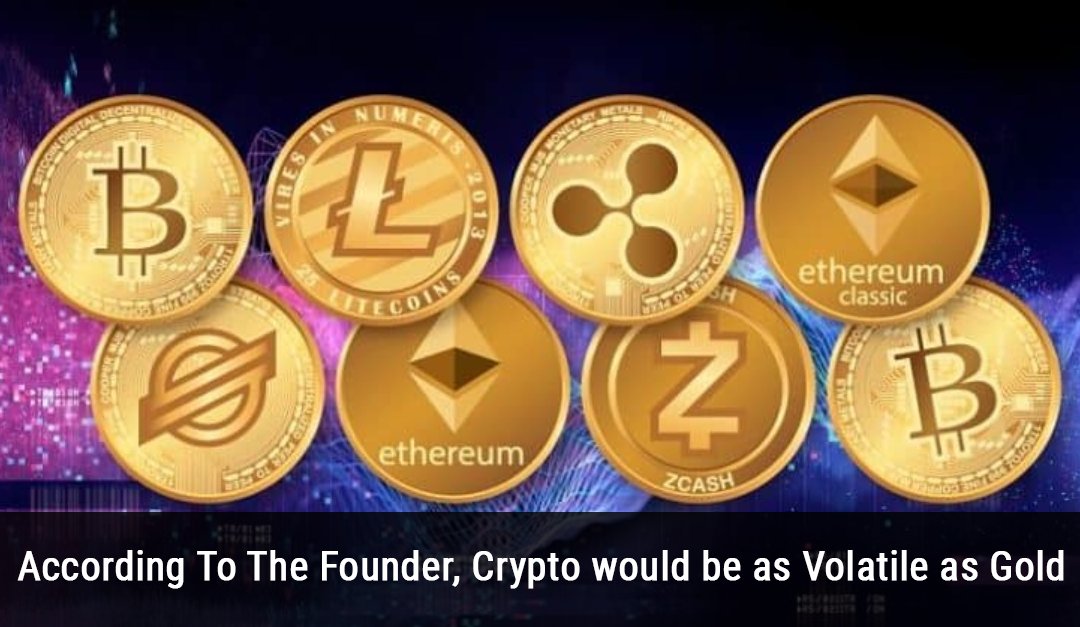
Ethereum Founder Vitalik Buterin has stated that according to him, crypto will be only volatile as gold or the stock market. The statement came from a recent interview. Buterin was interviewed by Noah Smith of Noahpinion.
During that interview, Buterin was asked if we will reach a position where Bitcoin adoption gets saturated and it returns to falling at the level of gold. Answering the question, Buterin said that he believes that in the mid-term future, crypto prices are going to settle down. According to Buterin, the important query is what level the prices will be set at.
Buterin's View :
Buterin stated in the interview, according to, massive volatility early on had to do with existential uncertainty. In 2011, when Bitcoin was down from $31 to $2 over six months, users were rudderless about whether or not Bitcoin was just a one-time volatile that would then collapse for good.
According to him, the uncertainty of crypto has decreased since 2011. It is very tough to argue against the fame of crypto now. While it’s not as mathematically Compatible, prices don’t volatile dramatically outside of major news or bull runs.
Buterin's Anticipation :
Suppose, in 2040, cryptocurrency would make its way robustly into a few niches some matter will be there. The niches are like it exchanges gold’s store of value component, it changes into a sort of “Linux of finance”, an always-available accepted financial layer that ends up backed by really crucial stuff. Though, it doesn’t take over from the mainstream. That time it has a chance that it’s going to either vanish or take over the world completely. In 2042 it might be much smaller, and separate events are going to have much less of a teeming effect on that possibility.
Analyzing the current data on crypto adoption around the world, it doesn’t seem that crypto is going to disappear. According to Buterin, In 2042, the chances of extremes for crypto will be much lesser. It can be as unchanging as gold is uncertain. It will not be like gold. It is expected to be much more accepted for day-to-day transactions, especially for the evaluation of the internet.
The Concern :
Additionally, Vitalik expressed his worry about Bitcoin and its security. According to him, in the long run, the number of fees would be the only source of security for Bitcoin. Alongside this, the market owners are currently failing to create enough fee income for the security of a system that has the potential to be worth huge trillions of dollars. Notably, BTC transaction fees are currently worth nearly $300,000 per day. It has barely risen over the past five years.
According to Vitalik's statement, the Ethereum blockchain is a far better implementation in terms of facilitating usage and applications and is significantly more successful than other platforms. Mentionable, switching from proof of work to proof of stake is another traction for the users of the Ethereum entities.
Conclusion :
ETH is about to launch its upcoming Beacon merge. Primarily the three upgrades were done. The new mechanism will be less energy-consuming and faster transaction speed than the present one. During the crypto crash, like other currencies, ETH also fell to the worst. Later, it focused on the upgrade. Many users are shifting to ETH due to its merge and more capable mechanism.
Additionally, ETH has retained its value after a notable fall. When the investors were worried about investing in crypto, currencies like ETH had arisen positive potential in the future. Currently, Ether is considered the top crypto network. Many users chose to shift to ETH from BTC.