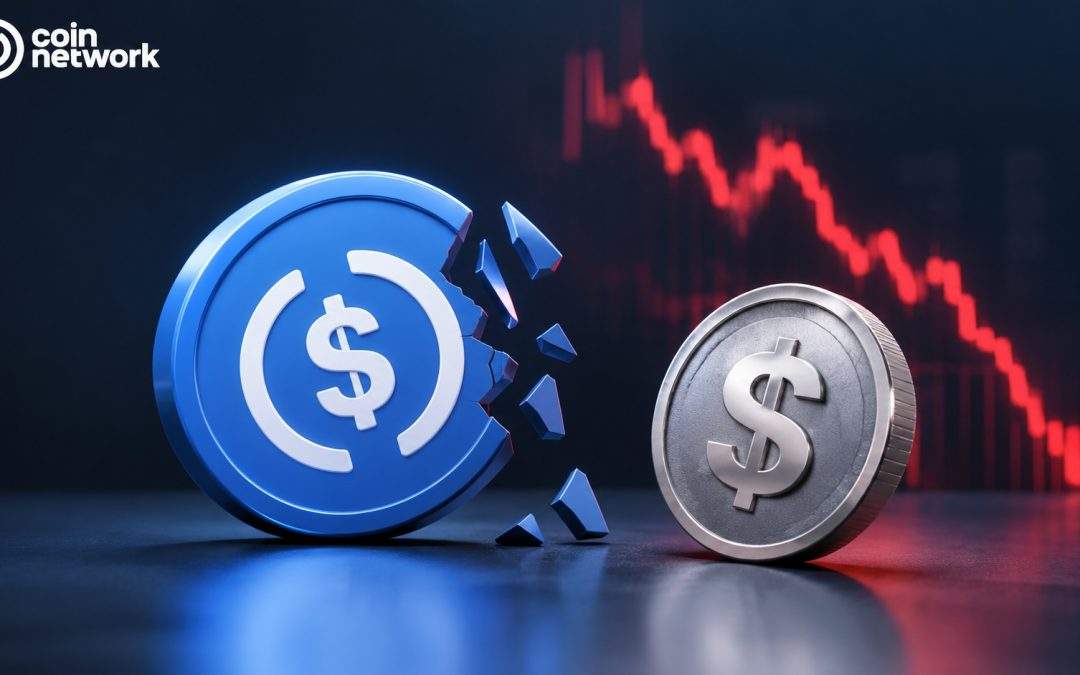
Stablecoin Depegging occurs when a token designed to maintain a value close to $1 moves materially above or below that reference price.
A stablecoin may trade at $0.99, $0.95, or substantially lower during a stress event. It can also trade above $1 when demand for the token exceeds the available market supply or when local liquidity conditions create a premium.
A temporary difference of a few basis points does not necessarily represent a structural failure. Stablecoins trade across multiple exchanges, blockchains, liquidity pools, and markets, so small deviations can occur during normal trading.
A more serious depeg can emerge when market participants lose confidence in the issuer, reserve assets, redemption mechanism, collateral, or smart-contract system.
The core question is:
Why are market participants no longer willing or able to exchange the stablecoin for approximately $1?
How a Dollar-Peg Is Supposed to Work
The mechanics depend on the type of stablecoin.
A fiat-backed stablecoin generally relies on reserves such as cash, Treasury bills, bank deposits, or other highly liquid assets. The issuer creates tokens when users provide the required assets and redeems tokens when users return them.
For example, Circle states that USDC is designed to be redeemable 1:1 for U.S. dollars and that its reserves consist of cash and cash-equivalent assets. Circle’scurrent transparency page publishes reserve information and issuance and redemption data.
Other stablecoins use different models.
Fiat-Backed Stablecoins
These rely primarily on off-chain reserves and an issuer or redemption system.
Crypto-Backed Stablecoins
These use cryptocurrency collateral, often with excess collateral to absorb price movements.
Algorithmic or Hybrid Stablecoins
These attempt to maintain their target value through market incentives, collateral structures, trading mechanisms, or combinations of these systems.
Because the underlying mechanisms differ, the causes and severity of a depeg can also differ.
Stablecoin Depegging Caused by Reserve Concerns
One of the most important potential causes of Stablecoin Depegging is uncertainty about reserves.
If holders believe that the issuer does not have enough high-quality assets to meet redemptions, they may rush to sell the stablecoin before other holders do.
The market does not necessarily need proof of an actual reserve shortfall. A sudden loss of confidence can itself create significant liquidity pressure.
This is why reserve transparency, redemption arrangements, custody, and asset quality are important components of stablecoin risk analysis.
Stablecoin Depegging and Redemption Pressure
A stablecoin’s peg depends partly on arbitrage.
If a token trades at $0.98 but can reliably be redeemed for $1, an eligible market participant may have an incentive to buy the token at $0.98 and redeem it for $1.
That process can help bring the market price closer to its target.
However, arbitrage only works efficiently when redemption is accessible and sufficiently fast.
Problems can arise when:
Redemption is restricted
Redemptions have delays
Certain users cannot redeem directly
Banking rails are disrupted
Market makers lack liquidity
Redemption costs become significant
A stablecoin can therefore remain below $1 longer when the normal arbitrage mechanism is impaired.
Stablecoin Depegging and Liquidity Shocks
Liquidity is another major factor.
A stablecoin may have substantial total market capitalization but still experience temporary price dislocations in specific trading pools or regions.
A thin order book or shallow decentralized-exchange pool can amplify a relatively modest sell order.
This became visible in June 2026 when USDT traded at a premium of more than 8.5% over its dollar reference price on some Indian crypto platforms after enforcement actions disrupted parts of the local supply pipeline.CoinDesk’s June 2026 report on the Indian USDT premium described the event as a local liquidity and supply disruption rather than a failure of USDT’s global dollar peg.
This example is important because not every deviation from $1 has the same cause.
A regional premium can result from fragmented liquidity even when the global market continues trading close to $1.
Stablecoin Depegging During Crypto Market Stress
Large market sell-offs can increase stablecoin volatility indirectly.
During periods of extreme crypto-market stress:
Traders may rush into stablecoins
Crypto-backed collateral can fall sharply
DeFi positions can be liquidated
Liquidity providers can withdraw capital
Market makers can reduce risk
Borrowing costs can change
Stablecoin redemptions can accelerate
For crypto-backed systems, falling collateral values can be particularly important because the stablecoin’s backing may itself be volatile.
A collateralized stablecoin may therefore require liquidation mechanisms or additional collateral to maintain its target.
Stablecoin Depegging and Collateral Liquidations
Crypto-backed stablecoins often depend on collateral being worth more than the stablecoins issued against it.
Suppose a protocol issues $100 million of stablecoins against $150 million of volatile crypto collateral.
If collateral falls sharply, the safety buffer becomes smaller.
The protocol may then liquidate collateral to maintain the required backing ratio.
If liquidations occur during a market-wide sell-off, liquidity can become more difficult to obtain precisely when it is most needed.
This can increase the risk of further price dislocations.
The specific risk depends on the collateral type, liquidation rules, oracle design, and available liquidity.
Stablecoin Depegging and Smart Contract Exploits
A stablecoin can also lose its target price because of a technical exploit.
In March 2026, the Resolv USR stablecoin experienced a severe depeg after an attacker exploited weaknesses in its minting system. CoinDesk reported that the attacker created about 80 million unbacked USR tokens and extracted roughly $25 million in ETH. USR fell to around $0.02 at one point and was trading well below $1 afterward.CoinDesk’s March 2026 report on the Resolv incident described missing mint limits, inadequate validation, and privileged-account weaknesses as important parts of the incident.
The event illustrates an important point:
Stablecoin Depegging can result from smart-contract failures even when the original problem is not a traditional reserve shortage.
The actual risk depends on the architecture of the stablecoin.
Stablecoin Depegging and Oracle Failures
Some DeFi stablecoins depend on price oracles to determine collateral values, liquidation thresholds, or minting conditions.
An inaccurate, manipulated, delayed, or unavailable oracle can cause a protocol to make incorrect decisions.
Potential consequences can include:
Excessive minting
Improper liquidations
Under-collateralized positions
Incorrect collateral valuations
Market dislocations
Oracle dependency is therefore especially important for decentralized stablecoins and other collateral-based protocols.
Users should examine which oracle providers a stablecoin uses and what happens if those feeds become unavailable or manipulated.
Stablecoin Depegging and Exchange Liquidity
Stablecoins trade on centralized exchanges, decentralized exchanges, peer-to-peer markets, and payment platforms.
Their prices can therefore differ temporarily between venues.
A large exchange withdrawal, liquidity-provider exit, market-maker reduction, or regional disruption can cause one venue to show a more significant deviation than another.
The broader stablecoin market has become large enough that liquidity fragmentation matters.
CoinDesk Research reported that the total stablecoin market capitalization reached approximately $311 billion at the end of August 2026, up 1.19% during the month. The same report noted that USDT remained the largest stablecoin and that euro stablecoins also reached a record market capitalization.CoinDesk’s August 2026 stablecoin report provides the market data and methodology.
A separate September 25, 2026 market snapshot from Stablecoin Beat placed total tracked stablecoin capitalization at approximately $304.8 billion, with USDT around $183.8 billion and USDC around $75.3 billion.Stablecoin Beat’s market-cap dashboard provides the underlying time-series data.
The difference between the two figures reflects different dates, datasets, and measurement methods rather than necessarily indicating a market collapse.
Stablecoin Depegging and USDC Scale in 2026
USDC provides a useful example of how large the stablecoin sector has become.
Circle reported that USDC circulation reached $73.3 billion at the end of Q2 2026, representing 19% year-over-year growth. Circle also reported $14.8 trillion in USDC on-chain transaction volume during Q2 2026, a 151% year-over-year increase.Circle’s Q2 2026 results provide the company-reported figures.
By September 24, Circle’s transparency page showed approximately $75.2 billion of USDC in circulation.Circle’s latest USDC transparency information provides the current reserve and circulation disclosures.
These figures demonstrate why stablecoin confidence matters beyond individual trading pairs: stablecoins function as major settlement and liquidity instruments across crypto markets.
How Stablecoin Depegging Can Become a Feedback Loop
A serious depeg can become self-reinforcing.
Consider a simplified sequence:
Investors become concerned about reserves.
More holders sell the stablecoin.
Market liquidity becomes thinner.
The price falls farther below $1.
Arbitrage becomes harder or slower.
Redemptions accelerate.
Confidence falls further.
This is sometimes described as a run dynamic.
The exact mechanism differs between stablecoins, but the common feature is that confidence and liquidity can reinforce each other.
Stablecoin Depegging: Temporary vs Structural
Not every depeg has the same significance.
Temporary Depeg
The token briefly moves away from $1 due to market volatility, liquidity imbalance, or a short-lived operational issue and subsequently returns toward the target.
Persistent Depeg
The token remains materially below its target for an extended period because the underlying mechanism cannot restore the peg effectively.
Structural Failure
The stablecoin’s reserve, collateral, smart contracts, redemption mechanism, or economic design can no longer support the intended target.
This distinction is important when analyzing market events.
A token trading at $0.997 for several minutes is fundamentally different from a stablecoin trading at $0.40 because a protocol no longer has sufficient backing.
How to Monitor Stablecoin Depegging
A useful monitoring framework includes:
Price: How far is the token from $1?
Duration: How long has the deviation lasted?
Liquidity: How deep are the major markets?
Redemptions: Are holders redeeming unusually quickly?
Reserves: Are reserve assets adequate and transparent?
Collateral: Is collateral falling in value?
Exchange flows: Are large balances moving toward trading venues?
Smart contracts: Are there unusual minting or redemption events?
Oracles: Are price feeds functioning normally?
Issuer operations: Are banking or redemption channels working?
Regional markets: Is the deviation global or limited to one venue?
For broader crypto risk education, Coin Network’sCryptopedia resources can be combined with itsDeFi coverage when researching collateral, liquidity, and protocol mechanics.
Common Mistakes When Analyzing Stablecoin Depegging
Treating Every Deviation as a Collapse
Small temporary movements can occur because stablecoins trade on fragmented markets.
Looking Only at Price
A price chart does not explain why the deviation occurred.
Ignoring Redemption Access
A stablecoin can appear liquid on exchanges while its underlying redemption mechanism is impaired.
Assuming All Stablecoins Have the Same Risk
Fiat-backed, crypto-backed, and algorithmic designs have different failure modes.
Ignoring Local Markets
A stablecoin can trade above or below $1 in one country while remaining close to its target globally.
Assuming Reserves Equal Instant Liquidity
Reserve quality matters, but the composition, custody, availability, and redemption process also affect how quickly backing can support the peg.
Stablecoin Depegging: Practical Checklist
Before judging a potential depeg, check:
Price: How large is the deviation?
Duration: Is it minutes, hours, or days?
Volume: Is trading activity unusually high?
Liquidity: Are major pools deep enough?
Reserves: What assets back the token?
Redemption: Can eligible users redeem normally?
Collateral: Has backing value fallen?
Minting: Are unexpected tokens being created?
Oracles: Are price feeds functioning?
Smart contracts: Has unusual contract activity occurred?
Exchange flows: Are holders moving large balances?
Geography: Is the premium or discount global or regional?
Conclusion
Stablecoin Depegging occurs when a dollar-pegged token moves materially away from its intended $1 reference value.
The causes can range from reserve concerns and redemption pressure to liquidity shortages, collateral losses, oracle failures, smart-contract exploits, banking disruptions, and broader market stress.
The 2026 market provides several useful examples. USDT experienced a significant premium on some Indian platforms after local supply channels were disrupted, while the Resolv USR incident demonstrated how a smart-contract exploit can create a much more severe and persistent depeg.
At the same time, the overall stablecoin market remained large, with CoinDesk Research reporting approximately $311 billion in stablecoin market capitalization at the end of August 2026.
The most important lesson is that a stablecoin’s price alone does not tell the full story.
To assess a potential depeg, researchers should examine reserves, redemption mechanisms, liquidity, collateral, smart-contract activity, market structure, and the duration of the price deviation.
The key question is not simply:
“Is the stablecoin below $1?”
It is:
“Why did the peg move, and does the mechanism exist to restore it?”
FAQs
1. What is Stablecoin Depegging?
Stablecoin Depegging occurs when a stablecoin designed to maintain a target value, such as $1, trades materially above or below that target.
2. What causes a stablecoin to depeg?
Common causes include reserve concerns, redemption pressure, low liquidity, collateral losses, smart-contract exploits, oracle problems, banking disruptions, and sudden market stress.
3. Is a stablecoin trading at $0.99 automatically failing?
No.
A short-lived deviation can result from normal market liquidity conditions. Duration, liquidity, redemption access, and the underlying cause are important.
4. Can a stablecoin trade above $1?
Yes.
Strong local demand, liquidity shortages, exchange-specific conditions, or restrictions on supply can cause a stablecoin to trade at a premium.
5. What happened to USDT in India in 2026?
In June 2026, USDT reportedly traded at a premium of more than 8.5% on some Indian crypto platforms after enforcement actions disrupted parts of the local supply pipeline. The event was primarily a regional liquidity and supply disruption rather than evidence of a global USDT reserve failure.
6. Can smart-contract exploits cause Stablecoin Depegging?
Yes.
The March 2026 Resolv USR incident demonstrated this possibility. An attacker exploited weaknesses in the minting infrastructure and created approximately 80 million unbacked tokens, causing USR to fall sharply below its target.
7. Why are stablecoin reserves important?
For reserve-backed stablecoins, reserves are part of the mechanism used to support issuance and redemption.
Reserve quality, liquidity, custody, transparency, and redemption access can all affect market confidence.
8. What is the difference between a temporary and permanent depeg?
A temporary depeg may result from a short-term liquidity or market imbalance and recover toward $1.
A persistent depeg can indicate that the stablecoin’s backing, redemption mechanism, or economic design is no longer restoring the target effectively.
9. How can I monitor a potential stablecoin depeg?
Track the token’s price across multiple venues, trading liquidity, redemption activity, reserve disclosures, collateral levels, unusual minting, exchange flows, and smart-contract events.
10. Does a larger stablecoin market cap make depegging impossible?
No.
A larger market can provide greater liquidity and adoption, but it does not eliminate reserve, redemption, liquidity, technical, or market-structure risks.
11. Which stablecoins are the largest in 2026?
USDT remains the largest stablecoin by market capitalization, while USDC is the second-largest among major dollar-backed stablecoins. September 2026 market data puts USDT near $184 billion and USDC near $75 billion in supply.
12. Where can I learn more about stablecoin and DeFi risks?
Coin Network’sCryptopedia provides broader blockchain education, while itsDeFi section covers decentralized-finance concepts related to collateral, liquidity, and protocol risk.
Crypto Token Unlocks are scheduled events that make previously restricted tokens available for transfer, trading, or other permitted uses. Tokens may be locked because they were allocated to founders, employees, investors, advisors, foundations, ecosystem programs, or community incentives.
An unlock does not automatically mean recipients will sell their tokens. It means the relevant restrictions have ended and those tokens can potentially enter circulation.
CoinGecko’s 2026 circulating-supply guide explains that locked, vested, or unissued tokens are not normally counted in circulating supply and that vesting unlocks can change the amount of supply available to the market.
For market analysis, the important question is therefore not simply how many tokens unlock, but how large the release is relative to circulating supply, liquidity, trading volume, and expected demand.
How Crypto Token Unlocks Work
Projects typically establish allocations and vesting schedules around their token launch.
A hypothetical project might allocate:
20% to investors
15% to the team
25% to the ecosystem
10% to advisors
30% to community programs
Those allocations may not become transferable immediately.
A schedule may include a cliff, where a larger amount unlocks at a specific date, or linear vesting, where smaller amounts become available progressively.
Projects can also combine both structures. For example, investors might face a 12-month cliff followed by monthly releases for another two years.
The published schedule should always be checked against current project documentation and, where possible, on-chain or vesting data.
Crypto Token Unlocks: Cliff vs Linear Vesting
Cliff Unlocks
A cliff unlock releases a predetermined allocation at a defined point after a lockup period.
Because a relatively large amount can become transferable at once, cliff events often receive more market attention.
However, a large cliff does not automatically create selling pressure. Recipients may hold, stake, transfer, relock, or use the tokens for ecosystem activities.
Linear Unlocks
Linear vesting distributes tokens gradually over time.
This can create a smoother increase in potentially circulating supply, although the impact still depends on the amount released relative to liquidity and daily volume.
Hybrid Vesting
Many projects combine cliff and linear schedules. A project may therefore have a major investor cliff alongside smaller monthly team or ecosystem releases.
Suppose a token has 100 million units circulating and another 10 million previously locked tokens become available. The potentially circulating supply could rise by 10% if all of those tokens enter the circulating category.
That does not automatically mean market capitalization falls. Market capitalization is determined by price multiplied by circulating supply, so both variables can move at the same time.
This is why investors should track:
Newly available token supply
and
Demand capable of absorbing that supply.
Crypto Token Unlocks and Dilution
Dilution is one reason vesting schedules matter.
Imagine a project with 100 million circulating tokens and a total eventual supply of 1 billion. If another 100 million tokens later become available, existing holders represent a smaller proportion of the overall token supply.
This does not automatically mean the token loses value. Demand, utility, liquidity, and market expectations can change at the same time.
However, a large difference between current circulating supply and eventual supply can indicate that substantial future issuance remains.
CoinGecko’s supply analysis notes that the gap between circulating and total supply can help reveal potential future inflation or dilution.
Crypto Token Unlocks and Market Price
An unlock can influence price, but the direction and size of the move are not predetermined.
Important factors include:
Unlock size
Percentage of circulating supply
Recipient type
Liquidity
Trading volume
Broader market conditions
Previous unlock behavior
Exchange flows
Holder behavior
A $50 million unlock can be relatively easy for a large, liquid market to absorb but more significant for a thinly traded token.
This is why the headline dollar value should not be used alone.
The Tie reported in August 2026 that more than $21 billion of token supply had unlocked across 101 tokens through August 19. Its analysis also found that the median unlock represented about 0.20% of the affected token’s average daily trading volume, while 95.6% of measured unlock events were below one day’s average volume.
Those figures suggest that many unlocks are not automatically large enough to overwhelm normal market volume, although individual assets can behave very differently.
Crypto Token Unlocks in 2026: Current Market Scale
Token unlock activity remains substantial in 2026.
At the time of review,Tokenomist’s live dashboard listed approximately $958.9 million in cliff unlocks scheduled over the following seven days.
The largest listed event was Hyperliquid (HYPE), at roughly $896.5 million, followed by Ethena (ENA) at about $41.2 million and Aptos (APT) at about $9.0 million.
These are live estimates based on token prices and scheduled releases, so the dollar value can change with market prices.
Earlier in 2026, unlock activity also produced very large monthly totals.Crypto Briefing’s July 2026 report on Tokenomist data reported that approximately $1.988 billion in tokens were scheduled to unlock during the following month.
These numbers measure the value of tokens becoming unlocked, not the value that will necessarily be sold.
Crypto Token Unlocks and Circulating Supply
A useful way to evaluate a scheduled event is to compare it with the current circulating supply.
For example, a $20 million unlock can have very different implications depending on the token’s supply and market depth.
Researchers should calculate:
Unlock as % of circulating supply
and
Unlock as % of average daily trading volume
These measurements can provide more context than dollar value alone.
An event representing 0.5% of circulating supply may be easier to absorb than one representing 15%, especially when both occur in markets with similar liquidity.
Who Usually Receives Unlocked Tokens?
Recipient type matters because different allocations may serve different purposes.
Team and Founders
Team allocations may be subject to long cliffs and extended vesting periods.
Investors
Early investors often receive tokens under contractual vesting schedules.
Advisors
Advisory allocations can have separate release conditions.
Treasury
Treasury tokens can fund development, incentives, grants, liquidity, or other project expenses.
Ecosystem Programs
These tokens may be distributed through grants, rewards, liquidity programs, or growth initiatives.
Community Allocations
Community releases can increase the number of token holders without necessarily producing immediate concentrated selling.
The schedule should therefore be read together with information about who receives the tokens and what those recipients can do with them.
How to Track Crypto Token Unlocks
A practical process starts with official tokenomics documentation.
The schedule becomes more useful when combined with actual on-chain behavior.
Crypto Token Unlocks and Exchange Flows
An unlock becomes more relevant to short-term market analysis when newly available tokens move toward trading venues.
However, a transfer from a vesting contract to a recipient wallet does not prove that the tokens will be sold.
Likewise, a deposit into an exchange does not guarantee an immediate sale.
Analysts can instead monitor:
Vesting-contract outflows
Recipient balances
Exchange deposits
Staking or relocking
Treasury transfers
Changes in holder concentration
These observations can help distinguish potentially sellable supply from actual selling.
Coin Network’sCryptopedia can provide broader educational context for readers researching tokenomics and on-chain market mechanics.
Crypto Token Unlocks and Tokenomics Risk
Unlocks are only one component of tokenomics.
Other supply changes may include:
Staking emissions
Token burns
Treasury spending
Liquidity incentives
Buybacks
Governance distributions
As a result, the statement “unlock equals price crash” is too broad.
A more accurate description is that an unlock increases the amount of supply that can potentially enter the market, while the eventual price effect depends on demand, liquidity, recipient behavior, market expectations, and broader conditions.
Common Mistakes When Analyzing Crypto Token Unlocks
Looking Only at Dollar Value
Percentage of circulating supply and trading volume often provide more context.
Assuming Every Unlocked Token Will Be Sold
An unlock creates transferability; it does not establish selling intent.
Ignoring Recipient Type
Team, investor, treasury, and ecosystem allocations can serve different purposes.
Using an Old Unlock Calendar
Schedules and market values can change. Check current information before trading.
Ignoring Liquidity
A smaller unlock can still matter in a thinly traded market.
Confusing Circulating Supply With Fully Diluted Supply
Current circulating supply may represent only part of a project’s eventual token supply.
Crypto Token Unlocks: Practical Checklist
Before evaluating an upcoming unlock, check:
Date: When does it occur?
Amount: How many tokens are released?
Float: What percentage of circulating supply is affected?
Recipient: Who receives the tokens?
Vesting: Is it a cliff or linear release?
Liquidity: How deep is the market?
Volume: How much is traded daily?
Wallets: Where are the unlocked tokens moving?
Exchange flows: Are recipients sending tokens to exchanges?
History: How did earlier unlocks affect the token?
Other emissions: Are staking, treasury, or ecosystem releases happening at the same time?
For broader market research, readers can also explore Coin Network’sDeFi section andEthereum coverage when evaluating token ecosystems built around those networks.
Conclusion
Crypto Token Unlocks are scheduled supply events that make previously restricted tokens available according to a project’s vesting arrangements.
They can increase the amount of token supply available to the market, but an unlock does not automatically mean that recipients will sell or that the token price will decline.
The more useful approach is to compare the release with circulating supply, daily trading volume, liquidity, recipient type, wallet movements, and previous unlock behavior.
The 2026 data illustrates how large these events can become. Tokenomist’s live dashboard currently shows nearly $959 million in cliff unlocks scheduled over seven days, while The Tie’s analysis indicates that many unlocks are relatively small compared with the daily trading volume of the affected assets.
For traders and researchers, an unlock should therefore be treated as a scheduled supply event rather than a guaranteed bearish signal.
The key question is:
How large is the unlock relative to the available float and liquidity, who receives it, and what happens after the tokens become transferable?
FAQs
1. What are Crypto Token Unlocks?
Crypto Token Unlocks are scheduled events that make previously restricted tokens transferable or usable according to a project’s vesting schedule.
2. Do token unlocks increase circulating supply?
They can. When previously locked tokens become eligible for circulation, the project’s circulating supply may increase depending on how the project classifies those tokens.
3. What is a cliff unlock?
A cliff unlock releases a larger allocation at a specific date after a predefined lockup period.
4. What is linear vesting?
Linear vesting releases tokens gradually over a specified period instead of releasing a larger allocation at one time.
5. Do Crypto Token Unlocks always cause price declines?
No. The market impact depends on supply size, demand, liquidity, recipient behavior, trading activity, and broader market conditions.
6. Why is the percentage of circulating supply important?
A $10 million release can have very different effects depending on whether it represents 0.2% or 20% of a token’s circulating supply.
7. Who usually receives unlocked tokens?
Recipients can include team members, investors, advisors, treasuries, ecosystem programs, and community participants.
9. Does an exchange deposit mean unlocked tokens will be sold?
No. An exchange deposit indicates that tokens have moved toward a potential trading venue, but it does not prove an immediate sale.
10. What is token dilution?
Token dilution occurs when additional tokens become available, reducing the proportional share represented by existing tokens unless demand or value increases sufficiently to offset the supply expansion.
11. Should investors only monitor large unlocks?
No. A smaller unlock can still be material when the token has limited liquidity, a small circulating supply, or low daily trading volume.
12. Where can I learn more about tokenomics?
Coin Network’sCryptopedia provides broader blockchain education, while itsDeFi resources andEthereum coverage can help readers understand token ecosystems and market mechanics.
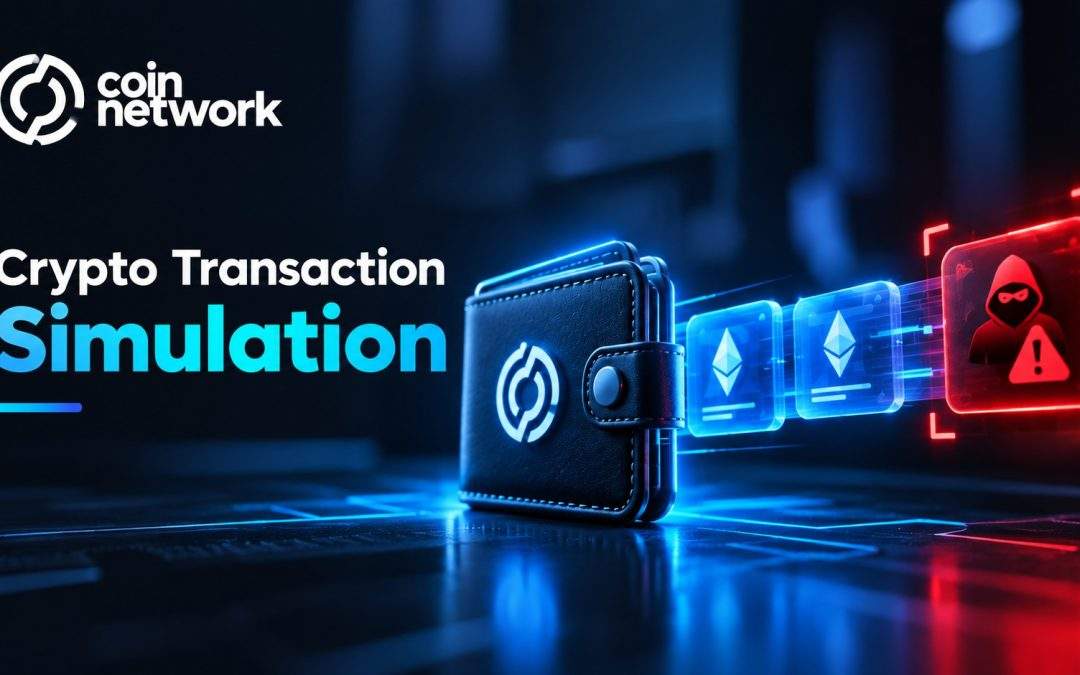
Crypto Transaction Simulation is a security technique that previews or tests a blockchain transaction before a user signs it. Instead of immediately broadcasting the transaction, a wallet or security service estimates what could happen if the transaction were executed.
A simulation may show potential balance changes, token transfers, NFT movements, approvals, contract interactions, and other state changes.
For example, a user may believe they are claiming an NFT while the transaction actually requests permission for a contract to spend tokens. A transaction preview can provide additional context before the user confirms the request.
MetaMask describes a transaction simulation as a test run that estimates balance changes and shows users what assets may move as a result. Its documentation also explains that standard off-chain simulations can differ from actual on-chain execution in some circumstances.MetaMask’s transaction simulation guide provides the technical details.
This makes simulation a useful security layer, but it should be combined with careful transaction review.
Why Crypto Transaction Simulation Matters
Crypto transactions can be difficult to interpret because smart-contract calls may contain technical instructions that are not obvious from a website interface.
A simulation can help answer practical questions:
Which tokens could leave my wallet?
Will I receive an asset?
Am I granting an approval?
Is an unexpected contract being called?
Could the transaction significantly change my wallet balance?
Does the expected result match what I intended?
This is particularly useful when interacting with decentralized applications, token claims, NFT platforms, DeFi protocols, and unfamiliar websites.
Coin Network’sCrypto Wallet Security in 2026 guide also covers reviewing transaction details, permissions, approvals, and suspicious signing requests before confirming blockchain activity.
How Crypto Transaction Simulation Works
The exact implementation depends on the wallet, blockchain, and security provider.
A transaction normally contains information such as:
Sender address
Recipient or contract address
Network
Gas parameters
Transaction value
Contract calldata
A simulation executes or models the transaction in a controlled environment to estimate the resulting state changes.
The wallet can then present those expected changes before signing.
For an ERC-20 interaction, the preview might show that 500 USDC will leave the wallet. For an NFT transaction, it may show one NFT leaving and another asset arriving.
Security providers can also combine simulation with threat intelligence, contract analysis, address reputation, and phishing detection.
MetaMask explains that its security alerts use on-chain analysis, ecosystem intelligence, and security partners including Blockaid.MetaMask’s security-alert documentation describes how these signals are used.
Crypto Transaction Simulation and Wallet Drainers
Wallet drainers are malicious systems or applications designed to trick users into signing transactions or approvals that may result in asset loss.
Common delivery methods include:
Fake airdrops
Counterfeit minting pages
Fake support websites
Phishing applications
Malicious token claims
Impersonation websites
Fake investment platforms
A simulation can expose an unexpected result before the user signs.
For example, a website may claim that a user is receiving an NFT while the simulated outcome shows valuable tokens leaving the wallet.
That mismatch is an important warning sign.
However, simulation does not guarantee that every malicious transaction will be detected.MetaMask’s security-alert guidance explicitly states that its security systems are designed to help users identify risks but cannot guarantee detection of every threat.
Crypto Transaction Simulation and Token Approvals
Token approvals deserve particular attention because an approval can create future spending permission rather than immediately transferring an asset.
A user should distinguish between:
A token transfer
and
A permission that allows another contract to spend tokens later.
That distinction matters because a transaction can appear inexpensive or routine while creating a potentially important authorization.
Simulation can help reveal expected permission changes, but users should still review the approval amount and destination contract.
Coin Network’swallet security guide provides additional guidance on reviewing token permissions and avoiding unnecessary approvals.
One of the most useful features of simulation is balance-change analysis.
A preview may conceptually show:
Before
1.0 ETH
2,000 USDC
3 NFTs
Expected after transaction
0.98 ETH
1,500 USDC
2 NFTs
The exact interface varies between wallets and networks.
A significant warning can arise when the simulated result does not match the user’s intention.
For example, if a user expects to receive an NFT but the transaction preview indicates that several valuable tokens will leave the wallet, the user should stop and investigate rather than sign immediately.
Crypto Transaction Simulation and Malicious Smart Contracts
Simulation can also help users understand interactions with unfamiliar smart contracts.
Depending on the transaction, a malicious contract may attempt to:
Transfer tokens
Change permissions
Move NFTs
Burn assets
Call additional contracts
Execute multiple internal operations
A simulator can trace or estimate these changes and present them in a more understandable format.
Blockaid describes its transaction-security technology as providing transaction previews that show the expected on-chain impact before signing, and its current platform says it protects more than 180 million Web3 transactions every month.Blockaid’s transaction-security platform provides the current product information.
This demonstrates how simulation has become part of broader wallet-security infrastructure.
Crypto Transaction Simulation and Red-Pill Attacks
A standard simulation can have limitations if a contract behaves differently during simulation than it does during actual execution.
MetaMask describes sophisticated attacks of this type as red-pill attacks.
In simplified terms, a malicious contract could attempt to appear harmless under simulated conditions while producing a different result during real execution.
MetaMask’s documentation explains that enforced on-chain simulations can address this problem by checking that actual execution matches the simulation. When the execution does not match the expected result, the transaction can revert.MetaMask’s enforced-simulation documentation explains the distinction.
The practical difference is:
A standard simulation predicts an outcome.
An enforced simulation can add a mechanism that requires actual execution to match the predicted outcome.
Support varies by wallet, smart-account implementation, transaction type, and network.
Crypto Transaction Simulation in 2026
The need for transaction-level security remains significant in 2026.
Chainalysis reported that it estimated $17 billion was stolen through cryptocurrency scams and fraud in 2025. Its 2026 report also found that impersonation scams grew by approximately 1,400% year over year, while the average scam payment rose from $782 in 2024 to $2,764 in 2025. These figures are estimates and can increase as additional illicit addresses and transactions are identified.Chainalysis’ 2026 Crypto Crime Report provides the methodology and context.
The FBI’s 2025 Internet Crime Report, released in April 2026, recorded 181,565 cryptocurrency-related complaints from U.S. victims and more than $11.3 billion in reported losses.The FBI’s 2025 Internet Crime Report provides the underlying figures.
Security infrastructure is also operating at large scale. MetaMask reported in June 2026 that its security partner Blockaid had flagged 65.4 million address-poisoning attacks since January 2025.MetaMask’s June 2026 Crypto Security Report explains the detection effort and related wallet protections.
These figures cover different parts of the crypto-security landscape. They should not be interpreted as evidence that every blockchain transaction is dangerous, but they do illustrate why transaction-level risk detection remains relevant.
How Wallets Use Crypto Transaction Simulation
A modern wallet can combine simulation with several other security checks.
Transaction Preview
The wallet estimates expected balance, ownership, and permission changes.
Threat Intelligence
The transaction can be compared with known phishing domains, malicious addresses, scam campaigns, and other security intelligence.
Contract Analysis
The wallet or security provider can inspect contract behavior and transaction calls.
Address Reputation
The destination address may be compared with known or suspicious addresses.
User Warnings
The wallet can display warnings when multiple risk indicators are detected.
MetaMask explains that its security classifications can use information involving phishing domains, contract behavior, impersonation signals, on-chain activity, and ecosystem reporting.MetaMask’s security-alert system provides more detail.
These layers should be viewed as complementary rather than as a single guarantee of safety.
What Crypto Transaction Simulation Can Detect
Simulation can be useful for identifying unexpected outcomes such as:
Unplanned token transfers
NFT movements
Token approvals
Large balance reductions
Unexpected contract interactions
Multi-step asset movements
Some suspicious permission changes
The effectiveness depends on the wallet, simulation method, blockchain, transaction type, and available security data.
An unknown malicious contract may have little reputation history, while an advanced attack may attempt to obscure its behavior.
A clean simulation therefore should not be treated as proof that a transaction is safe.
What Crypto Transaction Simulation Cannot Guarantee
Simulation does not replace broader security practices.
It may not reliably identify:
Social-engineering scams
Fake websites
Fraudulent project claims
Poor investment decisions
Unknown malicious infrastructure
Every simulation-evasion technique
Threats involving a compromised device
Users should therefore combine transaction simulation with domain verification, wallet security, permission management, hardware protection, and careful signing.
For broader crypto-security education, Coin Network’sCryptopedia section provides additional resources.
How to Use Crypto Transaction Simulation Safely
1. Check the Website
Verify that the domain comes from the project’s official channels.
2. Review Wallet Warnings
Do not dismiss a warning simply because the website appears familiar.
3. Read the Simulation
Look carefully at token, NFT, approval, and balance changes.
4. Identify Approvals
Determine whether the transaction creates spending permission for another contract.
5. Compare the Result With Your Intent
Ask whether the transaction preview shows the result you expected.
6. Stop When Something Looks Wrong
Do not sign simply because a website says the transaction is required.
7. Separate Long-Term Holdings
Using a separate wallet for experimental or unfamiliar dApps can reduce the amount of assets exposed to a mistaken interaction.
Common Mistakes With Crypto Transaction Simulation
Treating a Green Result as a Guarantee
A successful simulation indicates an expected execution path under the simulation conditions. It does not establish that the website or project is legitimate.
Ignoring Balance Changes
Users sometimes focus on a warning label without reading which assets are actually expected to move.
Approving Unlimited Spending
A transaction can create significant future permissions even when no asset leaves the wallet immediately.
Trusting a Familiar Brand
Attackers can imitate exchanges, wallets, projects, customer-support pages, and other trusted services.
Skipping Simulation for Small Transactions
A small transaction can still create a dangerous approval or permission.
Assuming All Wallets Simulate the Same Way
Wallets use different security providers, simulation environments, supported networks, and risk models.
Assets: Which tokens or NFTs may leave your wallet?
Gas: Is the expected network fee reasonable?
Warning: Has the wallet flagged the transaction?
Intent: Does the result match your intended action?
Follow-up: Can permissions be reviewed or revoked afterward?
Coin Network’sCrypto Wallet Security in 2026 guide provides additional guidance on approvals, suspicious dApps, wallet protection, and unfamiliar wallet activity.
Conclusion
Crypto Transaction Simulation provides a useful security layer by showing users what a blockchain transaction may do before they sign it.
It can help reveal unexpected balance changes, token transfers, NFT movements, approvals, and other contract interactions that may not be obvious from a dApp’s interface.
However, simulation is not a complete security guarantee.
A stronger approach combines transaction simulation, wallet security alerts, contract and address analysis, domain verification, permission management, and cautious signing behavior.
The 2026 security data from Chainalysis, the FBI, MetaMask, and Blockaid shows that scams and wallet-targeting attacks remain an important part of the crypto-security environment. Transaction-level visibility can therefore be especially useful when interacting with unfamiliar decentralized applications.
Does the transaction preview show the outcome I actually intended?
If the answer is unclear, stopping before signing is generally the safer choice.
FAQs
1. What is Crypto Transaction Simulation?
Crypto Transaction Simulation is a method of previewing or testing a blockchain transaction before it is signed and broadcast.
Depending on the wallet, it can estimate balance changes, token transfers, NFT movements, approvals, and other state changes.
2. Can Crypto Transaction Simulation detect malicious transactions?
It can identify some suspicious outcomes and risk signals, but it cannot guarantee detection of every malicious transaction.
MetaMask states that its simulations and security alerts are designed to help users identify potential threats but do not guarantee that every threat will be detected.
3. What can a transaction simulation show?
Depending on the wallet and network, it may show:
Token transfers
NFT movements
Balance changes
Approvals
Contract interactions
Other expected state changes
4. Can a malicious dApp bypass transaction simulation?
Sophisticated attacks can attempt to make simulated behavior differ from real execution.
MetaMask documents these as red-pill attacks and explains that enforced on-chain simulation is designed to help address this mismatch.
5. What is a wallet drainer?
A wallet drainer is malicious software or smart-contract infrastructure designed to obtain digital assets or permissions through deceptive interactions.
Users may be persuaded to sign harmful transactions or approvals.
6. Does a successful simulation mean a transaction is safe?
No.
A successful simulation indicates what the transaction is expected to do under the simulation conditions. It does not establish that the website, contract, project, or financial opportunity is legitimate.
7. Why are token approvals important?
An approval can allow another smart contract to spend a token on behalf of the wallet.
Users should understand the approval amount, token, and destination contract before signing.
8. Can transaction simulation prevent wallet drainers?
It can provide previews and warnings that help users identify potentially harmful transactions.
Some wallet systems also combine simulation with threat intelligence, address reputation, contract analysis, and enforced execution checks.
No single feature eliminates every security risk.
9. How should I react to a malicious transaction warning?
Do not sign the transaction.
Verify the project domain, check the destination address, review the transaction details, and investigate the warning before proceeding.
10. Is Crypto Transaction Simulation available on every blockchain?
No.
Support depends on the wallet, simulation provider, transaction type, and blockchain.
MetaMask currently documents on-chain simulation support across networks including Ethereum, Optimism, BNB, Polygon, Monad, HyperEVM, Sei, Tempo, MegaETH, Robinhood, Arc, Base, Arbitrum, Avalanche, and Linea through its supported implementations.
11. What should I do if I already signed a suspicious transaction?
Stop interacting with the suspicious application, review wallet activity and permissions, and consider moving unaffected assets to a secure wallet where appropriate.
Coin Network’sCrypto Wallet Security guide provides additional information for responding to suspicious wallet activity.
12. Where can I learn more about Crypto Transaction Simulation?
The crypto industry has recently expanded beyond the United States as more countries and regions have embraced digital currencies and blockchain technology. Brad Garlinghouse, CEO of Ripple, has predicted that cryptocurrency becoming increasingly popular will only continue in the years ahead.
One of the main reasons for the industry's global expansion is the increasing demand for digital assets and their use cases across various industries. From finance and banking to healthcare and logistics, blockchain technology is being adopted by more companies worldwide. As a result, there is a growing need for crypto solutions that can facilitate secure and efficient cross-border transactions.
Furthermore, many countries are beginning to recognize the potential economic benefits of embracing the crypto industry. For instance, some nations are considering launching their digital currencies to improve their financial systems, while others are creating regulatory frameworks to attract crypto startups and investment.
The rise of decentralized finance (DeFi) is also contributing to the crypto industry's global expansion. DeFi protocols are built on blockchain technology, enabling users to access financial services like lending, borrowing, and trading without intermediaries. These protocols are accessible to anyone with an internet connection, making them, particularly appealing to people living in underbanked or unbanked areas.
Ripple's role in the global adoption of cryptocurrencies
Ripple has partnered with financial institutions and payment providers worldwide, including MoneyGram, Santander, and American Express. Its partnerships have helped to increase the use and adoption of XRP and RippleNet, furthering its goal of creating a more efficient and accessible global financial system.
Beyond its products, Ripple has also been a strong advocate for the overall growth and development of the cryptocurrency industry. The company has worked closely with regulators and policymakers to ensure the industry is properly regulated and promotes its potential benefits.
As cryptocurrencies continue to gain popularity and adoption worldwide, Ripple is poised to be a key player in shaping the industry's future. Its innovative solutions and partnerships with major players in the financial industry have already helped to pave the way for widespread adoption, and it is likely to continue to be a major force in the years to come.
Ripple's role in shaping the future of the industry
Ripple, a San Francisco-based technology company that provides blockchain solutions for cross-border payments, has been at the forefront of driving the adoption and integration of cryptocurrencies into the mainstream financial sector. XRP, the company's digital currency, has been one of the leading cryptocurrencies in market capitalization and has attracted the attention of investors and financial institutions.
Ripple is shaping the industry's future by developing solutions addressing the inefficiencies and high costs of cross-border payments. Ripple's technology allows for near-instantaneous settlement times and drastically reduces the cost of sending money across borders compared to traditional banking methods. As more financial institutions adopt Ripple's technology, the speed and affordability of cross-border payments are expected to be enhanced, making them available to a broader range of people.
Another way Ripple is driving innovation in the industry is through its partnerships with various companies and organizations. Ripple has partnered with over 300 financial institutions worldwide, including banks, payment providers, and remittance companies. These partnerships help to expand the reach of Ripple's technology and promote the adoption of cryptocurrencies in the global financial ecosystem.
Furthermore, Ripple is actively involved in regulatory efforts to provide clarity and certainty around the use of cryptocurrencies. The company has called for clear and consistent regulations that foster innovation and protect consumers and has engaged with policymakers and regulators worldwide to promote this goal.
The future of the global crypto industry
In summary, the future of the global crypto industry looks bright as it continues to gain more mainstream acceptance and adoption. The industry rapidly evolves, with new technologies and applications being developed daily. The emergence of decentralized finance (DeFi), non-fungible tokens (NFTs), and other innovative use cases are expanding the possibilities for the crypto space.
Overall, the global crypto industry's growth and evolution will likely continue. The potential of blockchain technology is becoming increasingly evident as more businesses and people use it. It will be captivating to see how this technology progresses by introducing new applications and uses in the next few years.
DeFi Development grew its Solana treasury to 2.56M SOL, boosting net asset value per share as it provides leveraged exposure to Solana via CHAD shares.
The Galaxy CEO seemed undaunted by this year's devastation in the BTC mining business, stating that the company plans to dramatically increase its mining activities. Galaxy Digital Holdings CEO Mike Novogratz describes the Helios mining purchase as a game changer for the company. Bear markets are for construction. We are long-term supporters of $BTC and think that the lowest-cost miners will triumph over time.
Helios is a game changer that will broaden our mining capabilities and services as we continue to develop towards a decentralized future. In a more detailed explanation of the transaction, Mike Novogratz stated that the business has a certain philosophy on how to approach the mining sector- low-cost power, a very efficient staff, and buying ASIC miners cheaply. Previously, Argo Blockchain CEO Peter Wall announced on December 28 a $65 million transaction with Galaxy Digital to sell the Helios mining operation.
The crypto investment business announced the $65 million acquisition of Argo Blockchain's main mining operation on December 28 as part of Argo's extreme measures to avoid bankruptcy. In a tweet regarding the acquisition on December 29, Novogratz stated that Galaxy is a "big believer" in Bitcoin's long-term prospects and that the firm would continue to scale up its mining initiatives:
The Galaxy CEO went on to explain that the company has an unique "thesis" on how to approach the mining sector: "low-cost power, a highly efficient crew," and "purchasing ASIC miners inexpensively." "That's a prescription for mining success, even as the hash rate climbs," he added.
According to Hash rate Index, Bitcoin ASIC miner prices are at a level not seen since at least 2021, with the most efficient ASIC miners seeing their prices collapse 86.8% from their high in May 2021. Galaxy offers five business lines: trading, asset management, cryptocurrency mining, venture capital, and investment banking.
According to its website, it presently manages assets worth $1.9 billion. Galaxy now relies heavily on hosting services for its mining activities. However, Novogratz points out that Helios' 200 megawatt (MW) capacity will allow the firm to not only run miners on its own site, but also host for others.
Helios has the potential to become one of the largest miners on the market. Argo Blockchain earlier stated in May of this year that it intended to expand its energy capacity to 800MW in the "coming years." At the time, Helios claimed it intended to attain a BTC mining capacity of 5.5 exahashes per second by the end of the year, with the potential to reach 20 EH/s in the future.
Galaxy looks to have some capital to burn during the 2022 bear market, since it also provided Argo Blockchain with a $35 million equipment financing loan as part of the deal. The acquisition follows Galaxy's earlier this month acquisition of crypto self-custody platform GK8 for an unknown sum.
GK8 was auctioned off as part of the Celsius bankruptcy process, after the failed crypto lender purchased the company for $115 million in 2021. The purchase, according to Novogratz, is a "critical cornerstone in our endeavour to develop a genuinely full-service financial platform for digital assets."