These days, the cryptocurrency industry could use some encouraging news. Additionally, it received some on Wednesday. This improvement, which eventually became known as simply "the merge," is already being hailed as a pivotal juncture in the annals of cryptography's long and illustrious history.
The most popular cryptocurrency platform, Ethereum, appears to have successfully upgraded its software architecture by switching from a type of blockchain known as "proof of work" to a type of blockchain known as "proof of stake." Ethereum has been running a "proof of work" blockchain ever since it was launched in 2015, but the upgrade occurred recently.
What is the Ethereum Merge?
The Merge is an update to the Ethereum blockchain, which enables crypto ecosystem breakthroughs such as non-fungible tokens (NFTs). Formerly, the Ethereum blockchain, much like the Bitcoin blockchain, functioned on a proof-of-work paradigm, in which network nodes competed to solve complex arithmetic problems.
The update shifted Ethereum to the proof-of-stake paradigm, which is a more environmentally friendly and energy-efficient technology. It involves selecting nodes based on an algorithm that favors nodes that possess more of a network's money.
When did the Merge take place?
Dozens of Ethereum developers convened on a jubilant Zoom call that was hosted by the Ethereum Foundation early on Thursday morning. The meeting took place as the first proof-of-stake transactions were being validated.
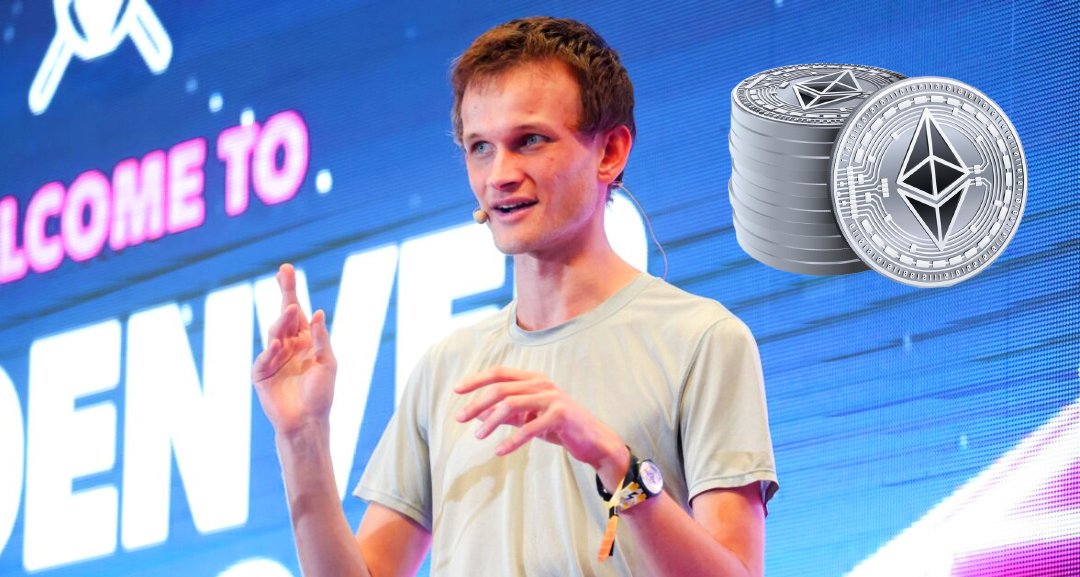
Vitalik Buterin, the creator of Ethereum, addressed the gathering and said that "this is the first step in Ethereum's huge journey towards becoming a mature system." "The merging, in my opinion, represents the transition from the early stages of Ethereum to the Ethereum that we have always desired,"
And many supporters of cryptocurrencies have high hopes that it will turn things around for the cryptocurrency movement, which has been plagued over the last year by losses totaling billions of dollars, a spate of big frauds and hacks, and a fresh wave of regulatory scrutiny.
The positive effects on the crypto market
To begin, it was by no means a guarantee that the merger would be successful. Changing the so-called consensus mechanism of a blockchain, which refers to how it processes and validates new transactions, is a frighteningly complicated operation. (Some creators of cryptocurrencies have likened it to switching out a spaceship's engine in the middle of its journey.)
Before the merge, no one had ever attempted such a move on a cryptocurrency platform that was even close to the scale of Ethereum, and it took engineers several years of testing and study (not to mention a significant number of setbacks) before they felt confident enough to try it. Hundreds of billions of dollars worth of bitcoin transactions, NFT collections, and Defi protocols may have been irreversibly disrupted if the merging hadn't gone according to plan. Ethereum is an open-source platform.
The new Ethereum blockchain is far less harmful to the environment than the previous one, which is the second reason why supporters of cryptocurrencies are ecstatic about the integration. In the past, the security of Ethereum was provided by a distributed network of very powerful computers.
These machines battled one another to solve cryptographic riddles, resulting in a significant amount of wasted energy. Now, it will be protected by a method that is known as "staking." Staking is a procedure in which investors agree to deposit their cryptocurrencies in a common pool in return for the opportunity to receive monetary benefits.
Final Thoughts
There are other advantages to the merging, such as the fact that it is anticipated to make Ethereum quicker and more efficient in the long term; nevertheless, the biggest and most immediate gain is the reduction in the environmental impact. Researchers in the cryptocurrency space predicts that the updated Ethereum blockchain will have an energy footprint that is 99.95 percent less than the previous version.
According to Vitalik Buterin, the co-founder of the Ethereum network, the much-anticipated software update of the Ethereum blockchain, which is referred to in the cryptocurrency industry as the Merge, is now expected to take place around September 13 to September 15.
The Merge signifies a movement in the manner that Ether tokens are generated and payments are verified, away from mining blocks utilizing challenging computational puzzles following the proof-of-work technique and toward the proof-of-stake approach. The proof-of-work method required miners to solve increasingly difficult problems to get new blocks. Holders of Ether may sign up to verify transactions on Ethereum using the POS mechanism, which is based on stashes of locked up tokens in their possession.
Buterin said that the proof-of-work version of Ethereum only has a roughly "fixed amount" of mining slots after the last test stage of the Merge known as Goerli earlier this week. Goerli was known as the name of the test stage. Because of this, engineers now have a better idea of when the formal network update will likely get underway.
An earlier projection suggested that the date would fall between September 15 and September 20. Next week, there will be another meeting with the engineers working on Ethereum to iron out any last-minute kinks in the Merge. During this call, a specific date will be decided upon and hammered out.
The Bellatrix hard fork
On the Ethereum blockchain, the long-awaited update to Ethereum 2.0 is set to get underway. Ethereum 2.0 refers to the method by which the cryptocurrency Ethereum (ETH) will transition from operating on a proof-of-work (PoW) basis to operating on a proof-of-stake (PoS) basis through a hard fork, also known as a separation process. Even though the Ethereum Foundation does not make use of the phrase "Ethereum 2.0," the word is often used in the industry to make things easier to understand.
A Bellatrix upgrade for ETH is slated for today, the day before the final merge. At that time, the Ethereum Epoch value on the proof-of-stake chain is expected to increase to 144,896. This will occur before the final merge. According to the Ethereum Foundation, one epoch is the amount of time that must pass to mine 30,000 blocks.
The most recent upgrade to Bellatrix is required for "the Merge" to be carried out without a hitch. This upgrade is the last one that will take place before the Paris Upgrade, which will take place after "the Merge." It brings together the proof-of-stake chain and the current execution layer (current proof-of-work).
Mining on the Ethereum Blockchain will be rendered obsolete as a result of the Paris Upgrade, which will also herald the transition from a proof-of-work validation system to a proof-of-stake system design.
An outline of the most recent changes to Ethereum
In the same way that Bitcoin was constructed, the Ethereum network was built using the proof-of-work (PoW) method. This suggests that mining, a process that uses a substantial amount of energy, is necessary for the production of Ethereum (ETH) coins.
To make the transition to a proof-of-stake (PoS) paradigm, however, various measures were made in preparation for the introduction of Ethereum 2.0 in 2020. The purpose of this project is to improve the speed, efficiency, and scalability of the Ethereum network to facilitate the execution of a greater number of transactions in parallel.
What will happen after The Merge?
At the beginning of this year, Ethereum's original developer, Vitalik Buterin, assigned a development progress rating of 50% to the project. In addition to this appraisal, he included a list of the many stages, such as merging, surge, verge, and others, that Ethereum must go through to reach 100%.
The update to Bellatrix is slated to take place today. As part of this process, the Beacon Chain will be integrated with the Ethereum mainnet, and the consensus method will be converted entirely from proof-of-work to proof-of-stake.
The zk-rollups layer 2 scaling solution will need to be implemented as the next stage of the surge. To aggregate and carry out several transactions all at once, a technique known as rollup makes use of an Ethereum sidechain.
With the introduction of the new cryptocurrency format in the financial system, various companies have shown an eager interest in accepting it as their mode of payment as well. This has led to various initiatives and steps being taken to facilitate it and ensure the smooth flow of crypto assets from one agency to another. This has started occurring in various industries across different sectors and many have even benefitted from it. It has also given rise to several international ties like Ukrainian supermarket chain that are born out of crypto agreements.
This article looks at one such initiative that has been taken by Binance. Binance has finally decided to initiate a partnership with the Ukrainian supermarket chain to accept crypto through the Pay wallet. This article has tried to throw some light on this decision and give the readers a clearer picture of what it entails.
The announcement made by Binance on this matter
This Friday, Binance a well-established firm, announced that it has entered into a partnership with VARUS, which is a Ukrainian supermarket chain. This was done to facilitate the payment for groceries being made through the use of Pay wallet which belongs to Binance. Its decision to partner with a grocery company has been reached after considering the vastness of the industry. It has almost as many as 111 shops in 28 different cities of the country.
By making the payment feasible through pay wallet the authorities have further stated that with this system in place, it will be much easier for customers to get access to cryptocurrency almost immediately. It will also get them faster deliveries in different parts of the country. However, for the time being, the fast delivery facility is available for nine cities. These cities are, Kyiv, Dnipro, Kamianske, Kryvyi Ri, Zaporizhzhia, Brovary, Nikopol, Vyshohorod, and Pavlograd.
Further statements were given by the authorities at Binance
Further announcements have also been made by the company which has come up with various new features as well. For example, they have also added that a reward fun promotion shall also be made available to the users. In this new feature, each customer who places an order from the Varus delivery program, and makes a payment through the Binance pay shall be rewarded with UAH 100. However, there is one condition that all must adhere to, which is a user must first place an order of UAH 500 to enjoy the cashback reward.
Similar initiatives are taken by other companies
This is not the first initiative of its kind taken in the field of cryptocurrency. There have been other steps that have followed a similar trend. For example, a company named Whitepay also launched a similar program in which customers could easily ace an order for electrical appliances and make easy payments through cryptocurrency. It was a system in place specifically for the Ukrainians to make them use crypto with much more ease and efficiency.
Conclusion
The new initiatives are n by Ukraine in the field of crypto and to promote the use of cryptocurrencies across various platforms, it has created a new wave of reformation for the industry. The same has been stated by the founder of Ethereum in a Summit at Kyiv, in which he said that the kind of initiatives being taken in Ukraine can potentially make it the next Web4 hub. He further stated that a country has the potential to become one only when its citizens show a keen interest in utilizing the technology available. It is only when every citizen comes together to help in furthering its cause and help it develop, only then the country can become a Web3 hub.
A Solana-native decentralized financial infrastructure protocol known as Alfprotocol has announced that it would be creating a cooperative venture with the decentralized financial infrastructure platform known as Soldex. This is consistent with the aim and objective of the Alfprotocol to turn the Solana blockchain into a one-stop shop for Defi transactions.
The Alfprotocol platform is a sophisticated one that offers leveraged liquidity and yields to traders and investors that fall into a variety of risk categories. Having one of the top Solana DEXs in-house provides them with the ideal infrastructure to develop their company as well as the ideal sandbox for doing rigorous testing and auditing before putting out new services. The two initiatives are mutually advantageous from a technological point of view, and Soldex DEX and Farming with Double Rewards is an all-encompassing technology that will improve the Alfprotocol Defi ecosystem.
What are the announcements made?
The Chief Executive Officer of Alfprotocol, Matt Sauciunas, made the following statement: "We are happy to announce that these two innovative Defi initiatives are combining forces and Soldex will become a member of the Alfprotocol family."
In practical words, Alfprotocol is merging with Soldex, although in this situation, a joint venture would be a better phrase to use than a merger since we will operate as equal partners and utilize the significant synergies this collaboration brings, as highlighted by Soldex CEO Iaroslav Osipov.
What are the current updates?
The task of integrating the personnel, the technology, and the company has already gotten underway. As a result of the internal teams coming together, there are now increased efforts for further development as well as stronger efforts to promote the entire platform. These efforts include access to additional capital, access to more liquidity, and increased security because the Alfprotocol team has already launched complex yet secure products. Additionally, there is access to more Defi users and a wider network of connections.
Both of the company's CEOs have emphasized that all hands are on deck and that everyone is putting their heads down and working hard during the bear market. They have also promised that there will be more exciting developments in the weeks and months to come.
What is Alfprotocol?
The Alf Protocol is a Solana native automated market maker, decentralized lending, and liquidity supplying protocol. It allows users can join segregated lending pools either as lenders or borrowers.
The Alf Protocol makes it possible for borrowers to have an entirely new kind of experience with leveraged yield farming, complete with increased leverage and farming rewards. At the same time, it allows lenders to earn a significantly higher yield on supplied tokens without running the risk of temporary loss. In simple terms, Alfprotocol is a protocol for the deployment of money on Solana for the supply of liquidity and the cultivation of yields, with or without the use of leverage.
What is Soldex?
Soldex is the third-generation DEX being developed on Solana that is known for being the quickest, simplest, and most user-friendly. Soldex is working to solve the problems that are currently experienced by order-matching centralized exchanges and trustless custody inside existing decentralized exchanges.
The Soldex platform uses its token, which is abbreviated as SOLX. A Defi token known as SOLX has been designed with the dual purpose of operating as an on-chain money and governance token. Staking, feeding the AI-powered bots, and paying transaction fees throughout the platform can all be done using SOLX. Users may also use SOLX to pay the transaction fees. Users have the opportunity to accumulate rewards by staking SOLX.
A cryptocurrency market is a place where changes of different types are taking place now and then, new reformations are being made to bring about improvement in certain aspects as well as new ways being introduced. It is a highly volatile market that is affected by costs and whose value fluctuates based on which crypto asset is in the hype at a particular time. It depends solely upon the way users accept a certain crypto asset. This article deals with Stabenow- Boozman crypto regulation bill that has been proposed to take place and how it can make a difference.
What do the members of the crypto industry have to say about the needed improvements?
The various members who are known for representing the crypto community have given their viewpoints on the Digital Commodities Consumer Protection Act on the 15th of September. At a panel that has been conducted by the Senate Agricultural Committee, have been all praises for the bill mentioned herein. However, they came up with various suggestions that would be necessary for being about improvements for the betterment of all. These suggestions were also given in the hearing of this panel.
What was the suggestion given by them?
There were different aspects with which various members of the panel, as well as the speakers, had a problem. The definitions became a matter of concern for the five speakers that were present there in the panel as well as the Blockchain head of policy, Jake Chervinsky. He even took a step further and published a statement on the same bill moments after the hearing was conducted. In this hearing, all of the members, or to be more specific, the commenters expressed an interest to make the definition of commodities and security, a lot clearer. This was the only necessary change or improvement, as said by the speakers, that the bill has been lacking.
They said in a statement that even though the bill includes the matter of security and has provisions made in it as well, however, it does not dictate or display in any manner what it considers or does not consider as part of security. This statement was specifically made by the Vice President and deputy general counsel of Coinbase, Christine Parker.
A further concern regarding the bill
There have been various comments and remarks made about the bill and what it considers security. One such statement mentioned how the bill has left it for the perusal of the court and other such agencies to decide whether a crypto asset is a security or not. These crypto assets include all except Bitcoin and Ethereum. It has also been mentioned that this method won't last for a long time as it has never in the past. It is bound to fail in the long run and it has significant implications for the consumers as well.
Conclusion
There have been also various issues about the fact that the bill has restricted various users and has allowed them to transact in a transaction or digital commodity that is not easily susceptible, however, it has not specified particularly what stands as easily susceptible. There have been numerous concerns about the scope of the bill among the users and the members of the panel as well.
Some issues have also been raised in this regard which hints at the bill posing a threat to the decentralized finance system. It has also been hinted that the bill has certain systems in place that can make it difficult for Defi to work within that mechanism.