According to the Decentralized Engineering Corporation (DEC), the company behind the Solana-based protocol TRIP that enables mobility-based applications, the ride-sharing industry is poised for another paradigm shift, with Web3 protocols permitting new companies and drivers to bid for rides using a matching algorithm.
According to DEC, companies and passengers can collaborate and compete in a common economy on the TRIP platform. The protocol also gives the most active participants a role in its governance, which benefits both drivers and customers.
The first service intended to operate on TRIP is Teleport, a decentralized ride-sharing program run by parent company DEC that is set to start in December. DEC announced a $9 million seed round funded by Foundation Capital and Road Capital on October 27.
The Foundation Capital and Road Capital co-led the seed round, with participation from Thursday Ventures, 6th Man Ventures, 305 Ventures, and Common Metal. Uber's third-ever employee, engineer Ryan McKillen, as well as social media influencer Jake Paul, Flexport founder Ryan Petersen, and Farcaster co-founder Dan Romero, are among the individual strategic investors.
according to Paul Bohm, CEO of DEC and founder of Teleport, Uber "basically operates a monopoly—incredibly it's concentrated." According to Bloomberg data, Uber controls an estimated 72% of the US ride-sharing market as of June.
TRIP is Aimed to be a Decentralised Protocol
According to Paul Bohm, CEO of DEC and founder of Teleport, ridesharing giant Uber "basically operates a monopoly—incredibly it's centralized." According to Bloomberg data, Uber offers the infrastructure that links drivers and riders and takes a big share of the fee, garnering an estimated 72% of the US ride-sharing market in June.
TRIP is intended to be a decentralized protocol into which multiple app developers may plug to create a marketplace that links drivers and passengers, all without the need for centralized power at the center.
Bohm believes that this will encourage both cooperation and competition, encouraging players to deviate from the paradigm of behemoths such as Uber and Lyft while also driving companies to innovate to produce the greatest app based on a shared economy.
DEC will utilize the seed financing to accelerate its implementation in the coming months, with Teleport and TRIP demonstrating at Solana's Breakpoint conference in Lisbon in November and Art Basel Miami in December.
According to Bohm, Uber is "atrocious" at delivering service around large-scale events, thus the plan for Teleport's initial test is to give "table stakes or higher quality."
He believes that full implementation of the service will take six to nine months, with further decentralization envisaged as DEC seeks to validate the idea. According to Bohm, certain companies and automobile fleet owners have shown interest in using TRIP to develop their apps, similar to what DEC has done with Teleport.
The additional funds, according to Bohm, will be used to "launch TRIP permanently in specific cities." It will also assist the corporation in meeting its decentralization goal.
Riders in the TRIP ecosystem can pay with USD Coin on Solana and fiat currency through Apple Pay thanks to a blockchain-based mechanism, while drivers can accept the stablecoin as payment directly to their bank accounts or have it transferred into their wallet.
"By turning ride-sharing into a protocol and Teleport is constructing what Uber could not do in 2010, and what Uber should be building now," said Ryan McKillen, a former Uber employee and one of the seed round investors. Thursday Ventures, 6th Man Ventures, 305 Ventures, and Common Metal were among the other investors.
Conclusion
TRIP is not the first attempt to construct a decentralized ridesharing service, but Bohm believes that recent developments in decentralized finance (DeFiDeFi) have yielded token models that can make this go-round work for all players.
According to Precedence Research, the ride-sharing sector would be worth $344.4 billion by 2030. According to Statista, Uber is the most popular ride-sharing app in the world, with 93 million people using it every month.
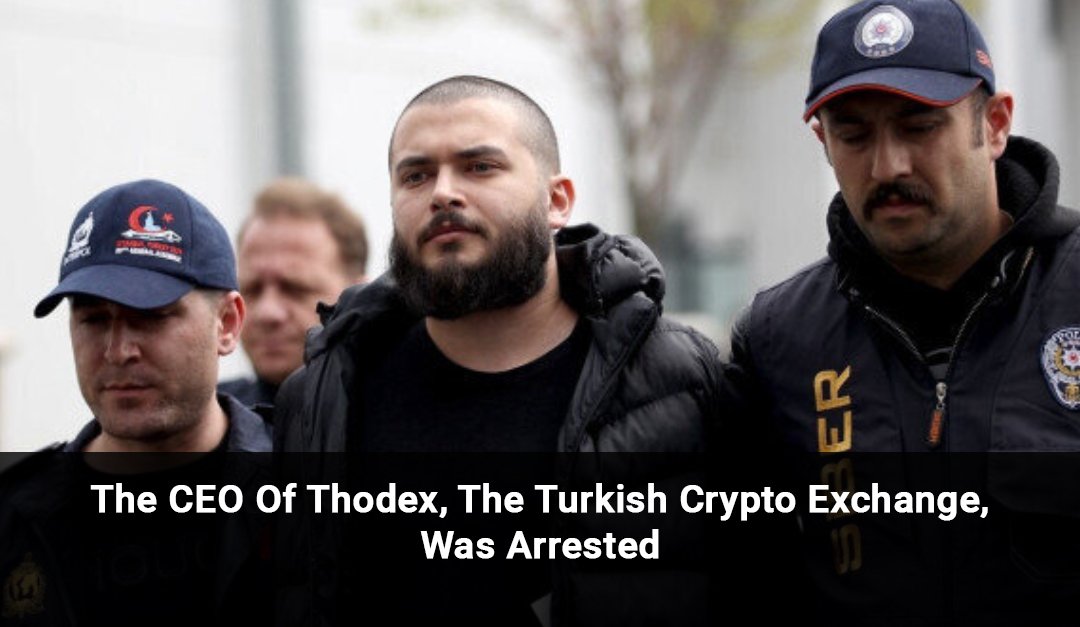
Thodex suddenly stopped trading in April 2021 due to an unspecified outside investment. It needed a four- to five-day pause in trading to work.
But after one day, Özer said that the company had been forcefully stopped trading due to cyberattacks. Though, claimed that customer funds were safe. That time, he promised to return the investors' capital shortly.
But on the same day of that claim, 62 people were confined by Turkish police. All the systems and computers of that company were seized. Also, accounts were frozen.
The Suspicion Raised :
After that incident, Özer flew to Albania to get rid of administrative activity. Though, the Turkish govt. was getting ready to have him extradited. The manhunt continued for months.
Later, Özer was found in Vlorë. Vlorë is a coastal city, the third most crowded region in Albania. Özer's identity was marked and confirmed through biometric documents.
In April 2021, it was claimed that Thodex had transferred $125 million in Bitcoin to Kraken. Kraken is a U.S. exchange. Thodex had transferred the amount before it closed. Whitestream, the Blockchain tracking firm that discovered the incident. It was said that it appeared to be a “cash out operation,” and executives stole customer funds.
The Govt. Steps :
The government of the country has expressed concern about high crypto uptake in the country. The govt. aimed to pass a bill seeking to establish new rules for the crypto industry.
Thodex was unable to access its digital assets due to the trading platform abruptly halted trading. The platform is filled with fraud allegations and thousands of criminal complaints.
Additionally, the platform shared a statement on its website this week. According to the statement, it would be closed for four to five days as a sale process is taking place.
According to the post, their services will be closed for about five working days until the share transfer completes. However, users do not need to worry about their investments.
Before that statement, the trading was considered the first halt for "six hours of planned maintenance work.”
But the users who were unable to withdraw their capital or access their accounts took to Twitter voicing the concern that they may have been scammed.
Defendant Statements Of The Founder :
Existing in the market since 2017, Thodex claimed that "negative” media reports regarding the company were not the truth.
It claimed that the Global prominent banks and funds, whose names they were going to announce when the agreement process will be completed, have been eager to invest in their company and even the companies proposed a partnership for a long time.
According to them, for that process, the transactions need to be stopped temporarily and the sale process required completion.
However, according to the primary assessment by police, Thodex CEO Faruk Fatih Özer had flown from Istanbul Airport. He is suspected to have fled to Thailand. He had with him $2 billion worth of digital assets. He has stopped all his social media accounts for safety as the reports say.
Later, Özer did not continue his silence. He published a new statement through the Thodex Twitter account.
Rejecting the allegations, Özer said that in the platform where approximately 700,000 users conduct crypto trading. So, the platform has never exploited or done any fraud to anyone, and nor will it in the future.
He also explained that when the company had undergone a cyberattack in 2018, it had gone through a total TL 25 million loss. But it never intends to fill the blank space through illegal activities. He added the platform has recently gone through "unusual fluctuations” in company accounts that took place during the almost three-month-long partnership negotiations.
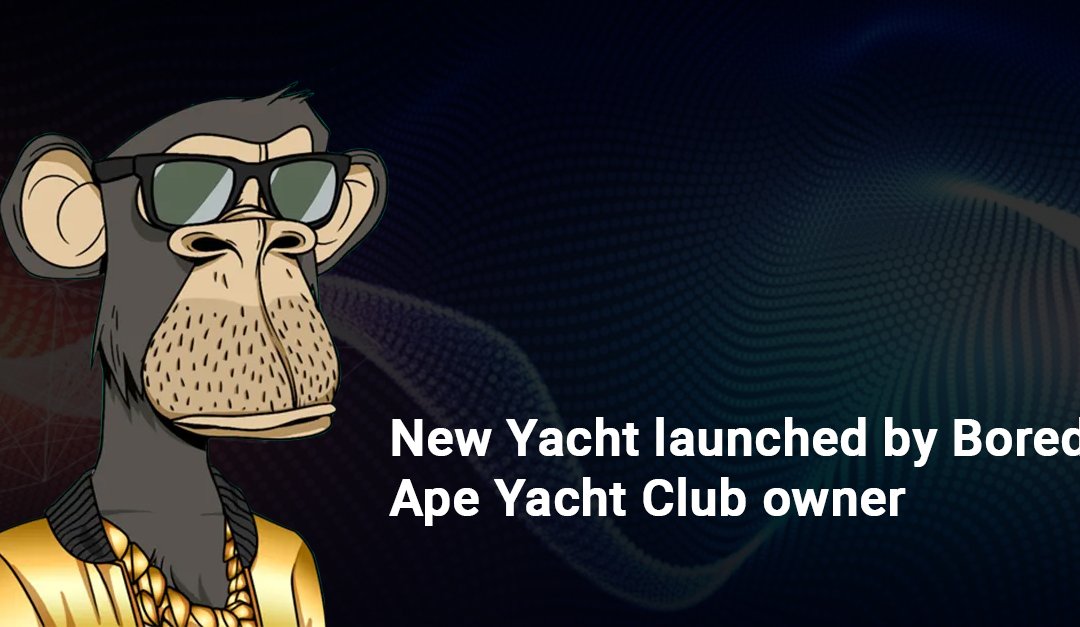
The Bored Ape Yacht Club has a suspiciously low number of boating chances while having a large number of Apes that seem bored or uninterested—10,000 of them, to be exact—in the form of NFTs. Now, one Bored Ape NFT holder—who also happens to be a boat owner—plans to alter that by launching a decentralized yachting club.
What is Bored Ape Yacht Club?
Bored Ape Yacht Club (BAYC), which is often referred to informally as Bored Apes or just Bored Ape, is a collection of non-fungible tokens (NFTs) that was constructed on the Ethereum network. The collection is comprised of profile photographs of cartoon apes that have been created procedurally by an algorithm.
Yuga Labs is the firm that Bored Ape Yacht Club reports to as its parent. After being issued for the first time on April 20, 2021, the project was made available for live pre-sale beginning on April 23, 2021. Owners of a Bored Ape NFT are given entry to an exclusive online club, invitations to exclusive in-person events, and rights to the image's intellectual property.
BAYC’s latest initiatives
The Bored Yachts Club intends to establish a decentralized, NFT-gated yachting platform to provide its members with the opportunity to charter actual yachts in a variety of locations around the globe, with the revenues from these charters being donated to charitable organizations. The effort will begin with "Lady Amanda," the only boat owned by club founder Jad Comair. However, the long-term objective is to recruit other yacht owners while allowing them the freedom to donate monies to charitable organizations of their choosing.
Melanion Capital is a French investment business that established a Bitcoin-themed exchange-traded fund (ETF) focusing on crypto sector firms in 2021. The CEO and the founder of Melanion Capital are Comair. According to his statements to Decrypt, he started investing directly in the most prominent cryptocurrency much earlier, in 2014.
An NFT, or non-fungible token, is a kind of blockchain token that may be used to represent ownership of an object. Over the last few years, the market for digital products such as Bored Ape-style profile photos, digital artwork, and collectibles has exploded. The market generated a total of $25 billion in trade volume in only the year 2021, and the Bored Ape Yacht Club is considered to be one of the most remarkable achievements in this sector.
Comair, an avid art collector, drew into non-fungible tokens (NFTs), and he has said that he discovered an affinity with the celebrity-packed Bored Ape Yacht Club as a sort of digital identity, in addition to the possible financial prospects.
Latest updates on the yacht
Bored Ape NFT holders are granted wide permission to utilize their artwork in the creation of derivative works and projects of any kind, courtesy of Yuga Labs. Others have used their Apes to produce items like clothing, toys, food and marijuana packaging, and even themed restaurants that serve fast food. Comair decided to transform his ape into a made-up version of the yacht's mascot and fake skipper.
There is no official connection between the Bored Yachts Club and Yuga Labs, and participants do not need to have a genuine Bored Ape NFT to purchase and make use of one of these NFT membership permits. His ownership of an ape came long before the conception of a decentralized marketplace for boat rentals.
Final thoughts
Comair expresses the hope that the platform will attract additional yacht owners from all over the world. This, according to Comair, can help fulfill the dual purpose of letting those yacht owners fill up empty charter windows when the boat is not being rented) while also contributing to charitable organizations in the process. In addition, because boats are able to operate on international seas outside of the authority of land-based authorities, Comair views the Bored Yachts Club as a possible stepping stone to a "crypto city" of sorts that is connected to a port.
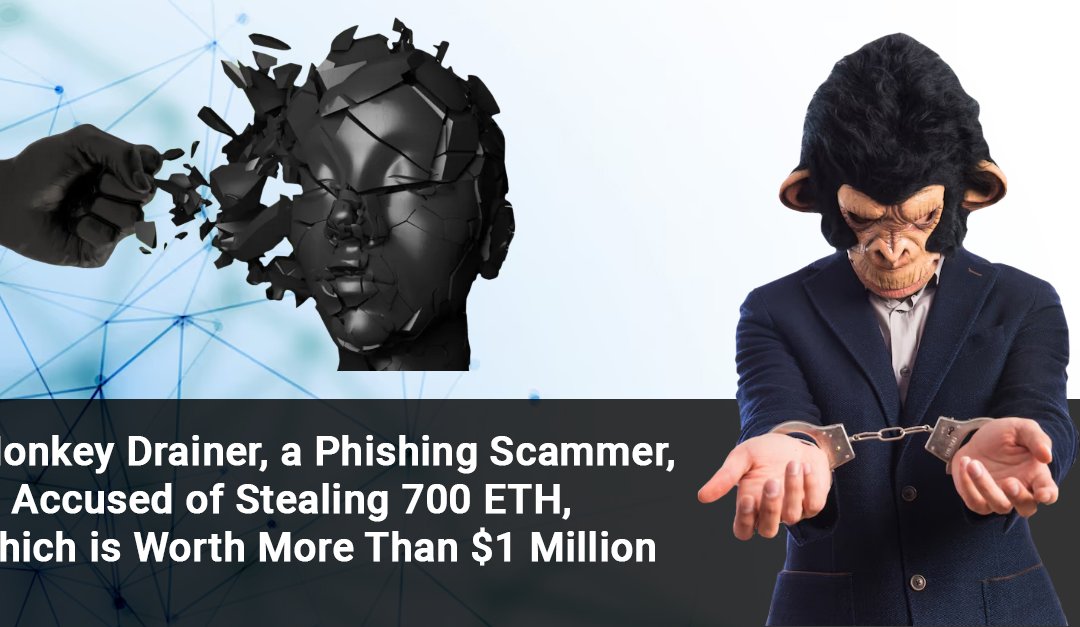
ZachXBT, a well-known on-chain investigator, claims that Monkey Drainer, a phishing scammer, has stolen over 700 ETH (equal to $700,000) worth of cryptocurrency and non-fungible tokens in the last 24 hours, amounting to about $1 million.
How did the Monkey Drainer Scam?
According to ZachXBT, the two biggest victims, 0x02a and 0x626, lost a total of $370,000 after approving transactions on phishing websites controlled by the serial fraudster. A total amount of $150,000 worth of non-fungible tokens (NFT) were apparently lost by 0x02a, including 1 Bored Ape Yacht Club (BAYC) collection, 1 CloneX, 36,000 USDC, and 12 additional NFT.
In the last few weeks, the suspected scammer has been successful in tricking several victims. The researcher claims that the amount of money stolen in the scam has exceeded $3.5 million and is continuing to rise.
Over 7,300 transactions have been performed by the hacker throughout his several months of operation.
APY, BMI, SHOPX, XED, and PMON, among other low-cap projects, were allegedly promoted by well-known crypto influencer Lark Davis before being dumped on the community's uninformed users, according to ZachXBT. He allegedly earned $1 million as a result.
Both of these victims were only a few of the numerous people who had their money taken by Monkey Drainer. According to a tweet from ZachXBT, more than $3.5 million has been stolen in total, and the figure is growing daily.
ZachXBT advised to the users to exercise "extreme caution" before linking their wallets to untrusted websites and signing transactions.
However, ZachXBT discovered a new phishing scheme in August when victims lost more than $2.5 million worth of NFTs. Five individuals associated with the BAYC collecting scheme were indicted in Paris earlier in October.
Phishing scams sometimes include criminals disseminating links to websites that pose as legitimate initiatives or businesses to trick users into divulging private information by promising a thrilling purchasing opportunity or a no-cost promotion.
The Monkey Drainer has been associated with four specific addresses, including the monkey-drainer.eth address.
Web3 Security Community Wallet Guard Responded
The blockchain-based Web3 security network Chainabuse now displays a lengthy series of reports about airdrop frauds, NFT scams, and phishing assaults when searching these addresses.
A handful of the reported cases are phony Aptos Airdrops, a false Wolf Game, Bored Ape Yacht Club marketplace, and airdrop frauds via the Astrobot Society discord channel.
ZachXBT's Twitter thread received a response from the Web3 security community Wallet Guard, which claimed to have "seen multiple additional mint sites recently constructed" with Monkey Drainer on the backend, including a bogus Garbage Friends whitelist link that led to a phishing website.
In the last few years, ZachXBT has established himself as a reputable independent blockchain investigator and exposed numerous instances of criminal activity in the industry.
Christophe Durand, the deputy head of France's national cyber unit, even acknowledged ZachXBT's efforts earlier this month for aiding authorities in locating five people accused of using phishing to steal NFTs valued at $2.5 million.
Conclusion
Even though 2022 has been a challenging year for the cryptocurrency market, phishing attempts continue to target cryptocurrency on social media. Phishing attacks rose from 106 to 290 in the second quarter, a 170% rise, according to blockchain analysis company CertiK.
The Coin Rise claimed that in a more recent event, hackers chose to target several FTX users and were successful in obtaining cryptocurrency worth $1.26. In previous incidents, hackers have taken control of Gate.io, an exchange platform's official Twitter account. The three biggest social media hubs for cryptocurrency frauds are now Discord, Telegram, and Twitter.
Recent times have been tumultuous for the crypto market. A lot of ups and downs have been witnessed as well. For example, the downfall of Terra and its assets occurred right before the globe, with all eyes on it. Various such instances have occurred that brings the plight of the crypto world into light such as losing pegs by UST, the issue of red notice against the founder Do Kwon by Interpol, etc. However, the problems do not seem to stop as new twists and turns keep rising in the case involving Do Kwon's arrest.
What is the new plot that emerged in the Do Kwon case?
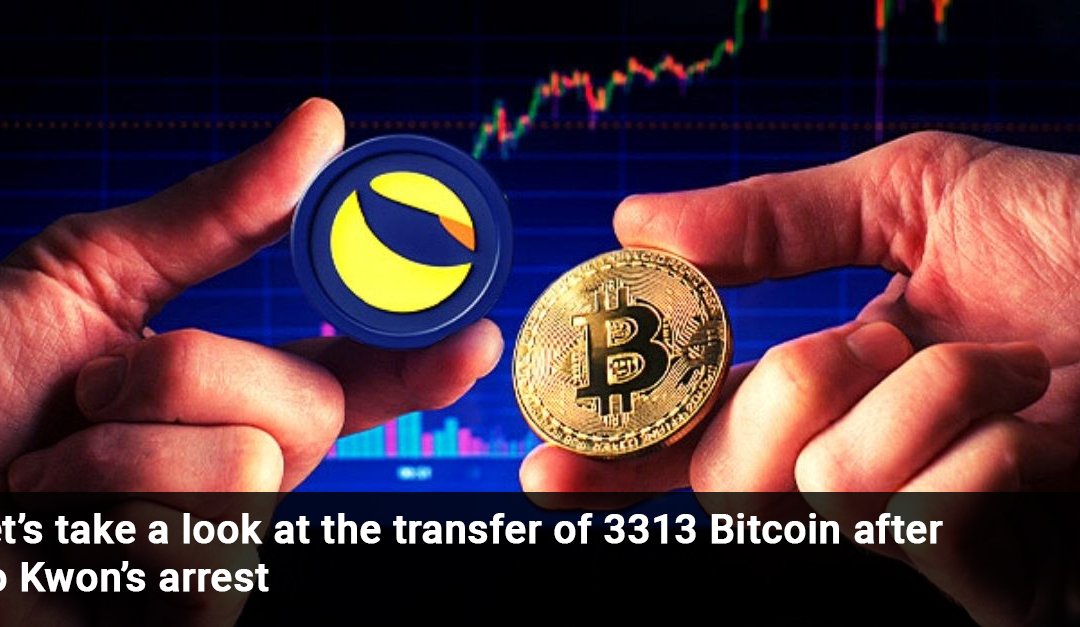
A new dilemma has presented itself in the case involving the transfer of Bitcoin. As the reports suggested, a transfer of Bitcoin worth 69 million dollars has been discovered. This Bitcoin was transferred from that Luna Foundation guard to two crypto exchanges that are functioning outside the South Korean Territories. It has also been found that this transfer was done within a short span since the warrant was issued against Kwon.
What were the steps taken to correct it?
After the above-mentioned detail came to light, the South Korean entities took several steps to make it right. For example, they froze the Bitcoin that was transferred. After a thorough investigation it was also discovered that after the issue of the warrant on the 14th of September, the LFG made a wallet on the Binance platform, from who h the transfer took place. This transfer was done from LFG to two coin exchanges, namely Kucoin and OKX wallet.
The transaction that was done from LFG was not a one-time process but that occurred continuously for three days. The Kucoin wallet received almost as many as 1354 Bitcoin whereas the OKX wallet received almost 1959 Bitcoin which amounted to 39 million dollars.
How has the investigation been carried out?
With each passing moment and with each investigation, new information is coming to light that raises all the more questions and suspicion in the minds of people. However, the authorities have been delving deep into the matter and are leaving no stone unturned to get to the root of it all. The authorities involved in the investigation comprise Seoul Southern District Prosecutor’s Office and the Securities Crimes Joint Investigation Team.
After the investigation, they ordered both wallets to immediately freeze the assets they have received. The former agreed to the urges whereas the latter contested them by simply ignoring them.
Do Kwon and his involvement in the case
After the allegations that came to light and led to the arrest warrant, Do Kwon has reportedly commented that he was not hiding from the officials and that he was in constant communication with government officials. The huge transfer of money that was carried out from the LFG account just after the issue of the warrant, raised suspicion of that money being used as an evacuation fund.
It has been stated by the officials that whenever such an event occurs that involves sending and receiving money, it is most probably used for illicit activities or to cover up such activities.
Conclusion
Even though Kwon has denied any accusations that were brought against him, the government officials are still looking into the matter to bring the real truth to the public. It is the first and foremost priority to further the investigation necessary as well as put restrictions on the use of funds by Kwon. This step has been taken to put an end to all of the illegal activities done by Kwon, at least until the investigation is over.