Mining Bitcoin and other digital currencies is become quite difficult right now and it has developed from something people could do sitting in their apartments. It has turned into a costly task, requiring specific equipment and it keeps on being staggeringly energy-intensive. This fairly conflicts with one of the first principles of blockchains which is that they ought to be decentralized. The Ravencoin project addresses something of an endeavor to counter these things and to make it workable for anybody with a simple PC to do the mining, issue the tokens, and then transfer assets.
Why Ravencoin activity increased?
The activity related to Ravencoin had proactively increased because proof-of-work miners are now searching for choices, as mining Ethereum or BTC will soon not be a choice for them. The miners of Ethereum are hoping to proceed with their operations after the Ethereum blockchain changes to a proof-of-stake algorithm so they can mine Ravencoin.
For those who don’t know about the Ethereum merge, the merge is an Ethereum upgrade that was being planned for quite a long time. The main purpose of the upgrade is to improve the network and make it better for its users. This update is being considered as one of the most important ones that can be very beneficial for the whole ecosystem and can completely change it. This may also have long lasting effects on the whole crypto market.
The Merge will indeed merge the Ethereum mainnet with Beacon Chain. As of now, the two chains exist in parallel and the Ethereum mainnet, which presently utilizes a component called proof of work, is handling all the exchanges. After the most awaited merge, the Ethereum mainnet will shift from proof of work to the Beacon Chain’s proof of stake mechanism. The proof stake is a type of consensus mechanism that differs from the conventional proof of work.
Currently, Ethereum utilize the energy-intensive proof-of-work mechanism. In the past, Ethereum mining was profoundly productive and profitable as the always growing ecosystem expected a large number of miners to keep up with the network, the expense of which exceeded millions of dollars in just the equipment.
After the ETH merge, the miners will be left with not many choices. They can either surrender their mining business and start staking ETH or begin mining other blockchains. While Ravencoin isn't too popular or as utilized as the second biggest digital currency by market capitalization, it tends to be mined with rigs that utilize graphics processing units (GPUs).
Ravencoin's hash rate has expanded fundamentally this month. It was observed expanding from 2.79 Th/s on September 6 to 6.46 TH/s as of press time. Its network difficulty additionally multiplied from 37.78k to 83.12k.
As we all know that the merge in Ethereum blockchain just took place on 15th Sep and changed a lot of things. The change in the ETH blockchain has not just affected itself but also the entire crypto market.
The merge is basically an Ethereum upgrade that was being planned for quite a long time. The main purpose of the upgrade is to improve the network and make it better for its users. This update is being considered as one of the most important ones that can be very beneficial for the whole ecosystem and can completely change it. With the merge, Ethereum mainnet just got shifted from proof of work to the Beacon Chain’s proof of stake mechanism. The proof stake is a type of consensus mechanism that differs from the conventional proof of work.
Effects of Merge in ETH Miners:
Since the blockchain is now fully shifted to PoS mechanism, the miners also faced some major changes. For all the Ethereum miners, it has become progressively difficult to make money after the merge as huge number of miners is making their ways towards other coins.
Thursday, 15th Sep, Ethereum, which is the world's second-biggest blockchain network, changed its consensus algorithm from PoW to PoS to support productivity and lower energy utilization. In any case, the software update - named the Merge- likewise implied that miners were not generally expected to secure the whole network, thus rig operators moved their machines to other PoW blockchains. GPU mining was seen dead within a time span of just 24 hours after the merge took place. The three biggest GPU chains have exceptionally low profits, and the main coins showing profits have no market cap or liquidity.
The hashrate, or power that is used to mine PoW altcoins like ethereum classic and ravencoin got doubled in a few hours after ETH merge took place. Along with rising hashrate, the troubles for miners are rising as well. This means that the ETH miners are less likely to effectively mine a block and receive the block reward.
The reward for mining an Ethereum Classic (ETC) block 24 hours prior was ETC 0.0186484 or around 70 cents, however a check after the merge indicated that the reward went down to just ETC 0.00030658 which is not more than around 11 cents. The merge that took place is just the first step in the Ethereum's blockchain. Ether miners are trying hard to stack up their losses by moving to other digital currencies, for example, Ethereum Classic and Ravencoin. There is a long way for ETH blockchain to become a mature system and even after the merge, there are many things left.
The Ethereum Merge is one of the most anticipated upgrades in the global crypto platform right now. The blockchain's switch to the proof-of-stake (PoS) consensus mechanism will increase scalability and lower power consumption and lower fees.
Though, ETH is not the only cryptocurrency that is going to perform the network's switch to PoS. The Merge will also affect a few other coins.
Ethereum Classic (ETC) :
Due to the shift to the PoS consensus mechanism, the network miners will be out of work, and their expensive mining arrangements will be unused. So, miners are searching for other blockchains to divert their resources and can continue earning rewards through mining. Ethereum Classic is one of the greatest platforms for these minings.
Ethereum Classic is the original entity of the Ethereum blockchain. It was forked in between the discordance around The DAO. The DAO was an investment organization based on Ethereum. It was hacked after hackers found a bug in its platform.
After the hack, several users wanted to fork the network and compensate the users who lost their capital. Though, a separate group stood against that idea. It was stated while disagreeing with the idea that users should suffer the consequences of unhealthy research investments.
The discord resulted in the fork of the Ethereum blockchain. Ethereum evolved as the new network. On the other hand, Ethereum Classic acted as the original chain.
Ethereum Classic is a blockchain based on proof-of-work. It expects to remain that way until the anticipated future. As a result, ETH miners get it as a durable platform after the Ethereum mainnet switches to the PoS consensus mechanism. That is one of the reasons why the price of ETC has increased over the last few months.
Ethereum Name Service (ENS) :
ENS is a naming system. It is based on the Ethereum blockchain. It provides services to users and businesses to convert machine-readable private keys into human-readable names.
The mechanism is the same as what Domain Name Service (DNS) does. It converts complicated IP addresses to easy-to-remember website URLs. Hence, ENS performs a long way to simplify decentralized transactions.
ENS increased 23 percent over the last three months. It sat at $10.8 at the start of July. Then it jumped to 13.34 at the time of writing. ENS hit a high of $18.1 at the start of August. Though, it lost most of its value due to the recent clutter in the global crypto market.
Notably, ENS is expected to see a rise with the protocol recording 2,744 ETH ($4.7 million) in revenue in August.
Firstly, the company did not utilize the impact of The Merge on rising sales. The switching from PoW to PoS cannot be considered a potential reason for the platform's rise over the last couple of months.
Lido DAO (LDO) :
After The Beacon Merge, miners are expected to be replaced by stakes. The important thing is that a user needs to have at least 32 ETH to participate in the staking activity. That is worth around $52,000 currently.
Platforms like Lido have the opportunity to come into the market. The platform offers stake pool services. In that platform, several underfunded stakers can accumulate their ETH and start staking as a collective.
Notably, Lido is the biggest staking platform in terms of value locked into Merge's executive smart contract. Recently, it contributes nearly 30 percent of the total staked value.
It is expected that if the Merge succeeds, Lido could get more stakers to come into their system. LDO has already jumped more than 106 percent over the last three months. LDO hit a high of $3.059 in mid-August.
Are you looking for long term sustainability for your investments? If yes, then Fortunas Finance is on your rescue.
Fortunas Finance is building a smart Defi ecosystem, one that has a fundamental grasp on the principle of supply and demand. By using a smart risk-reward structure, they are building an exciting protocol that will reward holders for years to come. All of this while building multiple revenue streams and garnering investor trust. In short, it is the only protocol that gives you the power to directly increase your return on investment, truly rewarding long-time holders while ensuring long-term sustainability. Exciting, right?
Fortunas Finance allows you to choose your APY (Annual percentage yield). With their unique DRP protocol, anyone can tailor a strategy based on their risk tolerance, be it aiming for a safe return, or risking time and resources to fight for higher returns.
How the investments are sustainable?
Fortunas Finance high APY is reserved only for strategic and dedicated investors. This prevents whales from hoarding tokens passively and crashing the protocol whenever they feel like it. The protocol also ensures that the APY is sustainable for many months to come, as only the best investors will be able to achieve a high return on investment. This means that your investment is safe and there is no major risk of crash.
Benefits and Returns for Investors:
There are many benefits waiting for the people who are going to invest in this project. So, let’s talk about them one by one.
In Fortunas Finance, a high APY can only be earned through long-term holding and clever resource management. This gives whales a major incentive to hold and buy rations, while reserving the high yield for the most dedicated investors. So, there is always a better reward waiting for long term investors.
In most protocols, the Treasury will be invested elsewhere in order to generate revenue for the protocol. This puts the protocol at the mercy of other projects. However, Fortunas Finance's treasury will consist of both BUSD and $FRTNA, which would be used to grow the protocol. This means independent treasury and a better protocol growth.
Unlike other rebasing protocols, Fortunas Finance's smart contract will not have a built-in dumping mechanism in its smart contract. Fortunas Finance treasury will only consist of $FRTNA/BNB/BUSD from the buy fees, and $FRTNA tokens from the sell fees.
In order to sustain your APY, investors require to purchase rations to keep their $FRTNA in battle. All $FRTNA used to purchase rations will be burnt in order to reduce the total circulatory supply, keeping the protocol healthy.
All these things indicate that this project has a very high potential to grow further in future and investing in it can be a wise decision at this time. Not just this, just recently, Fortunas Finance partnered up with Wizard Financial and came forward with an IFO that took place on 12th Sep. The IFO went crazy and it filled 100% within just a few hours. On 13th Sep $FRTNA got listed on Knightswap and Pancakeswap and trading went live with the listing price of $0.00689.
If you are interested in buying $FRTNA click here: $FRTNA
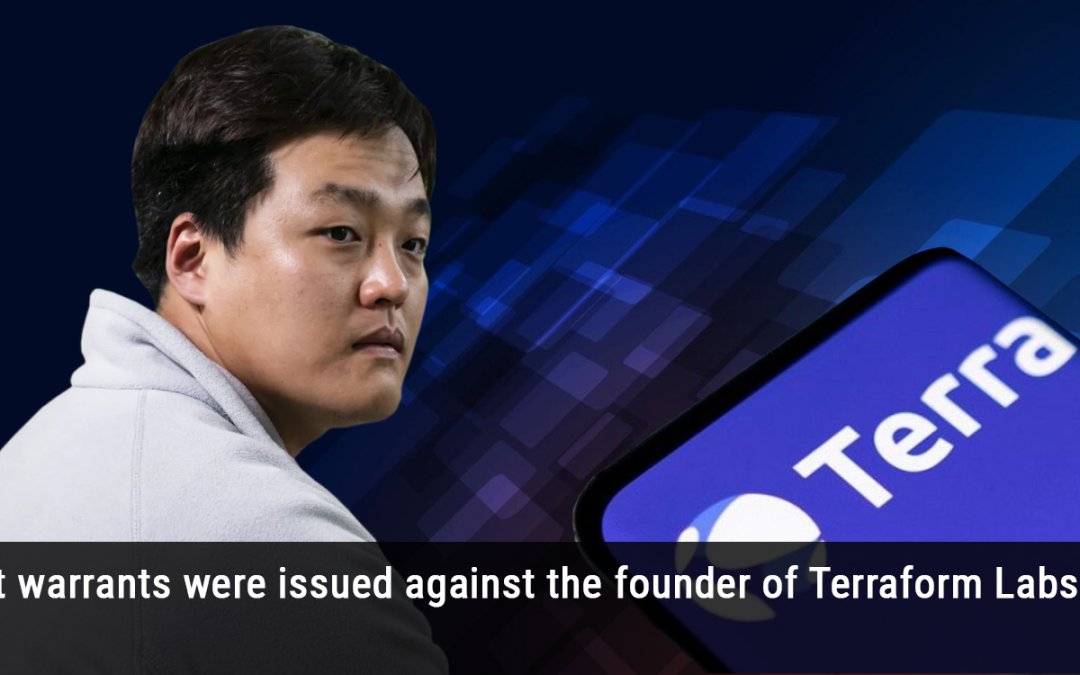
Investigations have been conducted against Terraform Labs, its founder Do Kwon, and other people associated with the company in many jurisdictions across the globe. At the beginning of this year, Terra [LUNA] and its native stablecoin UST both saw a significant loss in value. This led to significant losses for those who had invested. The same event also had a domino effect on the ecosystem as a whole, and as a result, the market as a whole became choppy.
According to the most recent information, the police in South Korea have filed a warrant for Do Known, which indicates that they plan to arrest the person responsible for founding Terra. According to a text message sent by the prosecutor's office, the court in Seoul issued an arrest warrant for Do Kwon and five other individuals.
What exactly are the Terraform Labs?
The Terra blockchain network and the Anchor inter-chain Defi program were both developed by Terraform Labs. Anchor pools emissions from proof-of-stake (PoS) blockchains, stabilizes them and then passes them on to depositors as a set, high-yield reward.
Terra is a blockchain technology that enables price-stable global payment networks to be powered by stablecoins that are tethered to fiat currency. According to the company's white paper, Terra is a cryptocurrency that combines the censorship-resistance of Bitcoin (BTC) with the price stability and widespread acceptance of fiat currencies, and it also enables rapid and economical transactions.
Terra's development began starting in January 2018, and the platform's mainnet went live in April 2019 (officially). It plans to bring out other alternatives, but as of September 2021, it provides stablecoins that are tied to the United States dollar, the South Korean won, the Mongolian tugrik, and the basket of currencies that make up the Special Drawing Rights of the International Monetary Fund.
The price of the stablecoins that are associated with Terra's protocol is maintained with the help of its native token, LUNA. The functionality of a governance token is given to the LUNA cryptocurrency since holders can propose and vote on governance proposals.
Infractions of the Capital Market Act on the part of Terra
In this context, it is important to keep in mind that a local media outlet not so long ago claimed that South Korean authorities were examining whether or not the Terra ecosystems have qualities that are typical of securities. Notably, the investigating team working on the Terra case at the Seoul Southern District Prosecutor's Office was evaluating the securities qualities of Luna by referencing examples from other countries.
It was alleged that the prosecutors had specialists in virtual assets brought in so that they might hear multiple viewpoints. In addition to this, they used monetary authorities such as the Financial Supervisory Service as reference individuals.
They stated yesterday that if the prosecution discovers that Luna and Terra have securities properties, they might be prosecuted for breaking the Capital Market Act for engaging in unfair trading, such as manipulating market prices. Bloomberg reported the following to confirm the rationale for the issuing of the warrants: Earlier in the day, it was claimed in a local newspaper that the warrant was associated with a breach of the regulations governing the stock market.
Final Thoughts
At the moment, virtual assets are not considered to be securities; hence, the Capital Market Act does not apply to them. In a circumstance in which the conversation has advanced significantly, there is a strong likelihood that the Luna-Tera case will become Korea's "leading case," regardless of what charges are charged. This potential exists even though the discussion has proceeded quite a little.
Only the charges about Coinone's margin trading were reviewed by the appropriate authorities in 2018, and since then, nothing more has been done in this regard. Therefore, if the relevant public authorities investigate it, it will surely have a crippling impact on the situation.
It seemed up to this point that the regulatory bodies in charge of finance were adopting a cautious position against Terra and its boss. The issuing of the most recent arrest warrant, on the other hand, provides some indication of a shift in position.