Since the launch of Bitcoin (BTC) in 2009, there has been a steady increase in the pace at which new cryptocurrencies are being distributed into circulation. When one considers the growth of the cryptocurrency industry, one could be curious about the kind of coins that would be most advantageous to acquire. It might have something to do with the accessibility of the currency, the capacity to meet the needs of the community it serves, and the ability to satisfy token holders as well as buyers.
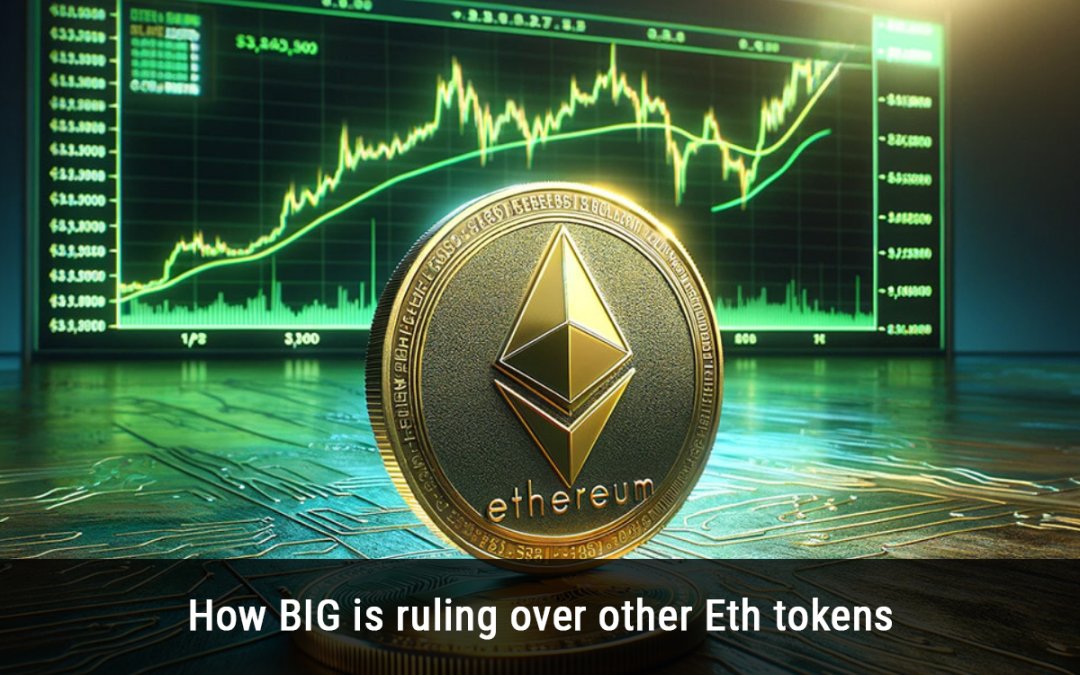
This is the objective that the Big Eyes Coin (BIG) project, together with its community, is working toward. Even while The Sandbox (SAND) and Wrapped Bitcoin (WBTC) have been known to accomplish that throughout the years, the costs associated with using their blockchain network are still rather high, which deters many crypto users and enthusiasts.
The commitment of the Big Eyes Coin (BIG)
The Big Eyes Currency, often known as BIG, is a meme coin whose community-driven platform intends to generate wealth for the Defi ecosystem. BIG stands for "Big Eyes Coin." Big Eyes has a lot more to offer than simply its adorable appearance, and its community will work to develop the blockchain ecosystem and encourage the expansion of non-fungible currencies (NFTs).
The community is the driving force behind the Big Eyes Coin (BIG), and as a result, their token does not impose any taxes or fees on transactions. In addition, their token is decentralized, and since the majority of the tokens are owned by the community, token holders can vote on significant issues relating to the project's long-term viability. The Big Eyes community, with its forward-thinking platform and a keen awareness of what's going on around the globe, has pledged 5% of its token to the cause of preserving the marine life in the ocean.
The Features and Transactions of the Sandbox (SAND) Gaming Come at a Very High Price
The Sandbox is a virtual Blockchain gaming world that has a rating of 40 on the currency market with a minimum circulating quantity of 1,497,270,108 SAND coins. It is built on the Ethereum blockchain and allows users to purchase, trade, and develop digital assets inside a game environment. Launched in 2011 by the Chief Executive Officer (CEO) Pixowl, the utility token The Sandbox (SAND) is now being used by the Sandbox (SAND) to create a decentralized ecosystem that supports the growth of the gaming community. This ecosystem was created with the help of the Decentralized Autonomous Organization (DAO).
The play-to-earn method of the Sandbox (SAND) token enables users to be both producers and players, and it also contributes to the transactions that are carried out on its platform. Despite being an Ethereum-based (ERC-20) token that allows users or gamers to stake on matters that concern them and makes the token more secure, transactions that are done with the Sandbox (SAND) token are large and frightening in comparison to transactions that can be done with Big Eyes Coin (BIG), which does not charge any fees or charges for making transactions. Because of this, the Sandbox (SAND) coin seems to have a high price tag.
Wrapped Bitcoin (WBTC) differs from other tokens
Wrapped Bitcoin (WBTC) is a variant of Bitcoin (BTC) that was first introduced through the blockchain of Ethereum (ETH). To carry out these transactions, it makes use of decentralized exchanges (DEX) and decentralized finance (Defi). Wrapped Bitcoin (WBTC) owners are permitted to trade their coins on Uniswap (UNI), Sushiswap, and other similar platforms due to the coin's market capitalization of 19. Wrapped Bitcoin (WBTC) may also be used to perform leveraged transactions on Ethereum (ETH), as well as other ERC-20 tokens and a variety of stablecoins.
Wrapped Bitcoin (WBTC) is a cryptocurrency that traders may use to ensure the safety of their funds when trading. The use of smart contracts enables a non-custodial procedure that is being described here.
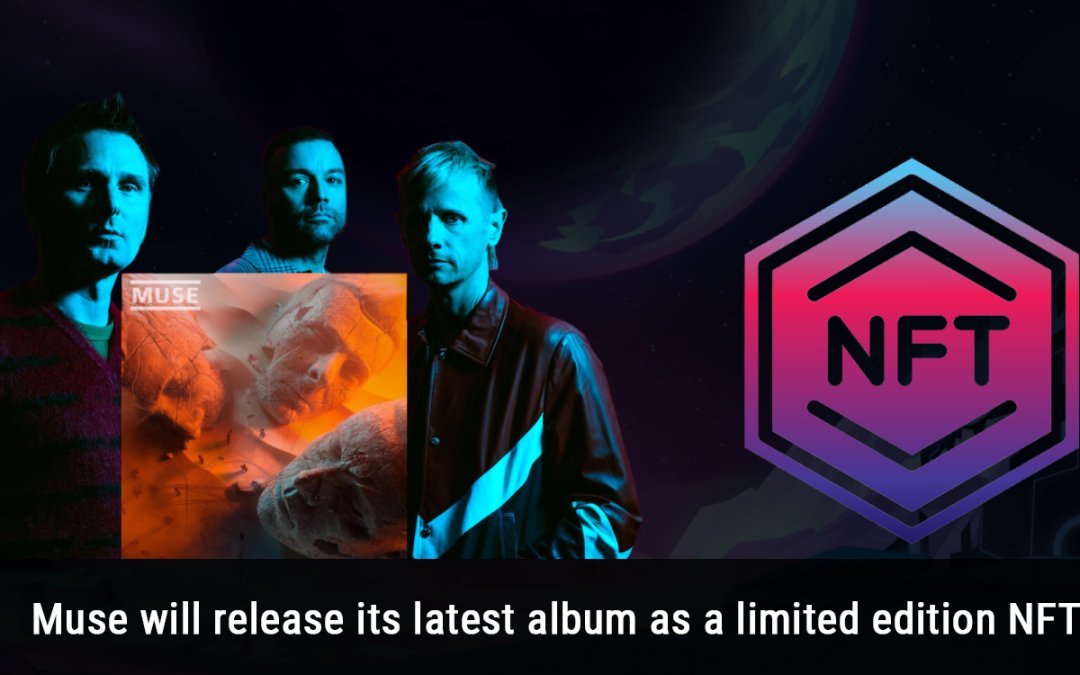
Muse has achieved a first by being the first artist to have an album sold in the form of an NFT to debut at No. 1 on the UK Album Chart (non-fungible token). The Devon rock trio was able to accomplish this with the release of their ninth studio album, titled Will of the People. The album was made available in a variety of formats, including vinyl, digital, cassette, and CD, in addition to a limited edition NFT "digital pressing." It was just released last week.
The first NFT album
Will of the People outsold the rest of the top 10 albums combined in its first week of release, selling 51,500 copies. However, only a small portion of those copies was NFTs since the digital printing of the record was restricted to 1,000 copies globally. This means that if all the copies were sold in the United Kingdom, they would only account for a maximum of 1.96% of the UK sales.
Will of the People wasn't the first charting album to be published in NFT format, however; Manchester rapper Aitch beat Muse to the punch with his first album Close to Home, which was released a week before Muse's record and peaked at No. 2 on the list last week.’
Will of the People
According to a study that was published by the Guardian a month ago, NFT records have been eligible for the charts for a few months already; nevertheless, it is only now that they are being sold by stores that return charts. Will of the People was distributed to customers via the "eco-friendly" NFT platform Serenade, but Aitch's Close to Home NFT was offered for sale on LimeWire, which was an NFT marketplace whose name and branding were licensed from a file-sharing service that is no longer in operation.
Will of the People was released as a digital pressing, which consisted of a downloaded version of the album that had alternative cover art and was digitally signed by the members of Muse. Unfortunately, this pressing is no longer available. The band now has the same amount of top-charting albums as Elton John, Paul McCartney, George Michael, the Prodigy, and the Killers thanks to the success of their seventh studio album, which debuted at number one.
What makes the event so significant?
The fact that the triumph of Muse's 'Will of the People album occurred only a few short months after the United Kingdom granted the go-ahead for NFT record sales to be included in the official music charts is an important factor that contributes to the importance of the monumental event. It has been confirmed by Serenade, the company that distributes the record, that NFTs are considered to be an innovation in the music industry.
The album will be a "Digital Pressing," which is a completely new music format that is limited in edition and collectible. It will feature the singles "Won't Stand Down" and "Compliance," and it will be a world-first release. Since album streams were initially included on the Official Albums Chart in 2015, this Digital Pressing will be the first new format to become eligible for inclusion on the chart.
In addition to being downloadable and streamable, Will of the People will also be made available in the more traditional tangible media, including vinyl, CD, and cassette tape. A Digital Pressing is a stand-alone, chart-eligible digital release (as opposed to being a part of a bigger release "bundle") developed by Serenade to satisfy the cravings of superfans for scarcity, unique material, and community recognition.
Final Thoughts
Digital Pressing will not only be able to live on the blockchain and offer web3 capabilities like verifiable ownership and the ability to trade on secondary markets, but it will also accumulate accurate and perpetual royalties for artists, copyright holders, and content owners. These royalties will be paid out to them over time.
In the wake of the passing of Queen Elizabeth II of England, the Ethereum-based NFT project QueenE is launching the last auction for its Gen1 artwork collection. Since the beginning of July, when the initiative first got underway, 73 different pieces of artwork have been made available.
New NFT released
After the death of England's longest-reigning monarch, an Ethereum NFT project that produced dozens of pieces of artwork as a tribute to Queen Elizabeth II over the past two months is currently hosting its final auction for the collection today. The auction comes after the passing of the long-serving monarch.
At the beginning of July, QueenE began holding auctions and offered a single Ethereum NFT picture as a memento in honor of the late Queen. Web3 builders Fabio Sevá, Vinicius Rodrigues, Everton Matumoto, and the pseudonymous Mladen. eth was responsible for the creation of the project, and it was intended to release new parts that were produced procedurally at a consistent pace for as long as the Queen lives.
How did the project begin?
The project took its framework and its code from Nouns, an innovative NFT initiative that auctions a single Ethereum-based profile photo each day and admits bidders into an exclusive club. However, the project gave it a royal twist by offering out lo-fi renderings of Queen Elizabeth II instead. The QueenE auctions used to take place every few hours, however, they have now transitioned to taking place once per day for the most part.
After hearing that the Queen had passed away earlier today at the age of 96, the project made the announcement that the current auction, which is for the 73rd Ethereum NFT in the collection, will be the last one that is made available as a part of the original collection. The QueenE Twitter account has hinted at an upcoming "Gen2" collection, but as of the writing of this article, no more information has been made available.
When is the auction held?
In its current iteration, the project's Twitter profile includes the phrase "Rest in Ethereum, forever." The last QueenE Gen1 NFT now has the highest offer of 0.5 ether, which is equivalent to around $825, and the auction is scheduled to expire shortly before 4 AM Eastern Time on 10th September. The previous record for the highest selling price in ETH for any item in the collection was set on July 27 with the purchase of QueenE #23 for 1.9 ETH, which was equivalent to around $3,275 at the time.
An NFT, or non-fungible token, is a kind of blockchain token that acts as a representation of ownership over an object. This may include digital products like artwork, profile photographs, collectibles, and video game items. In 2021, the market for non-fungible tokens (NFTs) saw robust growth, which resulted in prominent collections fetching selling prices in the eight-figure range.
Final Thoughts
Since it was revealed earlier today that Queen Elizabeth II had passed away, secondary sales of the QueenE NFTs have taken up. At the moment, the floor price—that is, the lowest available item listed on a marketplace—at OpenSea stands at 0.88 ETH, which is equivalent to around $1,450.
As was the case with Nouns, the proceeds from the primary sales of QueenE NFTs are deposited into a treasury that is managed by a DAO, also known as a decentralized autonomous organization. A DAO is a term that describes an organization that exists online and is comprised of individuals who share common interests and whose membership is based on tokens. Members of the DAO can vote on proposals that would put the money, which is now equivalent to $16,650 worth of ether, toward a variety of different projects.
According to a recent release, Bitso, a significant partner of Ripple and an ODL corridor, has formed a partnership with Africhange, a payment system with roots in both Africa and Canada that focuses on remittances. With the use of cryptographic technology, the alliance intends to make it easier for people to send money to each other from Canada and Mexico, as well as to cut down on the fees that end senders have to pay and streamline the whole chain of transactions.
Executives from Africhange have said that selecting a new partner was simple due to Bitso's extensive experience in international financial transactions as well as the company's tight collaboration with Ripple. The relationship ended up being good for all parties involved: Africhange can access a new market on a new continent, and Bitso is provided with the opportunity to both expand its turnover and assist its countrymen who are located outside of the country.
What is Bitso?
Bisto, a cryptocurrency exchange that specializes in Ripple On-Demand Liquidity (ODL), has formed a partnership with Africhange to allow payments across the border between Mexico and Canada. A total of seventy million dollars worth of cross-border transfers from Canada to Nigeria were completed through Africhange. Because Africhange was interested in expanding its service offerings to Mexico, the firm formed a partnership with Bitso, which made it possible for money to be transferred from Canada to Mexico.
Why was the collaboration necessary?
Because there are so many job prospects in Canada, there has been an increase in the number of Mexicans who have chosen to make that nation their permanent home and place of employment, as said in an announcement.
Another instance of a working relationship that seems to be highly amicable is shown below. The money transfer company Africhange, which already has a business worth $70 million in remittances from Nigeria to Canada, is expanding into a new market on a new continent. On the other hand, Bitso sees a chance to expand its own company while also assisting its countrymen living outside of the country.
As of the year 2020, there will be close to 130,000 Mexicans living in Canada; this figure has exploded over the previous two years. At present, immigrants make up about 21% of Canada's total population. These immigrants, who make up 15 percent of Canada's population, are continuously sending money back to their loved ones and family members in their home countries. According to Africhange, a total of $146 million has been transferred to Mexico from Canada as of the year 2022, citing a report that was made available by Data Mexico.
The prominent conclusions of the scheme
The most important takeaway from the recent events is that Bitso is Ripple's On-Demand Liquidity (ODL) corridor in this area and that XRP accounts for sixty percent of the trading activity on the exchange. In addition to the possibility of an extension of the usage of XRP in international financial transactions, we have a scenario in which three continents – Africa, North America, and South America – are connected by a cryptocurrency-based international financial transaction technology.
Obaoye continued by saying that Africhange aims to make it simple for Mexican immigrants residing in Canada to transfer money back to their families and friends in Mexico. This is made feasible by the company's efforts to overcome the primary challenges presented by international settlements, such as the lengthy transaction procedure and the high costs associated with international transfers.
Final Thoughts
Bitso is a leading cryptocurrency start-up in Latin America that has been actively promoting the use of Ripple technology to facilitate international financial transactions. The cryptocurrency exchange worked up with Everest to facilitate international money transfers to Mexico using XRP. Interestingly, Bitso has been a prominent participant in recent XRP transfers that include substantial quantities of cryptocurrency.
The Securities and Exchange Commission (SEC) department that manages corporate disclosure filings is getting two new offices: the "Office of Crypto Assets" and the "Office of Industrial Applications and Services." These two new offices will join the seven existing offices that are already part of the department.
What will the SEC department do now?
The disclosure Review Program (DRP) of the Department of Corporate Finance collaborates with the Securities and Exchange Commission (SEC) to assist corporate finance and cryptocurrency filings. In a recent statement, the director of the Division of Corporation Finance, Renee Jones, revealed that the Securities and Exchange Commission (SEC) is planning to open up two more offices by the fall of this year to deal with the surge in the number of filings about industrial applications and cryptocurrency assets.
The Securities and Exchange Commission (SEC) has decided to make this step because it has become more difficult for it to evaluate cryptocurrency filings at the same time as a greater number of larger participants are planning to increase the size of their crypto asset holdings.
These two offices will be known as the "Office of Crypto Assets" and the "Office of Industrial Applications and Services." The Securities and Exchange Commission (SEC) is currently in the process of establishing these two offices in addition to the seven specialized offices that are already in operation. "To address the specific and growing file review concerns associated with crypto assets" is one of the goals that the Office of Crypto Assets plans to pursue.
What is the current agenda of Industrial Applications and Services?
In the meanwhile, the office of Industrial Applications and Services is said to be concentrating on non-biotech, non-pharmaceutical, and non-medicinal items coming from the life sciences department. It is anticipated that the opening of two additional offices, as well as the hiring of specialized employees, would result in a quicker evaluation of the filings, which will in turn lead to corporations investing in crypto assets sooner than was originally anticipated.
The establishment of two new SEC offices in the United States has been hailed as a positive development by both businesses and the Securities and Exchange Commission. It is important to note that certain corporations, such as MicroStrategy, are seeking to increase the size of their cryptocurrency portfolio by investing an additional $500 million into Bitcoin. The business has submitted the review application to the SEC in preparation for its potential sale of class A stocks, which would increase the company's cryptocurrency holdings.
MicroStrategy's total Bitcoin holdings could not exceed $3.97 billion in value; they presently have 129,699 BTC in their possession. The current downturn in the market has resulted in their assets suffering losses. Because of this, the corporation has the intention of purchasing further. Following the opening of these new offices, the Securities and Exchange Commission (SEC) is anticipated to place a greater emphasis on "resources and experience to address the unique and changing file review concerns linked to crypto assets."
Final Thoughts
In recent years, cryptocurrencies and other digital assets have seen a meteoric rise in popularity. At the same time, they are becoming increasingly intertwined with the regulated financial system. As a result, policymakers are now faced with the challenge of monitoring risks in a sector that is largely unregulated.
The conflict in Ukraine, aggressive monetary policy tightening, and decades-high inflation combined to have a devastating effect on global risk sentiment in 2022, which resulted in a precipitous decline in demand for cryptocurrencies.
Several cryptocurrency companies have been accused of engaging in illegal activities, including money laundering, and there have been breaches of consumer privacy in the United States, which is the most important market for digital assets. These factors have all contributed to a decrease in demand.