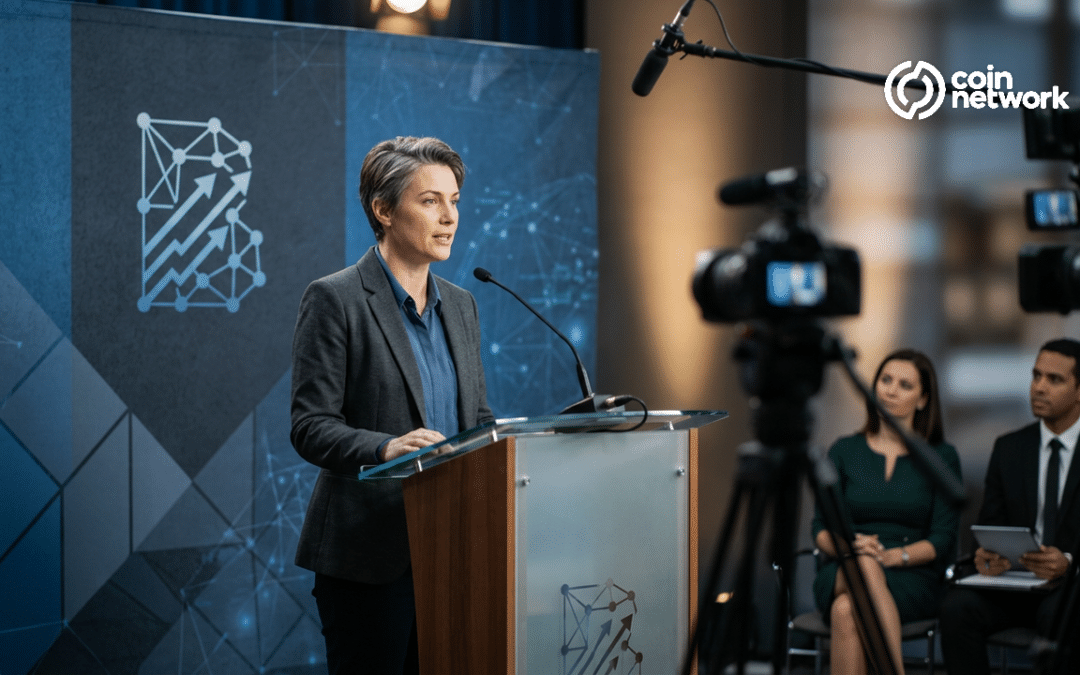
Warsh AI Optimism Lifts Emerging-Market Stocks as Fed Chair Stays Silent on October Rate Decision
Emerging-market stocks climbed on Friday, October 16, 2026, after Federal Reserve Chair Kevin Warsh delivered optimistic remarks about artificial intelligence during the IMF and World Bank annual meetings in Bangkok. The MSCI Emerging Markets Index gained 1% following his comments, according to Crypto Briefing.
The rally came even as the US central bank maintains a tightening stance. Warsh's positive framing of AI as a historic economic shift gave investors fresh reason to buy into emerging-market equities, which trade at roughly 10 times forward earnings compared with nearly 20 times for US stocks, according to Crypto Briefing.
Warsh AI Optimism Draws Investor Attention in Bangkok
Speaking at a public dialogue with IMF Managing Director Kristalina Georgieva, Warsh said AI investment would bring enormous benefits to the US economy, according to Asia Economy. He described the technology as a transformative force for productivity and long-term wealth creation.
Warsh said AI "will bring the most significant changes to the US and global economy in my lifetime," according to The Korea Daily. He added that "AI will transform the real economy, improve productivity, and increase wealth, the process will not be smooth," noting that the short-term impact on employment remains uncertain.
He also warned that AI would affect demand before supply. "AI is going to hit the demand side of the economy before the supply shock," he said, according to CNBC-TV18. Warsh cautioned that an AI investment boom could create potentially severe inflationary pressure in the short term, even as he projected longer-run productivity gains that could benefit both the US economy and global markets, according to Crypto Briefing.
No Rate Signal From the Fed Chair
Warsh declined to offer any guidance on upcoming interest rate decisions, according to Crypto Briefing. During the fireside chat with Georgieva, he indicated that policymakers would assess conditions meeting by meeting and made clear the central bank would not provide advance signals about its rate decisions, according to Coinpedia.
Warsh underscored the central bank's pledge to deliver price stability and emphasized how much weight he places on institutional credibility, according to Crypto Briefing. Warsh said that since the September FOMC meeting, "the world has broadly conformed to our expectations," according to CNBC-TV18.
On September 16, the central bank lifted its benchmark rate by a quarter point, setting a target range of 3.75% to 4.00%, according to Crypto Briefing. CNBC-TV18 reported that the increase marked the central bank's first rate rise since 2023. Warsh explained that officials had to pull back monetary accommodation in order to rein in price growth, according to Coinpedia.
Rate-Hike Bets Fall After Warsh AI Optimism
Following Warsh's remarks, the implied odds of an October Fed rate increase dropped to 15%, down from above 25% the previous day, according to Bloomberg as cited by Asia Economy. The Korea Daily, also citing Bloomberg, reported the probability dropped from 30% to 17% in the fed funds futures market. The two reports offered slightly different figures for the shift in rate-hike expectations.
Charu Chanana, chief investment strategist at Saxo Markets, told Bloomberg that "some bets on a Fed rate hike are being unwound, as Warsh did not commit to further rate increases." She added that "after inflation data came in stronger than expected, his comment that he 'does not prejudge the outcome of meetings' is not helping the dollar," according to Asia Economy.
Wei Liang Chang, a macro strategist at DBS Bank, said investors took comfort from Warsh restating his view that AI would lift productivity over the medium term, adding that it helped ease concerns over consecutive Fed rate hikes, according to The Korea Daily.
Even though Warsh gave no indication of the central bank's next step, CME FedWatch data showed traders assigning an 87.3% probability to the Fed leaving rates unchanged at its October meeting, according to Coinpedia.
Inflation Data Complicates the Fed's Path
US inflation data released earlier in the week came in above expectations, heightening market concerns, according to Asia Economy. In September, the core Consumer Price Index climbed 0.33% from the prior month, a second straight month of elevated readings, according to Asia Economy. CNBC-TV18 confirmed that core prices, a measure that strips out food and energy costs, posted a 0.33% monthly gain for a second consecutive firm reading.
Thursday's producer price figures also came in strong, focusing attention on the chance of additional Fed tightening, according to Asia Economy. Crypto Briefing reported that overall prices rose 0.6% month over month in September.
The Federal Open Market Committee meeting will take place on October 27 and 28, less than a week before the US midterm elections in November, according to CNBC-TV18. The Wall Street Journal observed that the Fed risks political backlash whether it chooses to raise rates or leave them unchanged, according to Asia Economy. The Fed's communication blackout began on Friday, according to CNBC-TV18.
Emerging-Market Rally Extends Across Asia
Following Warsh's remarks, US stock futures rose and gains in Asian markets widened, according to Asia Economy. South Korea's KOSPI opened 1.58% higher than the prior session and had extended its advance to 3.44% by Friday afternoon, according to Asia Economy. The Korea Daily reported the KOSPI rose over 4% during the session to reclaim the 5,700 level after plunging 7.57% the previous day.
China's Shanghai Composite Index was up 0.42%, while the Hang Seng Index rose 1.03%, according to Asia Economy. In Tokyo, the Nikkei 225 added 1.88%. Nasdaq 100 futures stood at 30,197.25, a gain of 0.18%, as of Friday afternoon, according to CNN as cited by Asia Economy. S&P 500 futures were up 0.15%, while Dow Jones 30 futures rose 0.12%.
The KOSDAQ index surged over 5% during the session, triggering a program trading sidecar at 12:55 PM, according to The Korea Daily. Tech and semiconductor companies in Taiwan and South Korea have each seen earnings lifted by spending tied to AI, according to Crypto Briefing.
Not all emerging markets benefited. Stocks in Indonesia dropped sharply after MSCI indicated it was weighing whether to strip the country of its emerging-market classification, according to Crypto Briefing.
Fed Plans AI Field Hearing in San Francisco
Warsh announced plans for a November 16 field hearing in the San Francisco Bay Area, where officials will examine how AI affects productivity and employment, according to Asia Economy. CNBC-TV18 confirmed the field hearing date.
In June, Warsh established five external expert task forces to study key areas related to monetary policy, according to Asia Economy. The task forces are expected to submit policy recommendations to the Fed by the end of this year.
Warsh also projected that AI will drive major changes in central bank policy decisions, according to The Korea Daily. He said the technology will fundamentally alter the operation of monetary policy, such as helping central banks analyze data better.
Conclusion
Warsh's remarks in Bangkok gave emerging-market stocks a lift on October 16, 2026, with the MSCI EM Index gaining 1% as investors welcomed his optimistic framing of AI's long-term economic potential. The Fed chair offered no signal on the October rate decision, and rate-hike expectations fell in futures markets following his comments. The next concrete step is the FOMC meeting on October 27 and 28, where policymakers will decide whether to raise rates again after September's increase to a range of 3.75% to 4.00%.
Frequently Asked Questions
What did Fed Chair Kevin Warsh say about AI at the IMF-World Bank meetings in Bangkok?
Warsh said AI would bring enormous benefits to the US economy and described it as one of the most consequential changes to the US and global economy in his lifetime. He projected long-term productivity gains and wealth creation but warned the transition would be bumpy, with uncertain near-term effects on employment and potential short-term inflationary pressure from AI investment.
How much did the MSCI Emerging Markets Index rise after Warsh's remarks on October 16, 2026?
The MSCI Emerging Markets Index gained 1% after Warsh's upbeat comments about artificial intelligence at the IMF and World Bank annual meetings in Bangkok, according to Crypto Briefing.
Did Kevin Warsh signal a rate hike at the October FOMC meeting?
No. Warsh declined to offer any guidance on upcoming rate decisions and said policymakers would assess conditions meeting by meeting. He made clear the central bank would not provide advance signals about its rate decisions, according to Coinpedia.
What is the current Fed funds rate after the September 2026 hike?
On September 16, the central bank lifted its benchmark rate by a quarter point, setting a target range of 3.75% to 4.00%, according to Crypto Briefing. CNBC-TV18 reported this marked the first increase since 2023.
When is the next FOMC meeting and what are the rate-hike odds?
The FOMC meets on October 27 and 28, less than a week before the US midterm elections. Bloomberg reported the implied odds of an October rate increase dropped to 15% after Warsh's remarks, while CME FedWatch data showed traders assigning an 87.3% probability to a hold, according to Coinpedia.
Sources
- Warsh Remarks Lift U.S. Nasdaq Futures 0.18%; Asian Stocks Also Rally on Relief (Update)
- Fed Chair Kevin Warsh — AI Optimism Eases US Rate Hike Fears
- Kevin Warsh Gives No Hint on October Fed Decision, Says AI Path Will Be “Very Bumpy”
- US Fed Chair Kevin Warsh offers no signal on October interest rate decision
- Fed chair Warsh’s AI optimism lifts emerging-market stocks