BitGo Labs Launches to Build Crypto’s Next Breakout Application

BitGo Labs Launches to Build Crypto’s Next Breakout Application

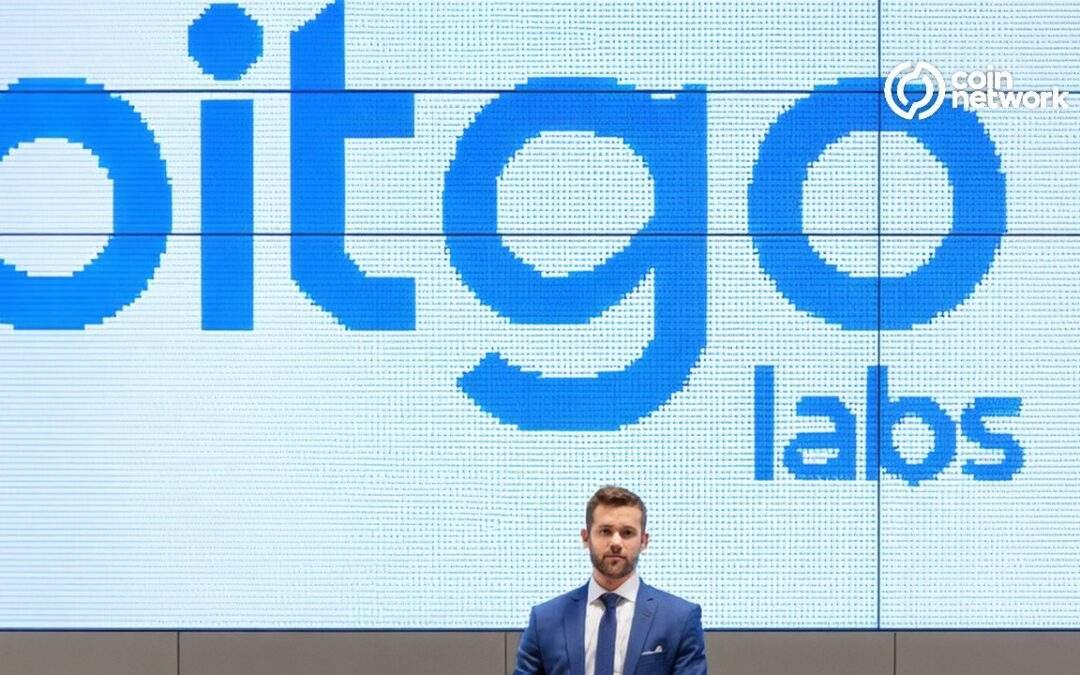
BitGo Holdings, Inc. launched BitGo Labs on Thursday, a research and innovation unit designed to build the next breakout application for digital assets. The digital asset infrastructure company, which trades on the New York Stock Exchange under the ticker BTGO, said the new division will focus on designing, launching, and proving out real applications on top of its financial technology.

The launch marks an expansion beyond the company's established business lines in crypto custody, trading, staking, financing, and settlement. By creating a dedicated unit for research and development, the company aims to explore new use cases for blockchain technology while leveraging artificial intelligence to accelerate development and introduce consumer services.

Focus on AI and Crypto

BitGo Labs will initially concentrate on the intersection of artificial intelligence and cryptocurrency. The unit plans to explore how crypto infrastructure can support autonomous AI agents, including capabilities for micropayments, instant settlement, and digital asset custody.

According to Crypto Briefing, the initiative arrives as developers in the artificial intelligence field increasingly examine autonomous agents that can handle transactions, buy services, and oversee financial activities with limited human intervention. BitGo said traditional financial technology cannot support this next leg of innovation, positioning its infrastructure as the solution for these emerging needs.

The company believes that as AI progresses from simple chatbots toward autonomous agents capable of researching, negotiating, hiring, and purchasing on the open internet, new opportunities will emerge for people to contribute and earn. BitGo Labs maintains that some of crypto's most important use cases will be found in this convergence and remain waiting to be built.

The unit's mandate includes identifying specific points where blockchain rails can serve machine-driven economic activity. This involves examining how autonomous software might utilize digital asset custody solutions, instant settlement mechanisms, and micropayment channels to conduct transactions without human oversight.

First Projects and Gokubu

The new division launches with several initial projects that put its approaches into practice. The first consumer product is Gokubu, an application featuring an AI-powered payment card that works wherever Visa is accepted.

Gokubu offers users a personalized AI financial assistant that helps optimize spending patterns, automatically identifies superior rewards programs, and assists users in extracting additional value from their purchases. According to BitGo, the service is already live and accepting registrations.

Beyond its initial products, BitGo Labs plans to publish research, develop prototype protocols and reference implementations, and collaborate with developers, academic institutions, and companies working across the AI and crypto industries.

Company Background and AI Integration

Since 2013, BitGo has operated as a backbone of the digital asset industry, providing custody, wallets, staking, trading, financing, stablecoins, and settlement services from regulated cold storage. The company maintains a global presence with multiple regulated entities, including BitGo Bank & Trust, National Association, the first federally chartered digital asset trust bank owned by a publicly traded company.

BitGo serves thousands of institutions, including financial institutions, exchanges, and platforms, as well as millions of investors worldwide. The company began trading on the New York Stock Exchange under the ticker BTGO in January.

The launch of BitGo Labs extends the company's existing use of artificial intelligence across its operations. In its second quarter financial results, BitGo reported increased use of AI to accelerate software development, automate manual processes, and improve operational efficiency. The new division extends that effort into consumer applications and financial infrastructure designed for AI agents.

Strategic Expansion

The initiative represents a strategic expansion for BitGo as it explores potential uses for cryptocurrencies in an increasingly automated digital economy. By focusing on the convergence of AI and digital assets, the company aims to develop financial applications that take advantage of blockchain infrastructure while using artificial intelligence to accelerate development cycles.

BitGo Labs will work to identify and build applications that leverage the company's existing regulated infrastructure. The unit's mandate includes exploring how autonomous agents might utilize digital asset custody, instant settlement, and micropayments to conduct economic activity on the open internet.

The company has focused on accelerating the transition of the financial system to a digital asset economy since its founding. This new unit represents a continuation of that mission, targeting the specific technological shift toward machine-driven commerce and automated financial management.

Conclusion

BitGo Labs begins operations with Gokubu already live and accepting registrations, marking the company's first consumer-facing application under the new innovation unit. The division plans to continue developing applications that combine artificial intelligence with digital asset infrastructure while publishing research and collaborating with industry partners. As AI capabilities advance toward autonomous agents, BitGo positions its regulated custody and settlement infrastructure as the foundation for the next generation of financial applications.

Frequently Asked Questions

What is BitGo Labs?

BitGo Labs is a research and innovation unit launched by BitGo Holdings on Thursday. The unit is charged with designing, launching, and proving out real applications on top of BitGo's financial technology, with an initial focus on the intersection of artificial intelligence and cryptocurrency.

What is Gokubu?

Gokubu is the first consumer product from BitGo Labs, featuring an AI-powered payment card accepted wherever Visa is supported. The application includes a personalized AI financial assistant designed to optimize spending and automatically identify better rewards for users.

When did BitGo launch BitGo Labs?

BitGo Holdings announced the launch of BitGo Labs on Thursday. The new division was announced alongside its first consumer product, an AI-powered payment card called Gokubu.

What will BitGo Labs focus on?

BitGo Labs will initially focus on the intersection of AI and crypto, exploring how crypto infrastructure can support autonomous AI agents. This includes developing capabilities for micropayments, instant settlement, and digital asset custody for AI-driven transactions.

Is Gokubu available now?

Yes, according to BitGo, Gokubu is already live and accepting registrations. The service offers automated rewards and a personal AI financial assistant to help users optimize their spending.

Sources

Extended Arc Migration: Settlement Moves From Starknet to Circle’s Arc

Extended Arc Migration: Settlement Moves From Starknet to Circle’s Arc

Extended, a decentralized perpetuals exchange, began moving its settlement layer from Starknet to Arc, the Layer 1 blockchain developed by Circle, on October 22, 2026. The Extended Arc migration started at 13:00 UTC, according to Crypto Briefing.

The shift matters because the platform carries roughly $117.7 million in total value locked, the bulk of it sitting on Starknet, and the exchange says trading will run without interruption throughout the move. For Arc, whose mainnet went live only weeks earlier, landing an established derivatives venue is an early test of its capacity to host high-throughput financial applications.

The migration relocates the infrastructure that settles trades on the exchange while leaving the trading experience itself intact, according to the report. That combination of a live order book and a changing settlement layer is what makes the October 22 switch notable for both the platform's users and its new host chain.

How the Extended Arc migration works

Extended says trading will keep running through the switch, with no interruption to the order book. Deposits and withdrawals, however, will pause for up to two hours while the Extended Arc migration takes place, Crypto Briefing reported.

The exchange expects the majority of participants to come through the migration with balances intact and positions untouched. For most users, no action is required: balances unaffected by the asset changes are set to be shifted into wETH on a one-for-one basis automatically, and holders do not need to complete any paperwork for that to happen.

The near-term to-do list for users is short but non-negotiable, according to the report. Anyone planning to move funds on or off the platform should plan around the two-hour deposit and withdrawal pause that began at 13:00 UTC on October 22, since transfers in either direction will not be processed during that window.

Once the pause lifts, the migration is designed to leave the typical trader in the same position as before, with the settlement layer underneath changed. The exchange's expectation is that most accounts will carry their balances and open positions across the transition without disruption, according to Crypto Briefing.

Deadline for USDT and wBTC holders

USDT and wBTC will not be supported on Arc, which creates a hard deadline for holders of either asset. Users holding USDT or wBTC had until October 21, 2026, the day before the migration, to act.

Those users were given two paths. They could swap their USDT for USDC and their wBTC for cirBTC on a one-for-one basis, or they could pull the assets off the platform entirely. The conversion terms also include a 0.50% premium.

Traders holding meaningful USDT or wBTC balances were advised to check exactly how that premium applies to their holdings before the cutoff, according to Crypto Briefing. The cost of converting could vary depending on the size of the balance, making the calculation worth doing ahead of the deadline rather than after.

The cutoff date of October 21 was set one day ahead of the migration itself, giving the exchange a clean break between the asset transition and the settlement switch. Users who missed that window faced the consequences of holding assets that the new chain does not recognize.

Why Extended chose Circle's Arc

According to the exchange, the goals behind the move center on quicker performance, delivered through finality of less than a second, and on transaction fees denominated in stablecoins. Extended has also presented the migration as a route to deeper ties with institutional investors, and the predictability of those fees is part of what it believes will appeal to that audience.

Arc is Circle's own blockchain. The network's mainnet went live on September 16, 2026, and the group of founding validators named at launch includes BlackRock and Visa, according to Crypto Briefing.

The asset changes align the exchange with its new host chain. Because USDC is the flagship stablecoin issued by Circle, moving stablecoin balances out of USDT and into USDC fits Arc's native ecosystem. By settling on a network operated by one stablecoin issuer, where USDC serves as the standard dollar asset, Extended ends up more tightly bound to Circle's ecosystem than it was on Starknet.

That closer relationship cuts both ways. The exchange gains the performance and fee structure it says it wants, but it also places its settlement infrastructure within an ecosystem defined by a single issuer's product, a degree of alignment it did not have before the move.

What the move means for Arc

For Arc, securing an established perpetuals exchange only weeks after its mainnet debut amounts to a helpful early indicator of traction. A derivatives platform arriving with roughly $117.7 million in total value locked hands the young network a functioning, high-throughput use case it can point to as evidence of demand.

For Extended, the operational challenge is substantial. Relocating a nine-figure pool between settlement layers while the order book stays live amounts to a meaningful test of the exchange's infrastructure and of Arc's readiness to support it.

The outcome will be watched as a measure of whether a chain backed by a major stablecoin issuer, and validated at launch by firms such as BlackRock and Visa, can absorb real derivatives flow without incident. A smooth transition would give Arc a working reference case; any disruption would fall on an exchange whose users were told their positions would be untouched.

Conclusion

The Extended Arc migration began on October 22, 2026, at 13:00 UTC, moving settlement off Starknet while keeping trading live and pausing deposits and withdrawals for up to two hours. The exchange brings roughly $117.7 million in total value locked to a chain whose mainnet launched on September 16 with BlackRock and Visa among its founding validators. The immediate next step for users holding USDT or wBTC was to convert or withdraw by the October 21 deadline, since neither asset is supported on Arc.

Frequently Asked Questions

When did Extended migrate from Starknet to Arc?

The migration began on October 22, 2026, at 13:00 UTC. Extended said trading would run without interruption, though deposits and withdrawals paused for up to two hours during the move.

What happens to USDT and wBTC on Extended after the Arc migration?

USDT and wBTC are not supported on Arc. Holders had until October 21, 2026, to swap USDT for USDC and wBTC for cirBTC on a one-for-one basis, with a 0.50% premium, or to withdraw the assets from the platform.

How much total value locked does Extended bring to Arc?

Extended carries roughly $117.7 million in total value locked, with the bulk of it previously sitting on Starknet. The migration gives Arc a working, high-throughput derivatives use case within weeks of its mainnet debut.

What is Circle's Arc blockchain?

Arc is a Layer 1 blockchain developed by Circle, the issuer of the USDC stablecoin. The network's mainnet went live on September 16, 2026, and BlackRock and Visa were named among its founding validators.

Why is Extended moving its settlement layer to Arc?

Extended cites faster performance through sub-second finality and stablecoin-denominated transaction fees. It has also framed the move as a way to build deeper connections with institutional investors, drawn in part by predictable fees.

Sources

Circle CEO Digital Dollars Pitch Shrugs Off Bitcoin Slump for AI Era

Circle CEO Digital Dollars Pitch Shrugs Off Bitcoin Slump for AI Era

Circle CEO digital dollars are the focus for Jeremy Allaire, who brushed aside questions about Bitcoin's underperformance this year, telling CNBC his attention is on dollar-pegged tokens designed for an economy where autonomous software handles transactions. In an interview reported by Yahoo Finance, Allaire framed his company's mission around financial plumbing rather than the trading swings of digital commodities.

The comments arrive as the Office of the Comptroller of the Currency puts finishing touches on regulations tied to the GENIUS Act, legislation passed in 2025 that governs tokens pegged to the dollar. Allaire said the regulatory work validates his sector's place in the financial system, even as other corners of crypto continue to face questions.

Allaire Dismisses Bitcoin Price Focus

CNBC's Seema Mody pressed Allaire on why Bitcoin has lagged this year if crypto represents the future of finance. Allaire rejected the premise that price action should drive the conversation about the technology's utility, making clear he views speculative trading as separate from the infrastructure Circle is building.

"I don't pay much attention specifically to like these sort of specific digital commodities, how they're trading, etc.," Allaire said, according to the interview. He positioned dollar-pegged tokens as instruments for moving money, extending credit and allocating capital, not as assets for betting on price appreciation.

Because these tokens are engineered to maintain a one-to-one peg with the dollar, their value does not rise and fall with Bitcoin's volatility. Allaire highlighted increasing usage of networks like Arc, a blockchain Circle debuted in September, as evidence of momentum behind his vision for programmable money that operates independently of crypto market cycles.

AI Agents and Machine-Built Blockchains

Allaire's broader argument rests on the rise of AI agents, software capable of completing tasks without human direction that he expects will handle a growing share of economic transactions. He contends this transition will generate need for dollar-denominated tokens and blockchains designed for machine use, the systems Circle develops.

He provided no data to quantify that anticipated demand during the interview. The pitch positions Circle's products as the underlying rails for an automated economy rather than instruments for traders chasing returns in volatile markets.

The distinction matters for Circle's business model. While Bitcoin's price swings dominate headlines and drive trading volume on exchanges, Allaire is betting that the real growth lies in software programs that need to settle payments, move funds between accounts and execute financial contracts without human intervention.

GENIUS Act Rules Take Shape

Allaire said the OCC's proposed regulations have direct implications for Circle, which issues USD Coin (USDC). According to Orrick, the draft rules would mandate that issuers hold reserves matching or exceeding the value of tokens in circulation and honor redemptions at face value within two business days.

The proposal would also prohibit issuers from offering interest to token holders. Allaire said the legislation is insulated from midterm political shifts because it attracted support from both parties, though the vote counts reveal a more divided picture than his characterization suggests.

Eighteen Senate Democrats voted for the GENIUS Act in 2025. In the House, Democrats were divided 102 to 110 when the bill came up for final passage, a narrow margin that underscores the fragility of the coalition Allaire described as bipartisan protection against future political headwinds.

Congress's broader effort to establish market structure rules for crypto, known as the CLARITY Act, stalled in the Senate and never became law. The contrast between the two bills highlights how stablecoins have achieved regulatory clarity while the wider crypto industry continues to operate without a comprehensive federal framework.

Banks Enter the Stablecoin Race

Competition is intensifying just as the regulatory picture comes into focus. Traditional banks have moved quickly to enter the stablecoin market, and 21 institutions have committed to launching a joint issuer, according to the report.

The sector now faces a dual reality: federal oversight is arriving at the same moment as a wave of new rivals from mainstream finance. Allaire's wager is that dollar tokens built for AI-powered transactions will prove more durable than the speculative cycles that drive coverage of Bitcoin and other digital assets.

The entry of established banks into the market could test Circle's first-mover advantage. While the company has operated USDC for years and built relationships across crypto and fintech, the joint issuer backed by 21 institutions represents a coordinated challenge from the traditional financial sector that Allaire has argued will eventually adopt blockchain-based money.

Conclusion

Allaire's message to CNBC was consistent: Circle is not in the business of tracking Bitcoin's price. The company is building dollar-pegged tokens for payments, lending and a future where AI agents execute transactions on blockchains designed for machines. The OCC's final rules for the GENIUS Act will shape how that business operates, setting reserve and redemption standards while barring interest payments to holders. Whether the bipartisan coalition that passed the law holds through the midterms, and whether banks launching rival tokens erode Circle's position, are the next concrete tests for Allaire's vision.

Frequently Asked Questions

What did Circle CEO Jeremy Allaire say about Bitcoin's slump?

Allaire told CNBC he does not pay much attention to how specific digital commodities trade. He said his focus is on dollar-pegged tokens for payments, lending and a future where AI software moves money, according to Yahoo Finance.

What are the OCC's proposed rules for the GENIUS Act?

The OCC proposal would require stablecoin issuers to hold reserves at least equal to outstanding tokens and to redeem them at par within two business days, according to Orrick. The rules would also bar issuers from paying holders interest.

How did Democrats vote on the GENIUS Act in 2025?

Eighteen Senate Democrats backed the GENIUS Act in 2025. House Democrats split 102 to 110 on final passage, according to Yahoo Finance.

What is Circle's Arc blockchain?

Arc is a blockchain Circle launched in September. Allaire pointed to growing activity on Arc and similar networks as part of his pitch for dollar tokens and machine-built infrastructure designed for AI-driven economic activity.

Are banks competing with Circle in stablecoins?

Yes. Banks have moved into stablecoins, and 21 institutions have committed to a joint issuer, according to Yahoo Finance. The competition arrives as federal rules for the sector take shape under the GENIUS Act.

Sources

October Crypto Stocks: Seven Names to Watch as Trading Volume Climbs

October Crypto Stocks: Seven Names to Watch as Trading Volume Climbs

Investors scanning October crypto stocks have a fresh list to work from. MarketBeat's stock screener on Thursday identified seven cryptocurrency-related stocks to watch based on recent dollar trading volume: Galaxy Digital, Bitfarms, HIVE Digital Technologies, Ionic Digital, Soluna, ZenaTech and Digi Power X.

The screen arrives as regulators cleared crypto platforms to continue paying interest-style rewards on certain digital assets, a decision Yahoo Finance reported keeps fresh capital flowing into this corner of the market. That backdrop keeps attention on businesses building the underlying infrastructure of digital finance, from blockchains to payment rails.

Why October crypto stocks are drawing volume

According to MarketBeat, the term covers shares of listed companies whose operations are significantly tied to cryptocurrencies or blockchain technology. They can include exchanges, miners, payment providers and firms that hold digital assets, letting stock market investors gain indirect exposure to the sector without buying tokens directly.

The seven names on the list posted the highest dollar trading volume of any cryptocurrency stocks over the last several days, MarketBeat reported. The group offers varied exposure to the sector, spanning digital-asset financial services, cryptocurrency mining, blockchain infrastructure, data-center hosting and digital-asset management.

Most of the featured firms are miners or infrastructure providers. Galaxy Digital stands apart with broader trading, investment banking, asset management and investment services, while ZenaTech pairs enterprise software and drone technology with cryptocurrency wallets, according to MarketBeat.

Galaxy Digital and the miners on the list

Galaxy Digital Holdings Ltd. is a financial services and investment management company operating in the digital asset, cryptocurrency and blockchain technology sectors. Its segments include Trading, Principal Investment, Asset Management, Investment Banking, Mining, and Corporate and Other, according to MarketBeat.

Bitfarms Ltd. mines cryptocurrency coins and tokens in Canada, the United States, Paraguay and Argentina. It owns and operates server farms that primarily validate transactions on the Bitcoin blockchain, earning cryptocurrency from block rewards and transaction fees, and it also provides electrician services to commercial and residential customers in Quebec, Canada.

HIVE Digital Technologies Ltd. operates as a cryptocurrency mining company in Canada, Sweden and Iceland, mining and selling digital currencies including Ethereum Classic and Bitcoin. The company also runs data centers and offers infrastructure solutions, and it was formerly known as HIVE Blockchain Technologies Ltd.

Infrastructure and hosting names round out the screen

Ionic Digital is a digital infrastructure solutions and cryptocurrency mining company, according to MarketBeat. Soluna Holdings, together with its subsidiaries, mines cryptocurrency through data centers and operates through two segments, Cryptocurrency Mining and Data Center Hosting.

Soluna also operates in the blockchain business and develops and builds modular data centers used for cryptocurrency mining. Digi Power X, listed as Digihost Technology Inc., operates as a blockchain technology company focused on digital currency mining in the United States; it was incorporated in 2017 and is headquartered in Toronto, Canada.

ZenaTech, Inc. is an enterprise software technology company developing cloud-based software applications in Canada. Its products include cryptocurrency wallets, enterprise software for the agriculture and medical records industries, safety and compliance management tools, field management software, drone technology solutions and browser-based applications for public safety, according to MarketBeat.

Beyond the screen: other October crypto stocks in focus

The seven names are only a starting point. Yahoo Finance reported that a broader screen surfaced 17 more crypto and blockchain companies with comparable narratives, among them Cipher Digital and Cellebrite DI.

Cipher Digital develops industrial-scale U.S. data centers focused on bitcoin mining, an activity that generated US$191 million, while building high-performance compute hosting for hyperscalers, according to Yahoo Finance. The firm carries a market value of about US$3.7 billion, tying its fortunes closely to crypto-linked infrastructure and making it one of the more pure-play infrastructure picks in that screener.

Yahoo Finance described the company's shift in strategy, writing: The rapid expansion and optimization of production capacity has shifted from adding Bitcoin hash rate to delivering hyperscale AI and high performance computing campuses such as Barber Lake, Black Pearl and Stingray. The report added that Signed leases and active construction are expected to convert gigawatt scale power into contracted rent streams that drive future revenue and net operating income.

Cipher Digital's appeal hinges on how one large, long-dated financial commitment flows through to cash generation and margins, and whether those rent streams outrun power and build costs over time, Yahoo Finance reported.

Forensics and compliance exposure

Cellebrite DI builds digital investigation software that helps agencies interpret complex data trails, with a specific role in untangling cryptocurrency-related financial crime through its forensics and analytics platforms, according to Yahoo Finance. The company generates about US$514 million from internet software and services and has a market value of roughly US$2.9 billion.

For crypto-focused investors, the business matters because its tools sit where digital evidence, blockchain activity and law enforcement needs converge, giving it a direct role in addressing the more complex side of digital assets, Yahoo Finance reported.

MarketBeat noted that Galaxy Digital currently holds a Moderate Buy rating among analysts, though the outlet said top-rated analysts believe five other stocks it tracks are better buys. The outlet did not name those stocks in the alert.

Conclusion

MarketBeat's screener has put seven cryptocurrency-linked names, led by Galaxy Digital and a group of miners and data-center operators, on the watch list for October crypto stocks based on recent dollar trading volume. The regulatory decision allowing platforms to continue paying interest-style rewards on certain digital assets keeps money moving into the sector, according to Yahoo Finance. The next concrete marker for investors is whether Cipher Digital's signed leases and active construction convert gigawatt-scale power into contracted rent streams, and whether those streams outrun power and build costs.

Frequently Asked Questions

Which seven crypto stocks did MarketBeat flag to watch in October?

MarketBeat's stock screener identified Galaxy Digital, Bitfarms, HIVE Digital Technologies, Ionic Digital, Soluna, ZenaTech and Digi Power X as the seven cryptocurrency stocks to watch. The selection was based on these companies posting the highest dollar trading volume of any cryptocurrency stocks within the last several days.

What does Cipher Digital do and how large is it?

Cipher Digital develops industrial-scale U.S. data centers focused on bitcoin mining, which generated US$191 million, while building high-performance compute hosting for hyperscalers. According to Yahoo Finance, the firm has a market value of about US$3.7 billion, tying its fortunes closely to crypto-linked infrastructure.

Why does Cellebrite DI matter to crypto investors?

Cellebrite DI builds digital investigation software with a specific role in untangling cryptocurrency-related financial crimes through its forensics and analytics platforms. Yahoo Finance reported its tools sit where digital evidence, blockchain activity and law enforcement needs converge. It generates about US$514 million from internet software and services, with a market value near US$2.9 billion.

What regulatory decision affects crypto platforms this month?

Regulators gave crypto platforms the green light to keep paying interest-style rewards on certain digital assets, according to Yahoo Finance. The decision keeps fresh capital flowing into this corner of the market and maintains the spotlight on businesses building the infrastructure of digital finance, from blockchains to payment rails.

What is Galaxy Digital's current analyst rating?

Galaxy Digital currently carries a Moderate Buy rating among analysts, according to MarketBeat. The outlet also reported that top-rated analysts believe five other stocks it tracks are better buys, though it did not name those stocks in its alert.

Sources

NeoSoul DNA Token: AI Trading Agent Project Debuts on BNB Chain With $11M Backing

NeoSoul DNA Token: AI Trading Agent Project Debuts on BNB Chain With $11M Backing

NeoSoul DNA token launched on BNB Chain as the native asset for an AI agent trading infrastructure project that raised $11 million in a Pre-A funding round announced on August 20, 2026. The token trades under the contract address 0xA991F61940095AEA0724ef54077223B048c5CF7b with the on-chain identifier DE NEO AGENT, according to project documentation.

The project centers on two products: NeoTrade, a local-first trading agent client for macOS and Windows that launched on August 17, and evoevo, a data preparation and evaluation engine. NeoSoul positions DNA as the operational currency for this agent economy, with a fixed supply cap of 1 billion tokens.

NeoSoul DNA Token Powers Agent Trading Infrastructure

NeoSoul's architecture addresses what it calls the Learning Gap and Execution Gap in AI trading. NeoTrade functions as the execution layer, allowing users to deploy trading agents that research markets, form judgments, place authorized orders, and leave observable records. The client supports live venues including Paper, predict.fun, and Polymarket.

The agent operates under user-defined constraints with Copilot and Auto approval modes, least privilege access, action logs, automatic pauses during anomalies, and a Kill Switch to halt operations immediately. Traders maintain the option to manually approve each proposal or enable automated execution within boundaries they set beforehand. Users prepay in-app usage credits with BSC-based USDT, keeping the payment address distinct from the trading wallet.

Skill Builder, which launched on September 1, enables traders to describe trading ideas in natural language and save them as reusable skills. The evoevo engine converts trading results into economic decision-making data that can be scored and improved, creating a feedback loop where the agent receives guidance from evidence, operates within user-set boundaries, generates outcome data, and uses that information to refine subsequent models.

Funding and Exchange Listings Mark NeoSoul DNA Token Debut

The $11 million Pre-A round announced on August 20 included backing from MH Ventures, Amber Group, ArkStream Capital, 0G Foundation, Kirin Capital, CatcherVC, and New Oak International. KuCoin and Bitget opened DNA/USDT spot trading pairs on October 16, with coverage from TechFlow and ChainCatcher positioning the token in a wider multi-venue spot debut during the same window.

CoinMarketCap shows a circulating supply of approximately 90 million DNA, representing 9% of the total supply. The token's CoinMarketCap UCID is 42524. Phemex Academy and other guides emphasize the standard trader rule for crowded tickers: verify the contract address before sizing positions.

The edgeX platform offers a DNAUSDC perpetual market pairing NeoSoul DNA against USDC collateral, with cross margin support, up to 10x leverage, a tick size of $0.0001, step size of 0.1 DNA, minimum order of 450 DNA, taker fees of 0.0450%, maker fees of 0.0400%, and a liquidation fee of 1.00%. The platform provides self-custody, KYC-free onboarding, and liquidity for DNA long and short positions.

Believe Plan Ties NeoSoul DNA Token to Product Settlement

The October 2026 Believe Plan introduces DNA-first product payments and KPI-gated team unlocks. NeoSoul states it will purchase DNA on the open market for salaries and partner compensation instead of drawing from locked treasury reserves. The project frames NeoTrade settlement for agents, skills, and data as requiring DNA exclusively, with technical partners who settle in the token receiving a 20% discount.

NeoSoul's FAQ positions DNA as payment for agent services, skill usage, data calls, and platform fees, along with governance participation and settlement between agents. The project explicitly states the token does not represent equity, does not provide a claim on profits, does not grant redemption rights, and does not promise returns. NeoSoul clarifies that it avoids holding user funds in custody, pooling assets, managing capital on a discretionary basis, distributing trading profits, or guaranteeing returns.

If NeoTrade fees, skill calls, and data usage settle in DNA, product adoption creates a demand path for the token. As adoption increases and payments settle in DNA, the token can function as an operational currency rather than a listing-week highlight. Conversely, if execution and evaluation occur but payments do not flow into DNA, the demand path weakens.

Trading Mechanics and Market Structure for NeoSoul DNA Token

The DNAUSDC market on edgeX opened after NeoTrade launched, the token debuted across multiple spot venues in mid-October, and the project rewrote its DNA-first Believe Plan. The market allows continuous expression of views on whether controlled execution and scoreable results translate into DNA payments after the initial listing period.

NeoSoul's website displays network counters including TOTAL AGENT, INTAKE AMOUNT, and TOKEN SPEND. The project's thesis is that DNA settlement should appear in actual product payments, not just announcement language, with DNA discounts for partners and open-market buying for salaries publicly visible on-chain.

Should open-market purchases, exclusive DNA settlement, and KPI gates advance together, the NeoSoul DNA token design carries more significance than a listing catalyst. If NeoTrade adoption grows and DNA-only settlement takes hold, the demand narrative strengthens. Under those conditions, the market would begin pricing DNA as an operational currency with sustained momentum instead of a temporary spike driven by listing week attention.

The risk case is that initial attention across multiple venues dissipates before fee demand materializes to replace it, and the market begins to treat DNA as generic AI beta. The token's value proposition depends on whether the agent economy generates measurable economic activity that flows through DNA settlement.

Product Loop and Verifiable History Define NeoSoul Approach

NeoSoul did not arrive as a blank brochure. The project has dated shipping milestones, named capital, live products addressing both learning and execution challenges, and a spot wave in mid-October. The DNAUSDC market provides traders a way to bet on whether those achievements will keep building into sustained DNA demand.

The project's argument is to connect the learning side and the execution side within the same system. Demonstrating intelligence falls short; what matters is whether it registers as a quantifiable economic activity. Market participants seek evidence of bounded actions and traceable records rather than displays of capability.

NeoSoul aims to build infrastructure for the agent economy rather than an opaque fund dressed in AI terminology. The goal is agents that can be trusted economic entities: measurable, controllable, accountable, with humans remaining the principals. This is a commercial bet, not a pitch for theater.

Conclusion

NeoSoul DNA token entered the market in mid-October 2026 with $11 million in backing, live products in NeoTrade and evoevo, and spot listings on KuCoin and Bitget. The token's design ties demand to product settlement through the Believe Plan's DNA-first payment structure and open-market purchasing for operations.

The next concrete milestone is whether DNA settlement appears in actual product payments as NeoTrade adoption develops. Traders can monitor the token's performance on the edgeX DNAUSDC perpetual market and track whether the agent economy generates sustained fee demand that flows through DNA.

Frequently Asked Questions

What is the NeoSoul DNA token contract address on BNB Chain?

The NeoSoul DNA token contract address on BNB Chain is 0xA991F61940095AEA0724ef54077223B048c5CF7b, with the on-chain name DE NEO AGENT. The token's CoinMarketCap UCID is 42524. Traders should verify this contract address before sizing positions, as crowded tickers require confirmation of the correct on-chain identifier.

When did NeoSoul announce its $11 million Pre-A funding round?

NeoSoul announced an $11 million Pre-A funding round on August 20, 2026. The round included backing from MH Ventures, Amber Group, ArkStream Capital, 0G Foundation, Kirin Capital, CatcherVC, and New Oak International. This funding preceded the NeoTrade product launch on August 17 and the mid-October exchange listings.

What exchanges listed NeoSoul DNA token in October 2026?

KuCoin and Bitget opened DNA/USDT spot trading pairs on October 16, 2026. TechFlow and ChainCatcher coverage placed DNA within a broader multi-venue spot debut during that period. The edgeX platform also offers a DNAUSDC perpetual market with up to 10x leverage.

What is the total supply cap for NeoSoul DNA token?

NeoSoul DNA token has a total supply capped at 1,000,000,000 DNA. CoinMarketCap data indicates roughly 90 million DNA in circulation, which equals 9% of the total supply. The token is designed as the operational currency for NeoSoul's agent economy, not as equity or a claim on profits.

What is the NeoSoul Believe Plan announced in October 2026?

The Believe Plan is NeoSoul's October 2026 initiative introducing DNA-first product payments and KPI-gated team unlocks. NeoSoul will purchase DNA on the open market for salaries and partner compensation rather than paying from locked treasury. NeoTrade settlement for agents, skills, and data is DNA-only, with technical partners receiving a 20% discount for settling in DNA.

Sources