The emergence of the crypto industry has led to a need for it in today's world which many firms have realized over time. It has generated a huge demand for the various cryptocurrencies with many companies coming forward to adopt them and integrate them into their operations. However, there is still a need for more awareness and the need to explore it more. It needs to be propagated or advertised in a way that it gets accepted by larger communities. Various organizations have come up with various ways that can help with crypto mining.
One such initiative has been taken by Maple Finance who very recently launched a lending pool worth three hundred million dollars that could assist firms in the mining of Bitcoin.
An in-depth analysis of the initiative taken by Maple Finance
It is imperative for each and everyone who is associated with the crypto industry to learn about its development and the changes being introduced in it, continuously to make informed decisions. It helps to be on top of things and be updated with the recent news and updates. Therefore, it is important to not only know what is going on in the market but to get to its roots. This article endeavors to do the same and provide readers with a detailed analysis of how the new initiative is going to help Bitcoin mining firms.
In an announcement made by Maple Finance as well as Icebreaker Finance, they would be extending a three hundred million dollars funding to all the private as well as public companies that are engaged in Bitcoin mining. Those industries can apply for funds that have the eligibility standards to meet treasury management as well as power strategies standard that are situated all over North America.
What is there in store for investors and allocators?
They also have provision made for those who invest in it. They have planned low-risk returns for the investors as well as the allocators, i.e. to almost as low as 13% per annum. However, there are certain guidelines that an investor must follow to be able to invest in it. First of all, an investor first needs to be accredited and be eligible enough by meeting the standard of income or having the appropriate net worth within the limits of jurisdiction.
More about the loans
It has also been mentioned by those at Maple Finance that the loans that are already existing in the lending pool would stay there for almost twelve to eighteen months and shall have a rate of interest of almost 20%. There are also some provisions made for the securing of the loans which are to be done by taking any physical or intellectual asset of the borrower.
However, it has also been mentioned by the authorities at Maple Finance that miners are important to the cause of any cryptocurrency and therefore provisions should be made to facilitate it. With this vision in mind, Maple Finance has rolled out a new finance system to assist and advertise Bitcoin mining further.
Conclusion
Various surveys and records have also found that Maple Finance constitutes the largest share in the crypto lending market. With such provisions in place, it is needless to say that, the crypto industry would be benefited in numerous ways and shall soon see a rise in its growth. The crypto market being highly volatile has been a risk that many are unwilling to take. However, with the right initiative in place and with the right steps taken, the whole scenario can change for the better.
Crypto-analyst Arthur Hayes says Hong Kong has a vital part to play in the development of the global Bitcoin and other virtual currencies market. The next cryptocurrency bull run, according to the former CEO of BitMEX, a market leader in cryptocurrency futures, will begin when China enters the market again.
The Hong Kong government's announcement about introducing a bill to regulate crypto is a sign that China is trying to ease its way back into the market. This could be because Hong Kong acts as "the proxy through which China interacts with the world," according to former Bitcoin co-creator Sean Hayes.
He commented, “When China loves crypto, the bull market will come back and It will be a slow process, but the red shoots are budding.”
As per Hayes, Hong Kong might serve as Beijing's test market for its experiments with cryptocurrency markets and as a conduit for Chinese capital entering the international cryptocurrency markets:
Further, he stated, “If these flows actually materialize in the way I imagine, they will be a strong supporting pillar of the next bull market.”
In a survey by Forex Suggest released in July 2022, Hong Kong has named the nation best poised for the broad adoption of cryptocurrencies. Numerous aspects were taken into account, including startup culture, crypto ATM installations, and crypto-friendly regulations.
Unfortunately, it is said that by the end of September this year, Hong Kong has lost this position partly because of its murky cryptocurrency regulations. Due to this, a number of significant crypto-focused companies and events were obliged to relocate their operations to Singapore and other nations and territories that were viewed as more welcoming.
Despite having one of the largest economies on earth, China has generally been hostile to the cryptocurrency sector. The nation's initial ban, which forbade banks from processing Bitcoin transaction, was enacted back in 2013.
When Beijing conducted numerous regulatory operations to banish Bitcoin mining from the nation and declared all cryptocurrency transactions to be banned in 2021, it stepped up its crackdown on the industry.
But as per Hayes, “China has not left crypto — it has just been dormant.”
In September 2022, China did start up its Bitcoin mining once more, and Chainalysis stated in its 2022 Global Crypto Adoption Index that China had re-entered the top ten this year after coming in 13th place in the previous year.
Given the Chinese government's assault on cryptocurrencies, the Global Crypto Adoption Index's authors said they considered the development "particularly noteworthy," but their data shows that "the prohibition has either been unsuccessful or lightly implemented."
How China is essential for Hong Kong's cryptocurrency growth?
Arthur Hayes, co-founder of BitMex, commented on news of Hong Kong's "comeback" efforts on his blog, saying that access to Chinese consumers is essential for Hong Kong's appeal to cryptocurrency businesses.
As cryptocurrency investors, we are concerned about Hong Kong's capacity to meet China's capital needs, he stated. The regular wealthy Chinese people are what drive the Hong Kong economy, whether it is through retail sales or capital flows.
He also voiced concerns about how China could use its influence over Hong Kong to undermine any pro-crypto measures such as, "What's to say Beijing won't reconsider tomorrow and roll back all these advantageous crypto policies?"
But he went on to say that he thought this time, "China is for real."
Conclusion
By the end of the month, the nation is anticipated to make its position on digital assets known. As previously reported, the Hong Kong Special Administrative Region of China will make a policy announcement at the next Hong Kong Fintech Week event, which is set to take place between October 31 and November 1.
Wolf's Clothing is the first startup accelerator that focuses on the Bitcoin Lightning Network and the Taro protocol, and it was founded by asset management company Stone Ridge, the parent company of Bitcoin company NYDIG (Wolf).
Wolf's Clothing (Wolf), a startup accelerator founded by asset management company Stone Ridge will be focused on fostering the development of Bitcoin-related products, the team exclusively revealed to TechCrunch.
According to Kelly Brewster, CEO of Wolf, the program will bring four cohorts per year to New York City from all over the world for eight weeks at a time to concentrate on building on the Bitcoin-centric Lightning Network and Taro protocol. Each cohort will be made up of eight to twelve teams, or roughly 30 to 50 founders.
How Will It Work?
Built on top of Bitcoin, the Lightning Network is a layer-2 payment system that seeks to facilitate quicker payment processes. Separately, the Taro protocol was introduced in April of this year to assist in the issuance of digital assets on the blockchain of Bitcoin that can then be instantaneously transferred to the Lightning Network in low-fee transactions.
Brewster stated, "It's like creating an HTTP accelerator; they're both generic and useable enough in such a wide range of applications. Though it is a specialized technology, the business use cases can be very diverse. However, we have a significant competitive advantage due to our intense concentration, which can be a major attraction for founders.”
Small startup teams and early-stage enterprises will all be represented in the accelerator by teams. According to Brewster, they will each get an investment of $250,000, and one cohort winner will also receive an additional $500,000 for a total of $750,000.
Micropayments and tipping using Lightning and Taro are two topics that Brewster is eager in seeing entrepreneurs develop.
Along with training and funding from operating businesses and venture capital firms with a focus on bitcoin, NYDIG, a division of Stone Ridge, is also supporting the accelerator. According to Brewster, the names of the companies contributing outside funding won't be disclosed. But he also pointed out that all mentors and investors are already using Lightning and Bitcoin. This includes public fintech and banking companies, as well as specialized VCs, focused on Lightning up.
Bitcoin Lightning Network
A layer-2 payment mechanism called Lightning Network, which was developed on top of Bitcoin, seeks to give the blockchain rapid payments and scalability at a reasonable price. It enables users to send or receive Bitcoin quickly by conducting transactions outside of the primary blockchain network, or, as Coinbase put it, "like an HOV lane on a highway."
At Stone Ridge, we've been keeping an eye on Lightning for a while, Brewster said, "Over the past 12 months, the network has reached critical mass, and there is enough capacity today that real-world activities can be conducted on the network with relative ease."
Brewster remarked that Lightning had grown extraordinarily over the previous year. In some ways, it is the ideal time to take a step back and determine where there is a signal and where there is only noise. Lightning is generating some of the most distinct signals right now. The rate of expansion and network capacity has been glacial.
The announcement comes at an unusual moment for NYDIG, which, according to a Wall Street Journal report published last week, recently let go of around 33% of its workforce. NYDIG raised $1 billion in December 2021, valuing the business at over $7 billion, according to the company.
Conclusion
Numerous cryptocurrency accelerator programs are emerging all across the ecosystem. Some of them range from generic web3-focused tools like Alliance DAO to layer-2 blockchain-specific accelerators like Polygon. While some startups provide funding, as Wolf intends to do, others invite investors to demo days in the hopes that they will fund the startups' initiatives. In situations like this, Brewster asserted, "the businesses that are developed will capture these secular patterns and truly take hold as they accelerate." Therefore, we believe that now is the ideal time to create rather than try to do something at Stone Ridge ourselves. We want to support and enable hundreds of other founders.
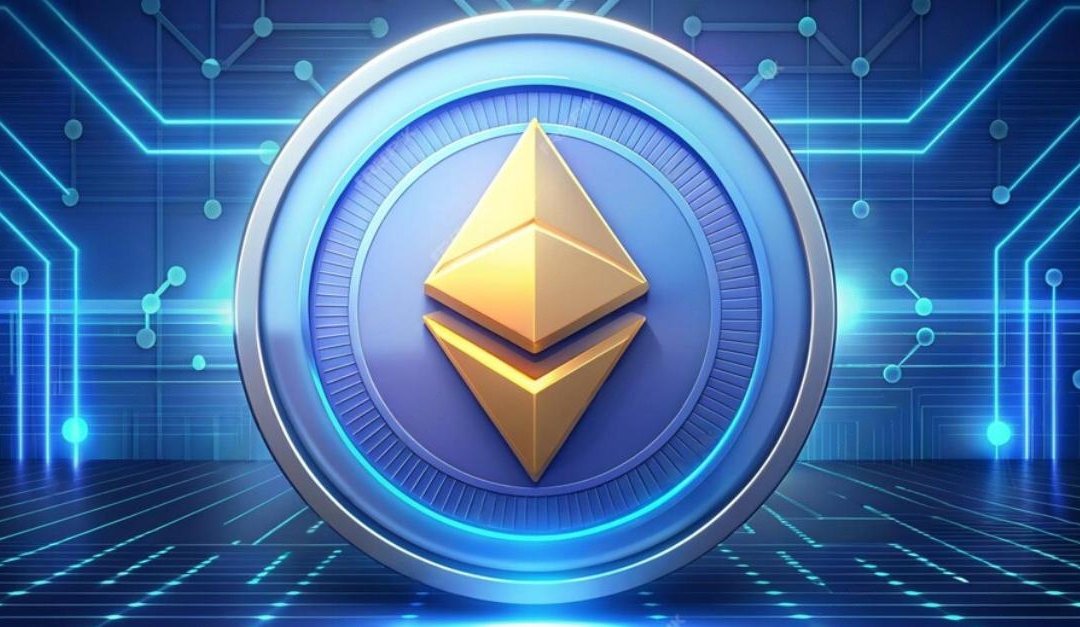
The Merge, an upgrade to the Ethereum [ETH] network that has been much awaited, has piqued the curiosity of many individuals. The proof-of-work (PoW) phase of the network's development will come to an end as it makes preparations to transition to the proof-of-stake (PoS) protocol. As a direct consequence of this, the network will almost certainly be upgraded, and it will also be greatly affected by the shift.
The Proof-of-Work (PoW) consensus algorithm is being replaced with the Proof-of-Stake (PoS) algorithm with the Merge update (PoS). In addition to this, it will change the role of miners to that of stakers, who will be responsible for verifying transactions on the blockchain.
Sharding is another essential part of the Ethereum ecosystem, which became an important part after the Ethereum Merge. The blockchain will be made more robust as a result of sharding, which is a crucial component of Ethereum 2.0.
What is the Ethereum merge?
The Ethereum blockchain, which powers the second most valuable cryptocurrency and many other technologies in the cryptocurrency ecosystem, such as non-fungible tokens, will get an update in the form of The Merge (NFTs). It's anticipated to take place in September.
The proof-of-work paradigm is now used to power the Ethereum blockchain, much as it is used to power the Bitcoin blockchain. This approach requires nodes, which are individual computers that are connected to a larger network, to compete with one another to solve difficult mathematical problems. Those who are successful are then able to mine the subsequent block of a transaction and produce additional currencies.
The update will move Ethereum toward the proof-of-stake paradigm, which is a system that is both more ecologically friendly and efficient in terms of the use of energy. It involves selecting nodes via the use of an algorithm that gives precedence to nodes that possess a greater amount of a network's money than any other nodes.
What exactly does "Ethereum Sharding" mean?
The word "sharding" is a fundamental concept derived from the field of computer science. It refers to the practice of horizontally slicing a database to help distribute the workload more evenly. Sharding Ethereum will be an update implemented in stages, each of which will contribute to scaling Ethereum and increasing its capacity.
The task of separating and equitably dispersing the load of a huge quantity of data may be simplified with the help of the sharding technique. Because of this distribution, the load will be less, there will be less congestion in the network, and the processing of transactions will go more quickly.
The blockchain will eventually break into shards, each of which will be able to operate independently of the others. Sharding will enable safe data storage needs distribution, make rollups cheaper, and make it simpler to operate nodes. It will also simplify the operation of nodes.
Through the use of sharding, the hardware requirements for operating a node may be reduced. Because it will allow users to operate the network using a laptop or even a phone, it will also help to increase the number of people who participate in the network.
When is it going to be available?
According to the statement made by the Ethereum Foundation, the first implementation of sharding will take place sometime in 2023. It relies mostly on the amount of development that may be made after the merger. Depending on how swiftly development develops after The Merge, the release of Sharding is projected to take place sometime in 2023. The capacity of Ethereum to store and retrieve data will be increased thanks to these shards; nevertheless, these shards will not be utilized for the execution of code.
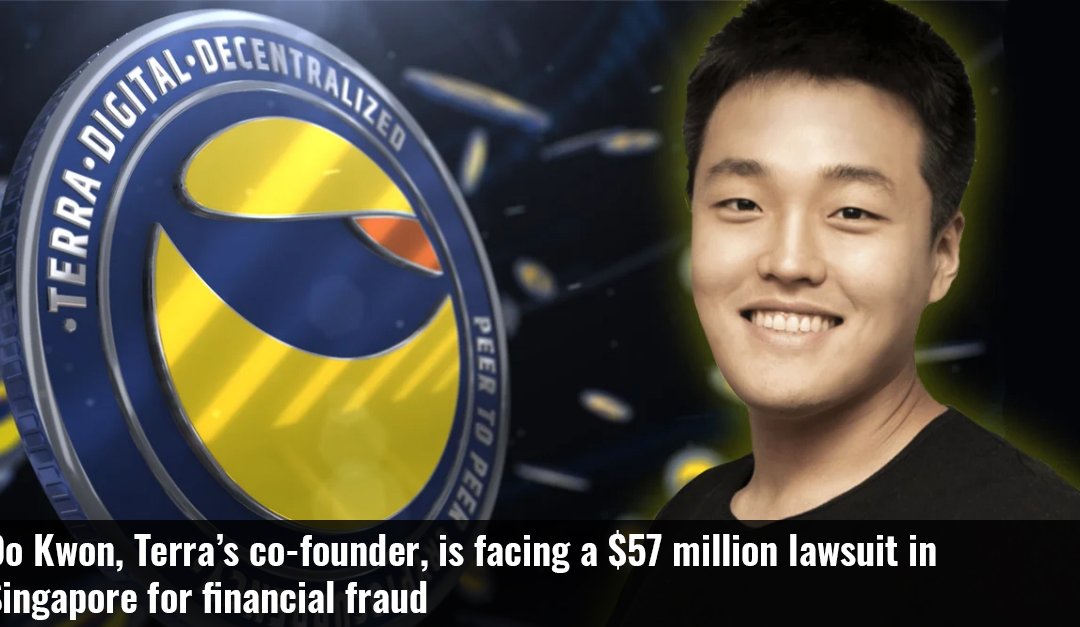
Victims of the UST-induced market crisis that saw over $40 billion in crypto assets evaporate in May have filed a fresh lawsuit in Singapore against embattled Terra Form laboratories CEO Do Kwon, the Luna Foundation Guard (LFG), and Terra founding partner Nicholas Plates.
What Went Wrong with TerraUSD?
Do Kwon's promises were readily swept away by waves on May 9, 2022, when the TerraUSD (UST), valued at $18 billion at the time, collapsed.
The cryptocurrency failed to hold its $1 peg, falling to $0.35. LUNA, a token designed to keep the UST price from plummeting precipitously, saw its value plummet from $80 to a few cents.
The TerraUSD collapse occurred in three stages, beginning with two dealers violating the currency's peg. Terraform Labs and three allies attempted to "fix" the situation by acquiring $2 billion in UST. As a result, the funds were depleted due to an uncontrolled sell-off.
The development did not end there, as it hyperinflated LUNA and eventually destroyed the prices of the two assets, forcing the crypto market to lose almost $40 billion.
Do Kwon’s Legal Headache
According to documents filed in Singapore's high court on September 23, 359 people claimed that Kwon and his co-defendants made false representations about Terra's algorithmic stablecoin TerraUSD's reliability (UST). The plaintiffs expressly claimed that Do Kwon was aware of "the structural fragility of algorithmic stablecoins" as a result of his engagement with Basis Cash (BAC), another stablecoin that failed under his supervision in early 2021, before the launch of UST.
The claimants further claimed that the defendants "knew or should have known that the claimants wanted to buy and hold digital stablecoins that were not susceptible to the volatility of the broader market and yield a respectable passive return." The claimants sustained significant losses on their UST holdings as well as additional damages as a result of the trio's acts. The claims asked the court to give them approximately $57 million for their losses and to force the trio to pay "aggravated damages."
The case comes amid an intensifying search for Kwon, who has now become an international fugitive after South Korea issued an arrest warrant. Therefore, the Terra blockchain ecosystem collapsed in May, Kwon has been the victim of many legal actions and threats. In September, South Korean authorities issued an arrest order for the Terra co-founder, which was later rejected, and Interpol added Kwon to its Red Notice list, urging that law enforcement identify and possibly jail him. On October 6, the South Korean Ministry of Foreign Affairs issued a notification ordering Kwon to return his passport within 14 days, or it would be invalidated.
Since his Terra empire collapsed in May, leaving millions of investors with severe losses, the Korean-born developer has been the target of several litigation lawsuits in the United States and South Korea over the last four months.
Eventually, local media reported that prosecutors were "in the process of freezing" tokens "believed to be owned by Kwon." These coins were allegedly stored on an unknown "overseas" cryptocurrency exchange that was "cooperating" with the Seoul Southern District Prosecutors' Office.
Despite not identifying his location, Kwon has been active on social media amid the issue and stated in September that he was "making zero attempt to conceal." In reaction to the complaint, one Redditor said Kwon was "doing a bad job at acting innocent for a guy who is innocent." Others speculated that he had undergone plastic surgery to conceal his features.
Conclusion
While it is unclear where Kwon is, Korean authorities reportedly claimed that he left Singapore for Dubai last month. However, no documents were found indicating that Kwon had entered the city, prompting Korea to ask neighbouring countries to assist in tracking his location. Kwon denied being on the run in a recent interview but refused to identify his location.