The Russia-Ukraine crisis has put crypto to the test in a real-world conflict where sanctions and imaginative blockchain financing methods exist.
The battle, now in its ninth month, has shown a slew of blockchain benefits, such as the ability to fund humanitarian efforts. It has also demonstrated how much control national governments have over crypto networks.
According to Vadym Synegin, co-founder of IT and crypto solutions business Tecor, cryptocurrencies offer a distinct benefit in situations when there is an elevated danger of money transfer interruptions due to the centralization of traditional systems.
"With most markets governed by centralized authority figures who can readily bow under political tensions, crypto markets remain more or less decentralized, meaning that their operating efficiencies during times of crisis are further increased," he said.
So, what else has the Russia-Ukraine Crisis revealed about cryptocurrency?
Donations of Cryptocurrency for Humanitarian Purposes
The Russia-Ukraine conflict has demonstrated that bitcoins can be used to support military operations. Notably, the Ukrainian government began taking bitcoin donations at the start of the year to broaden donor inclusion, which resulted in the establishment of the Crypto Fund of Ukraine.
The fund, which was established in collaboration with Kuna, FTX, and Everstake to support Ukraine's humanitarian aid and military projects, is currently managed by the Ministry of Digital Transformation. So far, the scheme has helped the Ukrainian government earn more than $100 million in cryptocurrency donations.
Nonetheless, some pro-Ukraine crypto fundraising organizations have turned to novel crypto instruments such as decentralized autonomous organizations (DAOs) to generate donations for the country.
The UkraineDAO, one of the most visible, was established in February with the sole objective of giving financial assistance to the Ukrainian military. Russian critic Nadya Tolokonnikova, a founding member of the Pussy Riot female protest organization, is one of the project's co-founders. PleasrDAO and Trippy Labs, a generative NFT studio, are also founder members of UkraineDAO. So far, the effort has raised more than $8 million.
Among the UkraineDAO's most remarkable achievements were the recent selling of a nonfungible token (NFT) of the Ukrainian flag for slightly over $6 million in Ether (ETH). It is now one of the top 20 most costly NFTs of all time.
Kayla Kroot, the co-founder of the Koii Network, spoke with Cointelegraph about the present use of cryptocurrency in the Ukraine crisis. Her organization is working on new blockchain models, such as Web3.
According to the executive, cryptocurrencies have allowed citizens caught up in the conflict to keep their money during these tough times:
"Cryptocurrency was created to assist worldwide citizens in maintaining control of their money."
Kroot also highlighted an increase in the use of digital currency by humanitarian organizations operating in the country. "Organizations like World Central Kitchen ran crowdsourcing campaigns”, In WCK's situation, this meant accepting ETH donations. These funds were distributed with fewer limits and control, allowing money to reach those who needed it the most quickly she noted.
Ukrainian Government has received Millions of Dollars in Direct Cryptocurrency Donations.
The European Commission issued sweeping sanctions against Russian crypto custodial accounts controlled by European firms and exchanges in October. Additionally, EU blockchain companies were barred from offering crypto custody services to Russian enterprises.
In response to Russia's invasion of Ukraine, new legislation was enacted to prevent Russia from circumventing sanctions.
Previously, Russian crypto wallets and accounts had a trade and deposit limit of up to 10,000 euros.
Recent EU crypto legislation has compelled some big exchanges with European operations, like Binance and Coinbase, to restrict services to Russian individuals and businesses to avoid a regulatory battle.
Other regulated cryptocurrency exchanges, like Kraken, Crypto.com, and Blockchain.com, have also stopped selling cryptocurrency services to Russian citizens as a result.
Conclusion
The war between Russia and Ukraine has highlighted the usage of cryptocurrency in communal effort situations for the common good. While the Ukrainian government has received millions of dollars in direct crypto donations, some digital currency fundraising efforts have been thwarted by scammers looking to benefit from the conflict.
More crypto benefits and drawbacks are expected to emerge when use cases evolve in more diversified situations.
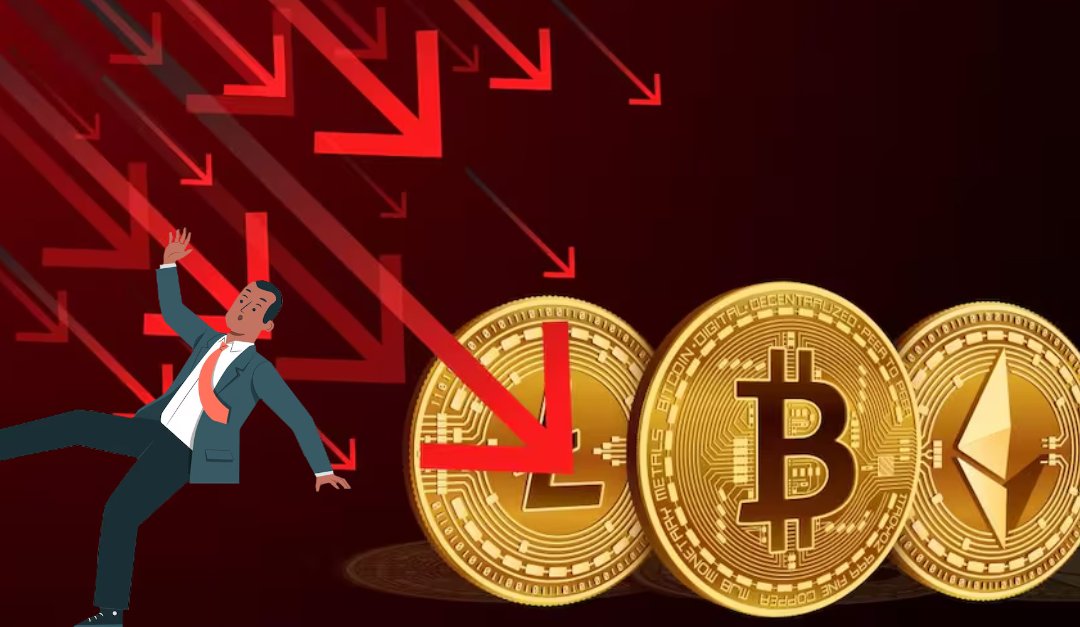
Bitcoin, which is known for its volatility, has only lost 18% or more in a single day ten times in the past ten years and twice in the past five.
As of the right moment, the Nasdaq and S&P 500 have more 20-day volatility than Bitcoin, according to analysis from data provider Kaiko. Over the past year, META has underperformed in both BTC and ETH.
Large tech stock losses, which often happen after Wall Street closure, do not translate into a drop in the price of bitcoin.
In a study report published on Thursday, Kaiko reported that "Bitcoin's market share of trading volume touched its greatest level in more than two years." Since April, Bitcoin dominance has grown significantly, suggesting that after the collapse of Terra's ecosystem and the wave of high-profile bankruptcies over the summer, sentiment has shifted primarily to the downside.
The future for equities is becoming more and more uncertain due to disappointing profits, a pending central bank decision, and a turbulent macroeconomic environment.
However, BTC/USD prevented a domino effect. Economic data for Q3, 2022, showed significant losses for some tech stocks.
Hodlers of bitcoin ignore the Q3 tech findings.
After reaching its greatest levels in six weeks, the largest cryptocurrency lost over $800 on October 27, or 3.8%.
As of the publication of this article, Bitcoin was still trading at roughly $20,200, exhibiting more consolidative trading behavior than a significant decline.
However, this was not the case for IT stocks, which were driven by a spectacular 20% decline in Amazon during after-hours trading as a result of failed earnings projections. At almost $230 billion, Amazon's market cap secured the largest post-close decrease in history.
The CEO Andy Jassy said in the company's third-quarter results release, "A lot is occurring in the macroeconomic climate, and we'll balance our investments to be more streamlined without jeopardizing our important long-term and strategic commitments."
Although a sign of the unsettling state of flux that digital titans around the world have been experiencing this year, Amazon's comedown notably failed to inspire copycat actions on cryptocurrency exchanges.
However, the same is true for similarly upsetting outcomes from Meta, whose stock price dropped under $100 this week and returned to levels from 2015.
The end of 2021, according to economist, trader, and entrepreneur Alex Krueger, was characterized by sharp price reductions that coincided with Netflix's subpar performance.
The 20% of slump that followed Netflix's earnings in January caused $BTC and $ETH to drop 20% and 30%, respectively. On October 28, he tweeted: "Today Amazon's results and its subsequent 20% drop pushed $BTC down 2% and $ETH down 3%.”
“Weak hands are mostly gone,” with its current stock price of $300, Netflix is down 50% year-to-date, and according to statistics from Cointelegraph Markets Pro and TradingView, BTC/USD is down another 6%.
Continuity of Correlation
The finding contributes to a burgeoning narrative about Bitcoin's relationship with conventional markets.
The clear-cut lockstep movements between BTC and equities over the last week have not been present, with the latter having to play catch-up as stocks cooled. Bitcoin's increasing resemblance to gold is currently receiving more attention, as Cointelegraph has reported.
Overall, though, it's still premature to declare a long-term trend change in association with, say, the S&P 500.
Although it's too soon to tell if this trend will persist, it's important to keep an eye on it, according to Mario Nawfal, the founder of Blockchain consulting company IBC Group.
Conclusion
This article expresses just the author's ideas and opinions, not necessarily those of Cointelegraph.com. Every investment and trading action entails risk, so you should research your options before choosing.
The future of cryptocurrency seems quite challenging during this dropdown situation in the market. Gary Gensler, the chairman of the U.S. Securities and Exchange Commission (SEC), strictly conveyed his views against the digital asset industry. According to him, the 'vast majority of existing cryptocurrencies are securities, issued to the public violating laws and regulations. The chairman stated, "Cryptos are not the same as laundromat tokens. Promoters are marketing it, and the investors are purchasing most of these tokens, following or anticipating profits based on the efforts of others."
The Remarks Regarding Cryptos :
A group of users in the crypto space is demanding a new set of rules specifically for digital assets. According to them, the existing securities law is not suitable for cryptocurrencies. Though, Gensler very clearly explained that no such regulations will be forthcoming. According to him, most cryptocurrencies have to be regulated as securities in the interest of investor protection.
"Nothing about the global crypto industry is inappropriate with the securities laws," stated Gensler. He further added that investors' protection is as important regardless of underlying technologies.
The Chairman advised that trading platforms should be registered with the SEC as securities exchanges and broker-dealers. According to him, cryptocurrency and stablecoin operators should register and regulate their tokens.
View Of Federal Reserve on laundromat tokens:
At the same time, the chairman of the Federal Reserve, James Powell came up with his view. According to him, if the crypto industry intends to play any role in the global financial world, it should be "appropriately regulated". But remarks on inflation raised more concern.
He also stated that "It is basically our view, and my view, that we should act immediately, confidently, strongly, as we have been working."
According to Powell, "As long as the inflation remains well above target, the risk would be greater as the user starts to see higher inflation as the norm."
On the same day, the European Central Bank (ECB) climbed its benchmark interest rate by 75 base points. According to Powell, he suggested the U.S central bank could also follow suit in September.
Commentary Effects On Crypto Rate :
Mainly, news of benchmark interest rate hikes becomes the major reason for crypto prices to dip. Recently, at the Jackson Hole conference, Powell clearly stated that inflation is the Fed's top priority. They are aimed to fight it head-on.
His comments caused a sharp decrease in the crypto market. Bitcoin dropped nearly 6 percent. Also, the global crypto market cap fell below $1 trillion after Powell's hawkish remarks.
Therefore, shockingly, Powell's remarks seem to have had the reverse effect. At the time of Powell's remarks, BTC raised from nearly $19,168 to $20,638 at the time of writing. It was a rise of nearly 7.60 percent over the last 16 hours. The second largest crypto, Ethereum, is also facing a similar rally during the same time.
Over the last few months, cryptocurrencies have dropped amidst rising inflation. The key inflation rate touched an all-time high of 9.1 percent in June. It caused a significant dip in the crypto markets. However, inflation has decreased since then. It stepped down 8.5 percent in July. Hence, investors and traders might see Powell's determination to fight inflation “until the job is done” as a green signal.
Another remarkable reason for the surprise rally in the crypto industry could be the rise in U.S stocks. The Dow Jones Industrial Average raised 0.61percent. Also, the Nasdaq Composite jumped 0.60 percent after Powell’s comments. The relationship between stocks and the crypto market has been effective and notable over the previous few weeks.
Following Elon Musk's acquisition of Twitter, a new age of cryptocurrency and network-based token integration has begun on the social media site. Alongside the announcement of Musk's $41.39 billion buyout of Twitter, the beta test of NFT tweet tiles was made public. A subset of users are now testing the functionality in conjunction with the markets on multiple blockchain protocols used by Magic Eden, Rarible, Dapper Labs, and Jump.trade.
The wealthy CEO of Tesla, Elon Musk, commenced his takeover of the social media behemoth, and the platform began testing interesting new NFT features at the same time. The integration of NFT trading was first made available on Twitter as part of a beta test for a limited number of users. Through a newly implemented rollout, Elon Musk's Twitter is currently powering NFT trading.
The new NFT feature
Following the successful completion of Elon Musk's purchase of Twitter for $41.39 billion, the social media platform pushed out a feature that allows for NFT trading. In conjunction with the following four major marketplaces—Magic Eden, Rarible, Dapper Labs, and Jump.trade—Twitter has announced that it would enable its users to immediately purchase, sell, and display non-fungible tokens (NFTs) via tweets.
NFT Tweet Tiles is the name of the integration, and what it does is show the artwork of an NFT in a panel that is included inside a tweet. Users may access the listing on the marketplace by clicking on the provided button, which takes them there. For the purpose of the beta test, four distinct marketplaces have been included as partners. The developer of the Flow blockchain, Jump.trade, along with leading NFT marketplace platforms Rarible and Magic Eden, are actively participating in testing the connection.
A number of alternative blockchains, including Ethereum, Solana, Flow, Polygon, Tezos, and Immutable X, are serving as hosts for the markets that are a part of Elon Musk's launch for Twitter. According to a spokesman from Twitter who spoke with Decrypt, the "feature is presently being tested with select Twitter users across iOS and web."
Users who are included in the test will see the NFT Tweet Tile integration, and contrary to common perception, a premium membership is not necessary to utilize the functionality. Users who are included in the test will see the integration.
Since 2021, Twitter has embraced cryptocurrencies and non-fiat tokens (NFTs), first by allowing users to pay content producers using Bitcoin and Ethereum and later by allowing verified NFT profile images to be shown on user profiles. It is essential to keep in mind that the social media platform will currently only handle Ethereum NFTs for the foreseeable future.
Musk takes over Twitter
Following a drawn-out court struggle and many months of unpredictability, Elon Musk has finally assumed ownership of Twitter. The issue that arises now is what exactly the Tesla CEO, who is worth a billion dollars, will do with the social networking site.
In a tweet that he sent on Friday, Musk provided a hint as to the direction he is going by declaring that there would be no judgments made on content or the reinstatement of accounts until a "content moderation committee" is established. He noted that there will be a variety of perspectives on the council.
It is generally anticipated that there would be significant staff changes, with Musk having fired some of Twitter's senior executives on Thursday. In a tweet, a fourth individual confirmed that he would be leaving.
But Elon Musk, the tech expert and self-proclaimed "Chief Twit," has frequently made contradicting pronouncements about his vision for the firm, and he has disclosed few detailed ideas for how he would operate it after purchasing it for $44 billion. Musk has also been called the "Chief Twit."
THORChain, a Cosmos ecosystem blockchain dedicated to delivering cross-chain liquidity, started operations on Friday after being halted due to a software problem.
On Thursday, the THORChain development team tweeted that it was aware of an outage and that developers had "discovered the likely cause owing to a unique transaction type (nothing to do with solvency)."
A spokeswoman for THORChain said in an email to CoinDesk on Friday morning: "The network stop has been lifted as of 10:20 AM (ET) on Friday, and the THORChain mainnet is once again creating blocks. Trading will be halted until the outgoing queue is cleared. Trading will resume once all outstanding outbound transactions have been executed."
A THORChain representative told Cointelegraph that the chain had been paused for safety reasons, but that it planned to "revert once the root of non-determinism is uncovered." THORSwap, a token-swapping platform, said that it was still accepting Ethereum and ERC-20 swaps during the outage.
A Non-Determinism of Nodes
After the blockchain administrators recognized the outage of the THORChain network on Twitter on Thursday due to a software error, the network's administrators claimed that solvency was unconnected to the halt and was caused by non-determinism between individual nodes. After confirming that the interruption had nothing to do with solvency, the company went on to tell its customers that they were working hard to find a solution as soon as possible.
According to a previously public update by THORChain, the company discovered the sources of non-determinism between nodes that were creating the problem four hours after the first alarm.
According to the researchers, consensus halts in a distributed state machine emerge from sources of inter-node non-determinism and protect the ledger from corruption. The network administrators outlined the steps required to resolve the problem, noting that they were almost there: finding the source of non -determinism, posting an update, and restarting the state machine.
After Running Back On, THORChain Claims It Was String Manipulation
After another three hours of waiting for the firm's response, the team claimed that they had recognized the problem as string manipulation. According to their statement, the developers should have recognized the issue because the wrong message was promptly switched out and never inserted into the block. Because the block contained a queue that prevents the swap from synthesizing on the same block, the wrong memo was written in the block, which damaged the mainnet.
According to the company, the code was pushing a cosmos. Uint into a string (rather than an uint64), leading the string to get the enormous int's point rather than its real value, resulting in different memo strings on different nodes. The erroneous memo is never written to disc or block. As a result, the statement missed this.
The chain was halted due to safety concerns, but a THORChain representative stated that the company intended to "revert once the source of non-determinism is discovered." THORSwap, a token-swapping platform, stated that Ethereum and ERC-20 swaps were still supported during the outage.
Conclusion
Most blockchains do not experience chain halts; stability and consistent uptime are frequently noted as important advantages of decentralized networks versus centrally controlled alternatives. The THORChain outage lasted around 20 hours. Other big blockchains have had network failures that have impacted users. According to Solana co-founder Anatoly Yakovenko, outages — allegedly caused by low-cost transactions — have been the blockchain's "curse," with at least seven occurring since its introduction in 2020. The Cosmos SDK was used to build the independent blockchain THORChain, which would serve as a decentralized cross-chain trade (DEX). It employs an automated market maker (AMM) mechanism akin to early versions of Uniswap (Uniswap) or Bancor (BNT), with THORChain's native token (RUNE) serving as the primary swap pair.