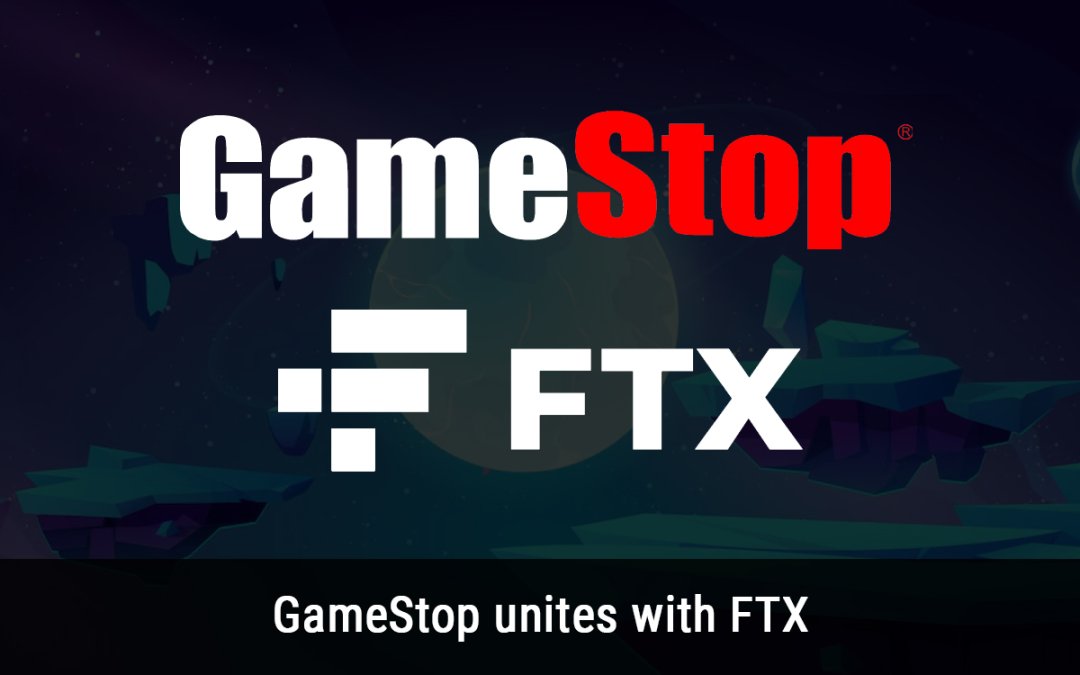
It's no secret that the last several years have been difficult for the renowned gaming shop, GameStop. In July, GameStop laid off several employees, including the company's CTO at the moment. To reorganize its business processes, GameStop looks to be doubling down on its NFT goals in the wake of its cooperation with FTX.
The business launched its NFT approach earlier this year when it teamed with Immutable to build a decentralized exchange. GameStop released its wallet for cryptocurrencies and non-fungible tokens (NFTs) in May, followed by the formal debut of its NFT marketplace a few months later. This allowed customers to access their monies and peruse the company's portfolio of virtual currencies and assets by opening a single wallet software.
Gamestop’s new announcement
On September 7, 2022, Gamestop (GME) announced a new relationship with the FTX Crypto exchange. According to StreetInsider, the cooperation aims to attract more GameStop consumers to FTX's digital asset community and markets. Additionally, the firm will begin carrying FTX gift cards at select retail locations around the country. These shops remain nameless.
On September 7, during the extended session, shares of GameStop Corp. increased by over 12 percent. This occurred after the video game shop announced a deal with Sam Bankman-FTX Fried's US, a U.S.-based cryptocurrency exchange that wants to attract more consumers to the crypto realm. Additionally, the parties expect to cooperate on internet marketing efforts. It is believed that GameStop's recent announcement of a 'smaller-than-expected' quarterly loss contributed to the surge in its stock price.
Impact of the FTX union
As the news was made, the value of GameStop's stock surged. According to MarketWatch, they rose 11.06% in after-hours trading to $26.48 after sliding 4.30% during the regular session. It is anticipated to increase more over the next twenty-four hours, particularly when markets reopen tomorrow morning.
The shop will be FTX's preferred retail partner in the United States for the duration of the collaboration. At this point, neither Gamestop nor FTX has commented on the cooperation. Through this agreement, the two businesses will push e-commerce and marketing efforts. FTX gift cards will reportedly be available at some GameStop retail locations. Throughout the term of the arrangement, GameStop will serve as FTX's "preferred retail partner in the United States." There are 2,970 GameStop stores in the United States as of August 31. GameStop did not divulge the specifics of the collaboration's financial arrangement.
GameStop reported revenue of $1.136 billion for the second quarter of 2022, which was $130 million below the average estimate. However, the collectibles division of the corporation was a bright light. It generated $223,2 million in sales. This was an increase from the $177,2 million reported in the second quarter of 2021. Despite reporting a reduction in quarterly net sales of about 4 percent to $1.14 billion, GameStop shares gained over 12 percent in after-hours trading to $26.84 per share.
Benefits of the partnership
The partnership advances GameStop's entrance into the realm of cryptocurrencies. GameStop has been one of the most recognizable brands among so-called "meme stocks" for a long time. Meme stocks are driven by social media. Last year, GameStop was at the center of a social media-fueled trading frenzy. This prompted its stock price to soar. In January of this year, the business established a section for NFT and Web3 gaming. It also launched its NFT marketplace in conjunction with Ethereum (ETH) scaling solution Immutable X on July 11.
To entice NFT inventors, GameStop has launched a $100 million fund denominated in Immutable X's IMX tokens. The startup plans to someday host billions of inexpensive in-game digital assets and NFTs. These include digital real estate and in-game skins. This way, the corporation aims to develop a substantial new income stream.
Moreover, the corporation just laid off workers. In his email to staff regarding the layoffs, CEO Matt Furlong also highlighted the company's blockchain department. According to him, the new relationship with FTX is meant to produce something "special" in the retail sector.
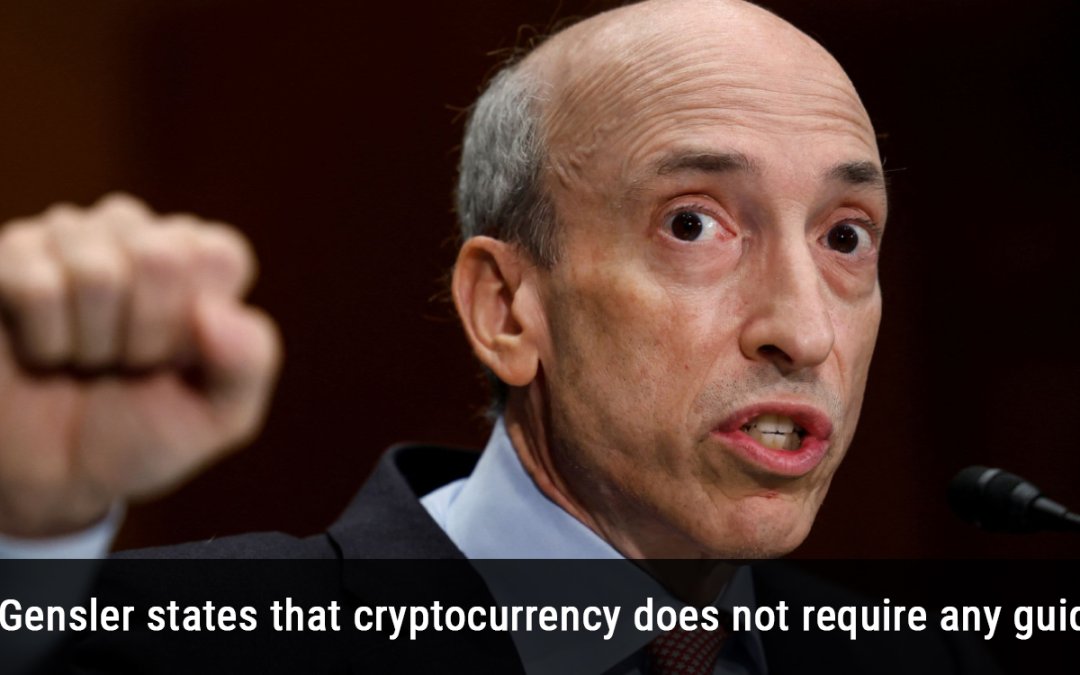
Gary Gensler, chairman of the United States Securities and Exchange Commission (SEC), said on Thursday during a speech that the cryptocurrency business does not need any particular legislation for enterprises that are issuing tokens. Gensler said that the norms and regulations that crypto issuers and service providers are required to follow have been apparent for years, and he framed the problem as one that relates to investor protection.
What did Gary Gensler state?
According to the prepared comments that Gensler delivered to the Practicing Law Institute, he said that "there is nothing about the crypto markets that is incompatible with the securities rules." Regardless of the technology that is behind an investment, "investor protection is just as vital."
His remarks are perhaps the clearest indication yet that the SEC intends to continue applying existing rules and regulations to the cryptocurrency industry. This is in contrast to the hopes of investors and entrepreneurs that the agency will create some kind of carve-out that will allow startups to issue tokens without having to register as a securities platform. His remarks are perhaps the clearest indication yet that the SEC intends to continue applying existing rules and regulations to the cryptocurrency industry.
Gensler’s take on crypto transactions
In his speech, Gensler also restated his belief that "most crypto tokens are investment contracts," and he referred to previous publications of the SEC, such as the DAO report and the Munchee order, as examples of models that software developers and business owners can and should model their practices after.
These comments were repeated by Gary Gensler in an interview that CoinDesk had with him in advance of his address a few days ago. According to him, there are over 10,000 different cryptocurrencies that are listed on CoinMarketCap. These cryptocurrencies have varying degrees of liquidity and value, but they are all being invested in using very similar strategies.
Later on in his presentation, Gensler aimed at several middlemen in the cryptocurrency space, analyzing both controlled and decentralized platforms. Whether centralized or decentralized, all intermediaries of crypto are an amalgam of services.
Opinions of the platforms
Gary Gensler said that these trading platforms manage order books and enable transactions in cryptocurrencies, which may be considered securities. He suggested that these trading platforms should adhere to standards that safeguard their customers. This last characteristic is the reason that results in platforms turning into brokers.
As a further illustration of how these initiatives may be comparable to conventional securities platforms, Gensler cited the employment of lawyers to represent crypto companies. Gary Gensler alluded to the SEC's previous enforcement efforts, which have mostly focused on token issuers when asked if the SEC would launch enforcement proceedings against trading platforms that failed to voluntarily register with the agency.
Discussion on threats and subsequent security
During his chat, he underscored the potential threats faced by investors, stating that numerous companies had declared bankruptcy and restricted access to customers' assets as a result. According to him, user access to their cash has been restricted by even those businesses that have not yet filed for bankruptcy.
He said that there are fundamental safeguards built into our securities rules that protect investors from occurrences such as those. If you invest in any of these service providers or platforms, you will not get the fundamental safeguards that protect you against fraud, manipulation, and the practice known as front-running.
Gary Gensler provided an example of how firms may register with the agency by referring to the settlement that the SEC reached with cryptocurrency lender BlockFi. However, he refused to talk about any other particular companies.
After obtaining a license from the British Virgin Islands (BVI) Financial Services Commission, digital asset service provider Houbi Group is getting ready to launch a cryptocurrency exchange in the British Virgin Islands (BVI).
Why was the license created?
The cryptocurrency business that is incorporated in Seychelles said on Friday that it has obtained a license from the Financial Services Commission (FSC) of the British Virgin Islands. This was done via Huobi's regulated local subsidiary, Brtuomi Worldwide Limited. Since April, Brtuomi has been one of the two firms taking part in a regulatory sandbox for fintech that was set up by the FSC. The purpose of the sandbox is to provide businesses with the opportunity to test out novel financial products and services.
After China outlawed cryptocurrency trading and pushed exchange platforms to relocate to other countries, Huobi Group, which was established in China, has been concentrating on developing its worldwide strategy. A money transfer license in the United States was acquired by a Huobi Global affiliate in July. This license will enable the affiliate to conduct foreign exchange and money transfer activities across the United States.
What did Houbi announce?
According to Huobi, its subsidiary was able to successfully get an "Investment Business License" in the British overseas territory. At the time of this publication, Brtuomi was not included on the list of FSC-regulated firms that are licensed to conduct investment operations. CoinDesk has attempted to contact the FSC to get a comment.
Huobi has stated that its subsidiary will be able to operate an "institutional-grade virtual assets trading platform for both professional and retail investors" once "all conditions are satisfied." This platform may offer a variety of services, including crypto spot trading and derivatives trading, among other things.
Huobi did not reveal when it hopes to build the local exchange in the statement; however, the company did say that it is working with authorities "to develop a range of regulated trading goods and services."
The major cryptocurrency exchange Huobi is continuing its worldwide footprint expansion by establishing operations in the British Virgin Islands, which are a British Overseas Territory.
Date of the official announcement
On 9th September, Huobi made an official announcement stating that the Financial Services Commission (FSC) of the British Virgin Islands had granted the company a license to operate an investing business there. Because of this clearance, Huobi is now able to run a virtual asset exchange via its wholly owned subsidiary, Brtuomi Worldwide Limited (BWL).
According to the release, BWL intends to provide a variety of services related to cryptocurrency trading. These services will include spot trading of cryptocurrencies such as Bitcoin (BTC) and Ether (ETH), in addition to derivatives trading.
The firm presents itself as the first digital asset trading platform operator in the British Virgin Islands to be granted a license to operate an institutional-grade crypto trading platform that can be accessed by both professional as well as retail investors.
Zhang said that Huobi had a distributed ledger technology license in the jurisdiction of Gibraltar as well. According to statements made by the chief financial officer to Cointelegraph, Huobi Group does not have a concrete timetable for when it will extend its services to include the remainder of the United Kingdom.
About BWL
BWL is a participant in the Financial Services Commission's Financial Innovation Sandbox in addition to being an officially regulated firm in the British Virgin Islands with other businesses such as Alameda Trust and Three Arrows Capital.
BWL is the second sandbox player to be recognized by the FSC, according to official documents maintained by the FSC. Structure Financial, a worldwide trading platform that facilitates crypto-based investment and lending, was the first participant to get such approval. The sandbox was first developed by the regulation in the year 2020 to foster innovation within the rapidly expanding fintech industry and provide companies with the chance to test the latest goods and services.
Final thoughts
The British Virgin Islands have become one of the most popular locations in the world for businesses that are tied to cryptocurrencies. According to findings presented in PwC's fourth annual global crypto hedge fund report 2022, the United States of America has been surpassed by the British Virgin Islands as the destination preferred by the second greatest number of crypto hedge funds.
Three Arrows Capital, a venture capital business located in Singapore, was forced into liquidation in June when a court in the British Virgin Islands issued an order to that effect. According to the publicly available data, the company has been granted registration by the FSC as a professional fund.
Since the launch of Bitcoin (BTC) in 2009, there has been a steady increase in the pace at which new cryptocurrencies are being distributed into circulation. When one considers the growth of the cryptocurrency industry, one could be curious about the kind of coins that would be most advantageous to acquire. It might have something to do with the accessibility of the currency, the capacity to meet the needs of the community it serves, and the ability to satisfy token holders as well as buyers.
This is the objective that the Big Eyes Coin (BIG) project, together with its community, is working toward. Even while The Sandbox (SAND) and Wrapped Bitcoin (WBTC) have been known to accomplish that throughout the years, the costs associated with using their blockchain network are still rather high, which deters many crypto users and enthusiasts.
The commitment of the Big Eyes Coin (BIG)
The Big Eyes Currency, often known as BIG, is a meme coin whose community-driven platform intends to generate wealth for the Defi ecosystem. BIG stands for "Big Eyes Coin." Big Eyes has a lot more to offer than simply its adorable appearance, and its community will work to develop the blockchain ecosystem and encourage the expansion of non-fungible currencies (NFTs).
The community is the driving force behind the Big Eyes Coin (BIG), and as a result, their token does not impose any taxes or fees on transactions. In addition, their token is decentralized, and since the majority of the tokens are owned by the community, token holders can vote on significant issues relating to the project's long-term viability. The Big Eyes community, with its forward-thinking platform and a keen awareness of what's going on around the globe, has pledged 5% of its token to the cause of preserving the marine life in the ocean.
The Features and Transactions of the Sandbox (SAND) Gaming Come at a Very High Price
The Sandbox is a virtual Blockchain gaming world that has a rating of 40 on the currency market with a minimum circulating quantity of 1,497,270,108 SAND coins. It is built on the Ethereum blockchain and allows users to purchase, trade, and develop digital assets inside a game environment. Launched in 2011 by the Chief Executive Officer (CEO) Pixowl, the utility token The Sandbox (SAND) is now being used by the Sandbox (SAND) to create a decentralized ecosystem that supports the growth of the gaming community. This ecosystem was created with the help of the Decentralized Autonomous Organization (DAO).
The play-to-earn method of the Sandbox (SAND) token enables users to be both producers and players, and it also contributes to the transactions that are carried out on its platform. Despite being an Ethereum-based (ERC-20) token that allows users or gamers to stake on matters that concern them and makes the token more secure, transactions that are done with the Sandbox (SAND) token are large and frightening in comparison to transactions that can be done with Big Eyes Coin (BIG), which does not charge any fees or charges for making transactions. Because of this, the Sandbox (SAND) coin seems to have a high price tag.
Wrapped Bitcoin (WBTC) differs from other tokens
Wrapped Bitcoin (WBTC) is a variant of Bitcoin (BTC) that was first introduced through the blockchain of Ethereum (ETH). To carry out these transactions, it makes use of decentralized exchanges (DEX) and decentralized finance (Defi). Wrapped Bitcoin (WBTC) owners are permitted to trade their coins on Uniswap (UNI), Sushiswap, and other similar platforms due to the coin's market capitalization of 19. Wrapped Bitcoin (WBTC) may also be used to perform leveraged transactions on Ethereum (ETH), as well as other ERC-20 tokens and a variety of stablecoins.
Wrapped Bitcoin (WBTC) is a cryptocurrency that traders may use to ensure the safety of their funds when trading. The use of smart contracts enables a non-custodial procedure that is being described here.
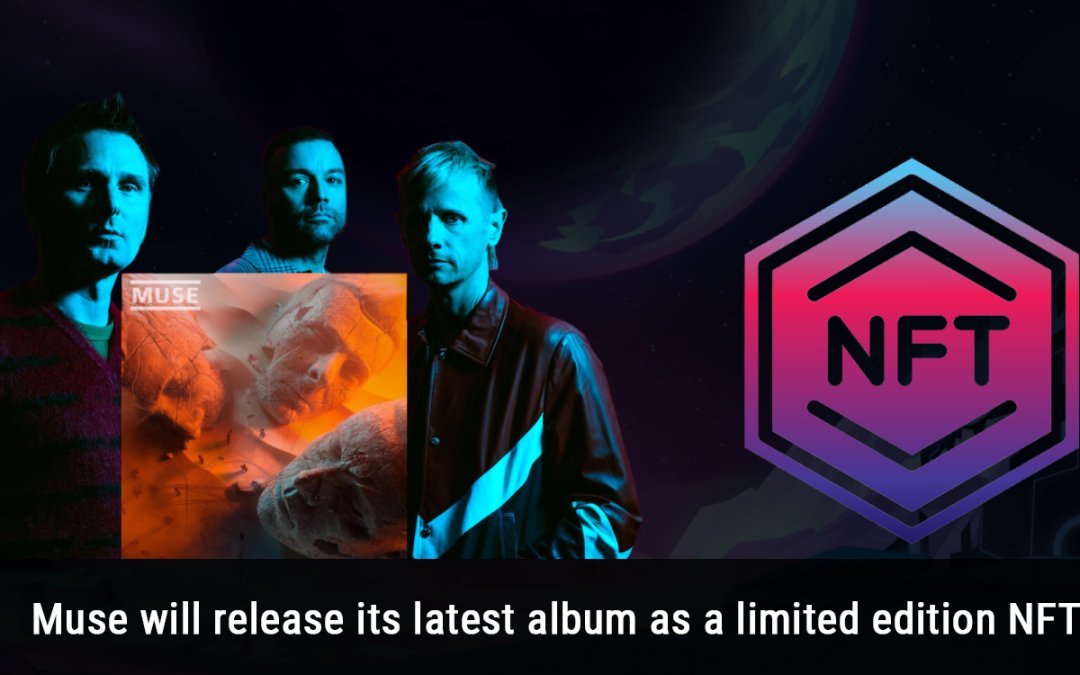
Muse has achieved a first by being the first artist to have an album sold in the form of an NFT to debut at No. 1 on the UK Album Chart (non-fungible token). The Devon rock trio was able to accomplish this with the release of their ninth studio album, titled Will of the People. The album was made available in a variety of formats, including vinyl, digital, cassette, and CD, in addition to a limited edition NFT "digital pressing." It was just released last week.
The first NFT album
Will of the People outsold the rest of the top 10 albums combined in its first week of release, selling 51,500 copies. However, only a small portion of those copies was NFTs since the digital printing of the record was restricted to 1,000 copies globally. This means that if all the copies were sold in the United Kingdom, they would only account for a maximum of 1.96% of the UK sales.
Will of the People wasn't the first charting album to be published in NFT format, however; Manchester rapper Aitch beat Muse to the punch with his first album Close to Home, which was released a week before Muse's record and peaked at No. 2 on the list last week.’
Will of the People
According to a study that was published by the Guardian a month ago, NFT records have been eligible for the charts for a few months already; nevertheless, it is only now that they are being sold by stores that return charts. Will of the People was distributed to customers via the "eco-friendly" NFT platform Serenade, but Aitch's Close to Home NFT was offered for sale on LimeWire, which was an NFT marketplace whose name and branding were licensed from a file-sharing service that is no longer in operation.
Will of the People was released as a digital pressing, which consisted of a downloaded version of the album that had alternative cover art and was digitally signed by the members of Muse. Unfortunately, this pressing is no longer available. The band now has the same amount of top-charting albums as Elton John, Paul McCartney, George Michael, the Prodigy, and the Killers thanks to the success of their seventh studio album, which debuted at number one.
What makes the event so significant?
The fact that the triumph of Muse's 'Will of the People album occurred only a few short months after the United Kingdom granted the go-ahead for NFT record sales to be included in the official music charts is an important factor that contributes to the importance of the monumental event. It has been confirmed by Serenade, the company that distributes the record, that NFTs are considered to be an innovation in the music industry.
The album will be a "Digital Pressing," which is a completely new music format that is limited in edition and collectible. It will feature the singles "Won't Stand Down" and "Compliance," and it will be a world-first release. Since album streams were initially included on the Official Albums Chart in 2015, this Digital Pressing will be the first new format to become eligible for inclusion on the chart.
In addition to being downloadable and streamable, Will of the People will also be made available in the more traditional tangible media, including vinyl, CD, and cassette tape. A Digital Pressing is a stand-alone, chart-eligible digital release (as opposed to being a part of a bigger release "bundle") developed by Serenade to satisfy the cravings of superfans for scarcity, unique material, and community recognition.
Final Thoughts
Digital Pressing will not only be able to live on the blockchain and offer web3 capabilities like verifiable ownership and the ability to trade on secondary markets, but it will also accumulate accurate and perpetual royalties for artists, copyright holders, and content owners. These royalties will be paid out to them over time.