








DeFi Development Expands Leveraged Exposure to Solana Past 2.56M SOL

DeFi Development Expands Leveraged Exposure to Solana Past 2.56M SOL

DeFi Development Corp. has expanded its corporate treasury past 2.56 million tokens, delivering leveraged exposure to Solana as it reports double-digit percentage gains in reserves alongside a preliminary surge in net asset value per share. The Nasdaq-listed company disclosed in an October 5 filing that it held roughly 2,564,212 SOL and SOL equivalents valued at approximately $302 million.

The corporate treasury model aims to offer investors leveraged exposure to Solana via ordinary equity markets. Through its capital structure, validator rewards and preferred share issuance, DeFi Development seeks to increase its reserves faster than the underlying token appreciates, magnifying per-share results for equity holders.

Treasury Growth and Preliminary Per-Share Gains

Between September 28 and October 2, the firm accumulated 26,203 SOL, representing an acquisition worth approximately $3 million, Decrypt News reported. Holdings have increased roughly 11% since the company's August 12 financial update, rising from nearly 600,000 SOL recorded in May 2025 to more than 2.56 million tokens.

Management expects net asset value per share to jump more than 100% from August 12 to September 30, according to preliminary estimates reported by Bitcoinist and Markets Insider. Chief Strategy Officer Dan Kang noted that total SOL reserves and SOL per share both experienced double-digit percentage gains over the period, MarketBeat reported.

Company calculations define net asset value by taking SOL assets and cash equivalents and deducting liabilities, out-of-the-money convertible notes, and preferred stock obligations. That net balance is divided by diluted shares, whereas SOL per share tracking incorporates liability deductions against common equity. DeFi Development noted these preliminary estimates remain subject to completion and do not constitute final audited figures.

CHAD Preferred Stock and Capital Strategy

To fund additional token purchases, DeFi Development is prioritizing its variable-rate cumulative preferred stock, listed under the ticker CHAD. The firm established a $300 million at-the-market distribution facility to issue CHAD shares around their $10 par value, using net proceeds to accumulate more Solana.

The instrument carries an annual dividend rate of roughly 13%, representing $1.30 per share yearly on the $10 stated balance, with distributions declared each business day. Decrypt News reported that daily distributions were set at $0.00516 per share through October. Chief Executive Officer Joseph Onorati highlighted the financing vehicle's role, stating, "CHAD is fuel for the DFDV engine and central to our next phase of growth."

The preferred equity structure targets yield-seeking buyers rather than pure cryptocurrency speculators. "That’s going to give us more leverage, give us more SOL Boost," Onorati said, pointing to the company's objective of generating equity gains that outpace Solana spot market returns.

If CHAD dips below par value following offerings, executives stated the firm could repurchase shares or elevate the dividend to reinforce price stability. The company has secured buyback flexibility while retaining provisions that prevent dividend decreases unless stated conditions are met, MarketBeat reported.

Staking Economics and Leveraged Exposure to Solana

Unlike corporate treasuries centered on Bitcoin, DeFi Development generates on-chain revenue through blockchain validation, reinforcing its ability to offer leveraged exposure to Solana. The company operates validator nodes across the Solana ecosystem, capturing proof-of-stake yields and network fees to cover corporate expenses.

Kang explained that these native staking returns provide the capital necessary to service daily preferred dividends without liquidating treasury tokens or issuing dilutive common shares. "The treasury works to pay CHAD itself," Kang said, arguing that network yields preserve balance-sheet value as the preferred instrument scales.

The company maintains ancillary decentralized finance activities, including exposure to $DONT, but Onorati stated the primary mission remains delivering leveraged exposure to Solana. Executive leadership also turned down financing alternatives requiring heavy discounts to share value, opting to preserve long-term balance-sheet flexibility.

Leveraged Equity Returns and Market Volatility

During the third quarter, DeFi Development common shares advanced approximately 83% while SOL gained roughly 57%, according to management metrics reported by MarketBeat. In August alone, common stock prices climbed over 100% as the underlying digital token rose about 38%, underscoring how its model produces leveraged exposure to Solana during market advances.

While leveraged holding strategies amplify gains in rising markets, they introduce symmetric downside risks during crypto pullbacks. Net asset value remains sensitive to token volatility, and corporate capitalization details such as outstanding debt and preferred claims directly affect equity values.

MarketBeat noted that Wall Street analysts currently assign DeFi Development a Hold rating. Kang stated that the company's long-term orientation involves securing resilient capital structures capable of navigating sharp digital asset cycles while preserving upside participation.

Conclusion

DeFi Development has expanded its treasury to 2,564,212 SOL and SOL equivalents valued at roughly $302 million, leveraging validator yields and preferred financing to build per-share value. The company's immediate operational focus centers on deploying its $300 million at-the-market preferred stock program at par value while preparing to publish finalized third-quarter financial results.

Frequently Asked Questions

How much Solana does DeFi Development hold?

As of early October 2026, DeFi Development held approximately 2,564,212 SOL and SOL equivalents, according to corporate filings. The company valued those treasury holdings at roughly $302 million.

What is the CHAD preferred stock dividend rate?

CHAD preferred shares yield roughly 13% annually against their $10 stated balance, translating to a payment of $1.30 per share over the course of a year. The firm provides these cash payouts on each regular business day.

By how much did DeFi Development net asset value per share rise in Q3?

According to preliminary management estimates reported by Bitcoinist and Markets Insider, DeFi Development's net asset value per share increased by more than 100% between August 12 and September 30, 2026.

How does DeFi Development fund its preferred stock dividends?

DeFi Development uses staking yields and network fees generated by its Solana validator operations to meet dividend obligations. Management stated that this native yield allows the firm to pay dividends without selling treasury assets.

Sources

Read Also

Altcoins Tumble as Heavy Liquidations Stall Altcoin Season

Altcoins Tumble as Heavy Liquidations Stall Altcoin Season

Several prominent cryptocurrencies fell sharply on Wednesday, interrupting expectations of an ongoing altcoin season, CoinDesk reported. The downturn affected major digital assets after a recent period of market momentum, signaling at least an immediate halt to broader sector gains.

The market pullback was accompanied by more than $200 million in liquidated long positions across trading platforms, according to CoinDesk. Ether contracts accounted for $43 million of these liquidations, while XRP liquidations totaled $32 million as digital asset prices slid under sparse liquidity conditions.

Market observers noted that the sharp contraction on Wednesday raised questions about whether the expected altcoin season might even be over before establishing genuine traction. With multiple large-cap tokens moving lower in tandem, speculative momentum across alternative markets paused abruptly.

Severe Losses for SOL and TON in Market Dip

The price declines varied across major alternative tokens on Wednesday. According to CoinDesk, ether recorded a 2% drop, while XRP fell 7% during the height of the market pressure.

Other major digital currencies suffered larger losses during the trading session. Solana's SOL declined 7%, while Toncoin's TON dropped 11%, CoinDesk reported.

Although XRP recovered slightly from its intraday low point, the token remained down by 5.2% over a 24-hour period, according to CoinDesk.

The combined impact of these rapid price reversals highlighted how vulnerable alternative tokens can be during broad market retreats, with major non-bitcoin assets suffering sudden double-digit drops.

Order Book Liquidity Challenges Hit Tokens

The scale of the drop was heightened by comparatively thin market depth on trading pairs for alternative tokens, CoinDesk reported. In contrast to bitcoin, which features deeper order books, secondary assets faced heightened slippage during the sell-off.

On major exchanges Binance and Coinbase, 2% market depth for bitcoin stands at roughly $40 million on each side of the order book, according to CoinDesk.

For XRP, however, the comparable 2% depth stands between $5 million and $6 million on either side, CoinDesk reported. This balance means an outright market sell order of $6 million would generate 2% slippage, before taking additional forced liquidations into account.

Because trading order books on alternative pairs carry vastly lower capital than bitcoin books, even moderate selling pressure quickly cascades through resting bids and forces price drops across the market.

This scarcity of resting orders creates severe price dislocation whenever large volumes hit the market, magnifying the impact of liquidations across XRP and other non-bitcoin digital assets.

Fragile Indicators for the Altcoin Season

Sector momentum metrics also dropped alongside the price decline. CoinDesk reported that CoinMarketCap's altcoin season indicator retreated from a reading of 55 out of 100 down to 47.

This decrease in the metric highlighted underlying vulnerability across non-bitcoin assets, despite a recent increase in retail participation, according to CoinDesk.

At the same time, bitcoin's share of the broader market climbed back above 60% as the primary cryptocurrency maintained relative price stability throughout the altcoin downturn, CoinDesk reported.

The shift in dominance back above the 60% mark underlined the contrasting behavior of capital, which exited high-beta alternative tokens while preserving stability in bitcoin.

The downward move in the index demonstrated that general market sentiment had shifted away from speculative non-bitcoin tokens, reinforcing the observation that the broader altcoin season had reached an impasse.

Key Thresholds and Leverage Drive Altcoin Season Outlook

Market participants are now evaluating whether altcoins can stage a recovery following technical breakouts that occurred last week, according to CoinDesk.

Ether faces an important price floor at $3,470, CoinDesk reported. Maintaining levels above this mark would suggest a bullish outcome as an area of previous price resistance flips to serve as support.

However, failing to preserve the $3,470 level could trigger wider losses across the sector and provoke further liquidations, according to CoinDesk. Ether open interest remains elevated at $24 billion, substantially exceeding its 2021 record when open interest failed to cross $10 billion, signaling that the latest movements have been driven by leverage.

The heavy reliance on leverage shown by the $24 billion open interest demonstrates that the speculative run remains fragile, leaving traders vulnerable to additional downside shocks.

A renewed altcoin season would likely depend on bitcoin reaching a fresh all-time high above $124,000 and establishing a base of stability at that level, according to CoinDesk. Such a consolidation would allow market capital to rotate toward speculative alternative assets.

Without such a record move and sideways consolidation from bitcoin, market watchers expect capital to remain cautious, delaying any broader rebound in the altcoin season until trading conditions improve.

Conclusion

The steep pullback on Wednesday exposed the vulnerability of non-bitcoin markets, with thin liquidity and heavy leverage resulting in over $200 million in long liquidations. Whether the broader altcoin season can resume depends on ether defending its $3,470 support level and bitcoin achieving a record high above $124,000 to enable capital rotation.

Frequently Asked Questions

How much was liquidated in crypto long positions on Wednesday?

More than $200 million in long positions were liquidated across the market on Wednesday, according to CoinDesk. These forced closures included $43 million in ether contracts and $32 million in XRP contracts.

Which tokens experienced the largest drops during the downturn?

Toncoin suffered an 11% loss and Solana's SOL declined 7%, CoinDesk reported. XRP fell as much as 7% before settling lower by 5.2% over a 24-hour window, while ether slipped 2%.

What key price level is ether watching to prevent further losses?

Ether needs to stay above $3,470 to avoid additional market drops, according to CoinDesk. Holding above that prior resistance level could serve as support, while falling below it could trigger broader liquidations.

What conditions could restart the altcoin season?

According to CoinDesk, a resurgence in the sector would likely occur if bitcoin reaches a new record high above $124,000 and consolidates, allowing capital to rotate into more speculative tokens.

Sources

Read Also

What Cryptocurrency Will Take Off Next in 2023? Try Filecoin (FIL), Collateral Network (COLT), or Litecoin (LTC)

What Cryptocurrency Will Take Off Next in 2023? Try Filecoin (FIL), Collateral Network (COLT), or Litecoin (LTC)

It is achievable if you want to discover the following cryptocurrency that will launch with a flourishing market in 2023. Certain initiatives have a higher likelihood of success than others, even though such a decision may depend on guesswork.

Other coins to keep an eye on are Litecoin and Filecoin. For asset-backed cryptocurrency initiatives, check out Collateral Network (COLT), the world's first crypto challenger lender, which analysts predict may soar up to 35 times in the coming six months.

Litecoin (LTC) 

Since it has been around for nine years, Litecoin has remained in third place in terms of market capitalization for the longest period. For most of this period, Litecoin has been a success and is now listed among the top 30 cryptocurrencies.

Litecoin (LTC) has a strong technological base, and the price ceiling is anticipated to grow in 2023 despite criticism of its brand waning or the lack of usefulness associated with it. Being a Bitcoin fork, Litecoin is built on the BTC protocol and maintains the same mining functionality, decentralization, anonymity, and proof-of-work consensus method.

After data from the prior year, Litecoin's minimum price for 2023 is predicted to be $113 with a trading price of $116. If this happens, Litecoin may surpass its record high in the upcoming weeks.

Filecoin (FIL)

Filecoin's platform makes use of computer storage space as one of the novel ideas in 2022 to increase decentralization. A P2P network with economic incentives built in to guarantee that retrievable files are appropriately kept throughout any period is called Filecoin. Filecoin utilizes a mix of proof-of-space-time with proof-of-replication methods for the ledger's state consensus. In the first half of 2021, Filecoin (FILprice )'s rocketed to an all-time high of $236 from $30 but then retraced almost 98% during the subsequent bear market.

With enough adoption, Filecoin (FIL) might overtake Microsoft Azure or Google Drive and some other monopolistic cloud storage services. Specialized smart contracts will be introduced as part of its 2023 goal, which might propel Filecoin to the top. By enabling the exploitation of internet-scale processes and decentralized data, Filecoin will transform cloud computing storage and Web 3.0.

Collateral Network (COLT)

Collateral Network is a challenger lender and the first NFT crowdlending platform in the world, making it simple for anybody to access cash from actual assets on the blockchain. DeFi users can lend stable coins to borrowers in any country for a set interest rate in the form of fractional loans.

Collateral Network is expected to upend the pawn and peer-to-peer lending markets by connecting the digital world of cryptocurrencies and NFTs with physical assets. When you need immediate cash, borrowing on the Collateral Network eliminates the need to sell a treasured physical item and eliminates the need to spend time dealing with red tape and bureaucracy. For customers to fund the loan, the platform creates fractionalized NFTs that are secured by the borrower's assets.

Also Read: 10 Future Cryptocurrencies To Become The Next Crypto King In 2023

As all of the loan conditions are kept in the NFT's metadata and are available on a public blockchain, users of the ecosystem may benefit from Collateral Networks' quick processing times, privacy features, and transparency.

In addition to providing lenders with a predictable passive income and competitive and flexible borrowing conditions, Collateral Networks NFT loans are tangibly secured on a one-to-one basis against real-world tangible assets.

First-stage presale for Collateral Networks native token (COLT) is now underway. Holders of this utility token get a range of advantages, including reduced borrowing and trading costs, staking incentives, and project governance privileges. Industry analysts believe the Collateral Network project has great potential and predict a price increase of over 3,500% from its current presale price of $0.01 during the next six months.

Latest News

5 Best Altcoins to Invest in 2023

5 Best Altcoins to Invest in 2023

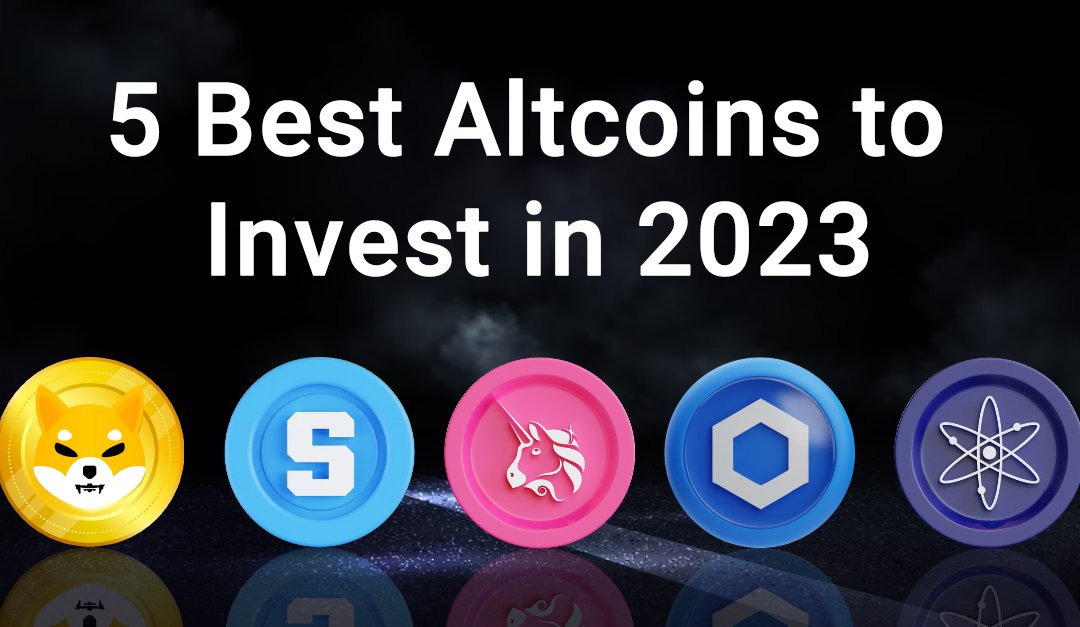
Crypto has become a revolutionary way for people to invest in their future and achieve financial freedom. People have realized that Bitcoin and other popular cryptocurrencies like Ethereum, Litecoin, and Dash will allow them to become free from the control of big corporations and bank systems that are not doing their job properly. The New Year is just about to get started and today we are going to help you out by listing a few best altcoins to invest in 2023.

Below is a list of some of the top altcoins to invest in for the next season.

  • Shiba Inu
  • Sandbox
  • Uniswap
  • Chainlink
  • Cosmos

So, let’s get started with best altcoins to invest in 2023!

1. Shiba Inu - The Best Altcoin to Invest in 2023:

You may have heard of this coin but if not, no worries as we are here to tell you a little bit about it so you can invest without any doubt. Launched in August 2020, it is a meme coin that saw some really amazing popularity within 2 years.

The reason behind this popularity may be the fact that it introduced a novel pay-to-burn feature that, over time, will slowly reduce the total number of tokens in circulation. With such exciting developments in it, it is not wrong if we say that it’s an investment with real potential for growth and hence it is among the best altcoins to invest in 2023.

Also Read: Shiba Inu among the most popular cryptocurrency in 2022, alongside Bitcoin and Ethereum.

2. Sandbox:

Sandbox holds the potential to grow very well in 2023. The ecosystem of the sandbox allows the players to communicate and connect with each other while enjoying an immersive gaming experience. It’s more like a gaming project where you can earn their in-game currency SAND by creating custom characters and participating in a number of different challenging play modules.

This altcoin has already gained a good amount of attention from well-known companies. A famous music company i.e. Warner Music wants to hold virtual concerts on the Sandbox Metaverse. The growing rate of its adoption is a clear sign that it’s going to go very well in the coming year and hence grabs 2nd position in the list of best altcoins to buy and hold in 2023.

Also Read: Best meta verse crypto projects of 2022 to watch out for!

3. Uniswap:

This can be considered one of the most adopted decentralized exchanges which was loved by many crypto enthusiasts. It has a lot of growth potential in the coming year and that’s why it’s in our list of the top altcoins to invest in 2023.

Uniswap helped people to take back control of their money and this thing welded the place of Uniswap as one of the most influential crypto pioneers of 2018 and we are sure that it is going to grow much better in 2023.

4. Chainlink:

Because of the fact that Chainlink is a decentralized oracle cryptocurrency that has already captured market dominance, we can’t resist adding it to our list of best altcoins to invest in 2023.

This amazing platform utilizes the latest technology to provide smooth connections between data sources and smart contracts due to which it also gained the attention of some world’s best businesses and traders towards itself. With up-to-the-mark security, strong data feeds, and flexible pricing, Chainlink is the most convenient solution for connecting to blockchain technologies.

Also Read: Top NFT Tokens to Purchase in 2023!

5. Cosmos:

Last but not least for sure, we have Cosmos on our list of best altcoins to invest in 2023 which is one of those altcoins that helps create blockchain interoperability. With the main focus on interoperability for Web 3.0, it has gained attention as one of the major providers of blockchain interoperability solutions.

Because of the fact that it is providing technologies necessary for truly interconnected systems, we are sure that it is going to grow very well in 2023 and is one of the best altcoins to invest in 2023.

Latest News

Polygon price rises nearly 6% in the last 24 hours

Polygon price rises nearly 6% in the last 24 hours

The bearish position of the crypto market creates chaotic consequences among crypto investors. The rate of the top cryptos is falling increasingly. The last couple of months is a remarkable phase for the crypto market ever. The top two cryptos, Bitcoin and Ethereum price fall hit the market cap separately. Even Polygon network's crypto Matic was decreasing its rate accordingly. Though the sellers' pressure makes a big concern for crypto investors.

But this week was quite promising for crypto members. It is forecasted about the bull run. The temporary increasing price has indicated the upcoming progress in the crypto market cap. Polygon (Matic) price rose nearly 6% in the last 24 hours. Which is a green signal for the native investors.

Other Crypto Overview :

The top two currencies, Bitcoin and Ethereum, have continuous ups and downs that make the investors hold for a long period. Though the increasing rate of this week is making the situation in progress. As of the time of writing this post, Bitcoin is running at $23474.80. It is 1.40% at an increasing rate. On the other hand, Ethereum's current price is $1637.49 and the increasing rate is 3.92%.

Noteworthy, the global cryptocurrency market is increasing by 4.8% to 1.12 trillion itself.  

Polygon Overview :

The native crypto network Polygon's crypto Matic is doing very well in the crypto market cap. According to reports, in the last 7 days, Polygon (Matic) price has increased around 71%. As of now, Polygon crypto is ranked 12 in the market.

In the last 24 hours, Polygon (Matic) price has risen nearly 6%. Which creates a massive crowd among the crypto investors. The exchange status of this crypto leaves a remarkable footprint.

Why Does Polygon Perform Well?

During this falling market, Polygon did its job better than the other networks. During this bear market, Polygon was able to perform well with some pre-planned strategies. During the price decrease, Polygon managed to retain its key support levels very well. After that, the price was increasing again.

Moreover, the partnership with Coca-cola and Disney in Spring and Summer 2022 makes the network perform well with unexpected increasing prices. Also, the layer 2 scaling solution is one of the considerable reasons behind it.

Polygon Current Status :

As of the writing time, Polygon's volume is around $1.4B. Its price is now $0.903413. Polygon's current market cap is $7.2B along with an 8.0B Matic circulating supply, which is 80% of the total. The market activity is in a bearish position, which is 78% buying and 22% selling graph. The typical hold time according to this network is 103 days. Above all, the price change in the last 24 hours is +5.14%. The 7 days price change is +28.87%.

Experts' Prediction On Polygon :

Government Capital :

According to Government Capital, Polygon might trade for over $3.7 per coin by 2023. Even go up to $20 within 5 years. Which indicates a bull run for long-term investors.

WalletInvestor :

WalletInvestor predicted that Polygon's price will be reduced as low as possible. It would fall to $0.035 by July 2023. According to WalletInvestor, Polygon might be a bad choice for upcoming years.

TradingBeasts :

According to TradingBeasts, Polygon can reach up to $1.17 by December 2022. It would be stagnant at $0.9 for the whole of 2023. In 2024, it will again rise to $1.5. Which indicates a low to high rate in the long run.

Digital Coin Price :

Digital Coin Price predicted that in 2023, Polygon will reach a minimum of up to 0.93 and a maximum of $1.15.