









The FSA of Japan plans to abolish the restriction on foreign stablecoins in 2023

The FSA of Japan plans to abolish the restriction on foreign stablecoins in 2023

For the greater part of 2022, stablecoins have been a source of contention. However, Japan has taken a position that may influence the course of this story. For crypto investors residing in Japan, Japanese officials are evaluating potentially substantial limits on the use of stablecoins such as Tether USDT and USD Coin USDC.

Japan will simplify stablecoin operations in 2023.

According to the Nikkei, a Japanese news source, in 2023, the Financial Services Agency (FSA) will lift the restriction on the domestic circulation of foreign-issued stablecoins. If the limitation on foreign-issued stablecoins is abolished, the body in charge of stablecoins in the nation becomes the distributor by default. To protect the tokens' value, distributors will handle them rather than the offshore issuers, according to the newspaper.

The country's new stablecoin law would allow local exchanges to support stablecoin trade in return for asset preservation via deposits and a limit remittance amount. According to the paper, if the usage of stablecoins grows, international remittances might become speedier and less expensive.

In 2023, Japan will eliminate its restriction on foreign-issued stablecoins.

The guidance requires that issuers of stablecoins established inside the region must prepare guaranteed value-added assets and that issuers are confined to banks, registered transfer agents, trust organisations, and so on.

After December 26, the Financial Services Authority will start polling on the guidelines. According to the FSA, authorising stablecoin distribution in the country will demand new anti-money laundering rules. As previously reported, the country's parliament passed legislation preventing non-banking companies from issuing stablecoins beginning in June 2022. Because no local exchanges currently provide trading in stablecoins like USDT or USDC, the new action will have a significant impact on the trading services accessible in the country.

According to official statistics, none of the 31 Japanese exchanges registered with the FSA, including BitFlyer and Coincheck, handled stablecoin trading as of November 30, 2022. Meanwhile, the maximum amount of remittances for such stablecoins is suggested to be 1 million yen, or $7,500 per transaction.

However, it is unclear which stablecoins will return to the Japanese market. One of the stablecoins to join the market might be the USDC created by the American corporation Circle. Tether (USDT), the largest stablecoin, might be another participant.

The current crypto ecosystem in Japan

Recently, Japanese authorities have started creating crypto-related rules. On December 15, Japan's ruling Liberal Democratic Party's tax committee approved a plan to exclude crypto firms from paying taxes on paper gains issued tokens. Local authorities had already warned against the usage of algorithmic stablecoins such as TerraUSD (UST).

The Web3 project team proposed eliminating the tax on paper gains in an intermediate policy proposal. It also included legislative recommendations for decentralised autonomous organisations (DAO) of the LLC variety, as well as support for the issuance of yen-based permissionless stablecoins, governance improvements are being implemented at the Japan Virtual Currency Exchange Association, which is in charge of token screening and auditing requirements for crypto firms. Furthermore, the Digital Agency of Japan said in November that it will establish its own decentralised autonomous organisation (DAO) before obtaining its legal standing.

Furthermore, the Japanese Ministry of Economy has set up a web3 policy agency. Meanwhile, Binance has devised a strategy to re-enter the Japanese market. This follows a year of withdrawal from the market in response to warnings from domestic regulators. The top exchange by volume may purchase the Japanese cryptocurrency exchange Sakura Exchange Bitcoin in an effort to re-enter the market.

Meanwhile, Square Enix and the crypto-heavyweight SBI announced a new collaboration. The Tokyo Stock Exchange-listed gaming firm and SBI agreed to a crypto gaming merger and acquisition deal. In addition to stablecoin legislation, officials are encouraging long-term collaboration with the country's cryptocurrency miners. The partnership between Tokyo Electric Support (TEPCO) and equipment manufacturer TRIPLE-1 will use excess grid electricity to support bitcoin mining.
ADA Underperforms SHIB, and Nansen CEO Makes Fun of Cardano Brothers

ADA Underperforms SHIB, and Nansen CEO Makes Fun of Cardano Brothers

What Is Cardano (ADA)?

Cardano (ADA) is a proof-of-stake blockchain platform which aims to bring about positive global change. The open-source initiative also aspires to "redistribute power from unaccountable systems to the periphery to individuals," thus contributing to the creation of a more safe, transparent, and fair society.

Cardano was formed in 2017 and was named after Gerolamo Cardano, who was a 16th century Italian polymath. The native ADA token is named after Ada Lovelace, a 19th-century mathematician widely considered as the world's first computer programmer. The ADA token is designed to enable owners to participate in the network's operation. As a result, users who own the cryptocurrency have the ability to vote on any proposed modifications to the coin. According to the team behind the layered blockchain, there have already been several compelling use cases for its technology, which intends to facilitate modular development of decentralized apps and smart contracts.

Charles Hoskinson announced the introduction of the Alonzo hard fork in August 2021, leading the Cardano price to skyrocket, rising 116% the next month. The Cardano 'Alonzo' hard fork was formally implemented on September 12, 2021, providing smart contract features to the network. Over 100 smart contracts were implemented in the 24 hours following the launch.

Cardano is used by agricultural organizations to track fresh fruit from farm to fork, while other solutions created on the platform allow educational credentials to be securely saved and shops to combat counterfeit items.

What Is SHIBA INU (SHIB)?

SHIB is the "DOGECOIN KILLER," according to the SHIBA INU website, and is featured on their own ShibaSwap, a DEX., The Shiba Inu money was produced under the alias "Ryoshi" in August 2020. Ryoshi considers himself as a nobody and inconsequential, and he believes that any attempts to uncover his identity, even if successful, will be unsatisfactory.

This meme currency swiftly grew in popularity and value as a community of investors were pulled in by the coin's charming charm along with headlines and tweets from celebrities such as Elon Musk and Vitalik Buterin. Vitalik Buterin was long thought to be the creator of the Shiba Inu, however he contradicted this on the Lex Fridman podcast on June 5, 2021.

Shiba Inu has since piqued the curiosity of other exchanges. SHIB, Mexico's largest cryptocurrency exchange, said in September that it will begin trading on its platform. Giottus, an Indian cryptocurrency exchange, made the same announcement. Bitstamp, Europe's largest crypto exchange, said that Shiba Inu would be listed for trade in early 2022. Korbit, a South Korean exchange, became the first in the country to offer the SHIB coin in 2021.

ADA Underperforms SHIB, and Nansen CEO Makes Fun of Cardano Brothers

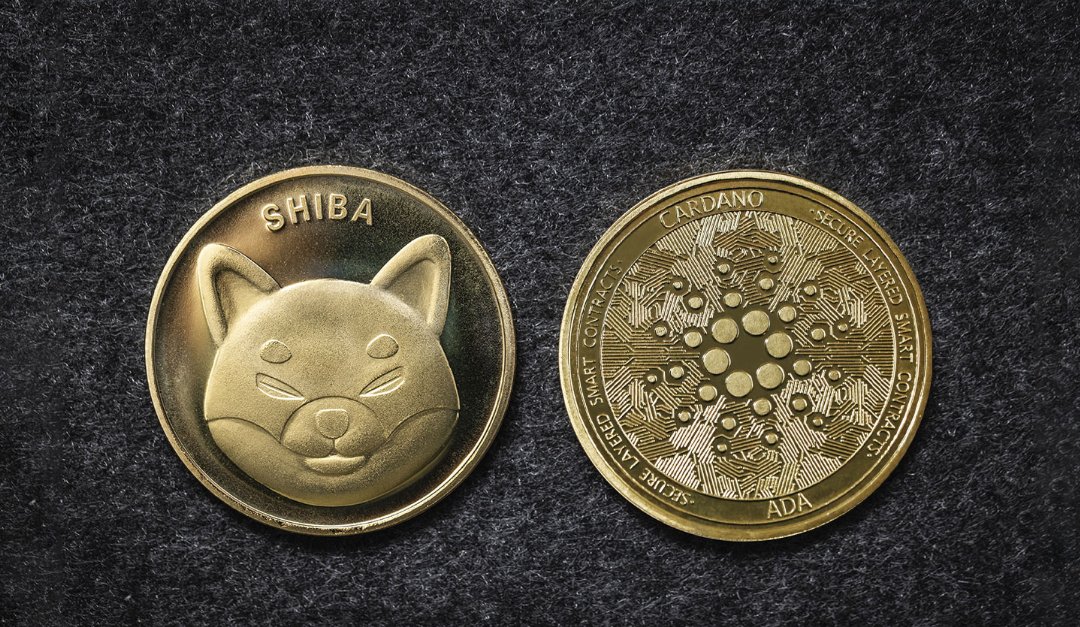
The creator and CEO of blockchain analytics company Nansen, Alex Svanevik, recently turned to Twitter to mock Cardano's native coin."Cardano brothers never thanked me for this," he tweeted. Svanevik was alluding to a forecast he made in March, adding, "Last chance to sell ADA over $30B market value." Svanevik appears to have been proven true, because ADA has had a bad year in terms of price performance. The cryptocurrency has dropped 91.67% from it's all-time high. Furthermore, it is down 81% year to year, which is higher than the meme coin Shiba Inu (77%).

Although ADA had a short-term bump in the run-up to the Vasil hard fork in September, it has been unable to gain traction since then. Despite its poor performance, ADA remains one among the top ten largest cryptocurrencies by market capitalization, with a valuation of almost $9 billion.

Svanevik's clairvoyance may have protected some investors from severe losses this year, but there doesn't appear to be much reason for optimism for those who are still hanging onto their ADA coins as we approach 2023. Market sentiment is very gloomy, with the sector still reeling from the FTX collapse and the US Federal Reserve refusing to abandon its hawkish monetary policies. According to U.Today, cryptocurrency expert Bobby Lee said that the next crypto bull market cycle will not begin until 2025. Svanevik's criticism of ADA is unsurprising given his backing for Ethereum, a key Cardano rival. The Ether cryptocurrency is 75.14% lower than its all-time high.