In recent years, cryptocurrency and blockchain technology have begun to make a significant impact in the gaming industry. The intersection of these two technologies has the potential to revolutionize the way games are developed, played, and monetized in the coming years.
One of the most significant ways that cryptocurrency and blockchain technology will impact the gaming industry is through the development of decentralized games. Decentralized games, also known as blockchain games, are built on blockchain technology and allow for true ownership and control of in-game items and assets. This means that players can buy, sell, and trade virtual items in a transparent and secure way, without the need for a centralized intermediary. This opens up new possibilities for players to earn real-world money through their in-game activities, giving them more control over their gaming experience.
Also Read: Decentralized Finance and Gaming: Navigating the Risks of Hacks and Exploits!
Another way that cryptocurrency and blockchain technology will impact the gaming industry is through the use of non-fungible tokens (NFTs). NFTs are a type of digital asset that is unique and cannot be replaced by another asset. They can be used to represent in-game items, characters, and even entire virtual worlds. This allows for the creation of truly unique and valuable digital assets, which can be bought, sold, and traded just like traditional physical assets.
In addition, cryptocurrency and blockchain technology will also impact the gaming industry by providing a new way for developers to monetize their games. Traditional methods of monetization, such as in-app purchases and advertising, can be limiting for both developers and players. Cryptocurrency and blockchain technology provide new monetization options, such as in-game token sales and crowd funding, which allow developers to raise funds directly from the community and give players more control over the development of the game.
One of the most interesting use cases of cryptocurrency and blockchain technology in the gaming industry is the use of cryptocurrency for in-game purchases. This allows players to use cryptocurrency, such as Bitcoin or Ethereum, to purchase in-game items, characters, and even entire virtual worlds. This can help to increase the adoption of cryptocurrency in general, by giving people a new use case for it, and also provide an alternative way to pay for in-game items, which can be especially useful for players in countries where traditional payment methods are not available.
Cryptocurrency and blockchain technology have the potential to revolutionize the gaming industry in 2023. The ability to create truly unique and valuable digital assets, the new monetization options, and the use of cryptocurrency for in-game purchases are only the beginning of what is possible. As more and more games begin to adopt these technologies, we can expect to see a shift in the way games are developed, played, and monetized, giving players more control and choice over their gaming experience.
More News:
UFO Gaming | Entering the future of Metaverse with P2E Gaming!
PULI | A unique ecosystem merging RPG and P2E mobile gaming, NFTs, staking and much more!
Similar News

TeraWulf Doubles Muskie Data Campus Contracted Power to 1 GW
TeraWulf doubled contracted power at its Muskie Data Campus in eastern Kentucky to 1 GW under an amended Kentucky Power deal, pending state regulatory approval.
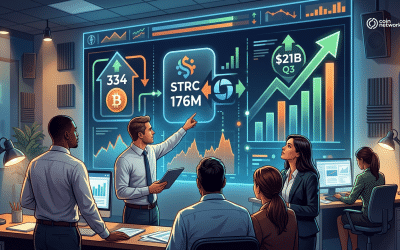
Strategy Bitcoin Purchase of 334 BTC Trails $176M STRC Buyback as Firm Posts $21B Q3 Gain
The latest Strategy Bitcoin purchase totaled 334 BTC for $28.7 million, while the firm spent $176.3 million on STRC buybacks and posted a $20.91 billion Q3.

Metaplanet Net Interest Income Strategy Targets Recurring Cash for Bitcoin Buys
Metaplanet unveiled a net interest income strategy and revised capital rules on Monday, aiming to fund more Bitcoin accumulation after ending Q3 with 44,000.

Strategy Boosts Bitcoin Holdings to 848,000 BTC, Spends $176M on STRC Buybacks
Strategy raised its bitcoin holdings to a record 848,000 BTC with a $28.7 million buy while spending $176 million on STRC preferred share buybacks, a filing.