























Smart Wallet Session Keys: What Are They?
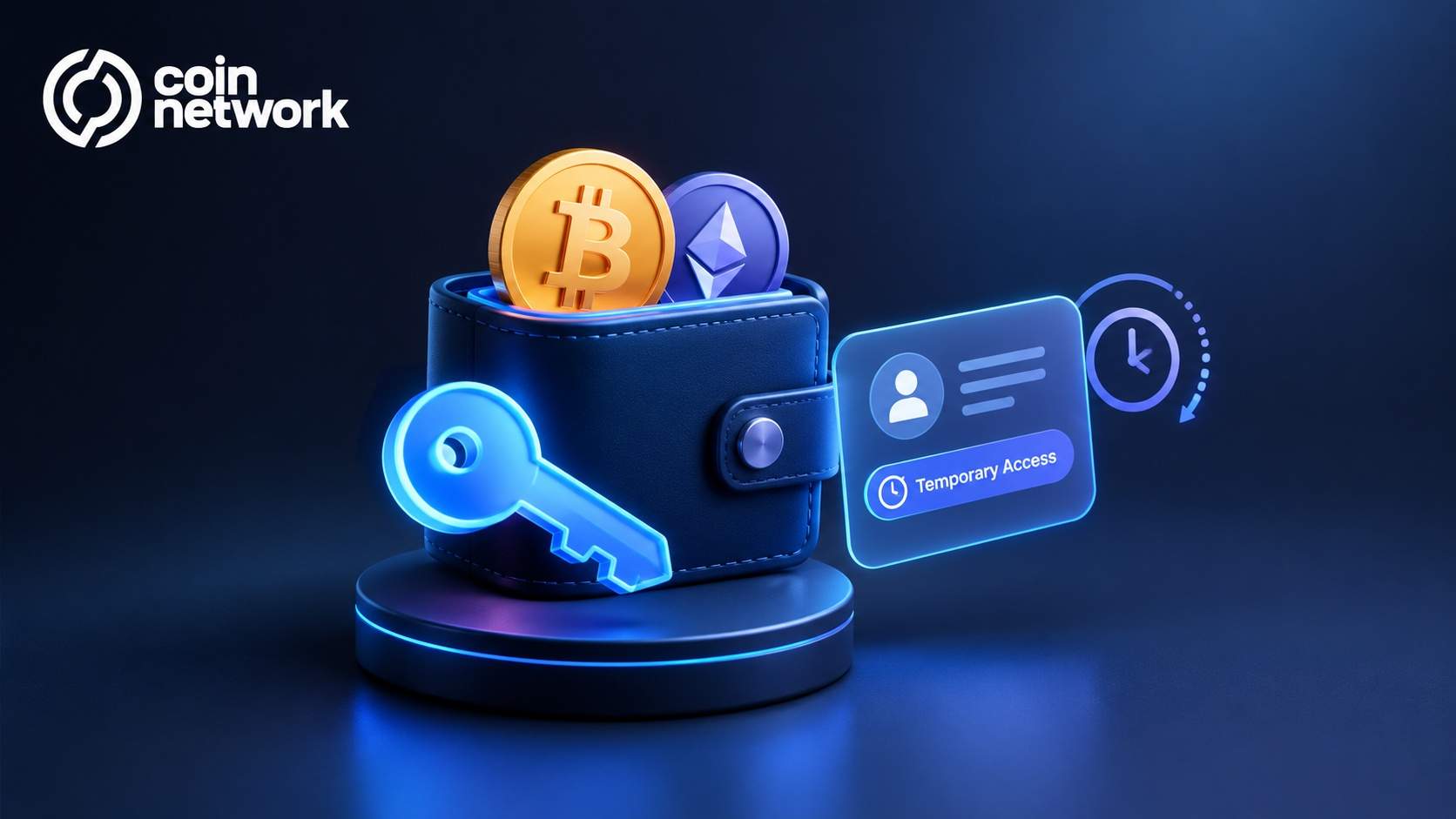
Smart Wallet Session Keys are temporary or restricted authorization methods that allow an application to perform certain blockchain actions without requiring the user’s main wallet key to sign every transaction.
The idea is to replace repeated full-wallet approvals with scoped permissions.
For example, a user could allow a game to spend up to 10 USDC per day, interact only with a particular contract, and automatically lose access after 24 hours. The application can then perform permitted actions within those limits without asking the user to approve every individual transaction.
The ERC-4337 documentation on session keys and delegation explains that session-key systems can grant permissions such as expiration times and target-contract restrictions, although implementations are still wallet- and module-specific rather than being a single native ERC-4337 feature.
This makes session keys an important part of the broader move toward programmable crypto wallets.
How Smart Wallet Session Keys Work
A traditional externally owned account generally relies on its main private key to authorize transactions.
That model is secure when the key is protected properly, but it can create a frustrating user experience. Every action may require another wallet confirmation.
A smart account can instead use programmable authorization logic.
A simplified session-key flow looks like this:
- The user connects a smart wallet to an application.
- The application requests a specific permission set.
- The user approves the permitted actions.
- A session key or delegated authorization is created.
- The application performs actions within those limits.
- The permission expires or is revoked.
The important security property is scope.
A session key should not automatically have the same authority as the user’s main wallet.
Depending on the implementation, restrictions may include:
- Specific contracts
- Specific functions
- Specific tokens
- Spending limits
- Time windows
- Number of transactions
- Chain restrictions
- Gas limits
The ERC-4337 session-key documentation describes static delegation and dynamic delegation models and notes that session-key enforcement is typically implemented through wallet plugins or authorization modules.
Why Smart Wallet Session Keys Matter
Smart wallets are designed to make blockchain accounts more programmable.
Ethereum’s Account Abstraction roadmap, updated in June 2026, explains that smart accounts can support features such as customized security logic, recovery mechanisms, gas abstraction, and improved user experiences.
Session keys extend that concept by allowing an application to receive a limited authorization instead of unrestricted control.
This can be useful for:
- Blockchain games
- Automated trading interfaces
- Recurring payments
- Subscriptions
- DeFi automation
- AI agents
- Portfolio management
- Social applications
- High-frequency dApp interactions
A user can potentially authorize a workflow once instead of repeatedly signing dozens of transactions.
Smart Wallet Session Keys vs Private Keys
The most important difference is the level of authority.
A traditional private key generally represents control over the account. Anyone who obtains that key can potentially sign transactions within the account’s capabilities.
A properly designed session key is intended to have narrower permissions.
For example:
Main wallet key: Broad account control
Session key: Trade only on one protocol, up to 50 USDC, until midnight
That difference can reduce the potential impact of a compromised session key.
However, the security depends on how the wallet and permission system enforce the restrictions.
A poorly implemented authorization mechanism can expose users to much greater risk than intended.
Smart Wallet Session Keys and ERC-4337
ERC-4337 provides a framework for smart accounts without requiring a fundamental Ethereum consensus-layer change.
The ERC-4337 documentation explains that smart accounts can support programmable validation, gas sponsorship, batching, and custom authorization.
ERC-4337 itself does not standardize one universal session-key format.
Instead, session keys can be implemented through smart-account modules, plugins, and delegation mechanisms.
The official ERC-4337 session-key documentation specifically notes that session-key delegation can be implemented through approaches such as ERC-6900 and ERC-7579 modules.
This distinction matters because two wallets can both support ERC-4337 while implementing session permissions differently.
Smart Wallet Session Keys and ERC-7715
ERC-7715 focuses specifically on how decentralized applications request permissions from wallets.
The ERC-7715 specification defines a wallet_requestExecutionPermissions method that allows a dApp to request scoped permissions for executing transactions on a user’s behalf.
The goal is to make permission requests more structured than traditional token approvals.
MetaMask introduced its Advanced Permissions system in April 2026 using ERC-7715. The company describes the system as providing limited, time-bound permissions for use cases such as subscriptions, dollar-cost averaging, AI agents, vesting, and auto-compounding. MetaMask’s April 2026 announcement provides the implementation details.
MetaMask’s current documentation explains that users can configure limits such as spending amounts, frequency, and expiration dates through supported smart accounts. MetaMask’s Advanced Permissions guide provides examples.
Smart Wallet Session Keys and EIP-7702
EIP-7702 introduced another important piece of the smart-wallet ecosystem.
Ethereum’s EIP-7702 documentation allows an existing EOA to delegate execution to deployed smart-contract code through a new transaction type.
This means users can keep the same wallet address while gaining smart-account-style functionality.
Ethereum’s 2026 development overview specifically identifies session keys, batching, gas sponsorship, and recovery flows as use cases enabled by EIP-7702.
EIP-7702 is therefore complementary to session-key systems.
The delegation itself is not necessarily the session permission. Instead, the delegated smart-account code can implement permission systems that support scoped authorizations.
This distinction is important when evaluating wallet security.
Smart Wallet Session Keys and Temporary Permissions
A session permission can be designed around several constraints.
Time Limit
The authorization expires after a defined period.
Example:
Valid for 24 hours
Spending Limit
The session can spend only up to a predetermined amount.
Example:
Maximum 100 USDC
Contract Restriction
The session may interact only with one or more approved contracts.
Example:
Only interact with a specific game contract
Function Restriction
The session can call selected contract functions but not others.
Example:
Swap only, no arbitrary token transfers
Chain Restriction
The permission may be limited to a specific blockchain.
These constraints reduce the scope of authority compared with giving an application unrestricted access.
Smart Wallet Session Keys and Security
Session keys are designed to reduce unnecessary exposure of a user’s primary signing authority, but they introduce a new security boundary.
The user must trust that:
- The permission request accurately describes the intended scope
- The wallet displays the permissions clearly
- The smart-account module enforces the limits
- The session key cannot bypass the restrictions
- Expiration and revocation work as expected
This is why session permissions should be treated as security controls rather than simply convenience features.
Ethereum’s EIP-7702 guidance warns that delegated code is security-critical. If an account delegates to malicious or buggy code, that code can potentially make calls as the user. Ethereum’s EIP-7702 security guidance recommends trusted delegation contracts and careful wallet handling.
Smart Wallet Session Keys vs Traditional Token Approvals
Traditional token approvals generally grant another contract permission to spend a token.
Depending on the approval mechanism, this permission can remain active until the user changes or revokes it.
Session-based permissions can provide additional constraints.
MetaMask’s Advanced Permissions documentation notes that users can define spending limits, recurring access, and expiration dates.
This creates a useful distinction:
Traditional approval: Often broad and potentially persistent
Scoped permission: Potentially limited by amount, action, contract, and time
Neither model is automatically safe. The security depends on the smart contract, wallet implementation, permission mechanism, and user’s approval.
Smart Wallet Session Keys in 2026
Account abstraction activity has reached a significant scale.
A current BundleBear ERC-4337 dashboard reports approximately 1.299 billion UserOperations, 856 million bundle transactions, and 67.9 million accounts with at least one UserOperation in its cumulative dataset.
The same dashboard provides network-level and monthly activity data for chains using ERC-4337 infrastructure.
EIP-7702 adoption is also substantial. The current BundleBear EIP-7702 dashboard reports approximately 56.6 million smart accounts, 242.8 million authorizations, and 102 million Set Code transactions in its cumulative metrics.
These figures are infrastructure-level measurements, not counts of unique human users, and the dashboards continuously update their datasets.
They nevertheless show that programmable-account infrastructure is operating at a scale where permission systems such as session keys have increasingly practical relevance.
Smart Wallet Session Keys and User Experience
One of the strongest use cases is reducing repetitive wallet confirmations.
Consider a blockchain game where a player makes dozens of small actions during a session.
Without scoped permissions, each interaction may require another wallet signature.
With a session authorization, the player could grant:
- Access to the game contract
- A small token spending allowance
- A short expiration period
The game could then execute permitted actions automatically.
This can make blockchain applications feel closer to conventional applications while preserving user-controlled authorization boundaries.
Smart Wallet Session Keys for AI Agents
AI agents are another emerging use case.
An agent may need to perform transactions on a user’s behalf, but giving an AI system unrestricted control over a valuable wallet creates obvious risks.
A scoped session permission can potentially limit the agent’s authority.
For example:
- Maximum spend: 25 USDC per day
- Validity: 7 days
- Allowed contract: one DeFi protocol
- Allowed function: swap
- Network: one specific chain
This does not eliminate agent risk, but it can reduce the consequences of an agent behaving incorrectly or being compromised.
MetaMask specifically identifies AI agents as one of the use cases for its 2026 Advanced Permissions implementation. MetaMask’s announcement describes session-based execution within approved permission scopes.
Smart Wallet Session Keys and Revocation
A temporary permission is useful only if users can understand and control it.
A robust permission system should provide mechanisms to:
- View active permissions
- See expiration times
- Revoke permissions
- Adjust spending limits
- Identify approved applications
- Identify approved contracts
Dynamic delegation models can also use explicit expiration timestamps or other conditions.
The ERC-4337 session-key documentation describes examples such as validUntil and targetContract restrictions.
Users should therefore periodically review active permissions rather than assuming every temporary authorization disappears automatically.
Common Risks of Smart Wallet Session Keys
Overly Broad Permissions
A session key that can interact with arbitrary contracts is much less restrictive than one limited to a specific application.
Excessive Spending Limits
A permission allowing unrestricted spending can undermine the intended security benefit.
Long Expiration Periods
A session that lasts indefinitely provides less containment than one that expires automatically.
Malicious dApps
A legitimate-looking dApp can request permissions that are broader than necessary.
Vulnerable Modules
Session authorization often relies on wallet modules or smart-account code. Bugs in those components can create additional risk.
Poor Permission Visibility
Users cannot make informed decisions if a wallet does not clearly explain what an authorization permits.
How to Use Smart Wallet Session Keys Safely
Before approving a session permission, check:
Application
Is the dApp authentic?
Contract
Which contract addresses can the permission interact with?
Assets
Which tokens or NFTs are affected?
Limits
What is the maximum amount that can be spent?
Duration
When does the authorization expire?
Functions
Which operations are allowed?
Chain
Is the permission restricted to the intended network?
Revocation
Can the permission be cancelled later?
Coin Network’s Crypto Wallet Security guide provides broader guidance on wallet permissions, suspicious dApps, transaction review, and protecting long-term holdings.
Smart Wallet Session Keys: Practical Checklist
Before approving temporary wallet permissions, review:
- Scope: What exactly can the session key do?
- Contract: Which smart contracts are authorized?
- Token: Which assets can be accessed?
- Limit: How much can be spent?
- Frequency: How often can actions occur?
- Expiry: When does access end?
- Chain: Which network is covered?
- Key: Is the session key separate from the main wallet key?
- Module: Which smart-account component enforces the rules?
- Revocation: Can the permission be cancelled?
- Visibility: Can the wallet show active permissions?
- Recovery: What happens if the session key is compromised?
For broader blockchain concepts, Coin Network’s Cryptopedia provides additional educational resources.
Conclusion
Smart Wallet Session Keys allow crypto applications to use restricted wallet permissions instead of requiring users to approve every action with their primary wallet key.
The concept fits naturally into the broader Account Abstraction ecosystem built around ERC-4337, EIP-7702, ERC-6900, ERC-7579, and ERC-7715.
The major benefit is flexibility. Users can potentially define permissions by time, spending amount, contract, function, asset, and network, making repeated blockchain interactions more convenient while reducing the scope of authority granted to an application.
The technology is still evolving, and session keys are not implemented identically across all wallets.
2026 adoption data shows that smart-account infrastructure is already operating at significant scale, with billions of ERC-4337 UserOperations and tens of millions of accounts appearing in current ecosystem datasets.
For users, the most important principle remains simple:
Temporary permission should mean limited permission.
Before approving a session, check exactly what the application can do, how much it can spend, when access expires, and whether the permission can be revoked.
FAQs
1. What are Smart Wallet Session Keys?
Smart Wallet Session Keys are temporary or restricted authorization mechanisms that allow applications to perform approved blockchain actions without requiring the user’s main wallet key to sign every individual transaction.
2. Are session keys the same as private keys?
No.
A main private key generally provides broad control over an account, while a session key is intended to operate within a limited permission scope.
3. Are session keys part of ERC-4337?
ERC-4337 enables programmable smart accounts that can support session-key functionality, but the ERC-4337 standard does not define one universal session-key format.
Session keys are generally implemented through wallet-specific modules, plugins, or authorization systems.
4. What is ERC-7715?
ERC-7715 defines a wallet interface that allows dApps to request scoped execution permissions.
It is designed to make permission-based interactions more structured and predictable.
5. What is EIP-7702?
EIP-7702 allows an existing Ethereum EOA to delegate execution to deployed smart-account code.
This enables features such as batching, gas sponsorship, recovery flows, and session-key-style functionality while allowing the user to retain the same address.
6. Can session keys have spending limits?
Yes.
A permission can be designed to restrict the amount of an asset that an application can use.
For example, a user could authorize spending up to 10 USDC per day.
7. Can Smart Wallet Session Keys expire?
Yes.
Time-based restrictions are one of the common session-key patterns. An authorization can specify a validity period so the permission stops working after a defined time.
8. Can session keys be revoked?
Depending on the wallet and implementation, users can revoke or replace permissions.
Users should verify that their particular wallet provides clear permission-management and revocation controls.
9. Are Smart Wallet Session Keys completely safe?
No.
They can reduce the scope of permissions, but vulnerabilities in wallet software, smart-account modules, dApps, contracts, or permission logic can still create risks.
10. Can session keys be used for AI agents?
Yes.
Limited permissions can allow an AI agent to perform predefined actions without giving it unrestricted access to a user’s main wallet.
MetaMask identifies AI agents as one use case for its 2026 Advanced Permissions system.
11. Are session keys useful for blockchain games?
They can be.
Games often require many small interactions, so a limited session authorization can reduce repeated wallet confirmations while keeping spending and contract access constrained.
12. Where can I learn more about Smart Wallet Session Keys?
For technical information, read the ERC-4337 session-key documentation, ERC-7715 specification, Ethereum Account Abstraction roadmap, and EIP-7702 specification.
For wallet-security guidance, Coin Network’s Crypto Wallet Security guide and Cryptopedia provide additional resources.


