






Not financial advice. This guide explains how cryptocurrencies work. It is for information only and is not a recommendation to buy or sell any asset.
Short answer: a cryptocurrency is digital money recorded on a shared, public ledger called a blockchain. Thousands of independent computers keep copies of that ledger and agree on which transactions are valid, so no single bank or company has to run it. Ownership is controlled by cryptographic keys: whoever holds the private key for an address can move the coins at that address.
What is a blockchain?
A blockchain is a list of transactions grouped into blocks. Each block contains a reference (a cryptographic hash) to the block before it, so the blocks form a chain. Changing an old transaction would change its block’s hash and break every link after it, which is why recorded history is very hard to rewrite. Copies of the chain are kept by many independent computers called nodes.
How does a crypto transaction work?
- You sign it. Your wallet uses your private key to create a digital signature that proves you control the coins being sent.
- It is broadcast. The signed transaction is sent to the network, where nodes check that the signature is valid and that the coins have not already been spent.
- It is added to a block. Valid transactions are collected into a new block by a miner or validator.
- It is confirmed. Once the block is accepted by the network, the transaction is recorded. Each additional block built on top makes it harder to reverse.
Who decides which transactions are valid?
Blockchains use a consensus mechanism so that independent computers agree on one version of the ledger:
- Proof of work (used by Bitcoin): miners compete to solve a computational puzzle. The winner adds the next block and earns newly created coins plus fees. Attacking the network would require controlling a very large share of that computing power.
- Proof of stake (used by Ethereum since 2022): validators lock up, or “stake”, the network’s coins. They are chosen to propose and confirm blocks and can lose part of their stake if they break the rules.
Wallets, public keys and private keys
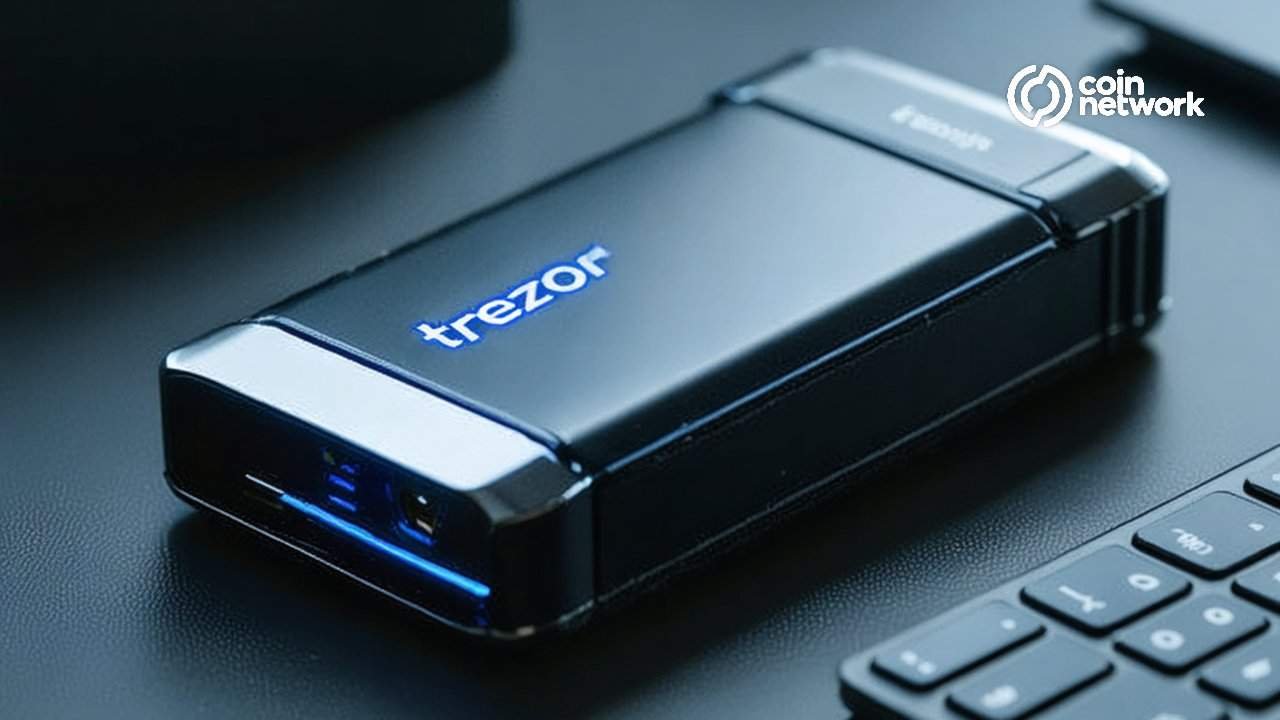
A crypto wallet does not store coins; the coins live on the blockchain. The wallet stores your keys. Your public address is like an account number you can share. Your private key, often backed up as a 12- or 24-word recovery phrase, is what authorises spending. Anyone who obtains it can take your funds, and if you lose it and have no backup, the funds are usually unrecoverable. Read our guide to crypto wallet security.
Coins, tokens and smart contracts
- Coins are native to their own blockchain, such as bitcoin (BTC) on Bitcoin or ether (ETH) on Ethereum.
- Tokens are created on top of an existing blockchain by software, for example stablecoins or governance tokens.
- Smart contracts are programs stored on a blockchain that run automatically when their conditions are met. They power decentralised finance (DeFi), NFTs and many other applications.
What gives a cryptocurrency value?
Crypto prices are set by supply and demand on exchanges. Factors that can matter include the asset’s supply rules, how widely it is used, network security, liquidity, regulation and overall market sentiment. Prices can change very quickly, in both directions.
Key risks to understand
- Volatility: prices can fall sharply in a short time.
- Loss of keys and scams: there is usually no bank to reverse a mistaken or fraudulent transfer.
- Platform risk: exchanges and lending platforms can fail or be hacked.
- Regulation: rules differ by country and change over time. See our crypto regulation news.
Frequently asked questions
Is crypto the same as blockchain?
No. A blockchain is the ledger technology; a cryptocurrency is one use of it. Blockchains can also record other kinds of data.
Who controls a cryptocurrency?
On open networks such as Bitcoin, no single party does. The software rules are enforced by the nodes that run it, and changes need broad agreement among users, developers, miners or validators.
Can a crypto transaction be reversed?
Generally no. Once a transaction is confirmed it is final, which is why checking the address before sending matters.
Keep learning with our crypto explainers.